

Collection
USA
By · 138 photos
Clark's Fork Cody Wyoming
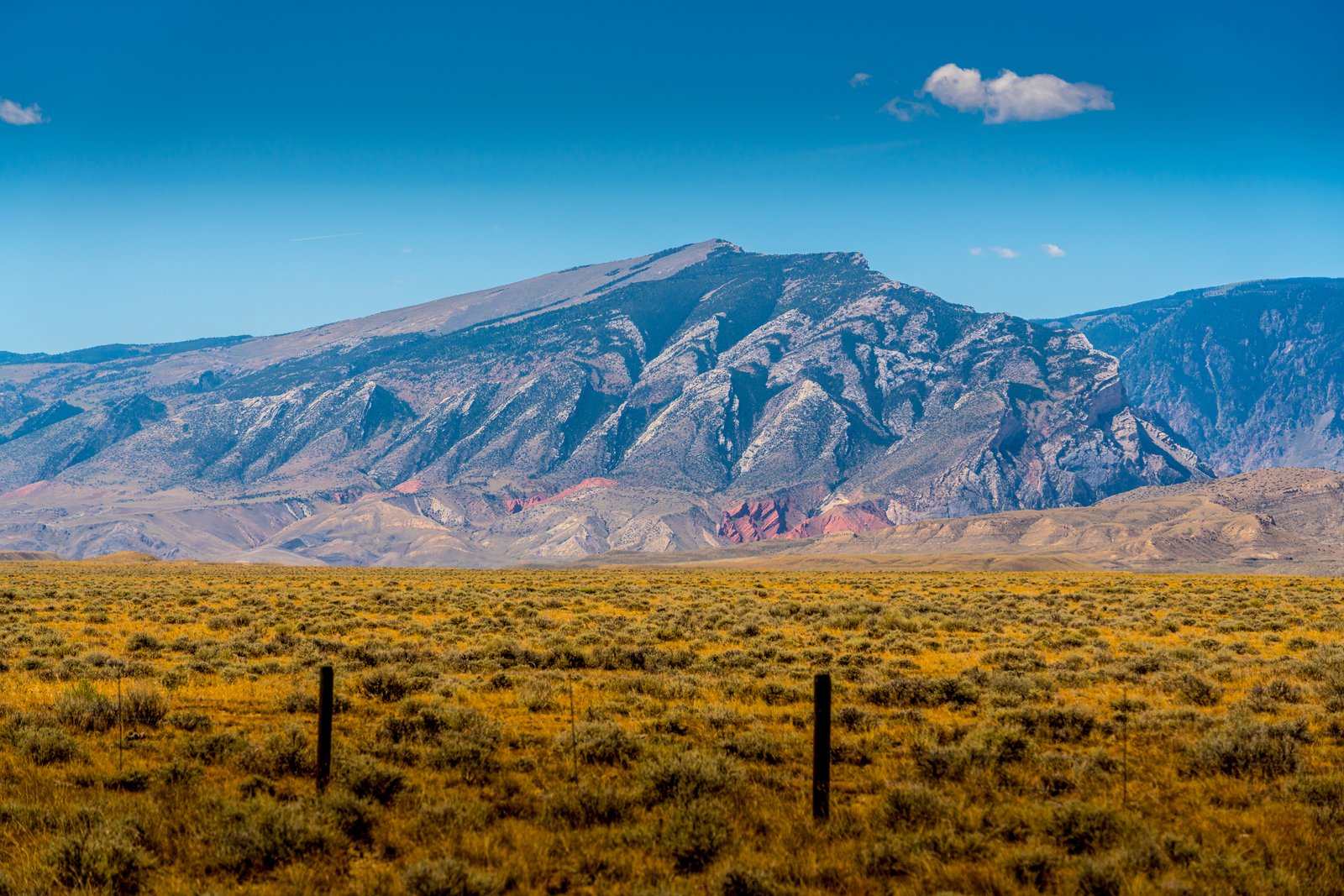
The photograph looks north from the sagebrush flats toward the mouth of Clarks Fork Canyon near Cody, Wyoming, where the Clarks Fork of the Yellowstone cuts through the front of the Beartooth Mountains. The Clarks Fork of the Yellowstone flows through the Shoshone National Forest through the awesome Clarks Fork Canyon into BLM-administered public lands, located just inside the mouth of the canyon. The tilted, weathered ridges and streaks of red rock in the foothills mark the folded strata where the mountain front meets the open plain. Key Features: The Location: Clarks Fork Canyon lies roughly forty miles north of Cody, Wyoming, at the edge of the Beartooth Range. The Geology: This canyon is at the intersection of the Laramide age Cody Arch and Beartooth Uplift, and the Eocene Absaroka Volcanic Province. The Terrain: The area is semi-arid high desert sagebrush plains with little rain or snowfall, as the bordering mountains squeeze moisture from passing storms. The Significance: Geologists consider the canyon one of the most striking exposures of ancient tilted rock layers in the region.
Prints from $14Downloads from $19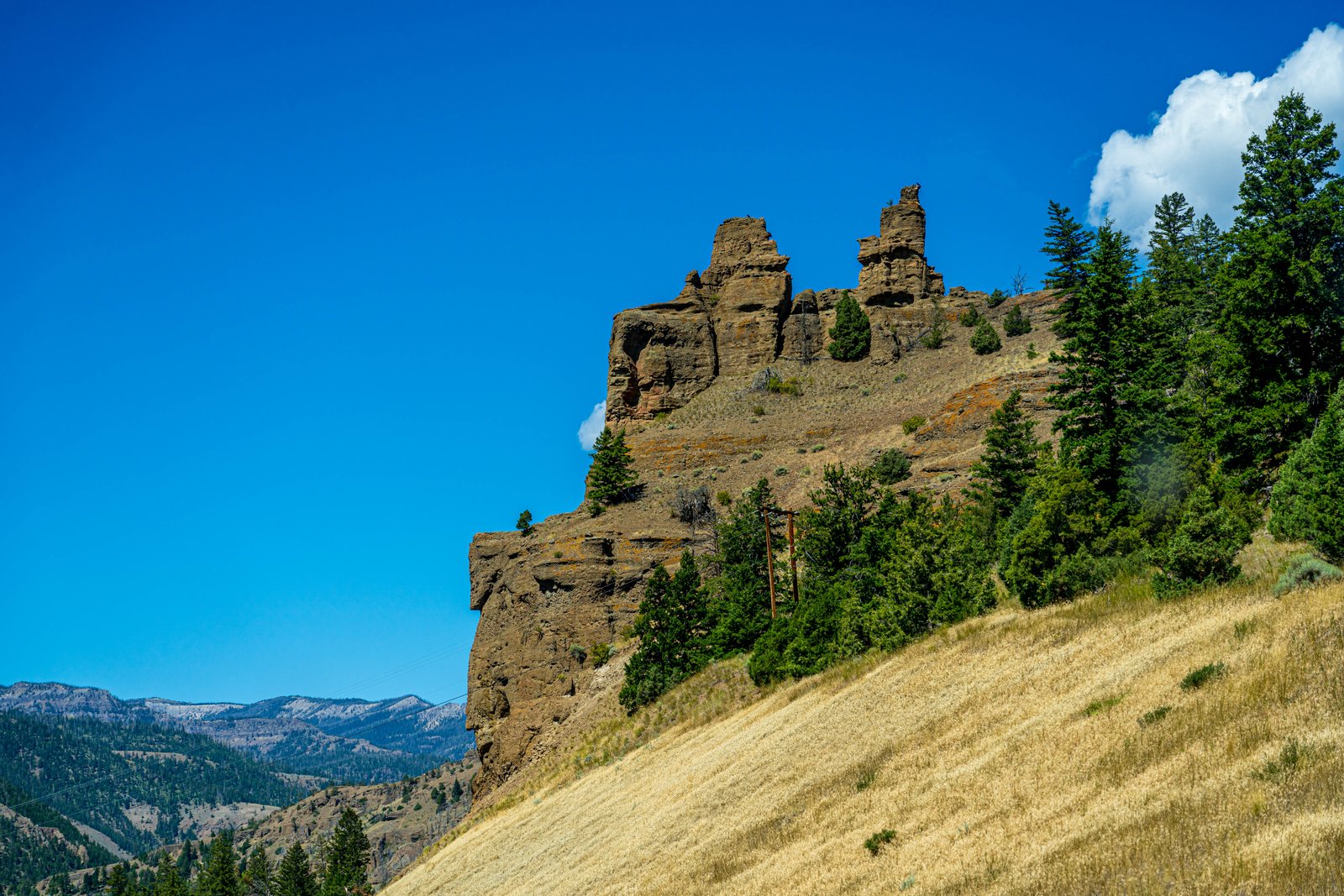
Yellowstone Hillside
The photograph looks north across a grassy, sage covered hillside in the northern reaches of Yellowstone country toward a weathered outcrop of eroded volcanic rock that has been sculpted by wind and time into castle like turrets. A stand of lodgepole and Douglas fir climbs the slope beneath the formation, while a faint line of old wooden utility poles follows what was likely a backcountry road, and the layered peaks of the Absaroka Range fade into the distance under a deep blue summer sky. Key Features: The Rock Formation: The jagged spires are remnants of ancient volcaniclastic conglomerate, hardened ash and debris flows from the region's Eocene era volcanic activity that erode unevenly into pinnacles and knobs. The Setting: The scene sits within Yellowstone's northern range, an area shaped by both volcanism and later glaciation, producing its mix of open grassland and forested slopes. The Backdrop: The Absaroka Range, visible on the horizon, forms the eastern boundary of the Yellowstone Plateau and is itself built from layers of ancient volcanic rock. The Season: Golden, cured grasses suggest the dry heat of late summer, a season when the park's hillsides turn from green to amber.
Prints from $14Downloads from $19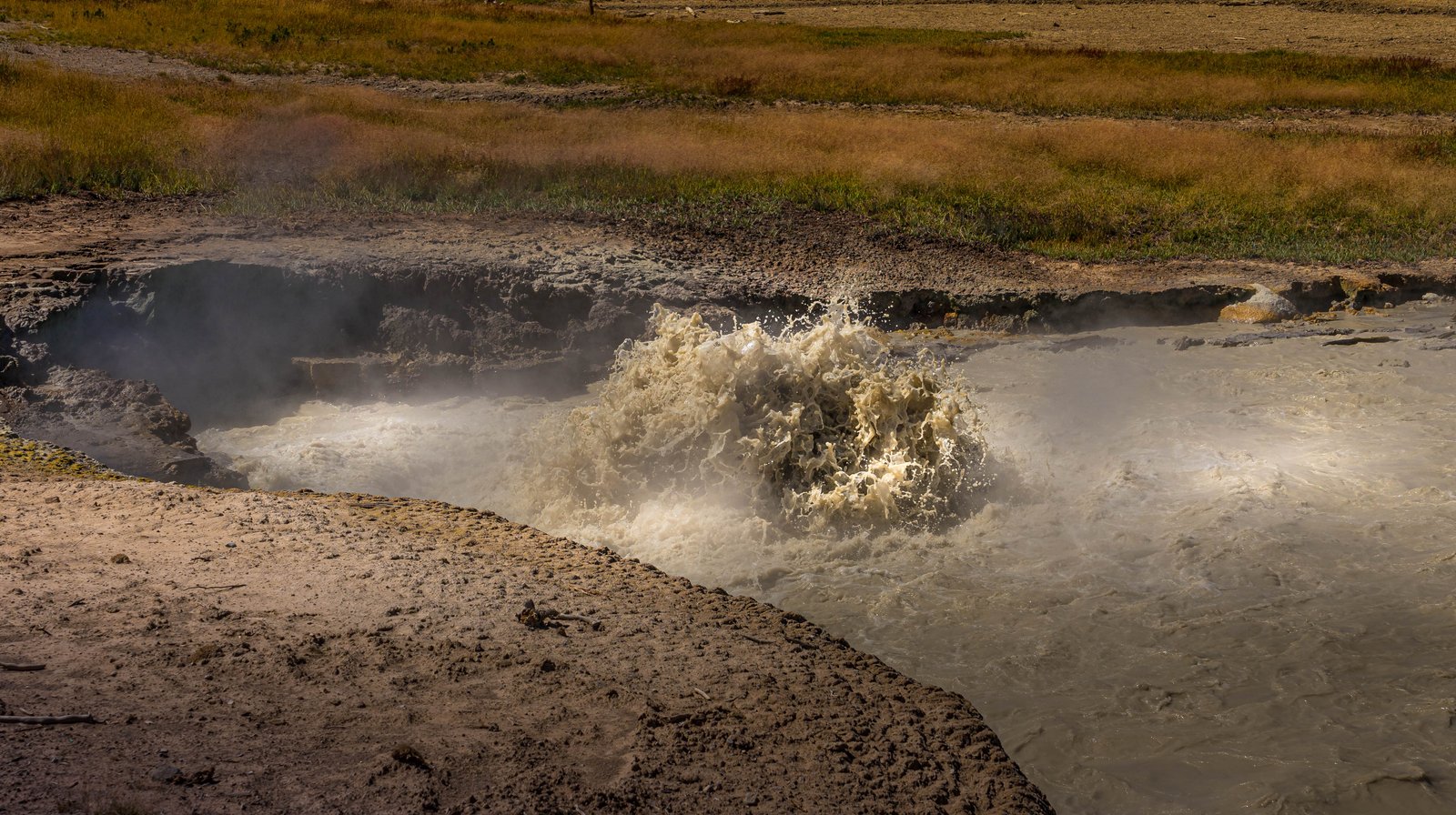
Churning Caldron
Churning Cauldron is a large, boiling mud pool in the Mud Volcano thermal area of Yellowstone National Park, along the eastern edge of Hayden Valley near Yellowstone Lake. The photo looks across a steaming, muddy pool where cloudy, mineral-laden water erupts and splashes at the center, framed by scorched, sandy ground and a strip of prairie grass beyond. Key Features: The Setting: This pool sits within the Mud Volcano Group, a cluster of acidic hot springs, fumaroles, and mud pots on a resurgent dome of the Yellowstone Caldera. The Eruption History: This spring was much cooler and covered with colorful microbial mats until earthquake activity in 1978-79 superheated the waters and destroyed the mats, and in 1996 it began throwing water 3 to 5 feet high. The Water Temperature: This once cool pool now averages 164 degrees Fahrenheit (73 degrees Celsius). The Smell: The area is marked by the strong odor of rotten eggs caused by hydrogen sulfide gas escaping from the ground atop this resurgent dome.
Prints from $14Downloads from $19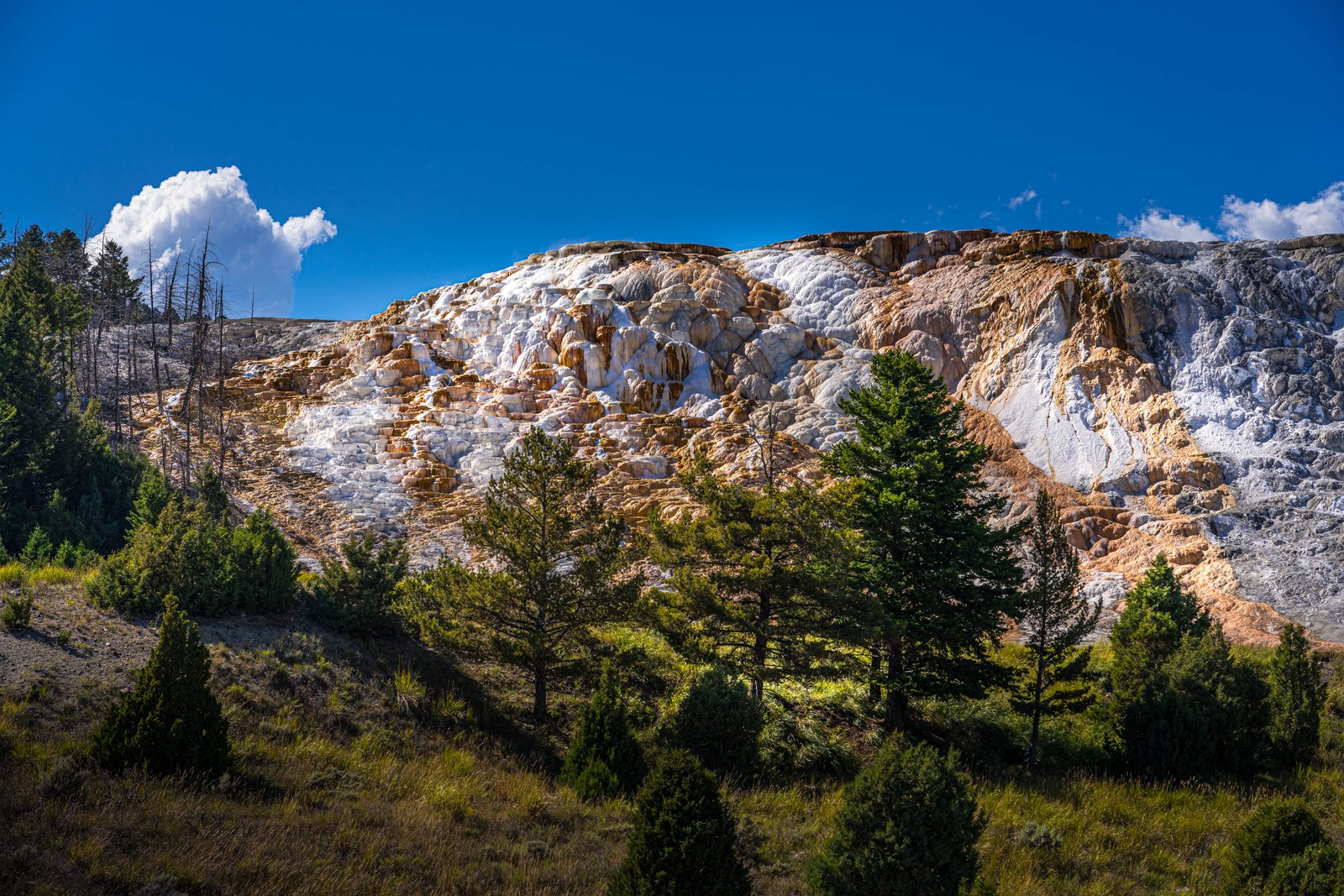
Mammoth Hot Springs
This photograph shows the travertine terraces of Mammoth Hot Springs in Yellowstone National Park, Wyoming, viewed from below along one of the hillside boardwalks that wind through the area. The frame captures the layered white and orange mineral formations rising above a foreground of lodgepole pines and sagebrush meadow, with a bright cumulus cloud drifting over the ridge under a deep blue sky. Key Features: The Terraces: Mammoth Hot Springs is an extensive mass of travertine terraces that have been forming over thousands of years, created as mineral-rich hot water flows over the hillside. The Rock Type: Travertine is a crystalline limestone that forms in mineral springs saturated with dissolved calcium carbonate, giving the terraces their sculpted, cascading look. A Living Landscape: rates of travertine deposition at Mammoth Hot Springs are very high, about 3 millimeters per day, compared to other calcium carbonate systems, so the terraces are constantly reshaping themselves, shifting color and form year to year. Discovery: Early explorers during the Washburn, Hayden, and Hague expeditions of the 1870s were astonished by the massive terraces and pools of hot-spring limestone, a feature notably different from Yellowstone's other geothermal areas.
Prints from $14Downloads from $19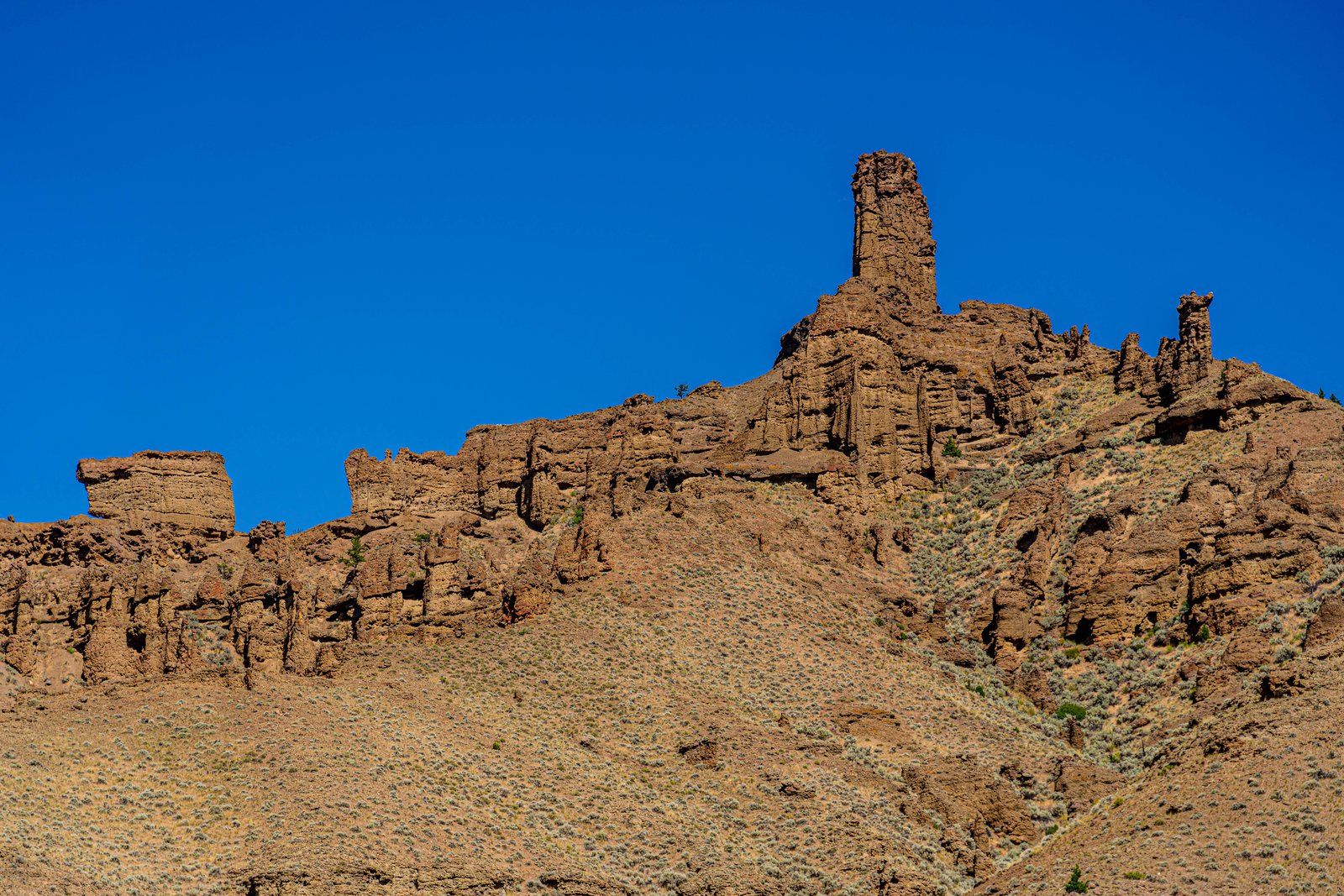
Yellowstone Peaks
Rising above a sage covered slope in Yellowstone National Park's remote northeast corner, this weathered spire and its companion rock towers are carved from ancient volcanic breccia in the Absaroka Range. The formation sits atop a ridge exposing thick layers of hardened ash, mud, and rock debris, with a single tall pinnacle standing above a jagged line of smaller hoodoos under a clear summer sky. Key Features: Volcanic Origins: These layers were created over time as successive eruptions from ancient volcanoes repeatedly buried standing trees under waves of ash and debris. The Rugged Terrain: Extensive erosion has exposed more than 1000 vertical meters of these volcanics and has created a rugged topography. Famous Fossil Ground: The classic petrified forests are found on Specimen Ridge and Mt. Amethyst, both located in the northeast sector of Yellowstone National Park. Erosional Sculptures: The soft breccia weathers into these grotesque spires and pillars, a striking contrast to the park's famous geothermal features.
Prints from $14Downloads from $19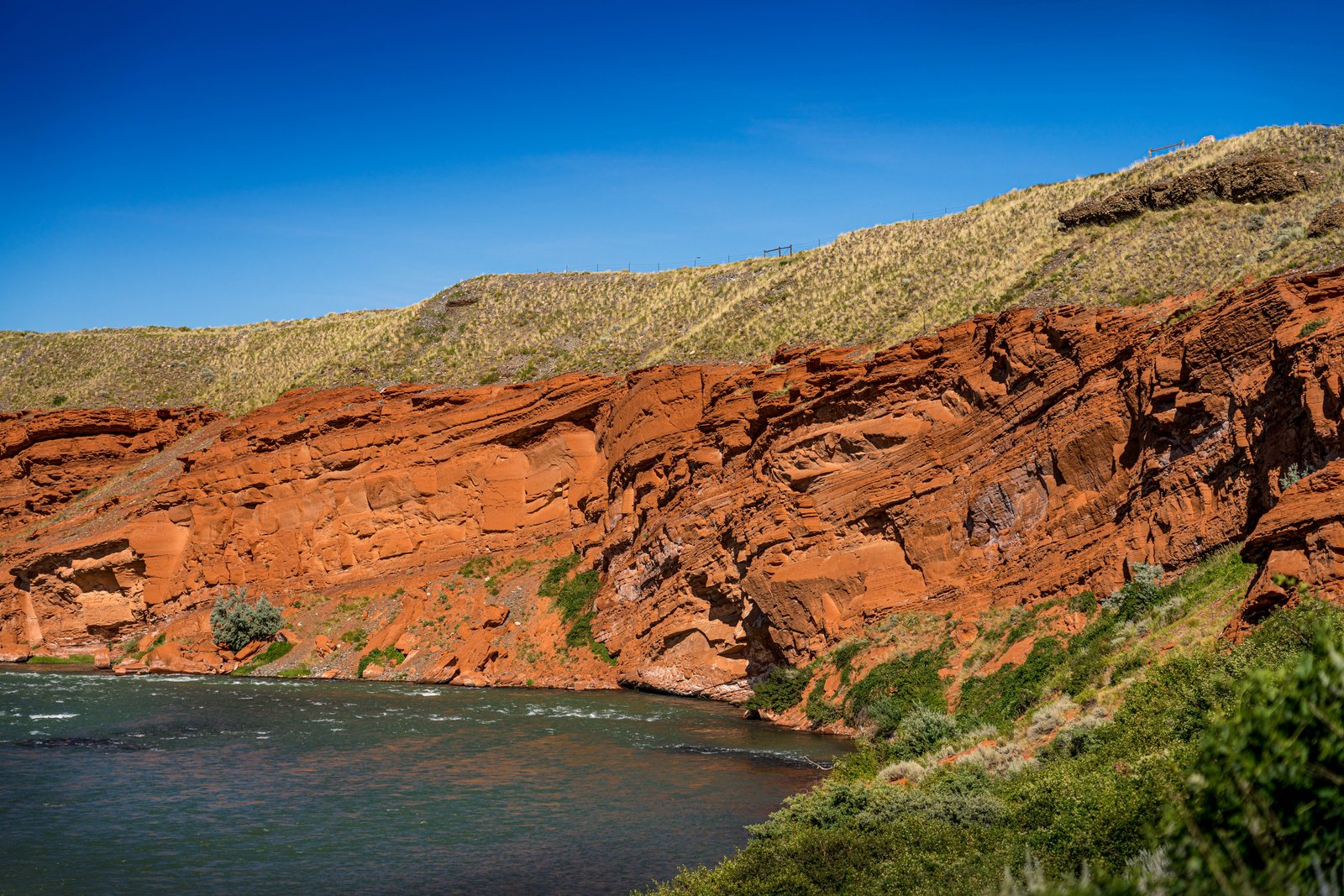
Shoshone Canyon River
This photograph captures the Shoshone River as it cuts through Shoshone Canyon near Cody, Wyoming, framed by the towering red sandstone cliffs of Rattlesnake and Cedar Mountains. The vantage point looks down along the water's edge, with sagebrush covered slopes rising above the layered red rock and grassy ridgelines meeting a clear blue sky. Key Features: The River Route: The Shoshone River runs from the Buffalo Bill Dam through an awesome canyon bordered by Cedar and Rattlesnake Mountains through Cody, Wyoming The Red Rock Canyon: This section of river winds through the Red Rock Canyon, a scenic stretch popular with rafters Gateway to Yellowstone: Shoshone Canyon is a popular route to the East Entrance of Yellowstone National Park Geologic Character: The towering cliffs of the canyon rise over the Shoshone River, providing an awe inspiring backdrop, formed over millions of years
Prints from $14Downloads from $19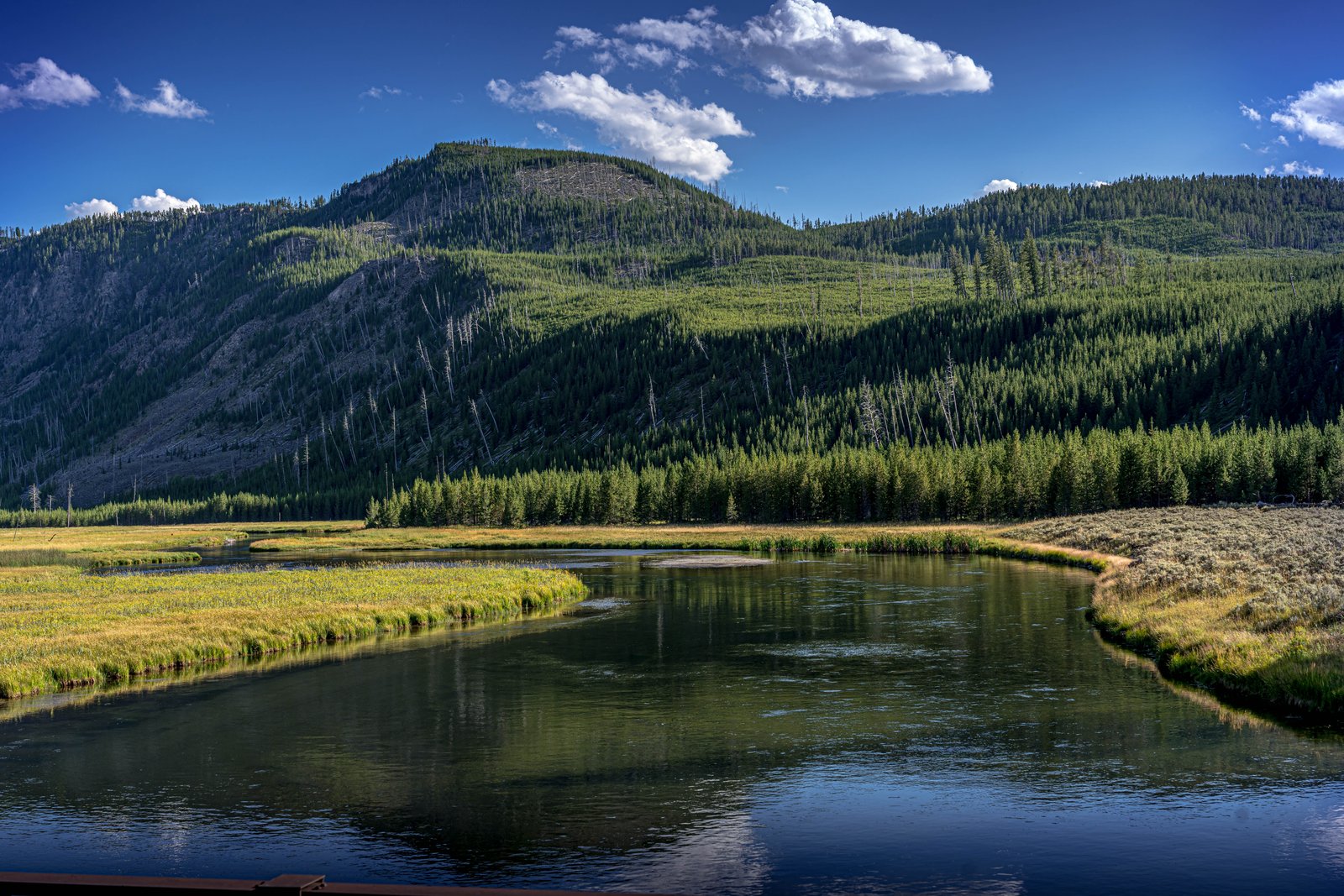
Yellowstone River Range
The image shows the Yellowstone River winding in broad, glassy loops through the open grasslands of Hayden Valley, inside Yellowstone National Park. The vantage point looks north across the marshy meadow toward a forested ridge and a bare, rounded summit, with standing dead snags among the live lodgepole pines marking the scars of past wildfires. Key Features: The Valley Floor: Hayden Valley sits between the north shore of Yellowstone Lake and the Grand Canyon of the Yellowstone, home to a meandering river bordered by grassy banks. Why It Stays Open: Because the glacial till in the valley contains many different grain sizes, including clay and a thin layer of lake sediments, water cannot percolate readily into the ground, keeping the area marshy with little tree growth. Elevation and Setting: At nearly 8,000 feet in elevation, Hayden Valley is a striking exception to the dense lodgepole pine forests that cover much of Yellowstone. Fire History: The scattered dead pine snags visible on the surrounding slopes are remnants of past forest fires that periodically sweep through Yellowstone's high country, part of a natural cycle shaping the landscape.
Prints from $14Downloads from $19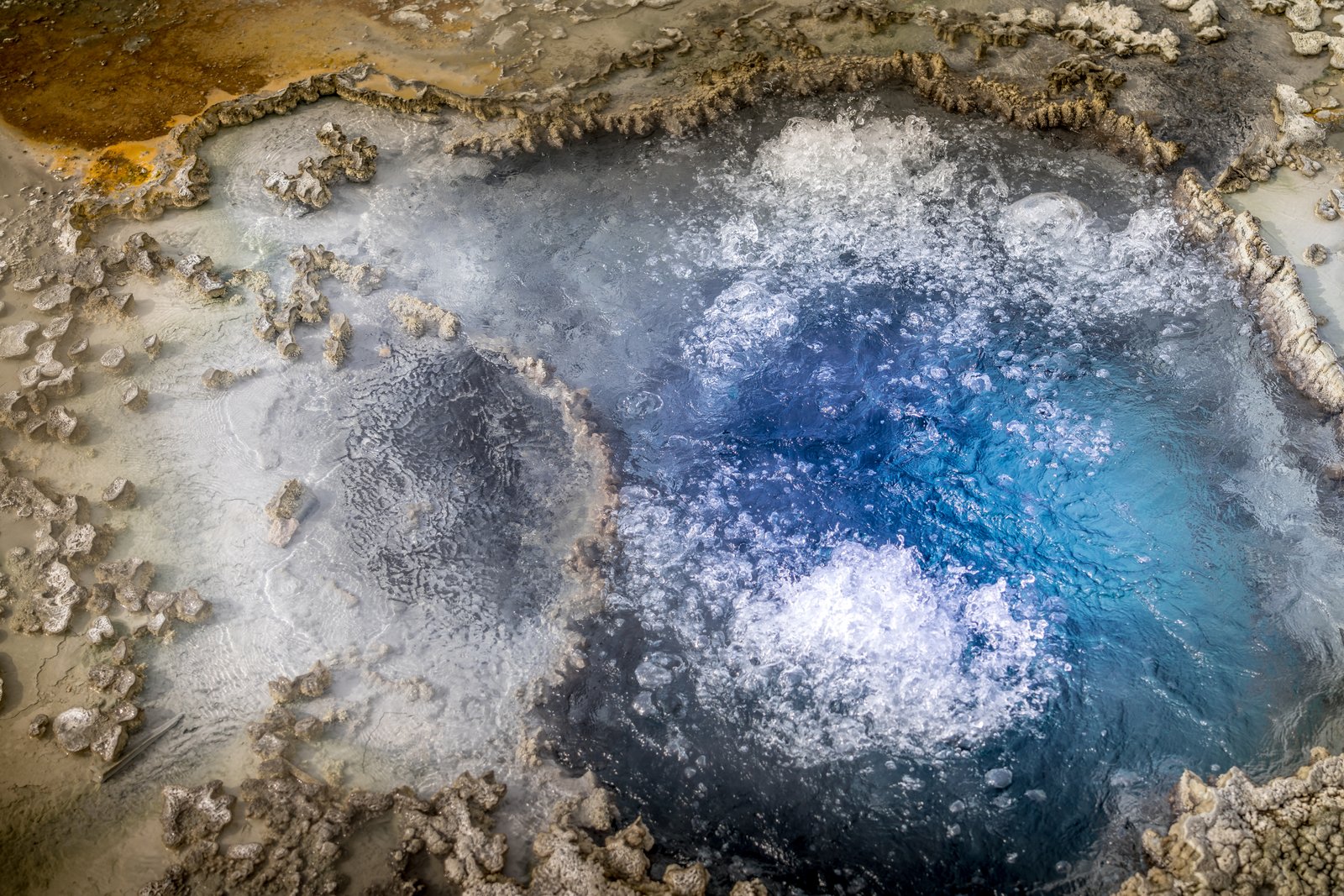
Blue Star Springs
Now I have enough information to write the story.This close up view looks straight down into Blue Star Spring, a hot spring pool on Geyser Hill in the Upper Geyser Basin of Yellowstone National Park, Wyoming. The frame captures the pool's deep indigo center where superheated water surges and bubbles, ringed by pale mineral sinter and rust colored bacterial mats. Key Features: Geyser Hill Location: The spring sits within the Upper Geyser Basin near Old Faithful, one of the densest concentrations of hydrothermal features on Earth. The Name: It is named for its distinctive star shaped vent and vivid blue color, caused by clear, mineral rich water scattering light. Rare Activity: Though usually a quiet pool, Blue Star has occasionally erupted as a geyser, with its last recorded eruption in 2002. Extreme Heat: The water averages nearly 191 degrees Fahrenheit, keeping it in constant, gentle motion.
Prints from $14Downloads from $19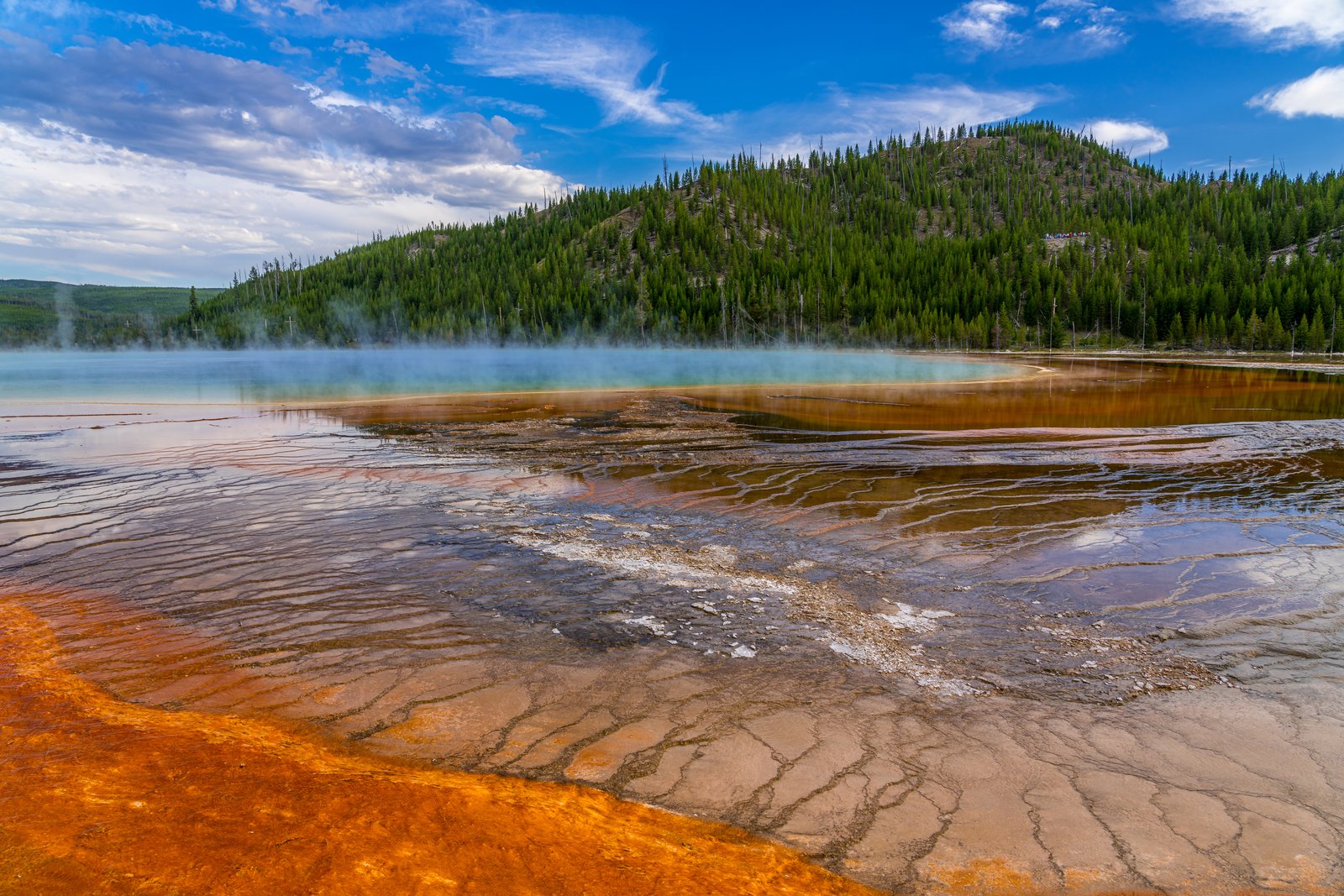
Grand Prismatic Spring
Grand Prismatic Spring lies in the Midway Geyser Basin of Yellowstone National Park, Wyoming, photographed from a boardwalk close to its steaming, mineral-crusted edge. The image shows the spring's deep turquoise heart fading into bands of amber and orange bacterial mats, with wisps of vapor drifting across the water and a forested ridge rising behind the basin. Key Features: The Spring's Size: Its size makes it the world's third-largest hot spring, with bands of orange, yellow, and green ringing the deep blue waters. The Colors: The vivid colors in the spring result from pigmented bacteria in microbial mats growing around the edges of the mineral-rich water, producing hues from green to red. The Setting: The spring sits within Yellowstone's Midway Geyser Basin, between the park's Lower and Upper Geyser Basins, surrounded by lodgepole pine forest. Historic Note: The area was explored by early expeditions in the 1870s that documented its thermal features for the newly designated national park.
Prints from $14Downloads from $19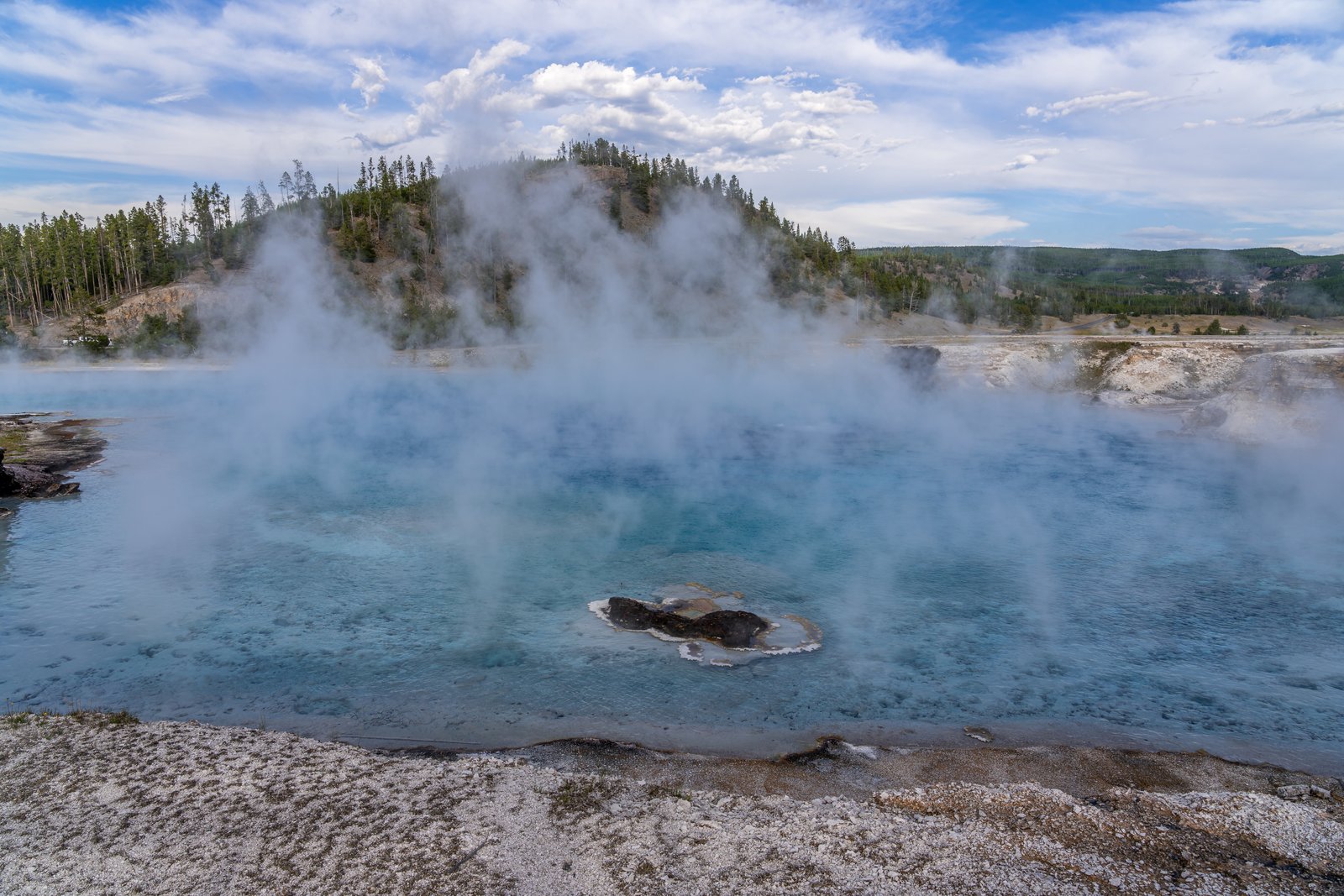
Excelsior Geyser Crater
This photograph shows Excelsior Geyser Crater in the Midway Geyser Basin of Yellowstone National Park, Wyoming, viewed from the boardwalk along its rim as steam billows off the turquoise pool and drifts across a pine covered ridge above the Firehole River valley. Key Features: The Crater: Excelsior Geyser Crater is a 200 x 300 foot crater that constantly discharges more than 4,000 gallons of water per minute into the Firehole River. Historic Eruptions: In the 1880s Excelsior Geyser erupted in bursts 50 to 300 feet high, and the thermal violence formed the jagged crater and apparently ruptured the geyser's underground system, causing eruptions to cease after 1890. Renewed Activity: Excelsior Geyser erupted on September 14, 1985, to the height of 55 feet and lasted 46 hours, with the last known eruption occurring in 1888. The Setting: The crater sits within Midway Geyser Basin, near Grand Prismatic Spring, along the road between Madison and Old Faithful in central Yellowstone.
Prints from $14Downloads from $19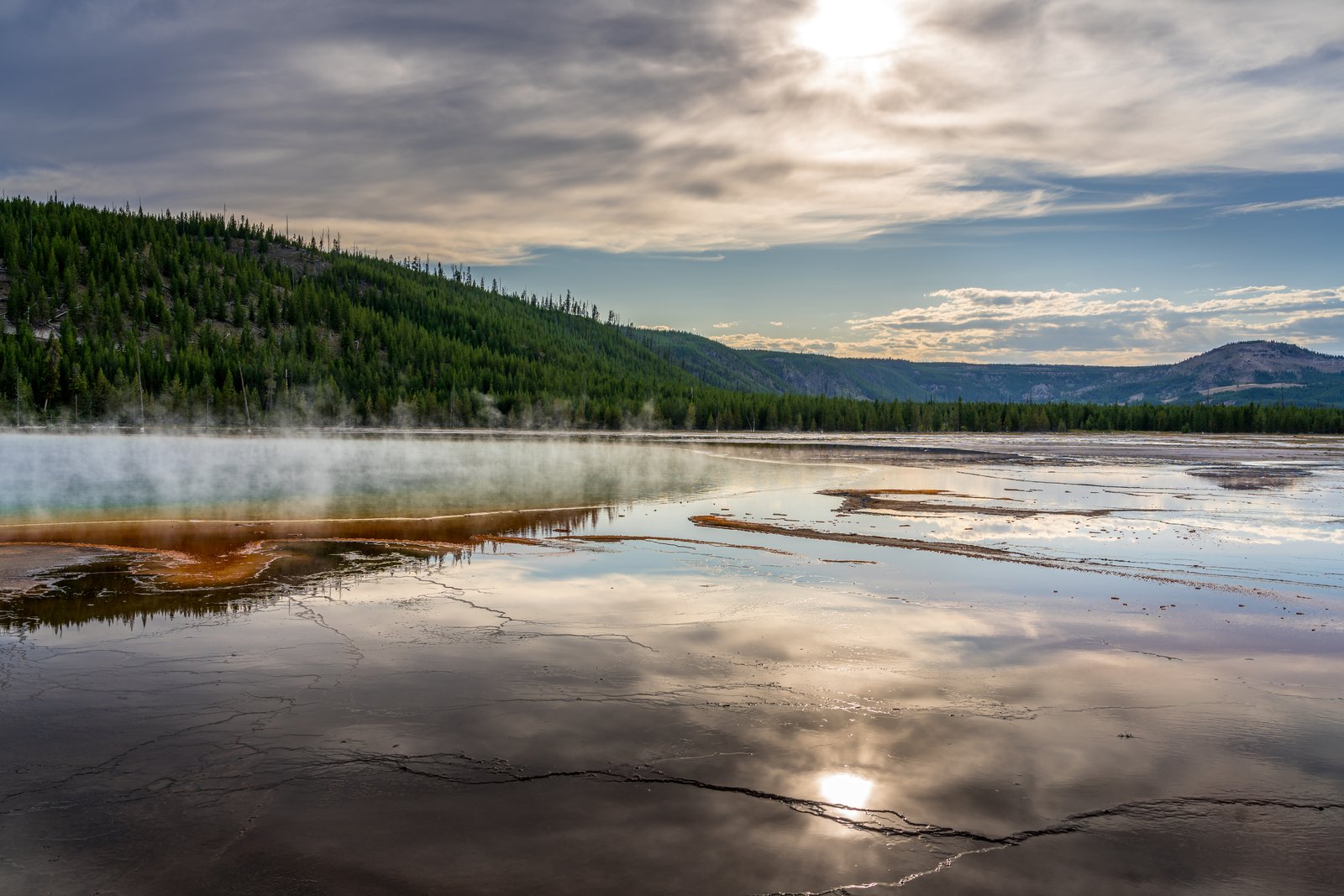
Grand Prismatic Spring
The photograph looks across the steaming edge of Grand Prismatic Spring in Yellowstone National Park's Midway Geyser Basin in Wyoming, taken from a low, ground level vantage point along the spring's rim rather than the elevated overlook trail. Rising steam drifts over the mineral colored runoff channels while forested hills and distant mountains frame the basin under a soft, cloud filtered sun reflected in the still water. Key Features: The Spring: Grand Prismatic is the largest hot spring in Yellowstone and the third largest in the world. The Colors: This spring is remarkable for two reasons: its size, the world's third-largest, and its colors, bands of orange, yellow, and green ring the deep blue waters. The Setting: The spring is located in Midway Geyser Basin, Yellowstone National Park, Teton County, Wyoming. The Scale: The 160 ft deep Grand Prismatic is the largest hot spring in the United States.
Prints from $14Downloads from $19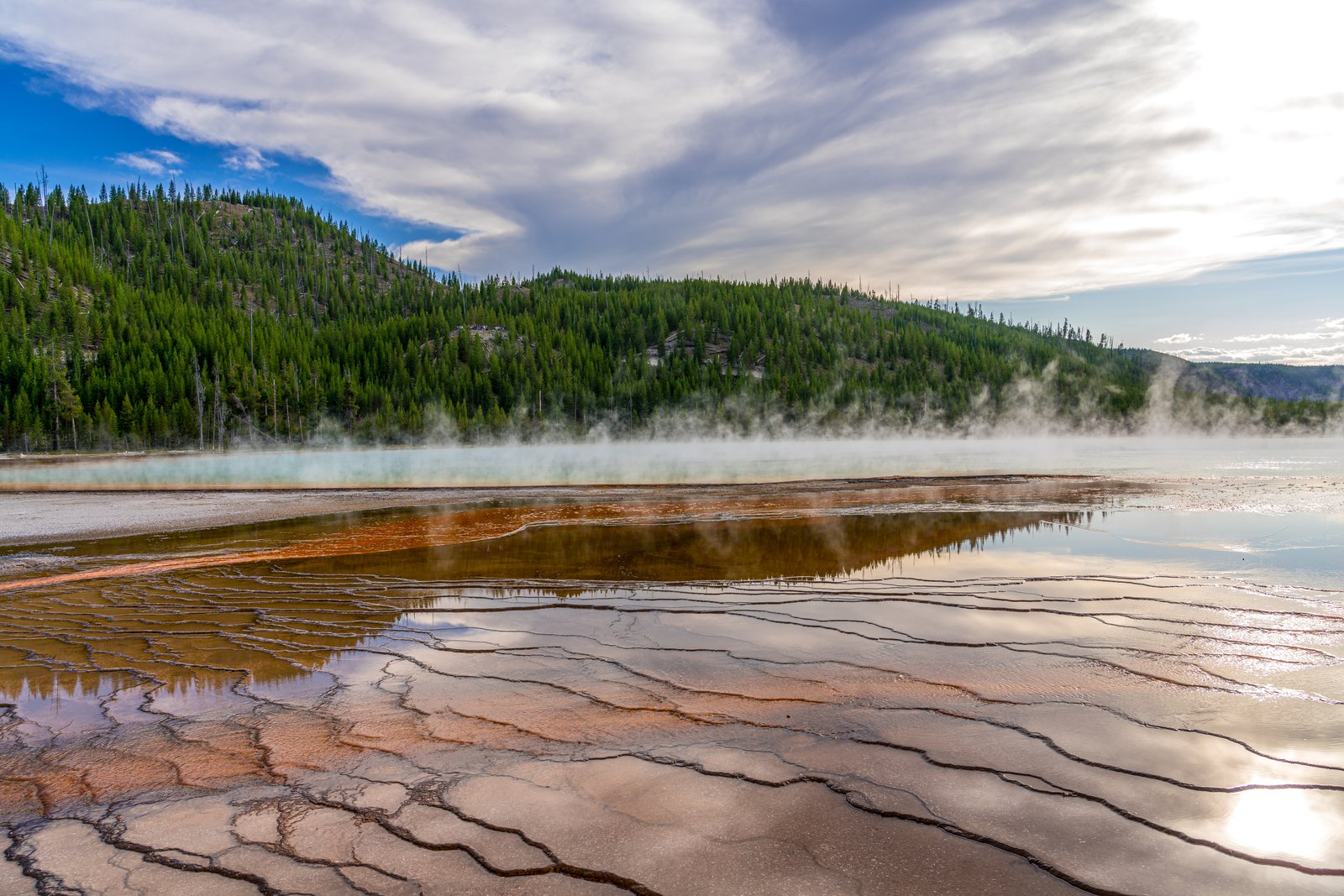
Grand Prismatic Spring
Grand Prismatic Spring sits in Yellowstone National Park's Midway Geyser Basin, in Wyoming. The photograph looks across the spring's terraced, mineral-crusted edge from ground level, with steam drifting off the vivid orange and blue water toward a forested ridge under a wide, streaked sky. Key Features: The Spring Itself: It is the largest hot spring in the United States, with a diameter of 370 feet, and the water surges up from a crack deep within the Earth's surface. Global Ranking: Grand Prismatic is the third-largest hot spring in the world. The Colors: The spring is remarkable for its size and for its colors, with bands of orange, yellow, and green ringing the deep blue waters. The Setting: The spring is located in the Midway Geyser Basin and has the distinction of being the park's largest hot spring.
Prints from $14Downloads from $19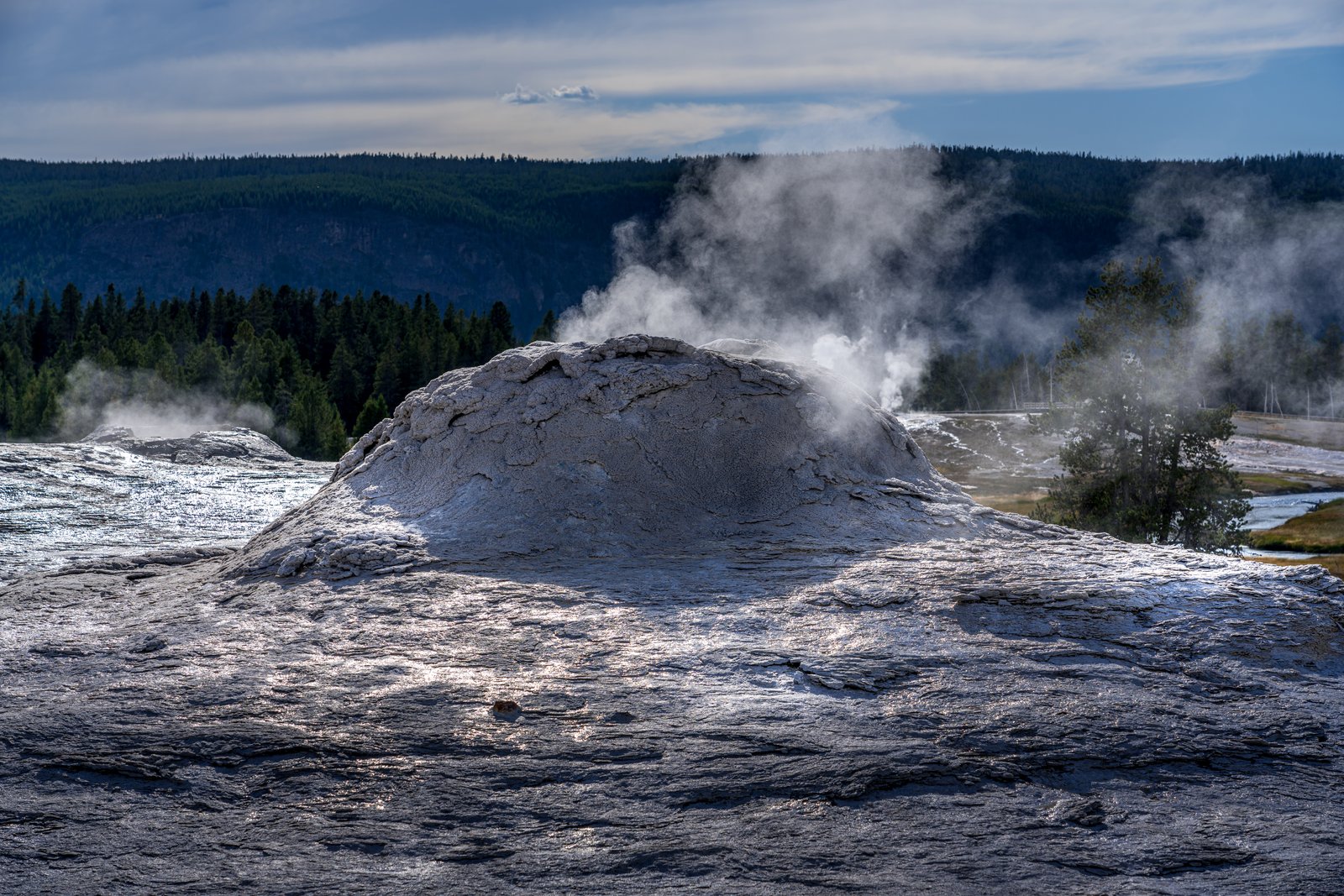
Lion Geyser in the Upper Geyser Basin of Yellowstone
The photograph captures Lion Geyser in the Upper Geyser Basin of Yellowstone National Park, Wyoming, viewed from close range beside its weathered sinter cone as steam vents skyward. Sunlight rakes across the mineral-crusted mound while forested hills and the wider geyser basin stretch out behind, with wisps of steam rising from neighboring thermal features in the distance. Key Features: The Lion Group: Lion Geyser is the largest of a group of four adjacent, interconnected geysers, a cluster nicknamed for the roaring sound its eruptions produce. Eruption Behavior: Eruptions of Lion Geyser are accompanied by a loud roaring sound, hence its name, and the geyser sends water up to 100 feet high during active periods. The Setting: The geyser sits within the Upper Geyser Basin, the densest concentration of geysers on Earth, surrounded by lodgepole pine forest and the Firehole River valley. Geologic Feature: Its pale, ridged cone is built up over centuries from silica-rich mineral deposits left by escaping steam and hot water.
Prints from $14Downloads from $19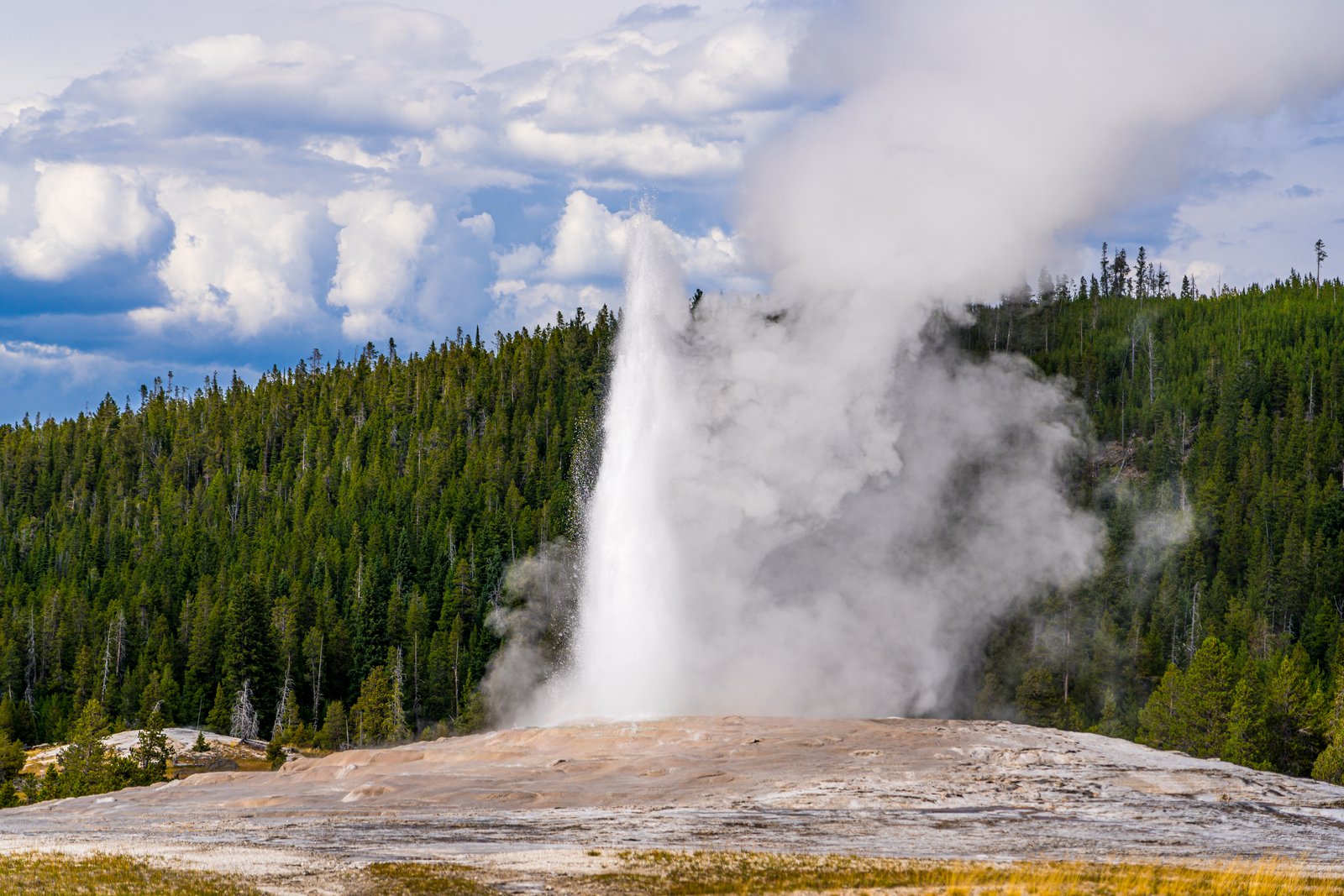
Old Faithful
Old Faithful erupts in the Upper Geyser Basin of Yellowstone National Park, Wyoming, framed here against the surrounding lodgepole pine forest with a plume of steam rising into a partly cloudy sky. The view shows the geyser's sinter cone in the foreground as a column of scalding water shoots skyward, a sight repeated on a near predictable schedule for well over a century. Key Features: The Naming: Named by Henry D. Washburn on September 18, 1870, the geyser owes its title to its unusually regular timing among Yellowstone's thermal features. The Eruptions: Eruption height ranges from 106 to 185 feet, occurring every 44 to 120 minutes and lasting one and a half to five minutes. The Setting: It sits in the Upper Geyser Basin of Yellowstone National Park in Teton County, Wyoming, at an elevation of 7,349 feet. The Legacy: Discovered in 1870 by the Washburn Expedition, it has erupted more than a million times since Yellowstone became the world's first national park in 1872.
Prints from $14Downloads from $19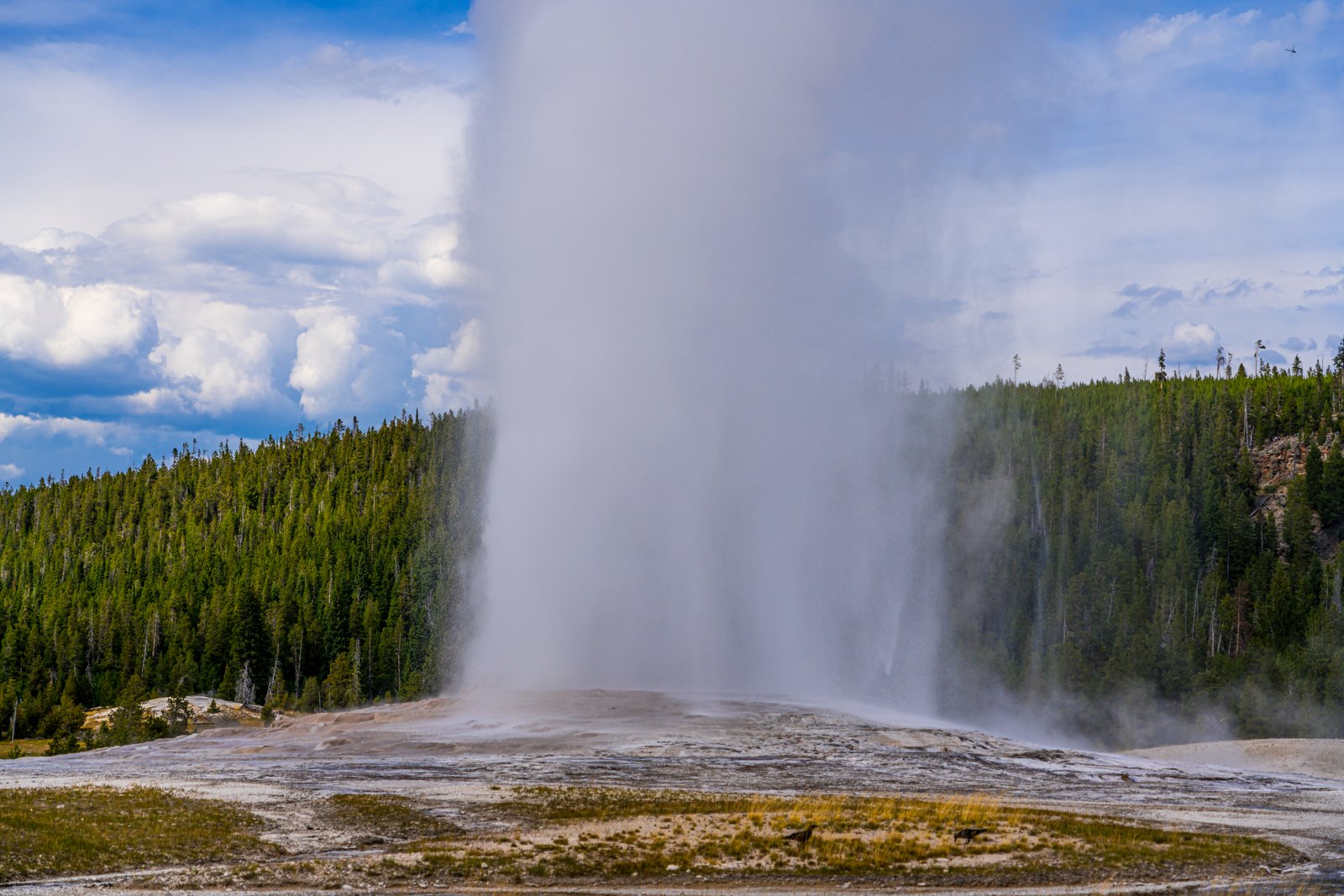
Old Faithful
This photograph was taken in Yellowstone National Park, Wyoming, in the Upper Geyser Basin, showing Old Faithful geyser mid-eruption from a close ground level vantage point. A tall plume of steam and boiling water rises from the geyser's cone, surrounded by mineral terraces and a backdrop of dense lodgepole pine forest under a partly cloudy sky. Key Features: The Eruption: Eruptions can shoot 3,700 to 8,400 U.S. gallons of boiling water to a height of 106 to 184 feet, lasting from 1.5 to 5 minutes. The Naming: Old Faithful was named by Henry D. Washburn on September 18, 1870. The Setting: The geyser sits in the Upper Geyser Basin of Yellowstone, ringed by conifer forest and pale mineral deposits built up from centuries of eruptions. The Notability: Its unusually predictable, frequent eruptions have made it the park's most famous natural landmark and a symbol of Yellowstone itself.
Prints from $14Downloads from $19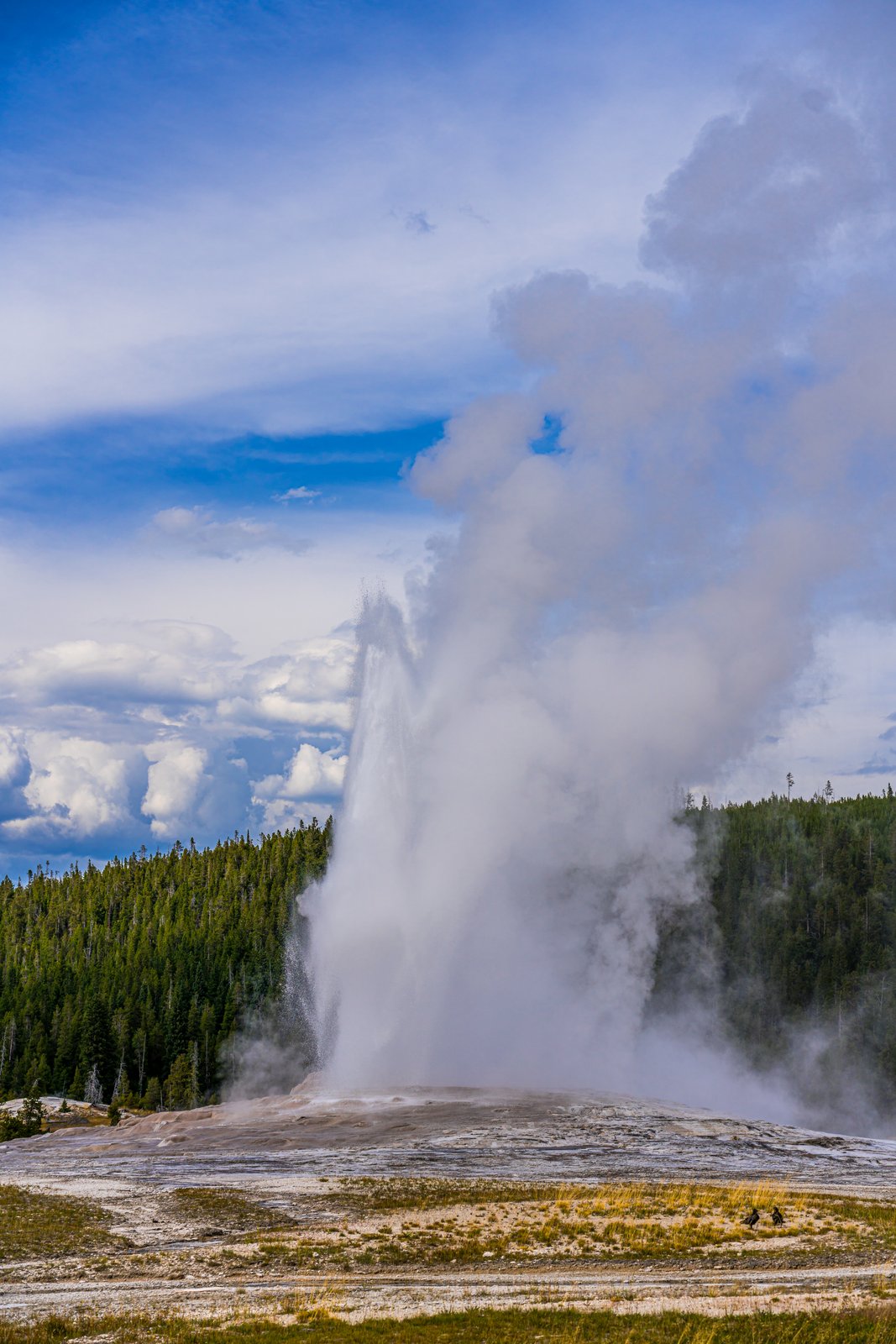
Old Faithful
Old Faithful erupts in the Upper Geyser Basin of Yellowstone National Park, Wyoming, photographed from a close ground level vantage point along the basin boardwalk. The frame captures the geyser's cone at the base, its tall plume of steam and spray rising against a mix of blue sky and clouds, with a backdrop of lodgepole pine forest and a few small figures near the base for scale. Key Features: The Name: Old Faithful was named in 1870 and was the first geyser in the park to get a name. The Eruptions: Eruptions can shoot 3,700 to 8,400 U.S. gallons of boiling water to a height of 106 to 184 feet lasting from 1.5 to 5 minutes. The Setting: The geyser sits in the Upper Geyser Basin, the park's most concentrated collection of hydrothermal features, surrounded by subalpine forest at over seven thousand feet elevation. The Draw: Its remarkably predictable, frequent bursts have made it one of the most visited natural landmarks in the United States.
Prints from $14Downloads from $19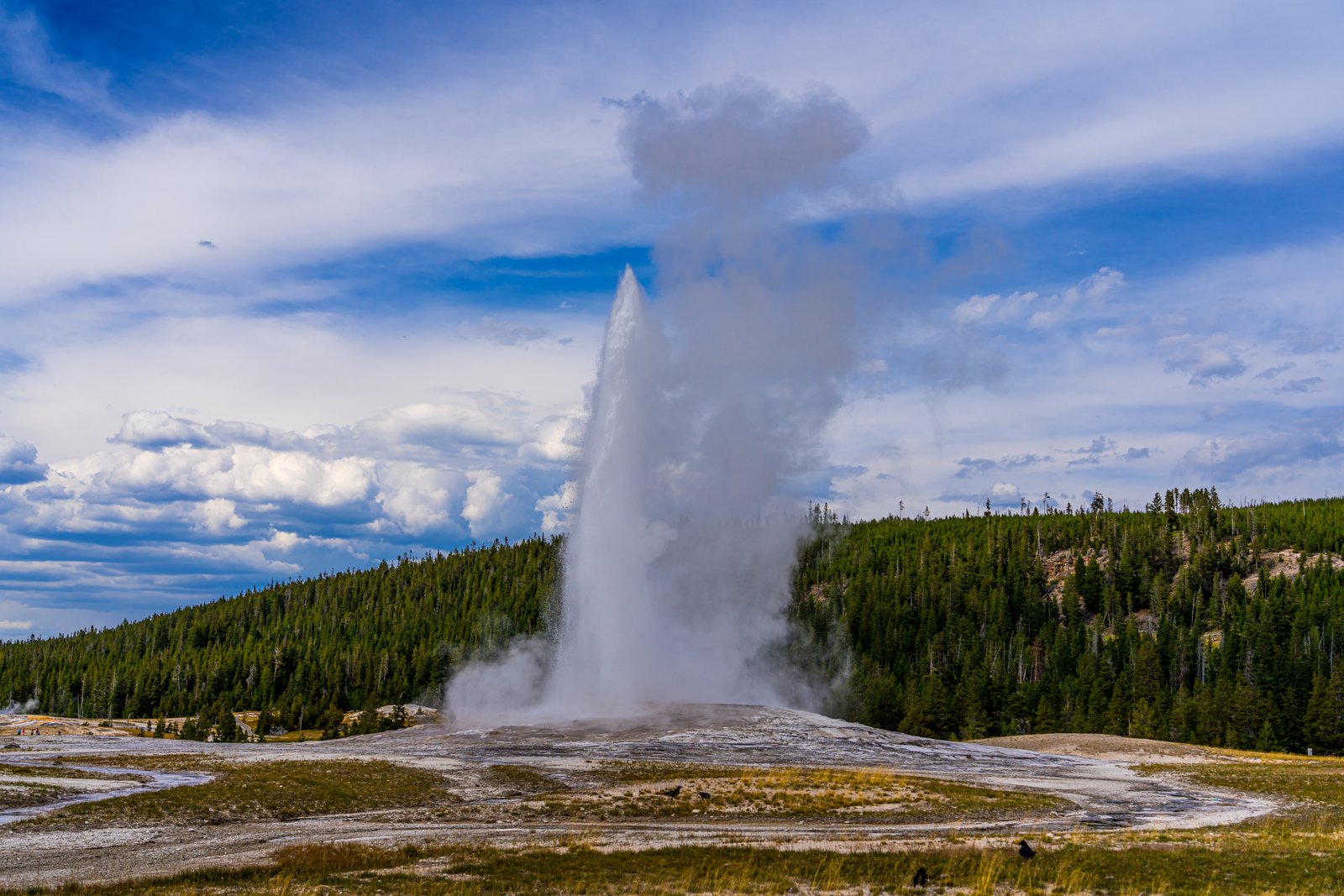
Old Faithful
Prints from $14Downloads from $19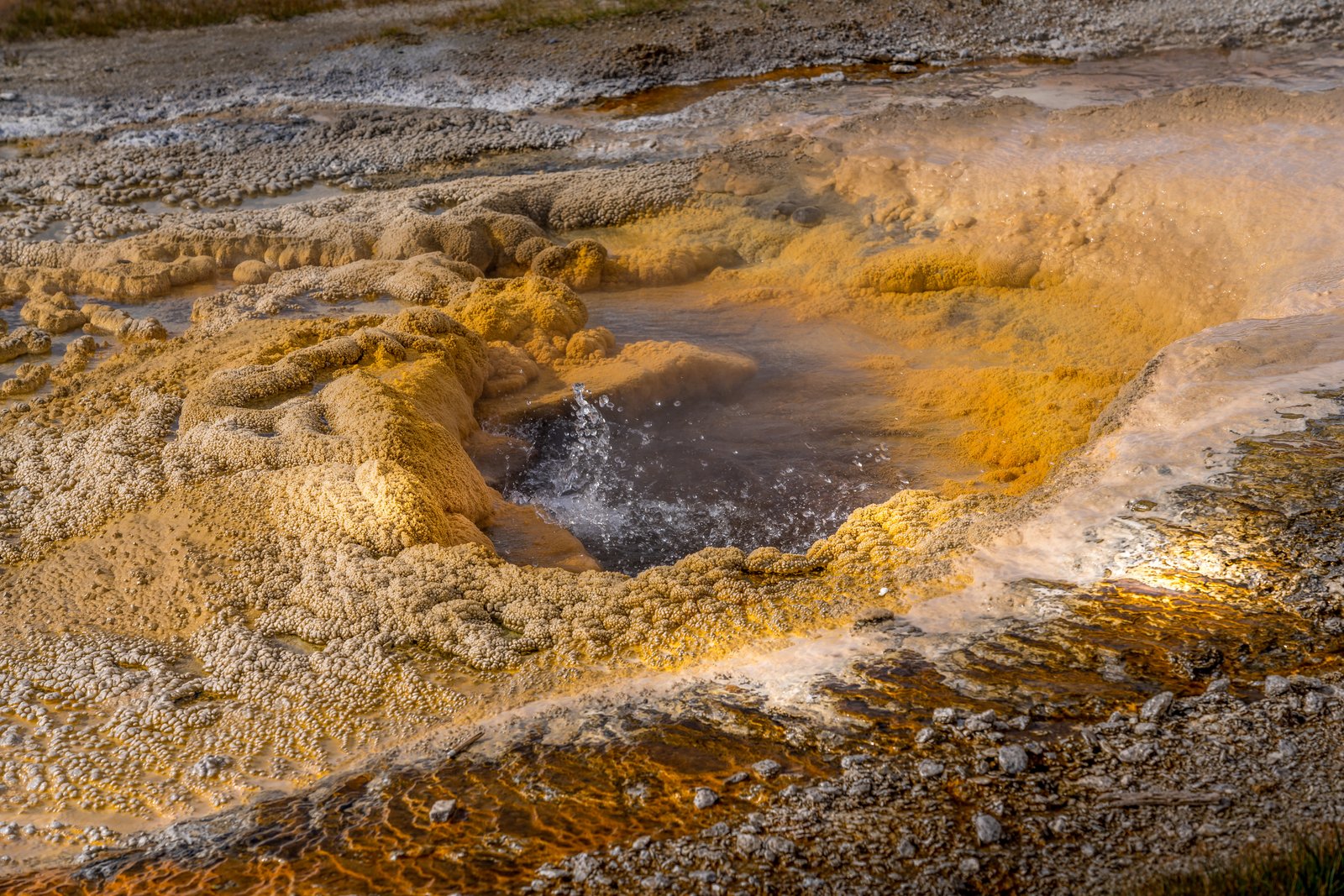
Pump Geyser
Pump Geyser sits on Geyser Hill in Yellowstone National Park's Upper Geyser Basin, just across the Firehole River from Old Faithful. The photograph looks straight down into the geyser's small, near constantly bubbling vent, framed by thick orange and buff colored sinter mounds built up by mineral-laden runoff and thermophilic bacteria. Key Features: The Name: Pump Geyser was named by Frank Jay Haynes, official park photographer from 1883 to 1916. The Activity: This cone type geyser is nearly constantly active, with small eruptions reaching two to fifteen feet from water around 86 degrees Celsius. The Setting: Like most springs on Geyser Hill, Pump Geyser is filled by boiling alkaline water, and is one of the most active features in the area. The Colors: The vivid orange and tan crusts around the pool are microbial mats and sinter deposits typical of Geyser Hill's hydrothermal features.
Prints from $14Downloads from $19