

Collection
USA
By · 138 photos
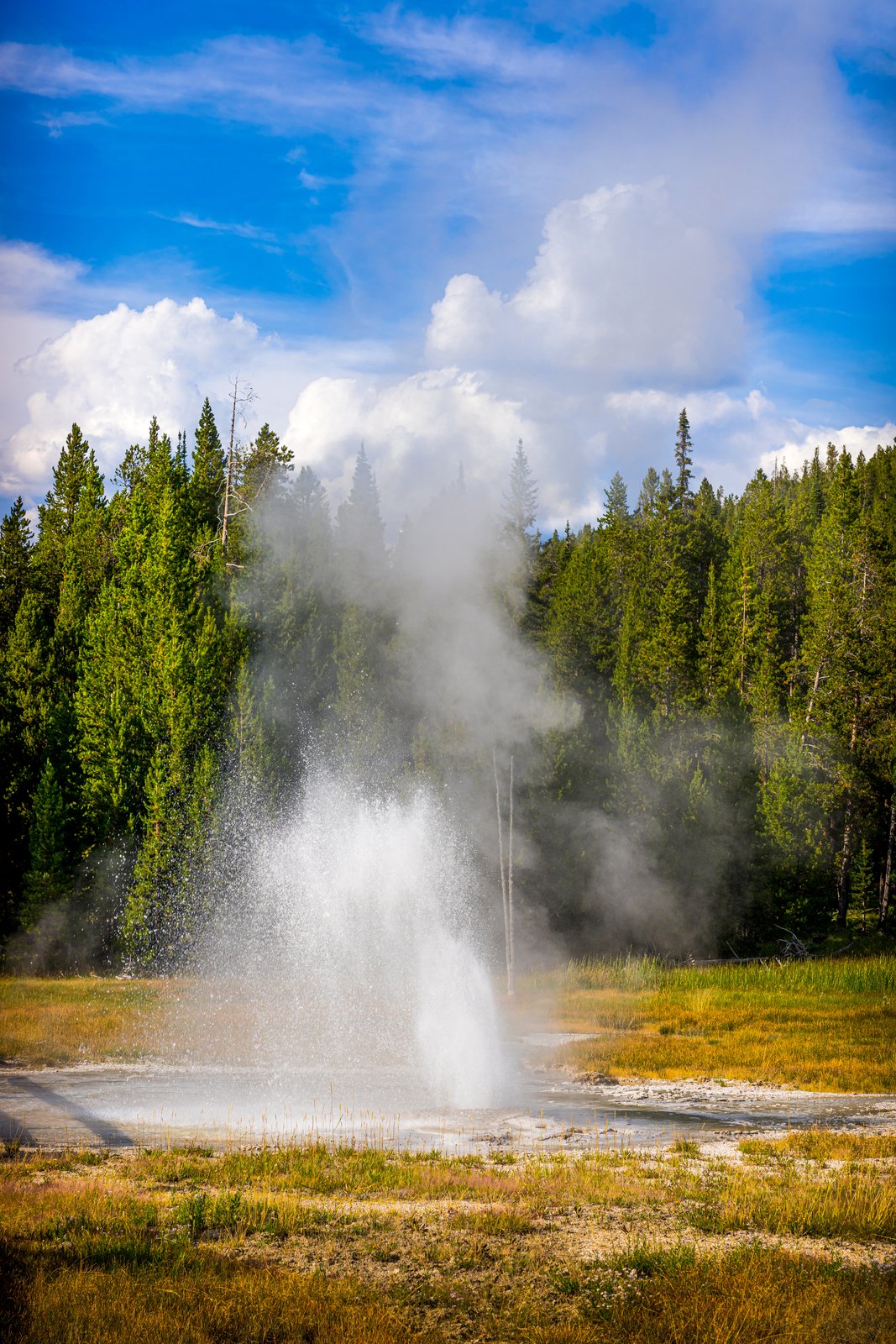
Yellowstone Aurum Geyser
Aurum Geyser bursts to life in the Upper Geyser Basin of Yellowstone National Park, Wyoming, its plume rising against a backdrop of lodgepole pine forest and a wide summer sky. The photograph captures the geyser at the height of an eruption, with a dense column of steam drifting above the spray while golden mineral deposits ring the vent below. Key Features: The Name: Aurum Geyser is named for the golden staining from iron oxide around its vent and adjacent pour over pool. The Eruptions: The geyser reaches eruption heights of 15 to 25 feet and erupts every three to seven hours, with each eruption lasting about 90 seconds. The Setting: The geyser sits within the Upper Geyser Basin, the densest concentration of geysers on Earth, alongside features such as Old Faithful and Beehive Geyser. The Water: Its underground water reaches temperatures near 197 degrees Fahrenheit before venting explosively at the surface.
Prints from $14Downloads from $19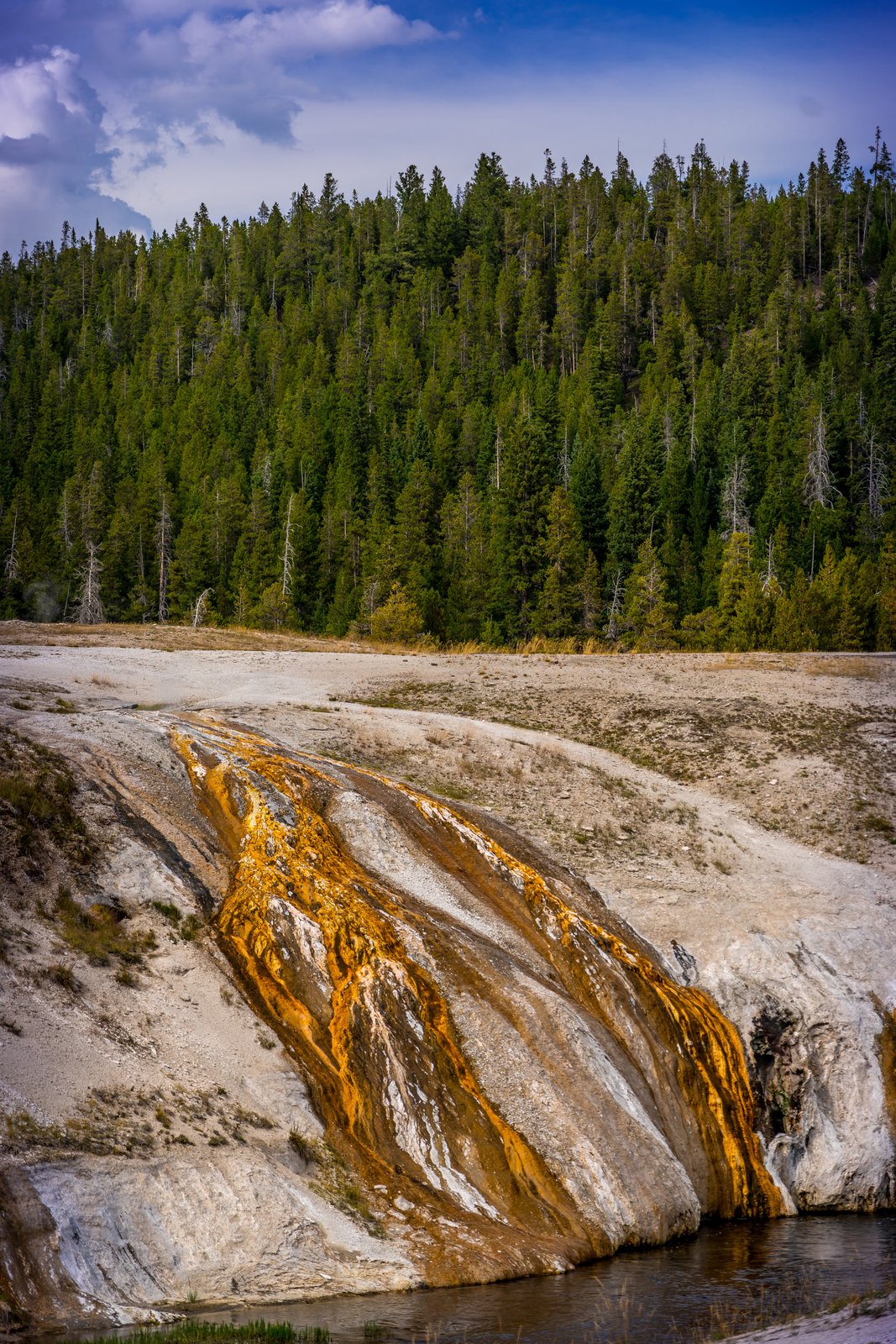
Yellowstone
This matches the classic scene of Excelsior Geyser Crater's runoff channels flowing into the Firehole River in Yellowstone's Midway Geyser Basin.This scene shows the Midway Geyser Basin in Yellowstone National Park, where the mineral-laden runoff from Excelsior Geyser Crater cascades down a wide sinter terrace into the Firehole River. The vantage point looks across the discharge channel from the boardwalk area toward a forested ridge of lodgepole pine, with the bright orange and rust colored bands marking bacterial mats along the hot water's path. Key Features: The Runoff Channel: The vivid orange and yellow streaks are colonies of heat loving microorganisms that thrive in the mineral rich water as it cools on its way to the river.This scene captures the Midway Geyser Basin in Yellowstone National Park, where mineral laden runoff from Excelsior Geyser Crater spills down a broad sinter terrace into the Firehole River. The view looks from the basin's boardwalk across the bright orange and white discharge channel toward a dense ridge of lodgepole pine under a partly clouded sky. Key Features: The Runoff Channel: The vivid orange and rust colored bands are colonies of heat loving thermophilic bacteria and archaea thriving in the mineral rich outflow as it cools on its way to the river. Excelsior Geyser: Once considered the largest geyser in the world, Excelsior erupted in bursts up to 300 feet high in the 1880s before its violent activity fractured its plumbing and eruptions ceased. The Firehole River: The river takes on steam from the surrounding thermal features, giving it the smoking appearance that inspired its name among early trappers. The Setting: Located near Grand Prismatic Spring, the basin sits within Yellowstone's active hydrothermal landscape, framed by forested hills typical of the park's high plateau.
Prints from $14Downloads from $19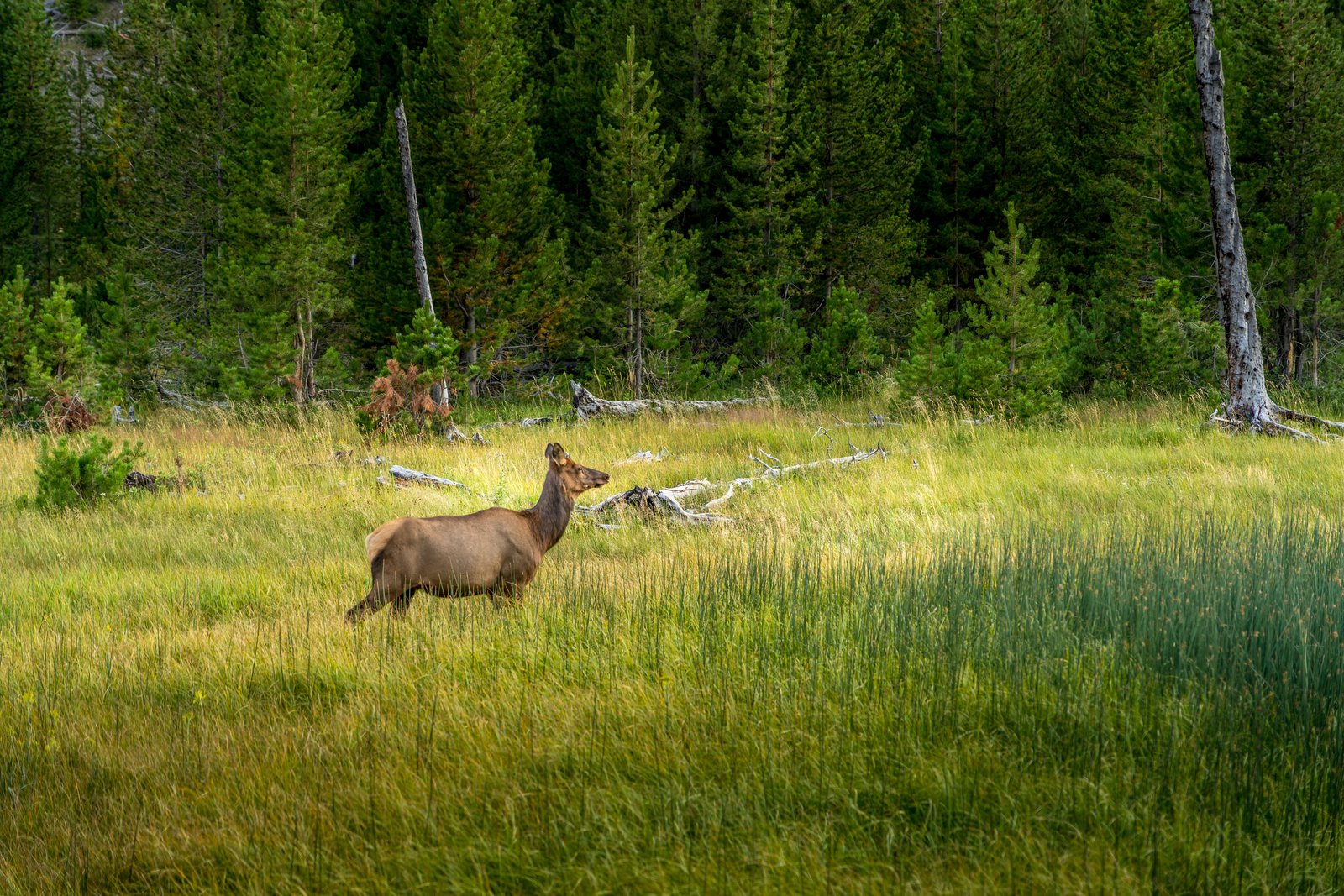
Yellowstone Elk
This photograph was taken in Yellowstone National Park, where a cow elk stands in a sunlit subalpine meadow at the edge of a dense lodgepole pine forest. The animal pauses mid-stride, alert and looking off to one side, framed by tall grasses in the foreground and weathered, fallen deadwood scattered along the tree line behind her. Key Features: Elk in Yellowstone: The park's elk herds spend the warmer months in grasslands, sagebrush steppe, and lodgepole pine forests near rivers and their tributaries, moving between open meadows and timbered cover through the seasons. Preferred Habitat: Elk favor highly productive meadow bottoms for grazing, which explains the animal's presence in this open, grassy clearing rather than deeper in the surrounding pines. Fire Legacy Landscape: Summering elk in northwestern Yellowstone do not avoid areas with dense coarse woody debris in young lodgepole pine forests even years after major fires, a pattern reflected in the downed timber visible at the meadow's edge. Iconic Wildlife Viewing: Yellowstone remains one of the premier places in North America to observe wild elk moving freely between forest and open range.
Prints from $14Downloads from $19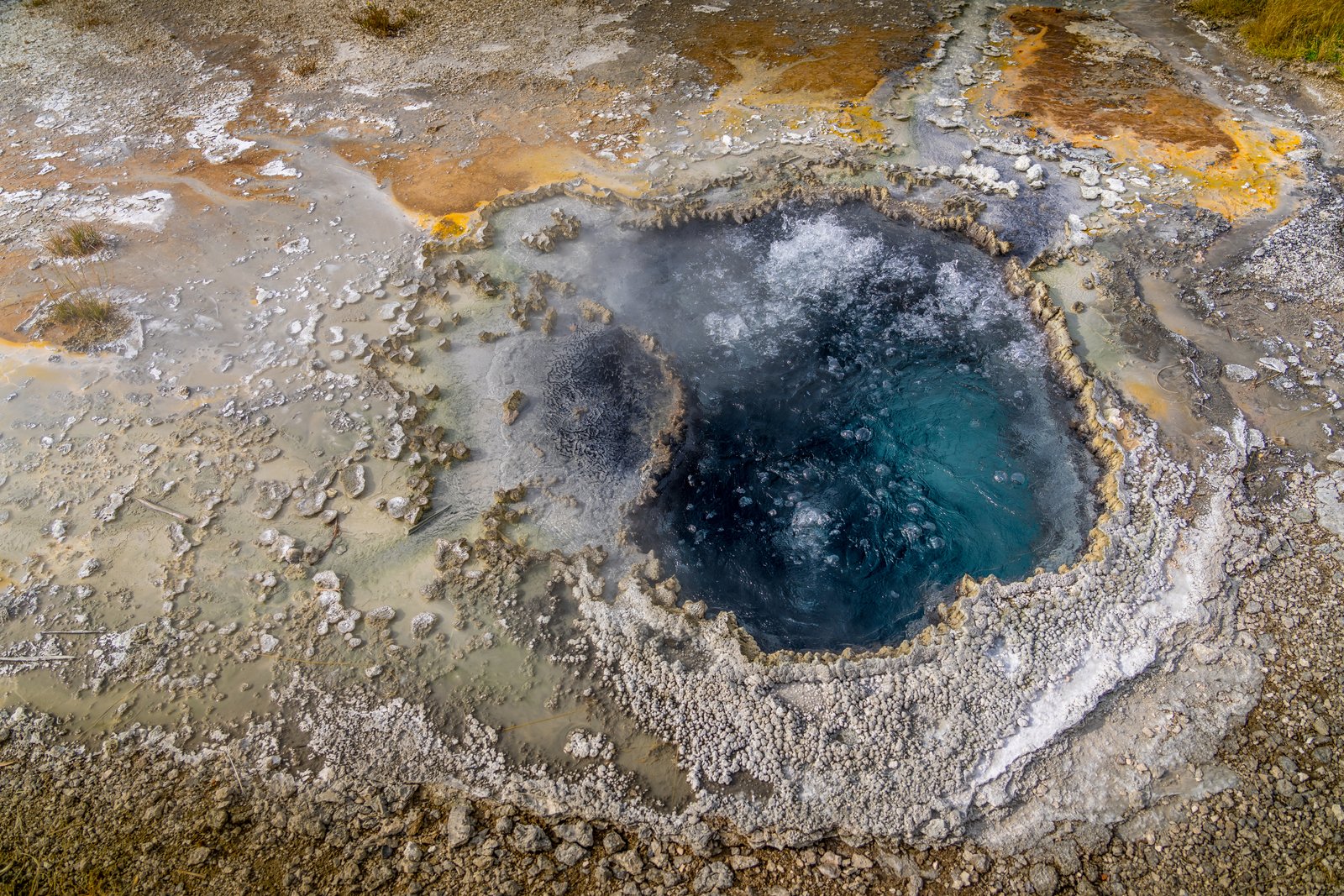
Yellowstone Geyser
This photograph captures a close, downward-looking view into an active geyser vent within one of Yellowstone National Park's thermal basins. The deep, nearly black throat of the vent gives way to brilliant turquoise water where superheated fluid churns and breaks the surface in white bubbles, all encircled by a knobby white sinter rim and pale mineral flats streaked with rust and gold microbial mats. Key Features: The Vent Itself: The dark center marks where near boiling water rises from deep underground plumbing before spilling across the surrounding sinter terrace. Sinter Formations: Geyserite precipitates from near-boiling fluids along the bottoms and edges of hot springs and geysers, with spicular formations building up where splashing water meets the inner rim. Color From Microbes: The vivid hues surrounding thermal pools come from thermophilic, heat-seeking bacteria that thrive in these extreme mineral-rich waters. The Wider Basin: Yellowstone's geyser basins sit atop a volcanic hot spot, where underground heat drives constant boiling, bubbling, and mineral deposition across the landscape.
Prints from $14Downloads from $19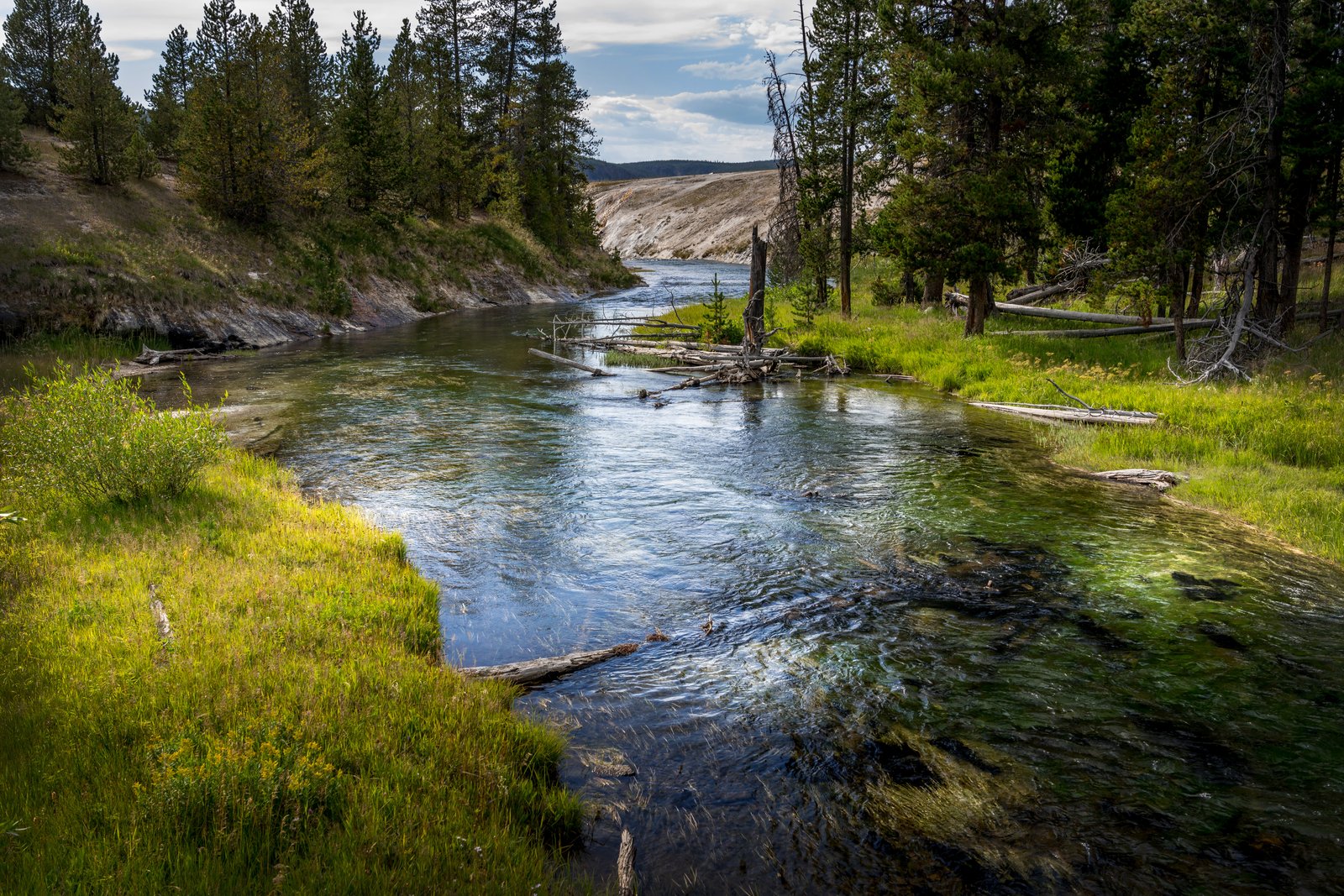
Yellowstone River
The Yellowstone River winds through a quiet stretch of forest inside Yellowstone National Park, framed by dense lodgepole pines on both banks. The vantage point is low, at the water's edge, looking downstream toward a pale, sparsely vegetated hillside that rises beyond a bend, where sun and shadow play across the current and a tangle of driftwood rests in the shallows. Key Features: The River: The Yellowstone River is the park's principal waterway, carrying snowmelt and spring-fed flow through forest and meadow on its route toward the Grand Canyon of the Yellowstone. The Setting: Lodgepole pine, the dominant tree of Yellowstone's high plateau, lines the banks, its shallow roots often leaving fallen trunks in and around the water. The Bare Hillside: The pale, thinly grassed slope in the distance reflects the park's rhyolitic volcanic soils, which resist tree growth and produce the open, eroded hills common along Yellowstone's river corridors. The Character: Calm, clear water and undisturbed woodland typify the park's backcountry drainages, far removed from its famous geyser basins.
Prints from $14Downloads from $19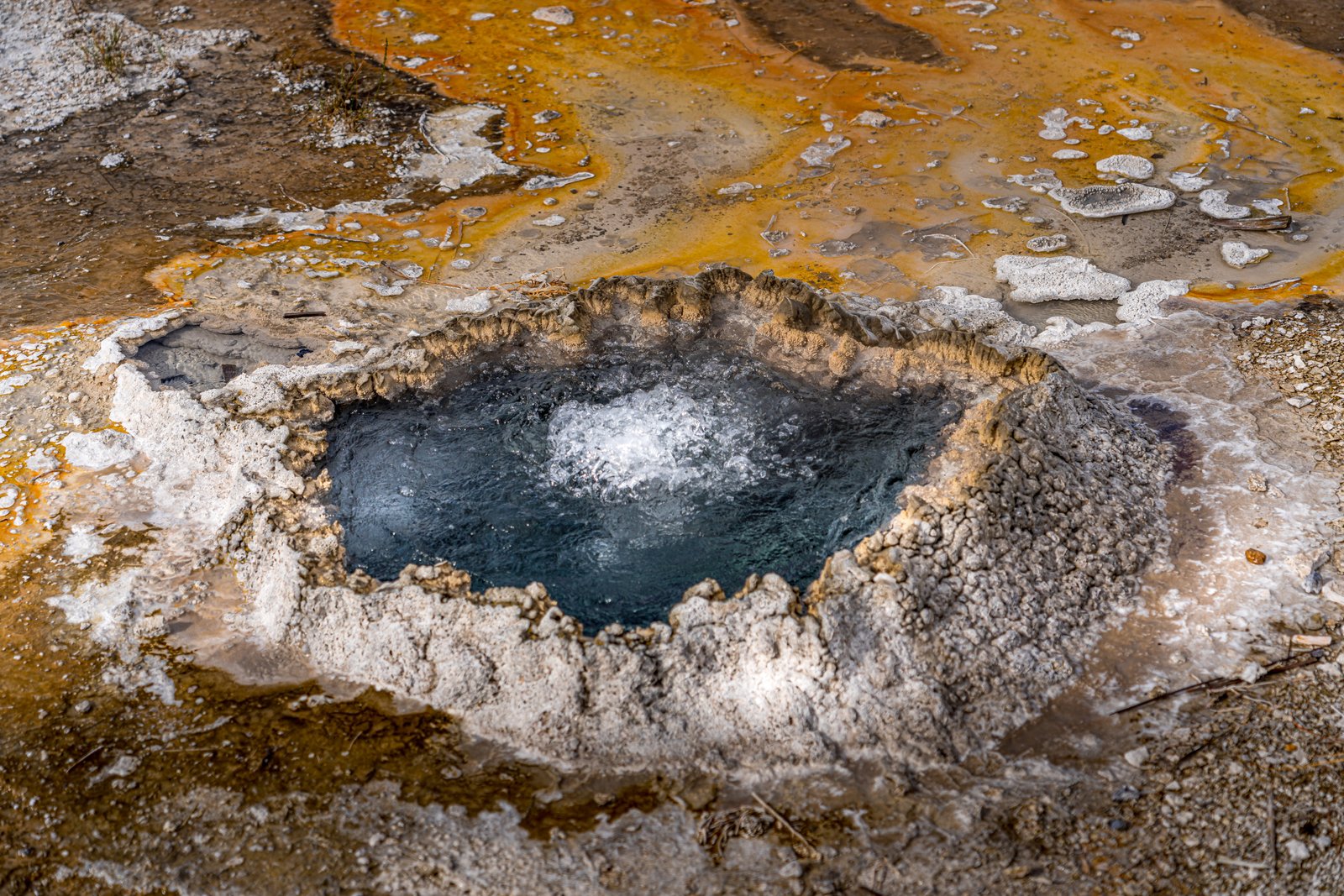
Yellowstone Geyser
Deep in Yellowstone National Park, this close up view looks straight down into a small hot spring vent bubbling within one of the park's geyser basins. A rim of gray and cream colored geyserite, or sinter, encircles clear blue water pushed upward by escaping steam, while bright orange and rust colored microbial mats spread across the surrounding ground. Key Features: The Mineral Rim: Silica dissolved from underground rock precipitates out as the vent cools, building the crusty white sinter lip visible around the pool. The Color Palette: Thermophilic bacteria and algae, adapted to scalding runoff channels, create the orange, yellow, and rust bands radiating from the vent. The Setting: Yellowstone sits atop one of the world's largest volcanic calderas, feeding thousands of hot springs, geysers, and fumaroles across its basins. The Activity: The visible turbulence marks a boiling or near boiling source, where heated groundwater constantly circulates and vents through the opening.
Prints from $14Downloads from $19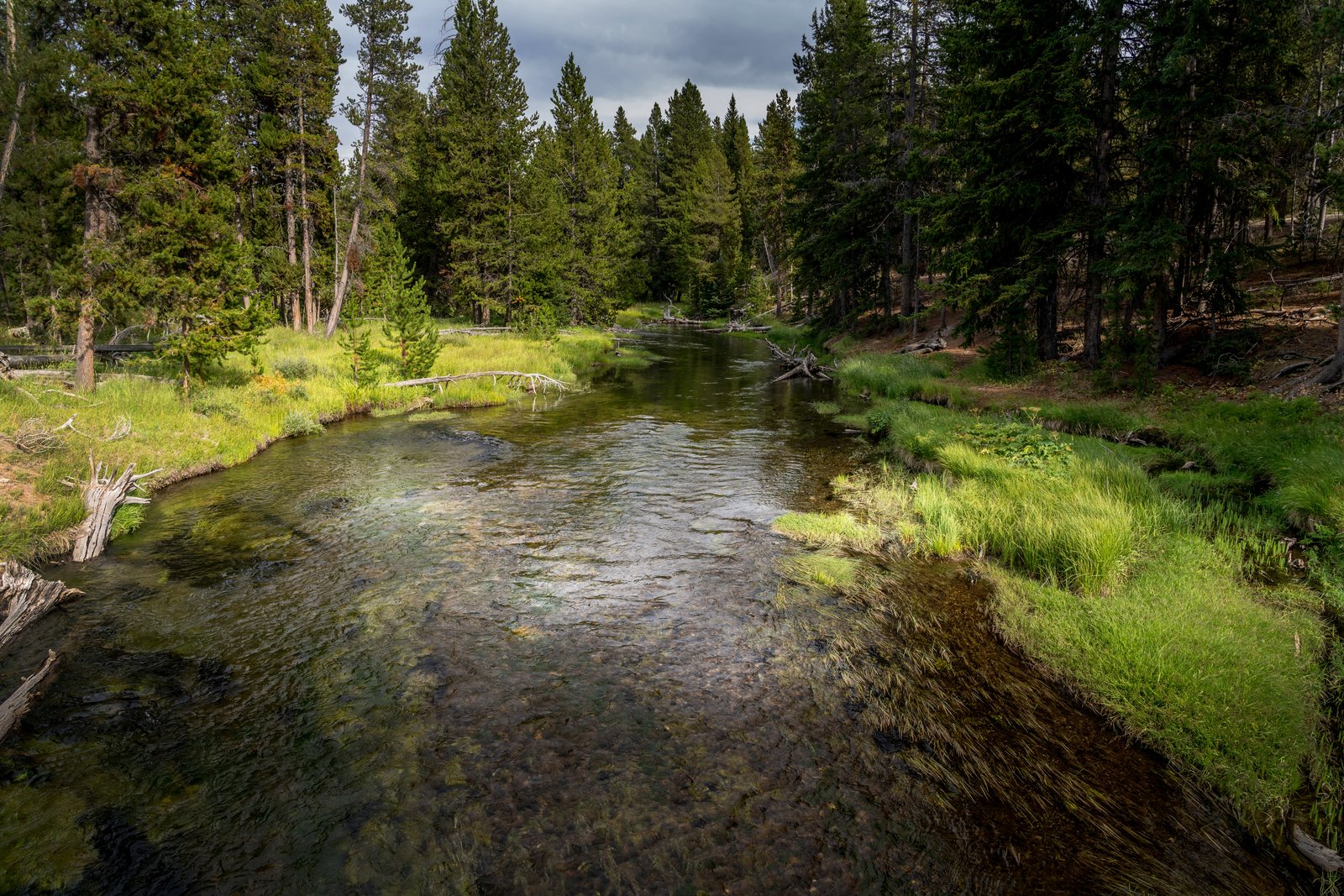
Yellowstone River
The photograph captures a quiet bend of the Yellowstone River as it winds through a dense lodgepole pine forest, its clear water gliding over a stony bed lined by sunlit meadow grass. This stretch reflects the river in its youthful stage, still narrow and shallow, well before it broadens into the wide, powerful current found further downstream in Yellowstone National Park. Key Features: The River's Origin: The Yellowstone River begins from melt waters near Younts Peak in the Absaroka Range, where the North and South Forks join to start the river's 692 mile journey. Entry into the Park: The river rises on the slopes of Yount Peak in Wyoming's Absaroka Range and soon enters the southeastern corner of Yellowstone National Park. Undammed Waterway: The Yellowstone is known as the longest free flowing river in the lower 48 states, giving stretches like this one an unaltered, natural character. The Setting: Grassy banks and dense conifer stands typify the park's backcountry corridors, where wildlife and anglers alike frequent the clear, cold waters.
Prints from $14Downloads from $19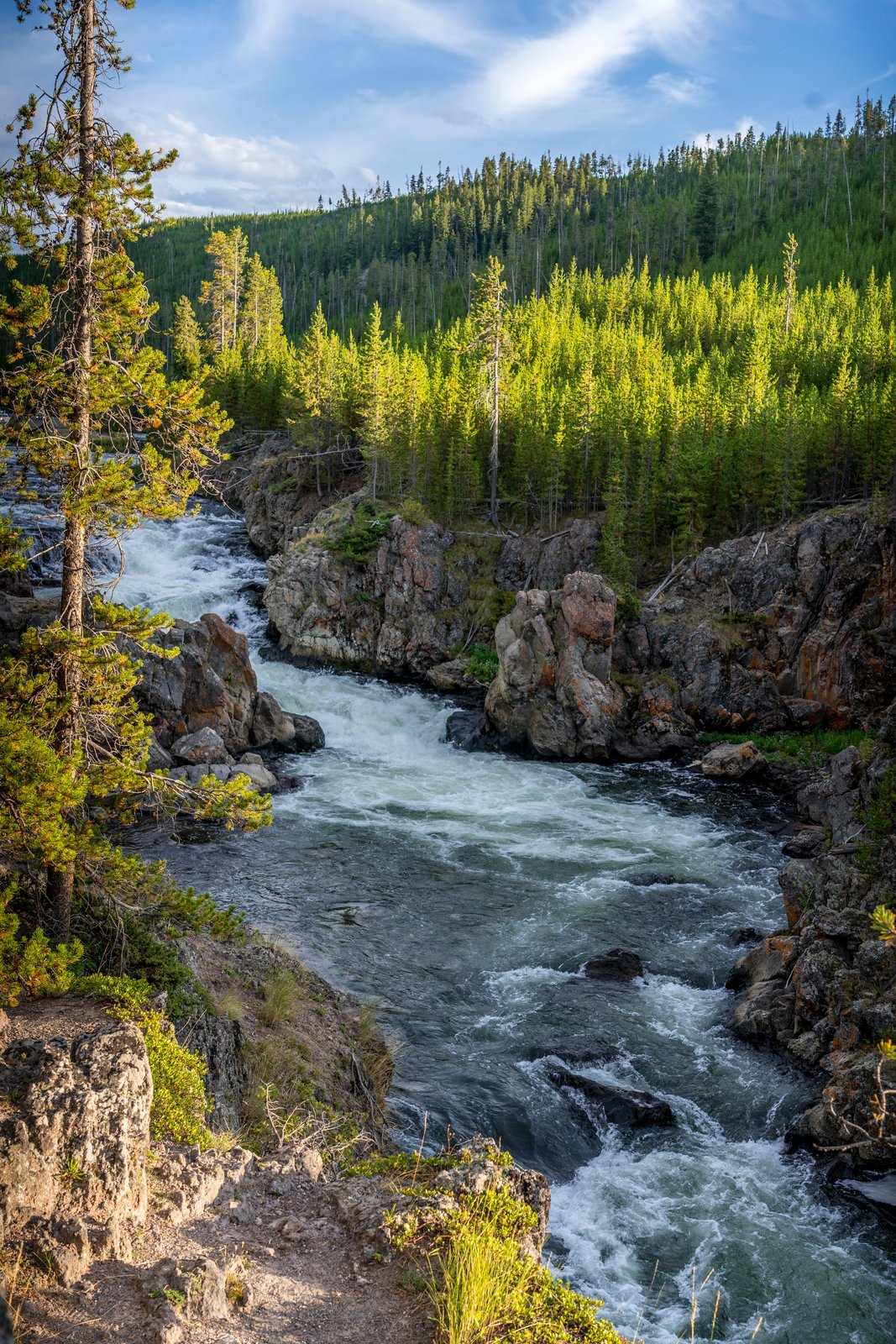
Yellowstone River
This photograph looks down on the Yellowstone River as it churns through a rocky, tree lined channel just above Upper Falls, where the river narrows before its plunge into the Grand Canyon of the Yellowstone. The vantage point sits along the rim trail near Canyon Village, framed by lodgepole pines on both banks as whitewater rushes between weathered rhyolite boulders. Key Features: The Waterway: This stretch of rapids leads directly to the 109 foot Upper Falls, the first great drop of the Yellowstone River. The Rock: The channel cuts through ancient rhyolite lava flows that later formed the canyon's colorful walls. The Setting: Dense stands of lodgepole pine cover the surrounding hills, typical of the Yellowstone Plateau's high elevation forest. The Park: The area lies within Yellowstone National Park, established in 1872 as the world's first national park.
Prints from $14Downloads from $19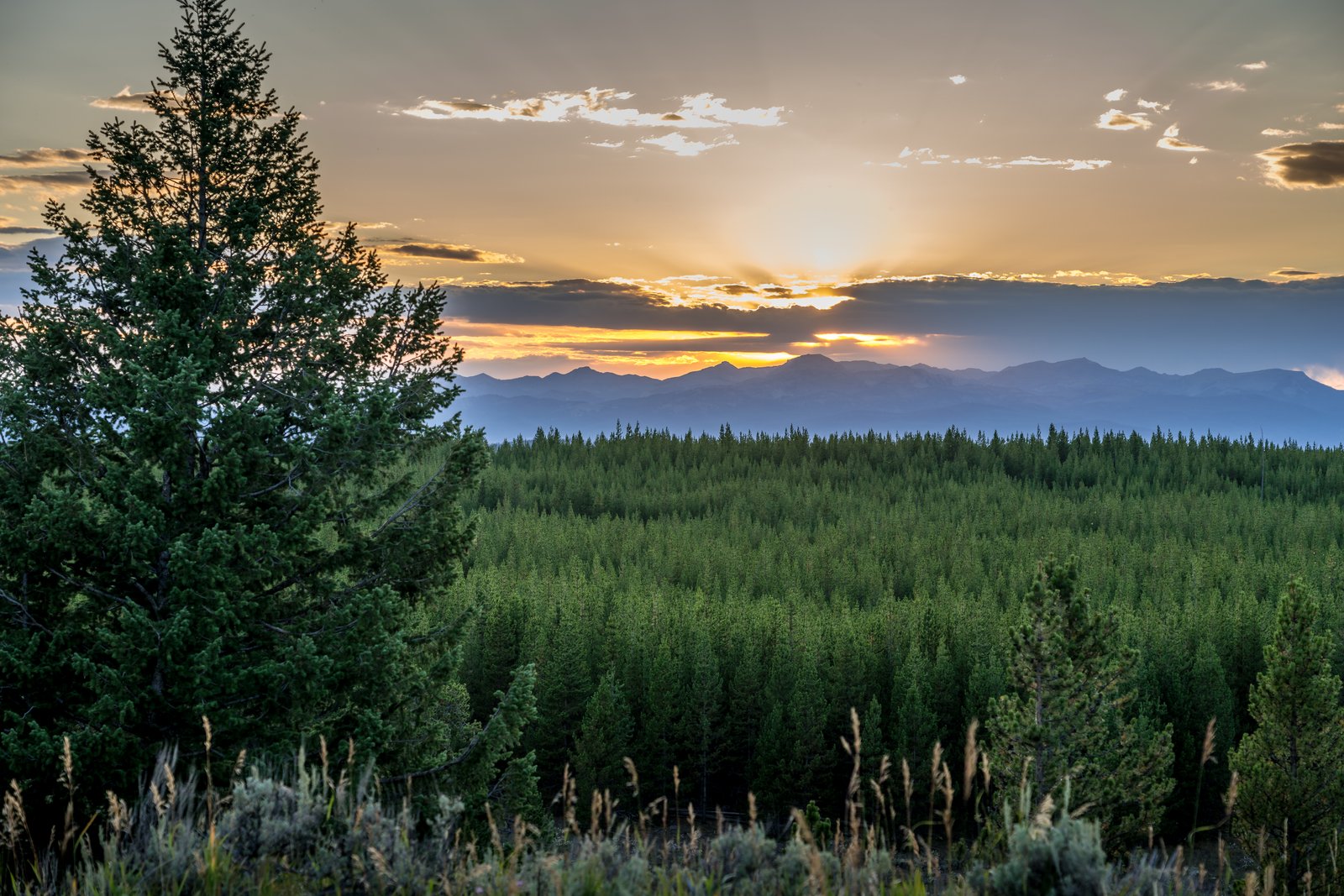
Yellowstone Sunset
Somewhere within Yellowstone National Park, this photograph looks out from a high overlook across an unbroken sea of conifer forest toward a distant mountain range as the sun sinks behind banked clouds. A lone lodgepole pine and sagebrush frame the foreground, while sunbeams break through the horizon clouds, backlighting the ridgeline and casting the valley forest into deep blue-green shadow. Key Features: The Forest Cover: Nearly the whole scene is blanketed by dense stands of conifer, reflecting how the park's woodlands are overwhelmingly composed of lodgepole pine, Engelmann spruce, and subalpine fir growing tightly together. The Mountain Backdrop: The hazy peaks on the horizon belong to one of the ranges bordering the Yellowstone plateau, likely the Absaroka Mountains that rim the park's eastern side. The Light: Sunset in Yellowstone is prized precisely because open meadows and high points offer rare breaks in the tree line where the glowing sky can be fully seen. The Setting: High-elevation overlooks like this one give photographers a rare unobstructed sightline across the park's vast, largely untouched wilderness.
Prints from $14Downloads from $19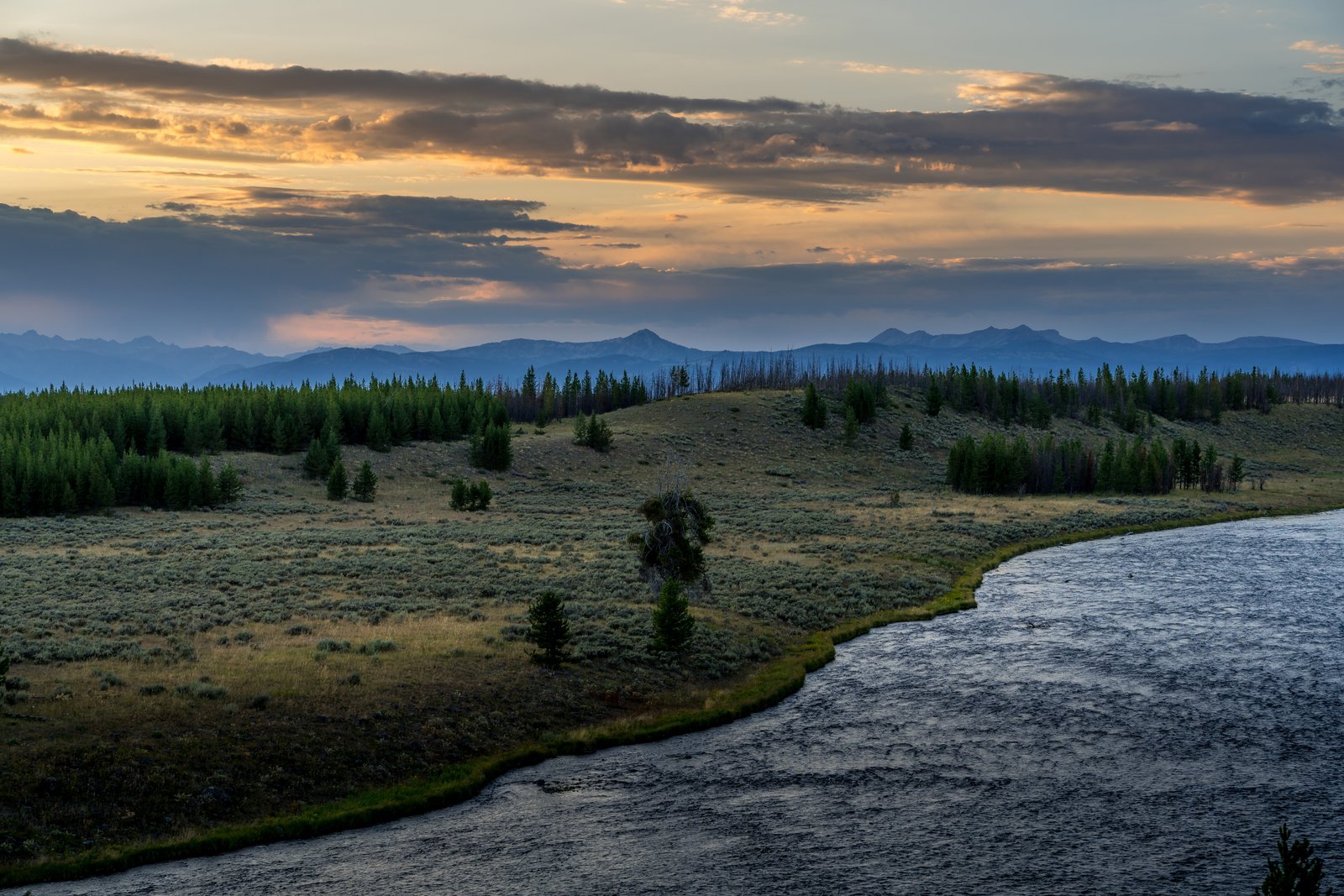
Yellowstone Sunset River
Along the meandering Yellowstone River in Hayden Valley, in the heart of Yellowstone National Park, this photograph looks north across sagebrush meadows and lodgepole pine ridges toward the distant peaks of the Absaroka Range at dusk. The elevated vantage takes in the river's curve through open grassland, with scattered stands of pine leading back to layered mountains fading into evening haze and cloud. Key Features: The Valley: Often considered the heart of Yellowstone, Hayden Valley is found in the middle of the park. The Geology: The floor of Hayden Valley is full of fine-grained lake sediments from the prehistoric lake; these are overlaid for glacial till from the most recent glacial retreat around 13,000 years ago. The Wildlife: It's an iconic viewing spot for wildlife such as buffalo, grizzly bears, and elks. The Waterway: Hayden Valley, located in Yellowstone National Park, is a picturesque area with vast meadows along the Yellowstone River.
Prints from $14Downloads from $19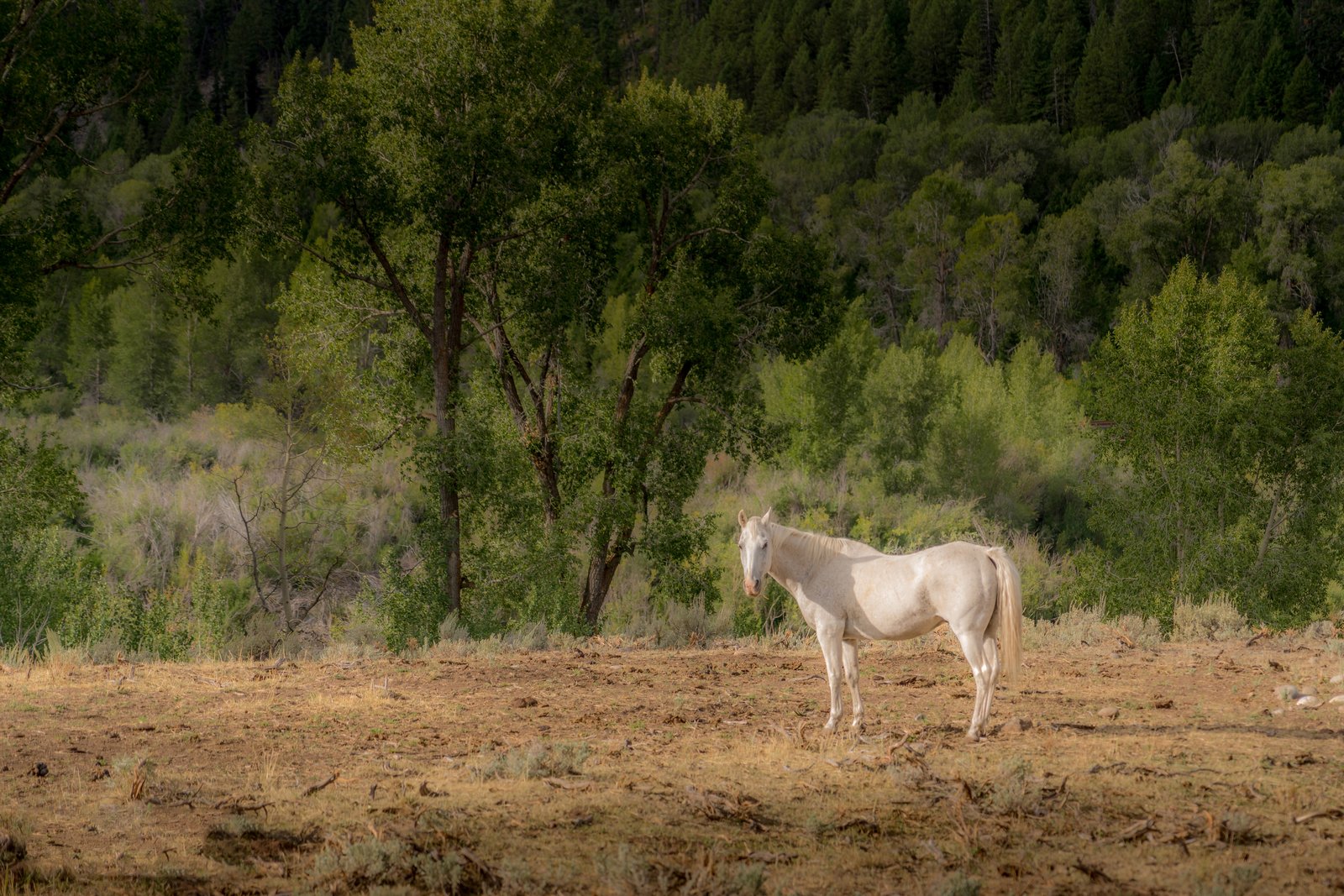
Jackson White Horse
The photo was taken in the Jackson Hole valley of northwestern Wyoming, in the cottonwood and conifer bottomlands that line the Snake River drainage below the Teton and Gros Ventre ranges. A pale cream colored horse stands alone in a sun dried meadow, its coat catching the late afternoon light against a dense backdrop of cottonwoods and dark evergreens climbing the hillside behind it. Key Features: The Setting: Jackson Hole is a high mountain valley where working cattle and horse ranches sit along the Snake River corridor beneath forested slopes. The Vegetation: Cottonwood trees flowering in spring and turning yellow and orange in fall are common throughout the valley, forming the thick greenery seen behind the horse. The Ranching Tradition: Large historic ranches in the area, some of the biggest deeded properties in the region, have grazed livestock along these river bottoms for generations. The Moment: The image captures a quiet, unposed pause in a grazing horse's day, framed by the wild, untamed character that still defines much of the Jackson Hole landscape.
Prints from $14Downloads from $19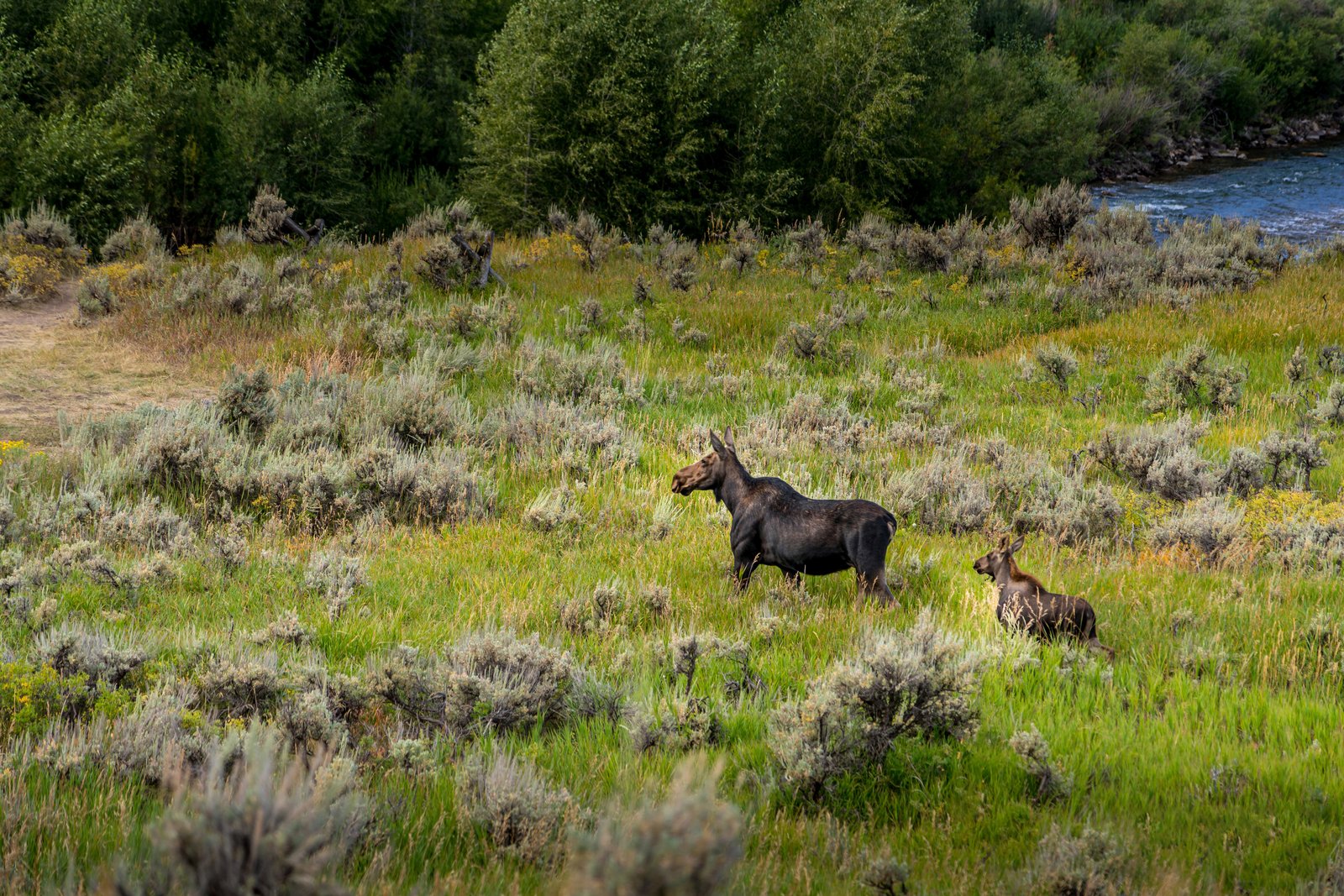
Yellowstone Moose Baby
The photograph was taken in Yellowstone National Park, likely along one of the park's river corridors such as the Lamar Valley, where a cow moose and her calf move through a sagebrush meadow near flowing water lined with dense willows and conifers. The vantage point looks down across an open grassy flat toward the riverbank, capturing the pair pausing in the tall grass as the calf follows close behind its mother. Key Features: Rare Sighting: Moose are among the least common large mammals in the park, with fewer than 100 individuals living there. The Habitat: Sagebrush flats bordered by river willows and conifer forest provide the cover and browse moose favor, especially in warmer months. Mother and Calf: Cow moose stay close to their calves through summer, teaching them to forage in wet meadows and streamside vegetation. The Setting: Yellowstone's river corridors, shaped by volcanic and glacial history, create the mosaic of grassland, brush, and forest seen here.
Prints from $14Downloads from $19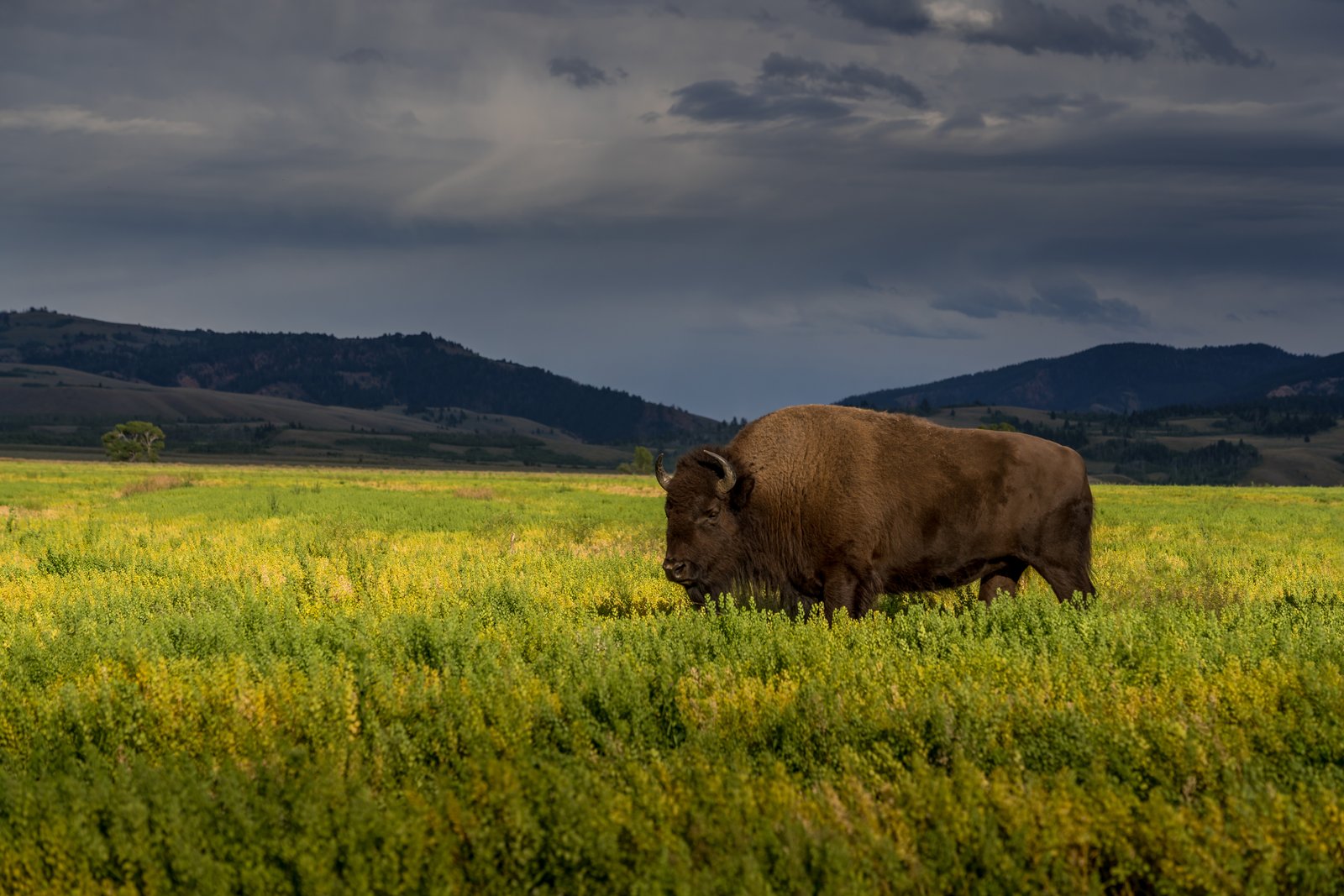
Buffalo Range
The photo shows a lone American bison standing in a lush meadow of wildflowers, likely captured in Yellowstone National Park's Lamar Valley beneath a gathering storm. The vantage point is low and open, placing the animal against a backdrop of the Absaroka Mountains and darkening sky, emphasizing the scale and wildness of the landscape. This valley is renowned as prime bison habitat, and the title nods to the historic buffalo ranch established here to protect the species. Key Features: The Lamar Valley: The Lamar River meanders through the valley and is flanked by the impressive Absaroka Mountains Bison Conservation: The ranch was established in 1907 when 28 bison were moved there from Fort Yellowstone, with the purpose of helping preserve one of the last free-roaming bison herds in the United States Wildlife Haven: Yellowstone National Park maintains a population of around 3,000 bison, preserving one of the last genetically pure herds of the American Buffalo Nickname: This broad valley is bison central, where visitors often see herds grazing and lounging along the wide Yellowstone River
Prints from $14Downloads from $19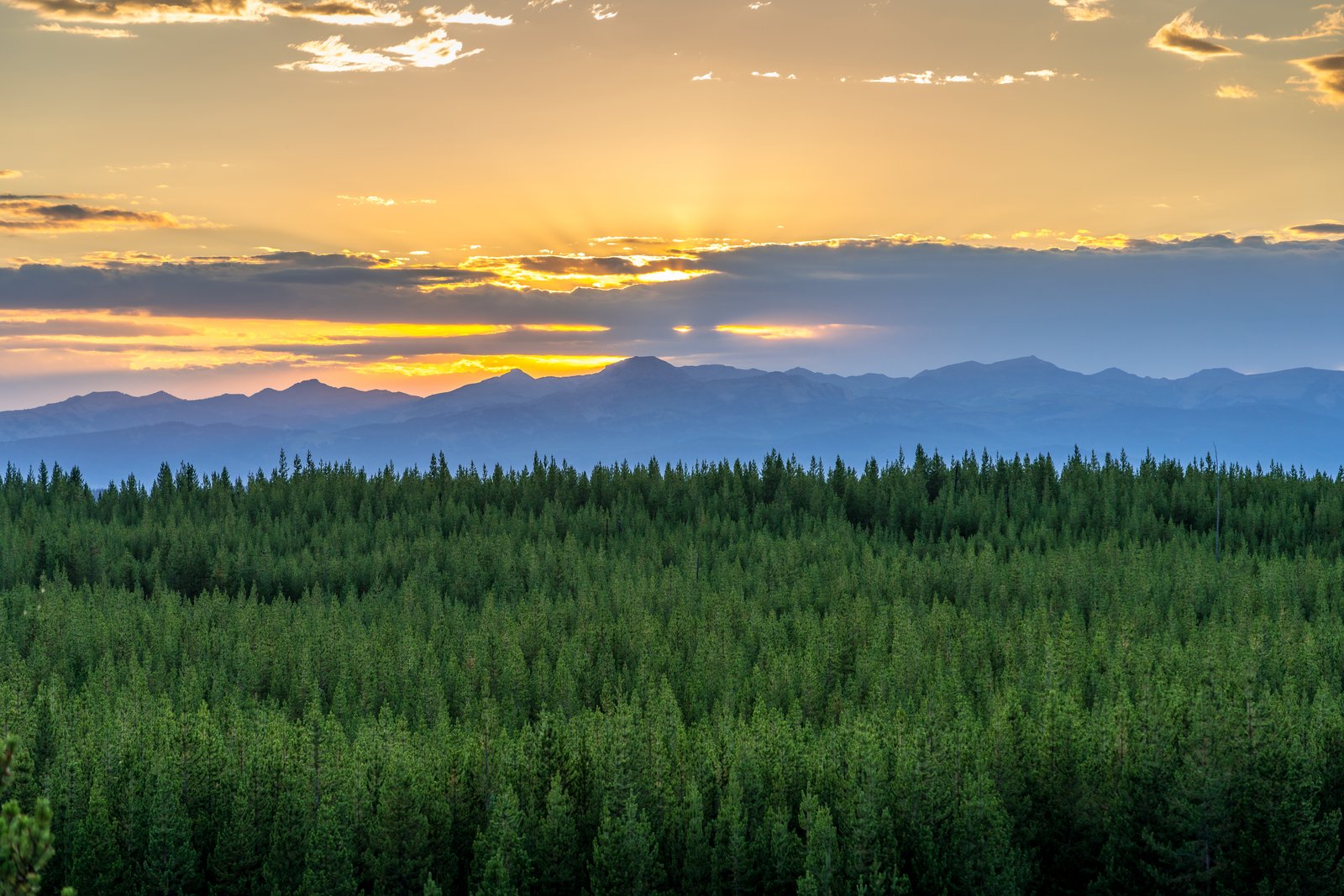
Yellowstone Sunset
The photograph looks across a dense sea of lodgepole pine toward the layered ridgelines of the Rocky Mountains within Yellowstone National Park, with the sun sinking behind a bank of clouds along the horizon. The vantage point appears to be an elevated overlook or ridge road pullout, giving an unobstructed sweep from the darkening forest canopy in the foreground to the hazy blue mountain ranges receding into the distance under a sky streaked gold and violet. Key Features: The Forest Canopy: Forests cover roughly 80% of the park, with lodgepole pine forming miles of continuous cover, especially within the Yellowstone Caldera. The Terrain: Yellowstone sits atop a high volcanic plateau ringed by rugged subranges of the Rocky Mountains, producing the layered, hazy peaks visible fading into the distance. The Light: The golden crepuscular rays breaking through cloud cover are typical of high altitude sunsets over the plateau, where thin air and long sightlines intensify color at dusk. The Setting: The scene reflects the park's vast, largely undeveloped backcountry, where uninterrupted timber stands stretch for miles between mountain ranges.
Prints from $14Downloads from $19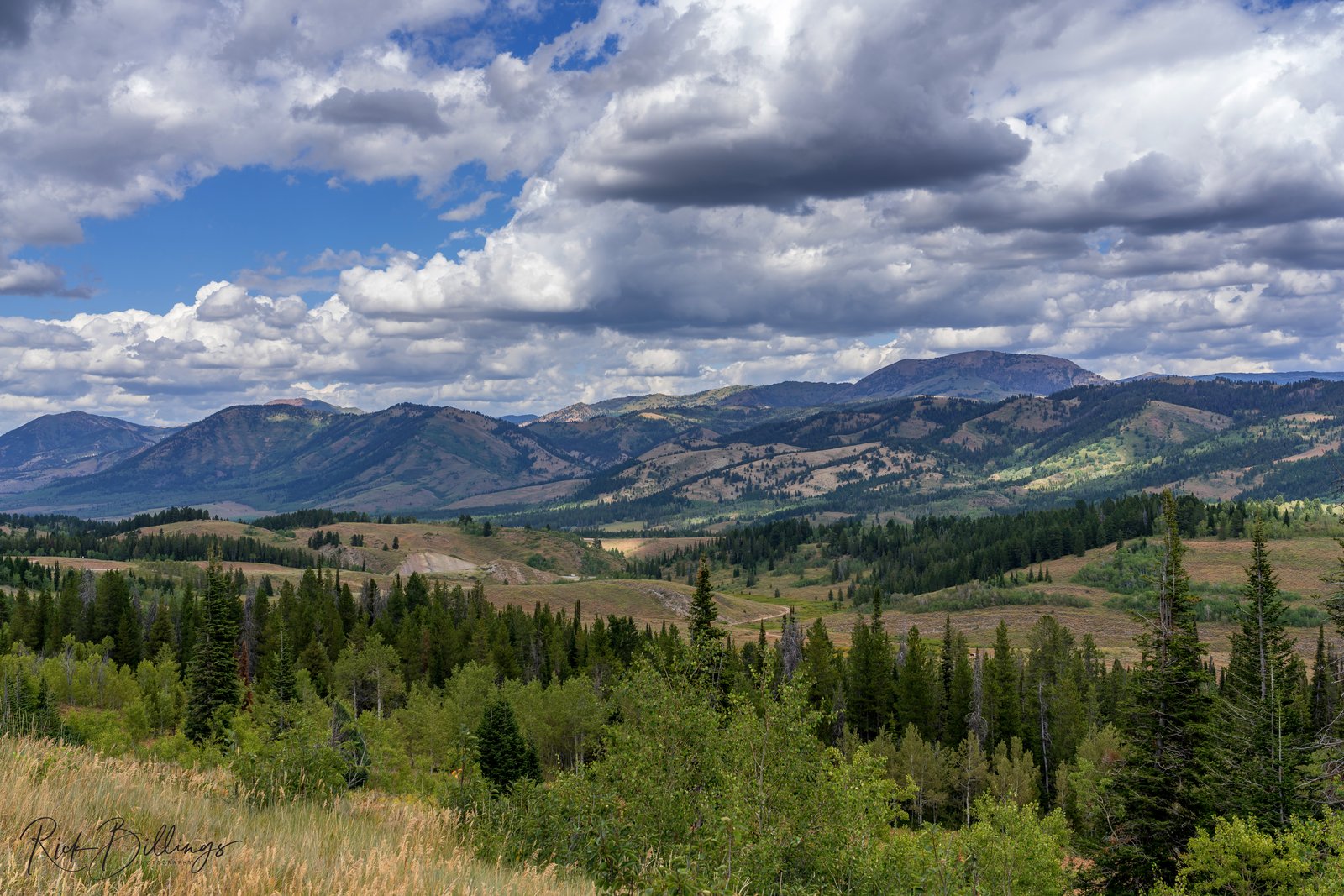
Jackson WY Scenic
The photograph looks southeast across the high country outside Jackson, Wyoming, toward the rounded, timbered summits of the Gros Ventre Range. The vantage point is an elevated overlook above a broad sagebrush basin, where a ranch road winds through open meadows before the land rises into dense stands of lodgepole pine and aspen and finally into the distant peaks beneath a sky filled with towering summer cumulus. Key Features: The Gros Ventre Range: These mountains east of Jackson Hole are known for rounded, sedimentary peaks rather than the jagged granite of the nearby Teton Range. The Valley Floor: Jackson Hole sits at roughly 6,200 feet, with surrounding ridgelines and foothills rising through mixed conifer and aspen forest. Ranching Heritage: Dirt roads and open meadows in the foreground reflect the area's continued use for grazing and rural homesteads amid protected forest land. Weather Patterns: Dramatic afternoon cumulus buildup, as seen here, is common in the Rockies during summer months, often preceding brief mountain thunderstorms.
Prints from $14Downloads from $19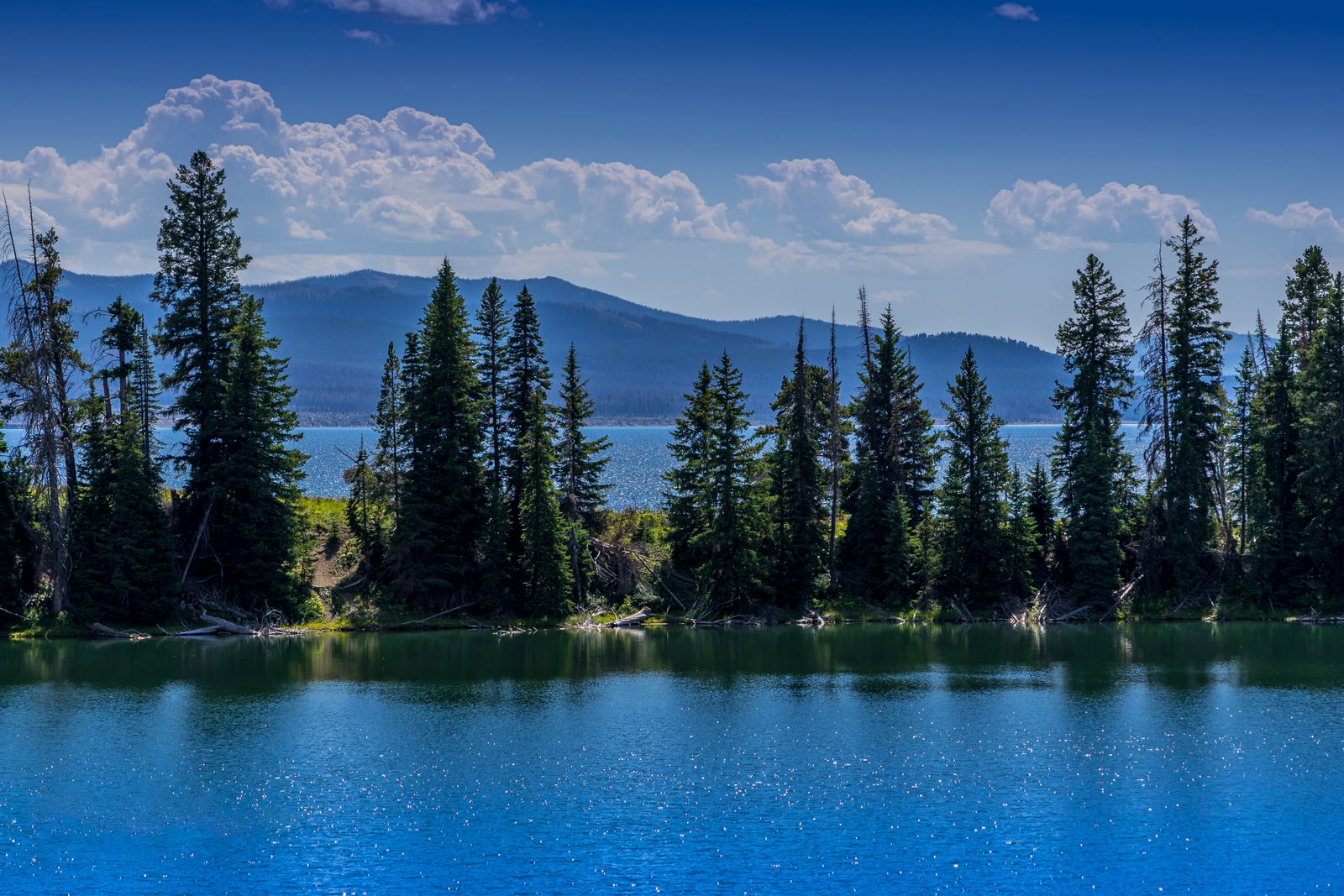
Lake Cody Wyoming
The photograph looks across a small, tree lined pond toward a much larger lake, with the ridgelines of the Absaroka Range rising hazily beyond, a scene characteristic of the high country west of Cody, Wyoming. This rugged terrain belongs to the Shoshone National Forest, where dense stands of lodgepole pine frame countless backcountry lakes and reservoirs tucked below the mountains. The vantage point appears to be from the near shore of a small forest pool, looking through a screen of conifers toward open water and distant peaks softened by summer haze. Key Features: The Shoshone National Forest: America's first national forest, established in 1891, sits just outside Cody and holds thousands of mountain lakes and ponds within its boundaries. The Absaroka Range: The layered blue peaks in the distance form part of this volcanic mountain range along the edge of the Greater Yellowstone Ecosystem. The Setting: A foreground pond bordered by lodgepole pine opens onto a larger lake, a common double layered composition found throughout this backcountry region. The Region's Character: Cody serves as a gateway town to this remote high country, prized for fishing, camping, and undeveloped alpine scenery.
Prints from $14Downloads from $19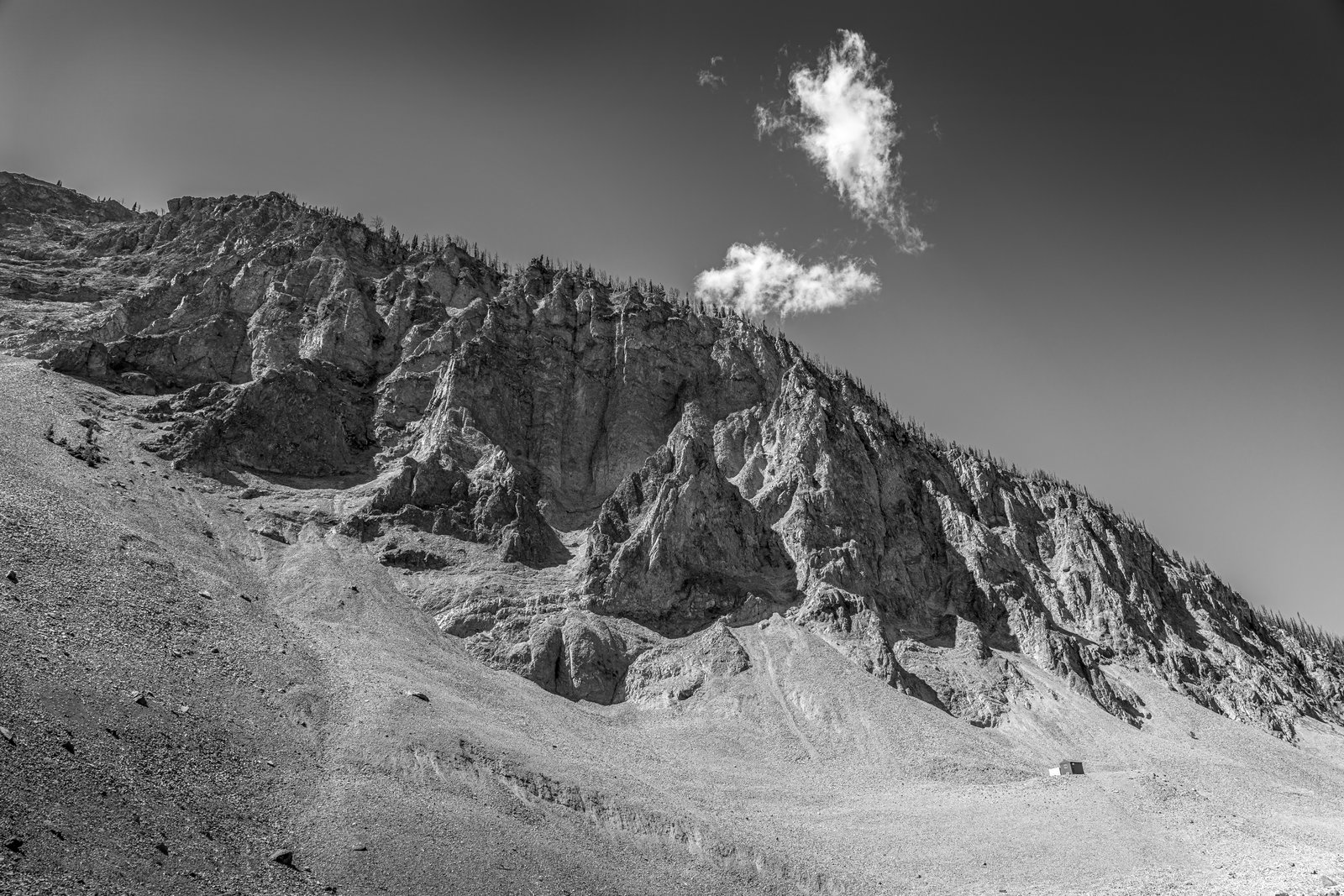
Cody Wyoming Mountains B&W
This image captures the crumbling flank of Cedar Mountain, also called Spirit Mountain, in the Absaroka Range just west of Cody, Wyoming. Shot from the scree-covered base looking up, the frame shows deeply eroded volcanic spires and gullies rising to a ridgeline, a single small cabin dwarfed at the foot of the slope, and a lone cloud drifting past the summit. Key Features: The Name: Crow tradition called this peak the mountain of spirits, and settlers reported Native tree burials on its slopes. The Geology: The mountain is built of volcanic breccia, weathering into the jagged, crumbling pinnacles seen here. The Setting: It stands across the Shoshone River gorge from Rattlesnake Mountain, near Buffalo Bill Reservoir. The Legend: Local lore holds it as a possible burial site tied to showman Buffalo Bill Cody.
Prints from $14Downloads from $19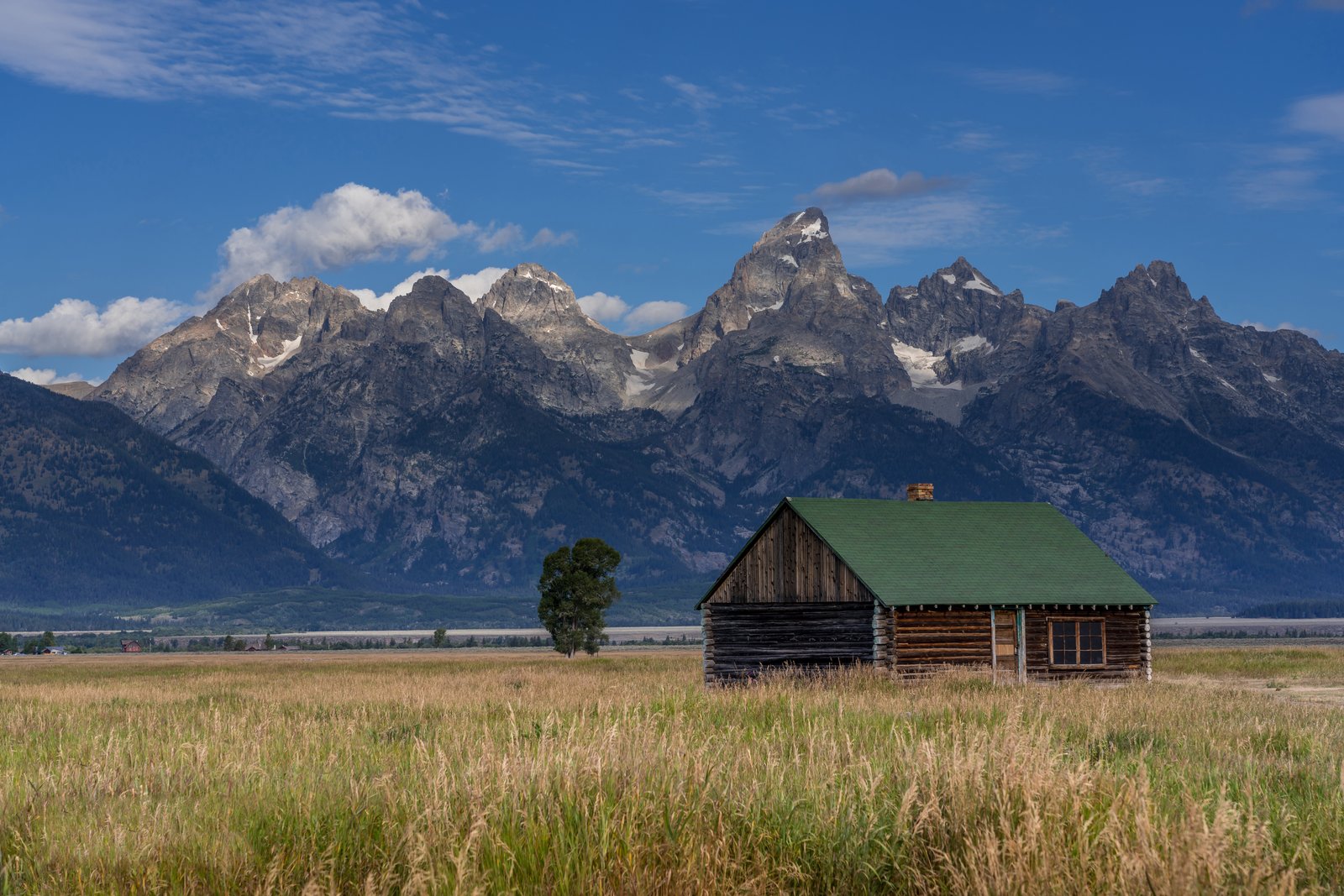
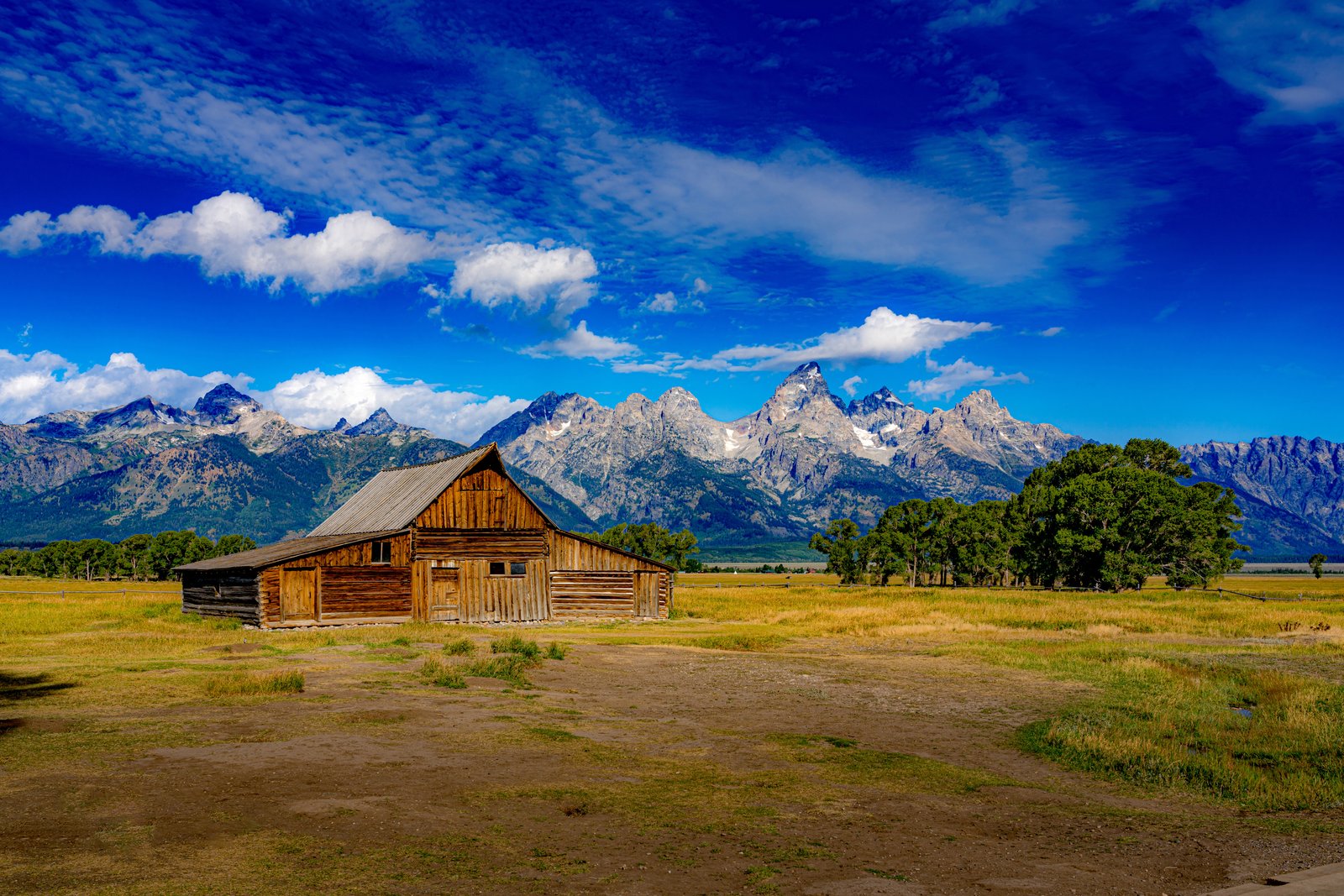
Grand Teton Barn
This photograph looks across Mormon Row in Grand Teton National Park, Wyoming, where the historic T.A. Moulton Barn stands alone in a grassy homestead field with its distinctive green shingled roof and weathered log walls. The view faces west toward the jagged granite spires of the Teton Range, their upper slopes still streaked with summer snow beneath scattered clouds. Key Features: Homestead History: Mormon settlers arriving from Idaho in the late 1800s and early 1900s built barns and farmhouses along this row after crossing Teton Pass into Jackson Hole. Alma began work on his barn in 1912 to shelter his horses, and it took decades before he considered it fully complete. Protected Landmark: In the mid-1900s Mormon Row was acquired to expand Grand Teton National Park, and in 1997 the district was added to the National Register of Historic Places. The Mountain Backdrop: The rugged Teton peaks rise abruptly from the valley floor with no foothills, creating one of the most photographed mountain silhouettes in the American West. Ongoing Preservation: Contracted crews and volunteers, including members of the Moulton family, have carried out repairs to the barn's steeply pitched roof to keep the historic structure standing.
Prints from $14Downloads from $19