

Collection
USA
By · 138 photos
Pacific Ocean Sunset
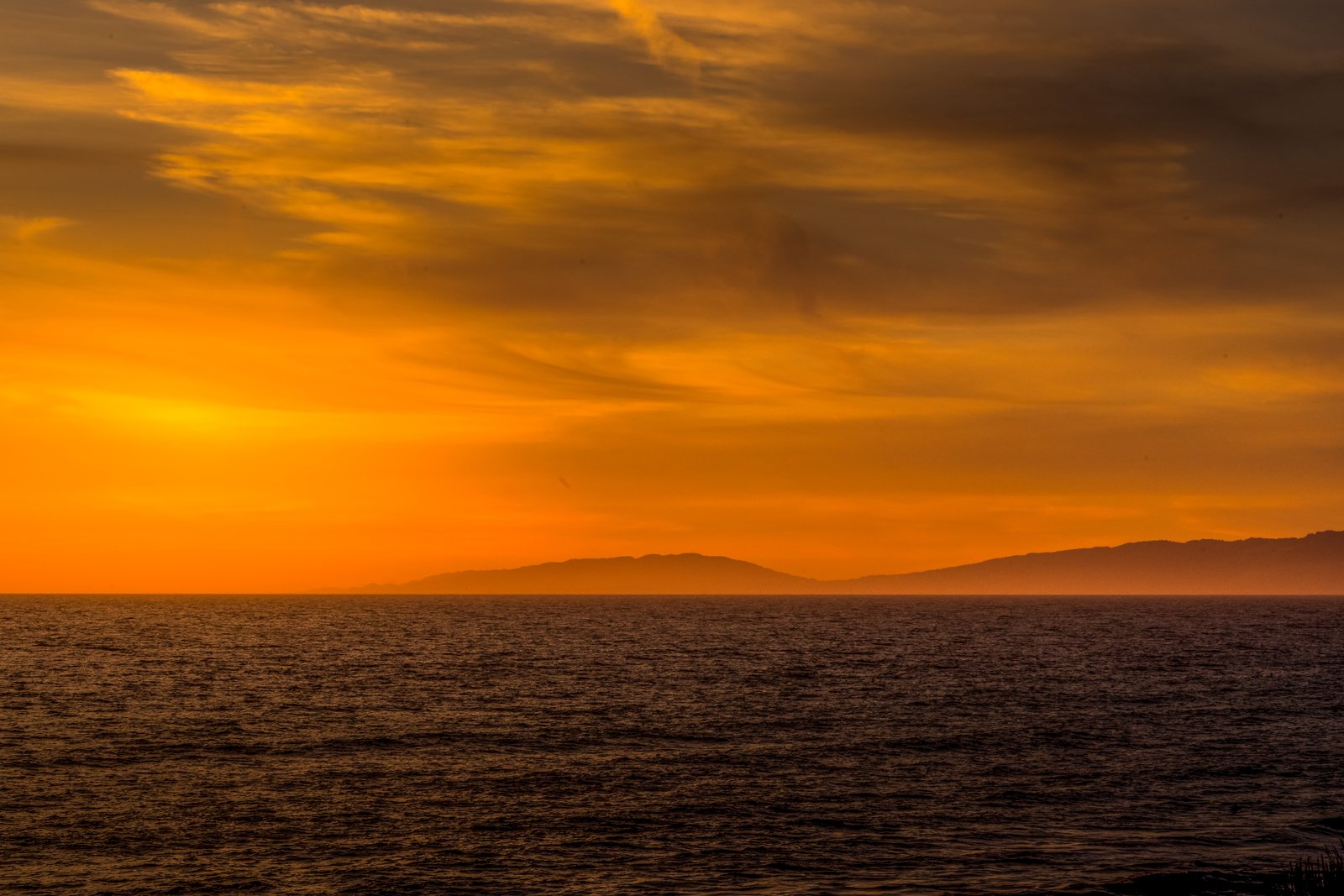
The sun sets low over the Pacific Ocean, casting the sky in deep amber and burnt orange as thin veils of cloud stretch across the horizon. In the distance, the silhouette of a coastal mountain range rises above the water, its hazy outline suggesting a headland or peninsula along the California coastline. The calm, darkening sea reflects the fading light, marking the quiet transition from day to dusk. Key Features: The Coastal Silhouette: Layered hills in the distance are typical of the mountainous shoreline found along stretches of the California coast, where ranges meet the sea. The Atmosphere: The warm, diffused light and haze over the water suggest marine layer conditions common to Pacific coastal sunsets. The Vantage Point: The low, level view across open water indicates the photograph was taken from a shoreline or bluff looking out toward distant land across a bay or channel. The Moment: The photo captures the fleeting minutes just before sunset, when the sky's colors are most intense before nightfall.
Prints from $14Downloads from $19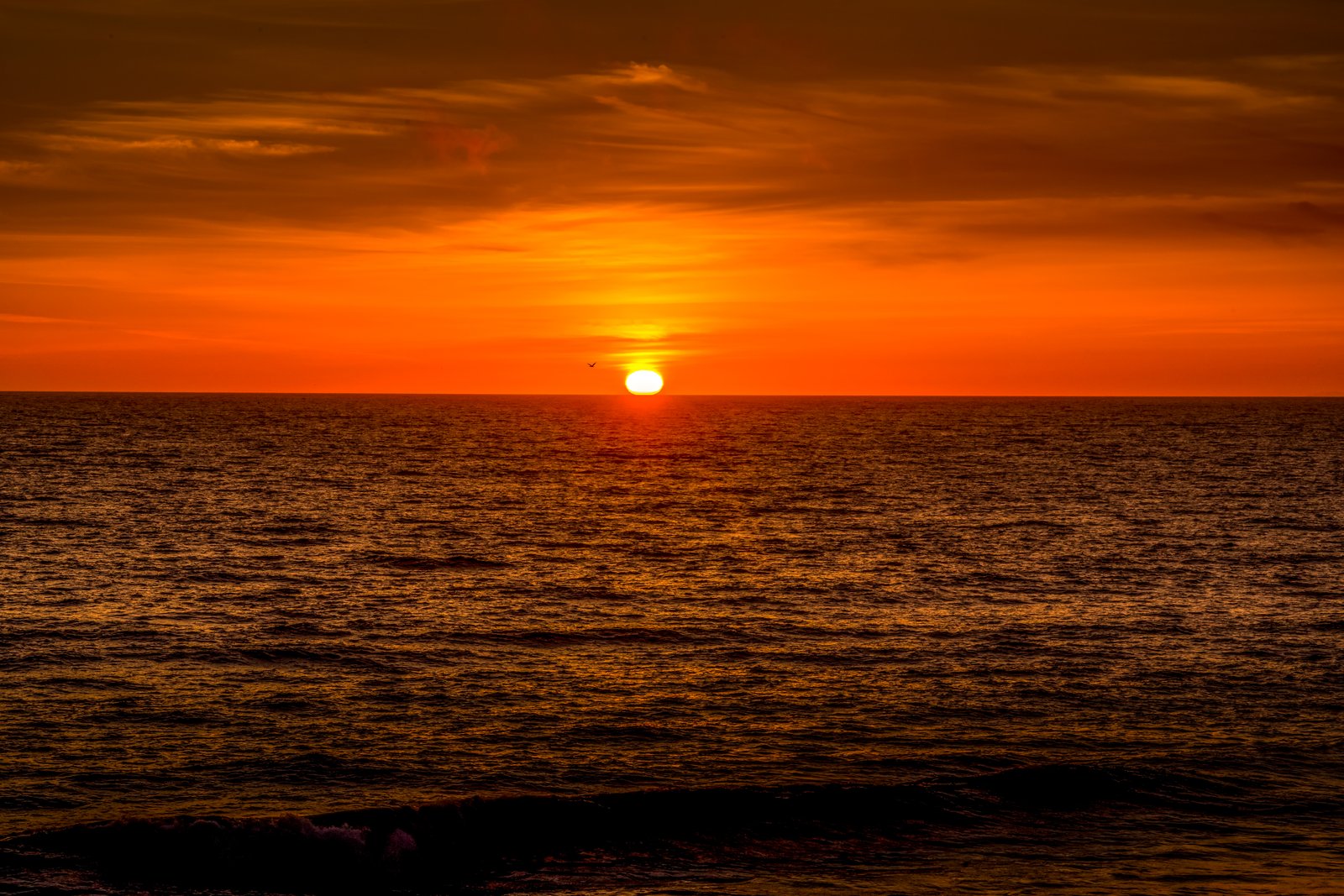
Pacific Ocean Sunset
This photograph captures the sun setting directly over the open water of the Pacific Ocean, taken from a shoreline vantage point looking due west across an unbroken horizon. A lone seabird crosses the sky near the glowing disc of the sun, while gentle waves roll toward the camera in the foreground, all bathed in deep amber and orange light. Key Features: The Vantage Point: The low, level horizon and absence of land features suggest a wide beach or headland along the Pacific coast, chosen for its unobstructed westward view. The Color Palette: As the sun sinks, its light passes through a much thicker layer of atmosphere, scattering away blue and violet tones and leaving the sky saturated in red, orange, and gold. The Ocean Setting: The Pacific is the largest and deepest of the world's oceans, and its western-facing coastlines are famous for dramatic, uninterrupted sunset views. The Moment: A solitary bird in flight adds scale and a fleeting sense of time to the otherwise still, expansive seascape.
Prints from $14Downloads from $19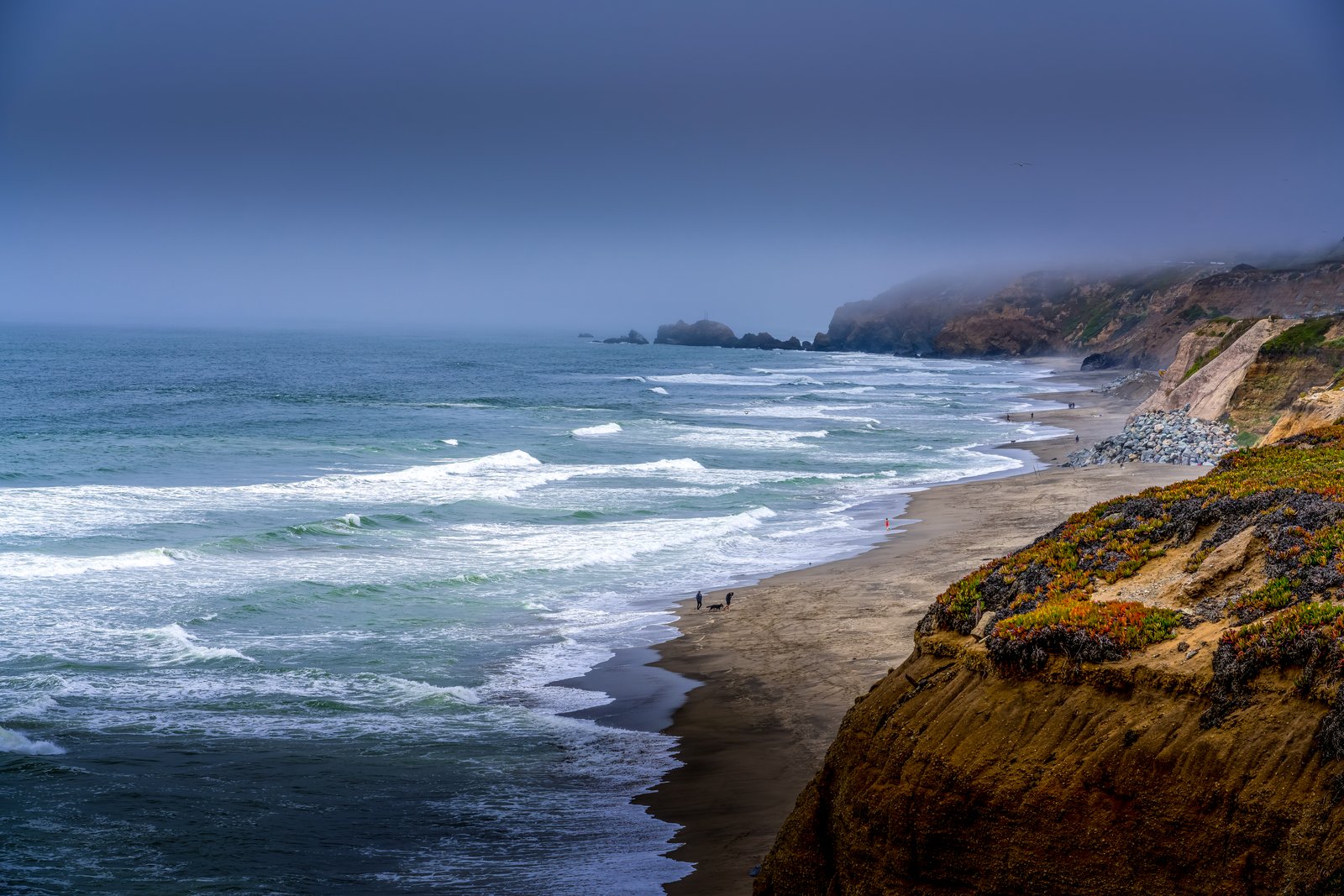
Pacific Ocean California
Fort Funston, on the southern edge of San Francisco within the Golden Gate National Recreation Area, looking north along Ocean Beach toward the misty outline of Seal Rocks and the Cliff House area. The image is taken from atop the sandy, ice plant covered bluffs, with rolling Pacific surf rolling ashore and a few walkers and a dog visible on the beach far below. Key Features: The Cliffs: These are sandstone bluffs prone to erosion, part of a stretch where Fort Funston is known for its intricate sandstone cliffs, secluded beach, and expansive ocean view. Military History: The site once held Battery Davis, built in the late 1930s to house massive coastal defense guns as part of San Francisco's harbor defenses. Wildlife: Bank swallows once migrated through California in great numbers and today the sandstone cliffs here remain one of their few known coastal nesting sites. The View North: The rocky outcrops fading into fog mark Seal Rocks, a landmark just off Ocean Beach near the historic Cliff House.
Prints from $14Downloads from $19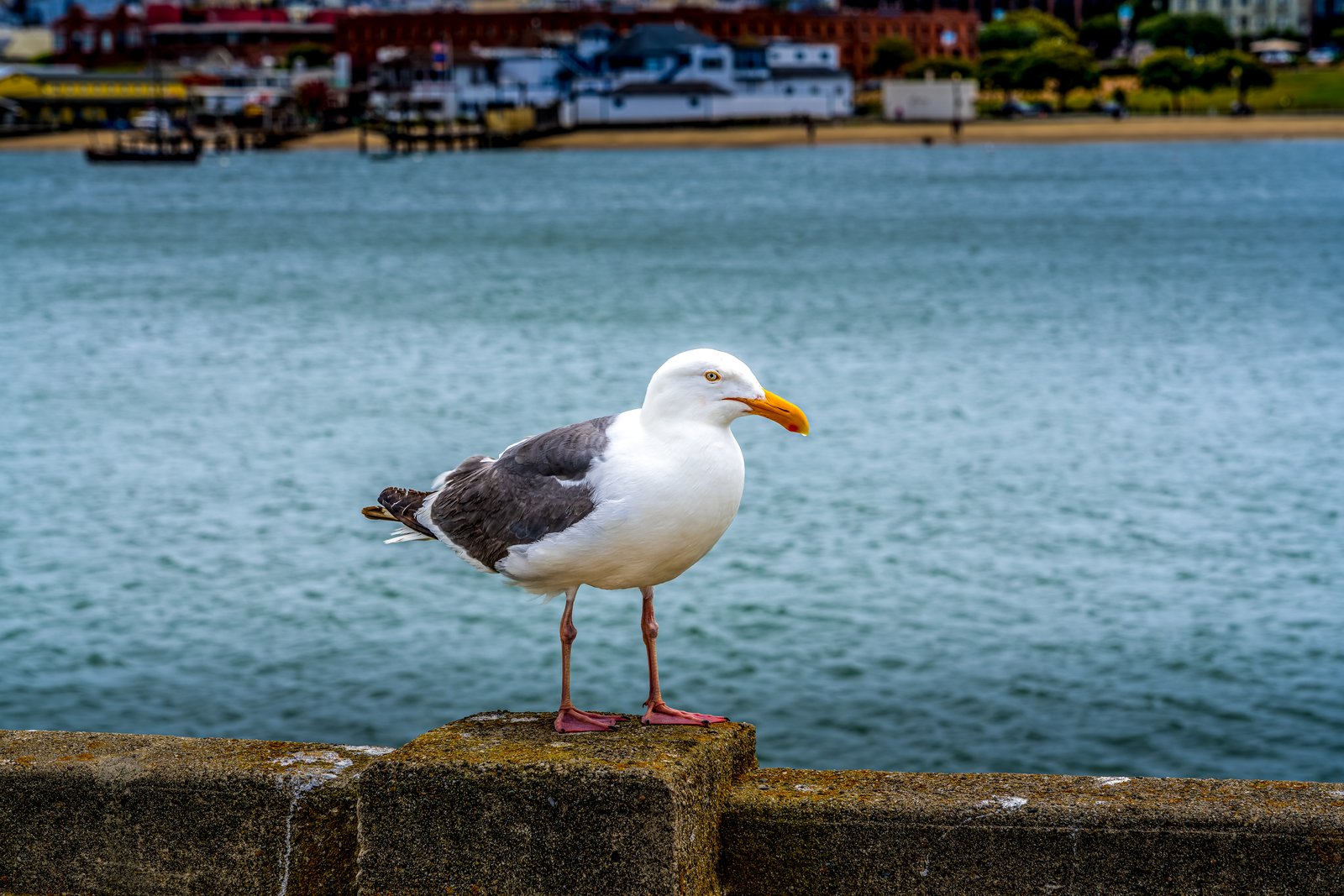
San Francisco CA
The photograph looks across Aquatic Park Cove in San Francisco, likely taken from the curved stone breakwater of the Municipal Pier. A western gull perched on the pier wall commands the foreground, while the calm waters of the cove stretch behind it toward the sandy beach and the historic waterfront buildings, including the red brick facade of Ghirardelli Square. Key Features: The Vantage Point: The shot is taken from the Municipal Pier, a favored spot for anglers, strollers and gulls looking out over the protected cove. The Waterfront Backdrop: The Marine Museum sits at the center of Aquatic Park Cove near the beach, alongside Victorian era buildings lining the shore. Ghirardelli Square: The careful restoration retained the architectural charm of the original buildings, including the red brick facades and the unique industrial elements visible across the water. The Cove Itself: Aquatic Park Cove has a narrow sandy beach and a grass park at the end of the Hyde Street Cable Car line on the San Francisco Waterfront, part of the Fisherman's Wharf district.
Prints from $14Downloads from $19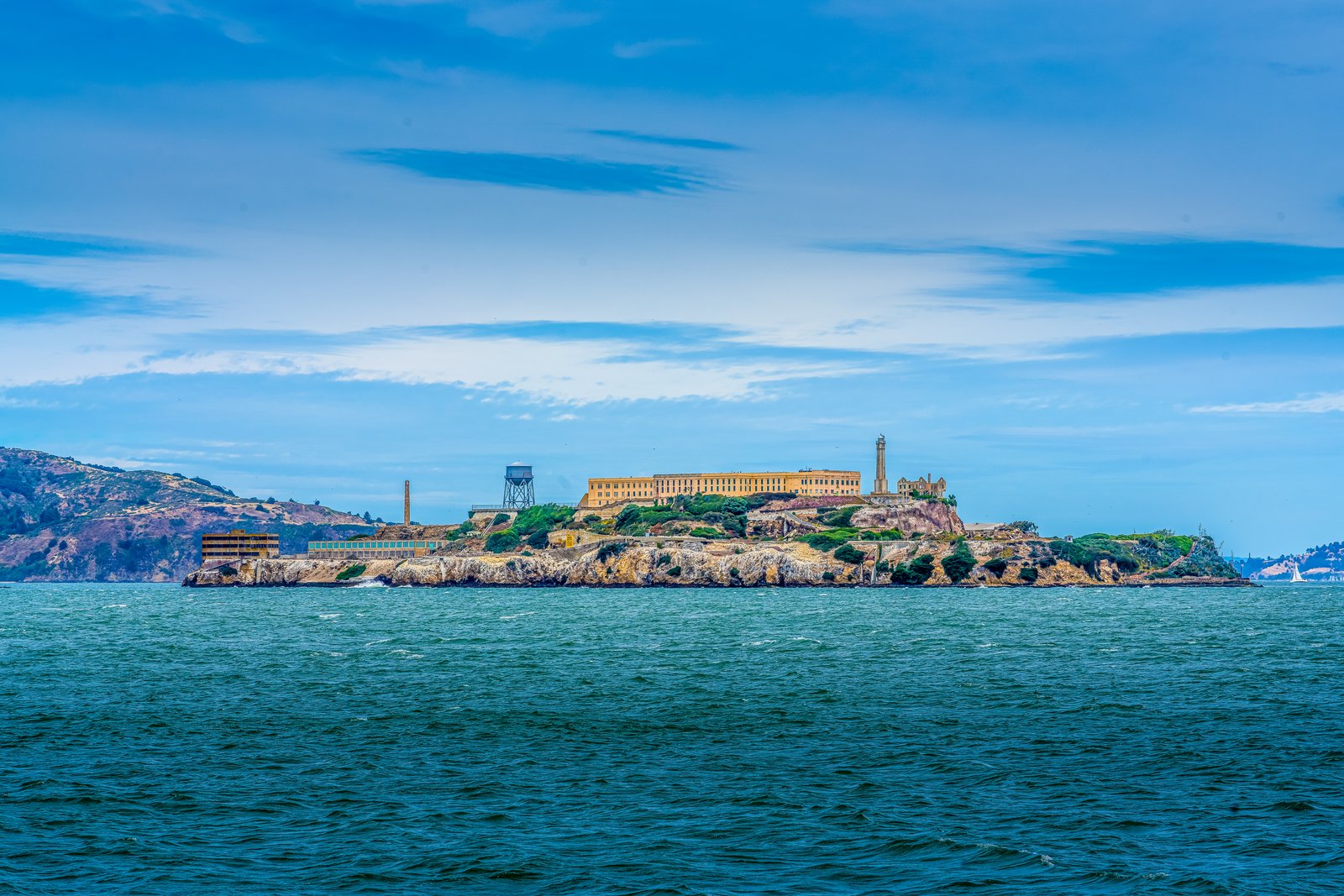
Alcatraz San Francisco California
Alcatraz Island rises from the choppy waters of San Francisco Bay, seen here from a passing boat with the Marin Headlands fading into haze behind it. The frame captures the island's low profile of eroded rock topped by its cluster of weathered structures, from the old water tower and cellhouse to the lighthouse standing at the island's highest point. Key Features: The Lighthouse: This tower is a rebuilt version of the West Coast's first lighthouse, which began operating in 1854 before being replaced by the current 84 foot structure in 1909 to clear the new cellhouse. The Prison Era: The island housed a federal penitentiary that held some of America's most notorious inmates before its closure, leaving the cellhouse and support buildings visible today. The Setting: Positioned about a mile and a quarter offshore, the island is surrounded by the strong currents and cold water of the bay, adding to its reputation as an inescapable prison site.
Prints from $14Downloads from $19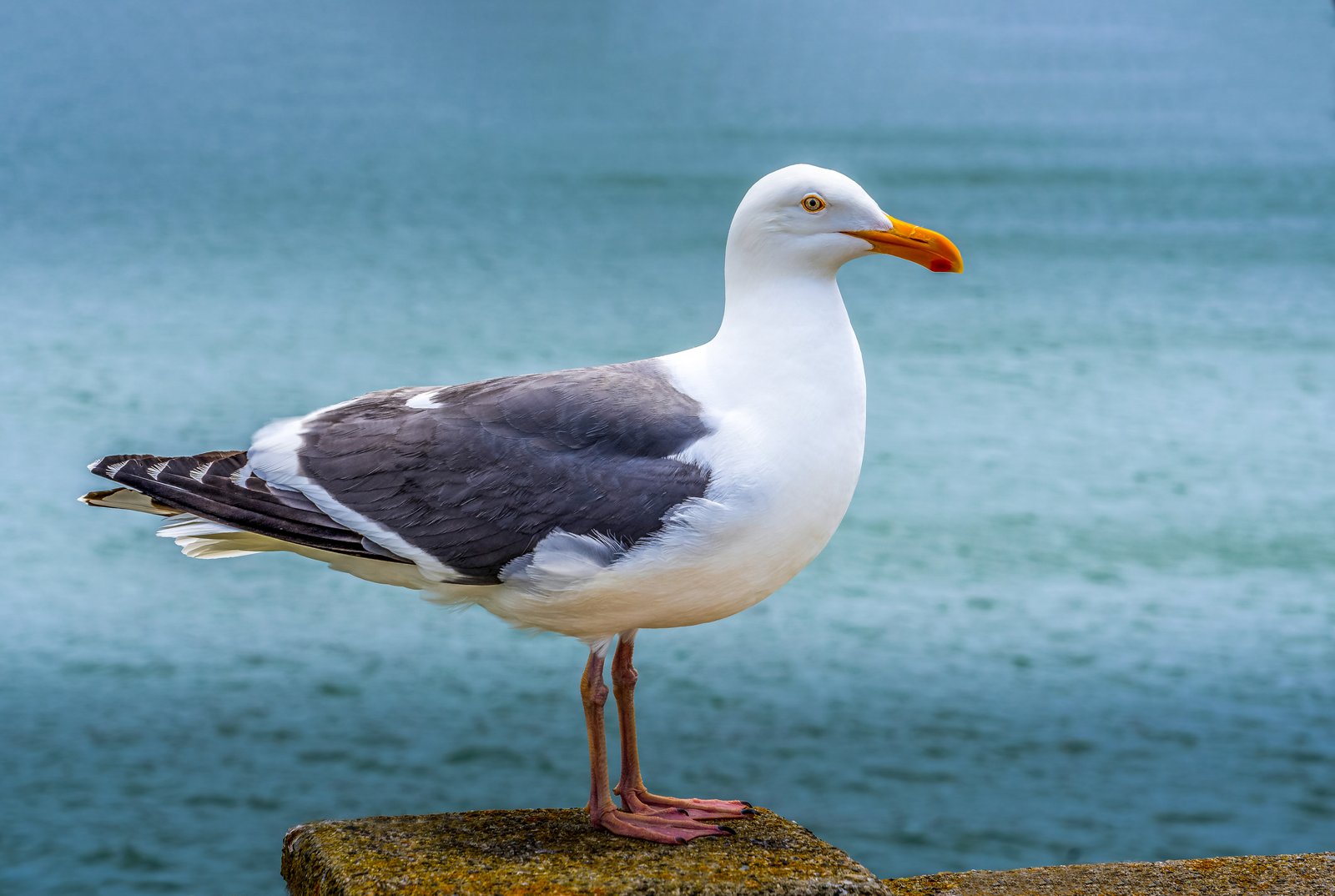
San Francisco California
This photograph was taken along the San Francisco waterfront, where the bird stands on a weathered concrete piling with the calm blue waters of San Francisco Bay stretching behind it. The gull's clean white head, dark slate mantle, stout yellow bill with a red spot, and pink legs place it as a Western Gull, a species closely tied to the California coastline and one of the most familiar sights along the city's piers, wharves, and seawalls. Key Features: The Species: The Western Gull is a large, white-headed gull with a dark gray mantle, pink legs, and a large, bulbous yellow bill with a red spot toward the tip. The Range: It breeds from Washington State, United States, south to central Baja California, Mexico, and winters along the coast and in offshore waters from Vancouver Island, Canada, south to the tip of the Baja California Peninsula, Mexico. The Setting: San Francisco's working waterfront, with its piers and seawalls facing the bay, offers ideal resting perches for coastal seabirds like this one. The Behavior: These gulls are common and confident around people, often seen perched motionless on posts and railings while scanning the water for food.
Prints from $14Downloads from $19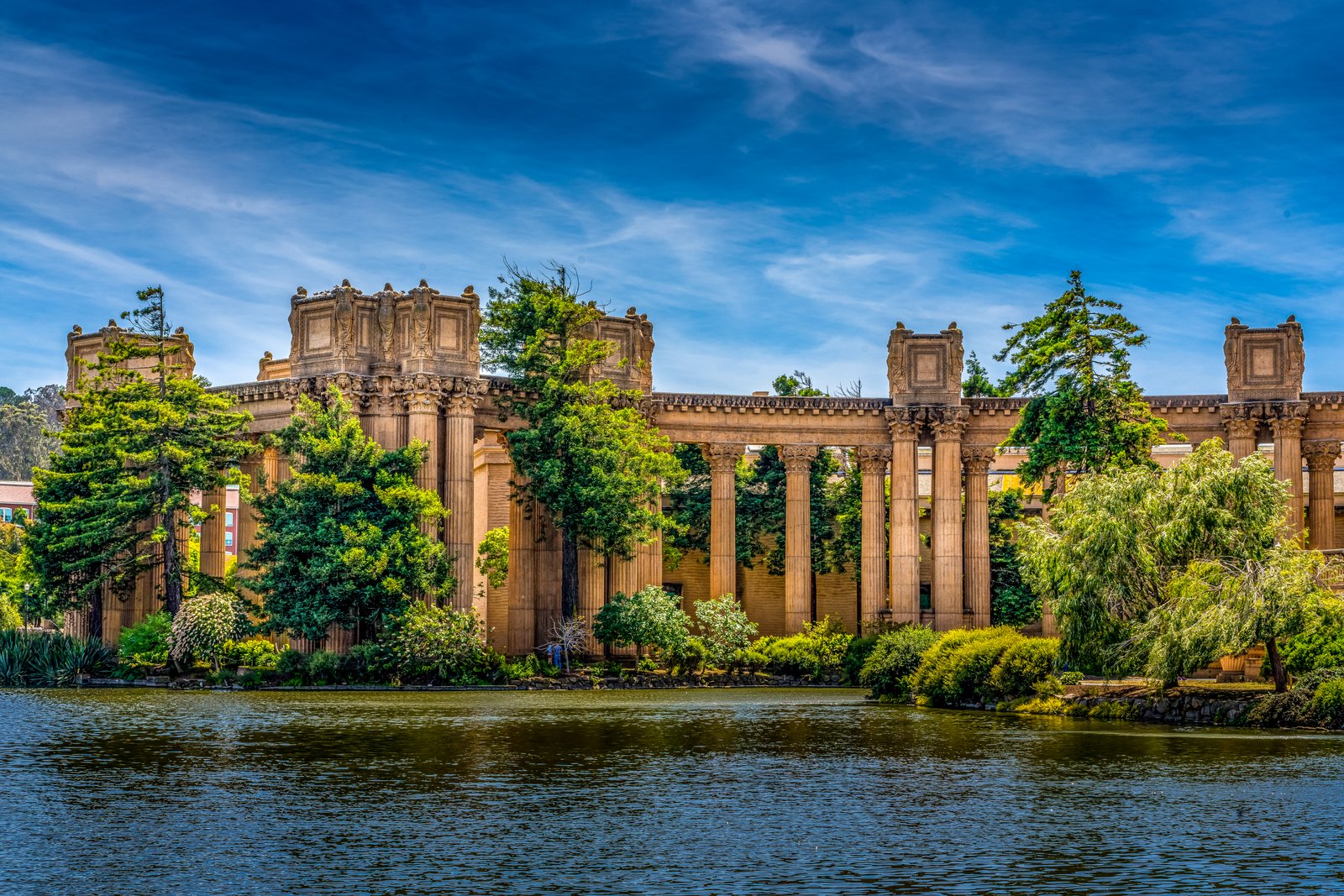
The Palace Of Fine Arts San Francisco
This photograph captures the Palace of Fine Arts in San Francisco's Marina District, seen from across its tranquil lagoon. The view frames the monumental Corinthian colonnade and open rotunda, their classical stonework partially veiled by tall cypress and willow trees along the water's edge. Key Features: The Origin: Bernard R. Maybeck was chosen as architect for the Palace of Fine Arts, designing it as a Beaux Arts structure evoking a Roman ruin for the 1915 Panama Pacific International Exposition. The Lagoon: The surrounding lagoon was original marshland that Maybeck preserved rather than filling in, weaving the water into his design so the colonnade appears mirrored in its surface. The Recognition: The site is a designated San Francisco Landmark and is listed on the National Register of Historic Places, occupying about 17 acres beside the Marina.
Prints from $14Downloads from $19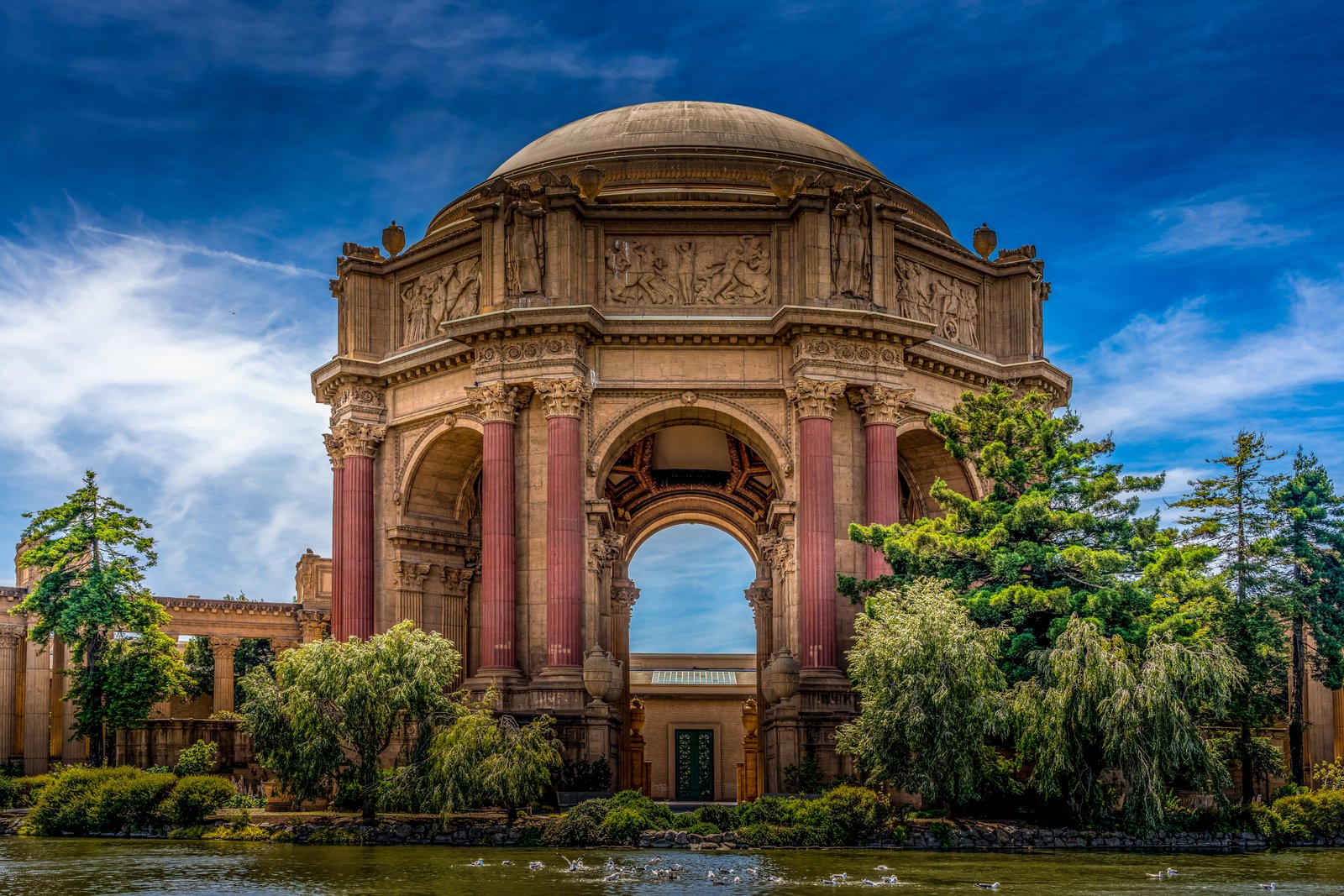
The Palace Of Fine Arts San Francisco
This photograph shows the Palace of Fine Arts in San Francisco's Marina District, viewed from across the lagoon looking directly through the great central arch of the rotunda toward the colonnade beyond. Reflecting pools, willows and pines frame the reddish Corinthian columns and sculpted frieze panels beneath the massive dome, with waterfowl gathered on the water in the foreground. Key Features: The Origin: The Palace of Fine Arts was one of the finest buildings constructed for the 1915 Panama Pacific International Exposition in San Francisco. The Architect: It was designed by Bernard Maybeck, one of America's most important and influential architects. The palace established a new standard for civic monumental architecture in the city. The Rebuild: Originally built of temporary materials for the fair, the decaying structure was reconstructed using permanent materials between 1964 and 1974. The Setting: The open rotunda rises roughly 162 feet and is framed by sweeping colonnades and a lagoon, giving the complex its theatrical presence today.
Prints from $14Downloads from $19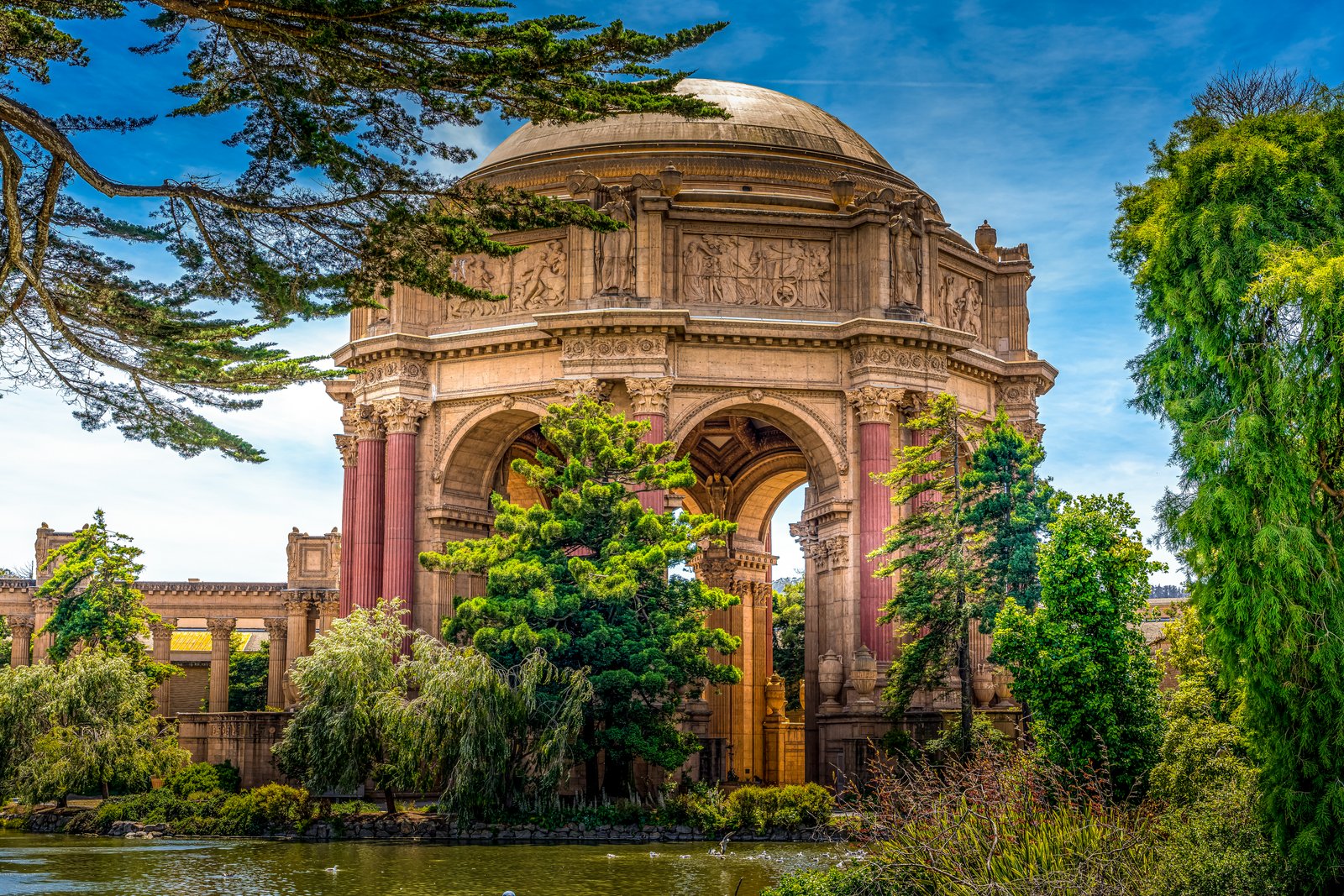
The Palace Of Fine Arts San Francisco
The photograph shows the Palace of Fine Arts in San Francisco's Marina District, viewed from across its lagoon with the great domed rotunda framed by cypress and pine trees. The arched openings, paired Corinthian columns and carved friezes of the open-air rotunda dominate the frame, with the curving colonnade visible beyond. Key Features: The Origin: The Palace is a faithful recreation of an earlier structure designed by Bernard Maybeck for the 1915 Panama-Pacific International Exposition, originally built of temporary materials for the fair before the decaying structure was reconstructed with permanent materials decades later. The Design Concept: Maybeck chose the theme of a Roman ruin for his design, meant to show the mortality of grandeur and the vanity of human wishes, choosing a Marina District site for the Palace. The Structure: The Palace consists of a rotunda and two flanking curvilinear colonnades fronting a lagoon, with its domed rotunda an open-air octagon supported by eight piers framing arched openings. Its Legacy: The Palace and the Marina Green are the only remnants of the 1915 Exposition still on site today.
Prints from $14Downloads from $19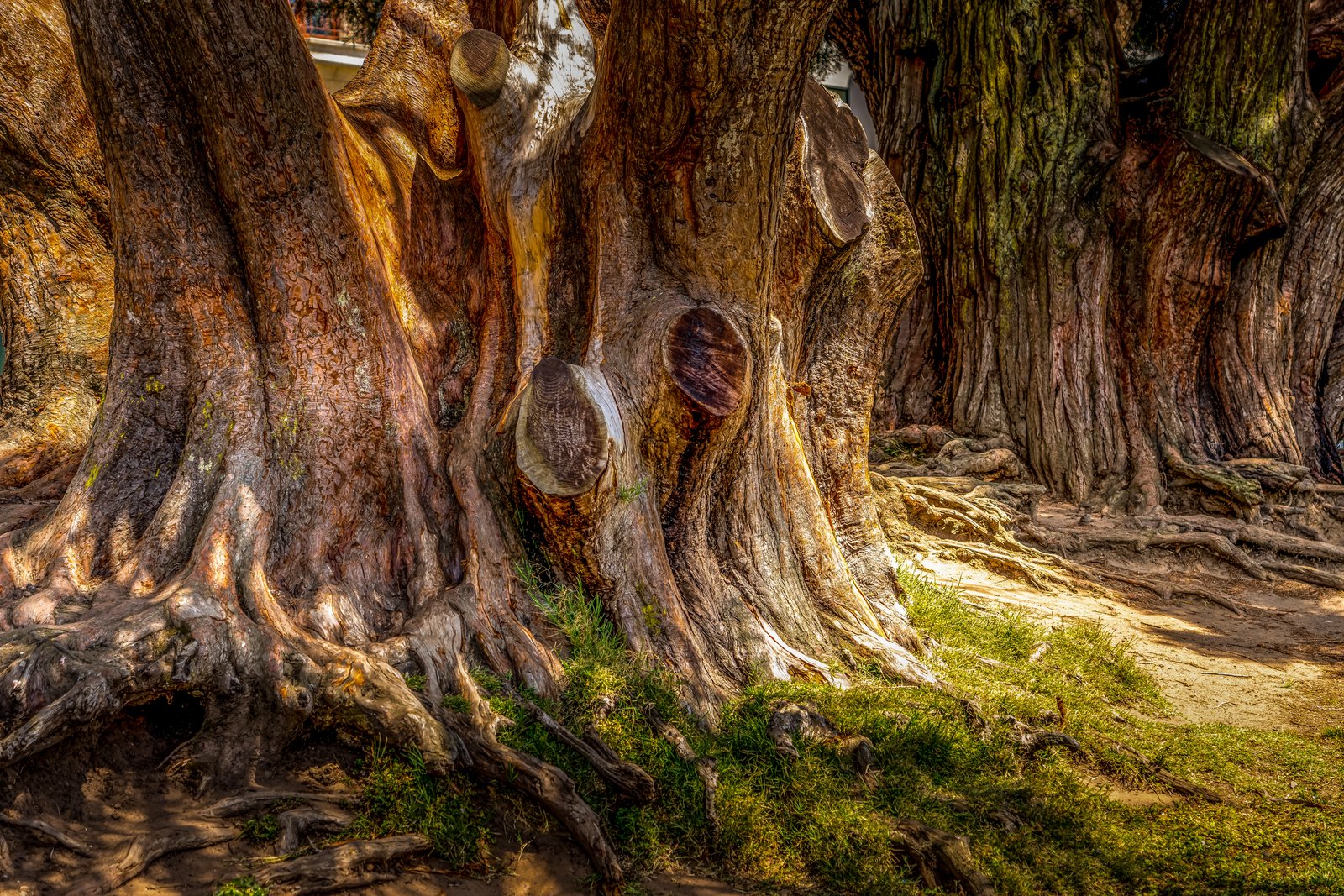
Tree of Life
The photograph shows the immense, gnarled trunk of El Árbol del Tule, a single Montezuma cypress standing on church grounds in the town center of Santa María del Tule, Oaxaca, Mexico. The close vantage point reveals its massive buttressed roots, deeply furrowed bark, and thick lobes of wood that give the impression of several separate trunks fused together, with the shaded churchyard and grass at its base. Key Features: The Ancient Tree: El Árbol del Tule is a mighty Montezuma cypress located in the town center of Santa María del Tule in the Mexican state of Oaxaca, chronicled for more than 2,000 years by both the Aztecs and the Spanish, making it one of the oldest trees in the world. Record Trunk: Its trunk measures 11.62 meters in diameter and reaches a height of 35.4 meters, making it the tree with the largest trunk diameter worldwide. Hidden Shapes: Its knotted trunk and branches have taken different forms and with a little imagination one can see faces of goblins and monsters and animals. Single Organism: DNA analysis has confirmed that this 1,500-year-old cypress is a single living organism, though researchers initially believed it might be several trees merged together.
Prints from $14Downloads from $19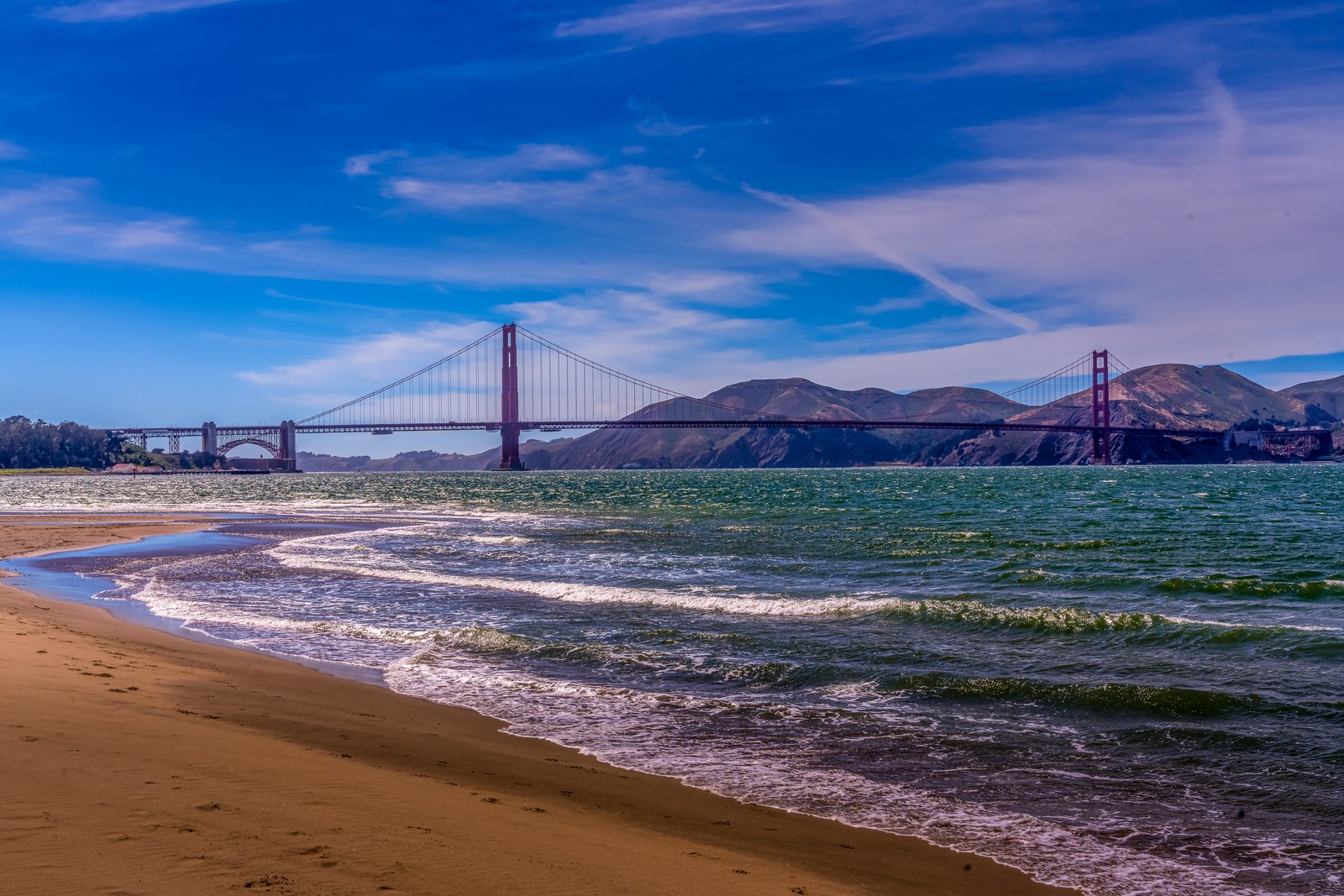
The Golden Gate Bridge San Francisco
The photograph looks north across San Francisco Bay from the sandy shoreline of Baker Beach, in the Presidio, toward the Golden Gate Bridge and the Marin Headlands beyond. From this low vantage point at the water's edge, waves roll in over the beach while the bridge's towers and cables stretch across the strait, with the rugged headlands rising against the sky in the distance. Key Features: The Vantage Point: Baker Beach is one of the closest beaches to the Golden Gate Bridge, offering a view of waves breaking in front of the bridge with the Marin Headlands in the distance, all captured in one frame. The Setting: Baker Beach stretches a mile below rugged cliffs on the Presidio's western shoreline, with spectacular views of the bridge and the Marin Headlands beyond. The Bridge: The Golden Gate Bridge spans the entrance to San Francisco Bay, connecting the city to the Marin Headlands and standing as one of the most photographed landmarks in the United States. Natural Surroundings: The strait's cold currents and steady winds shape the waves seen breaking on the beach, while the headlands' dry, rounded hills form a dramatic backdrop typical of the Northern California coast.
Prints from $14Downloads from $19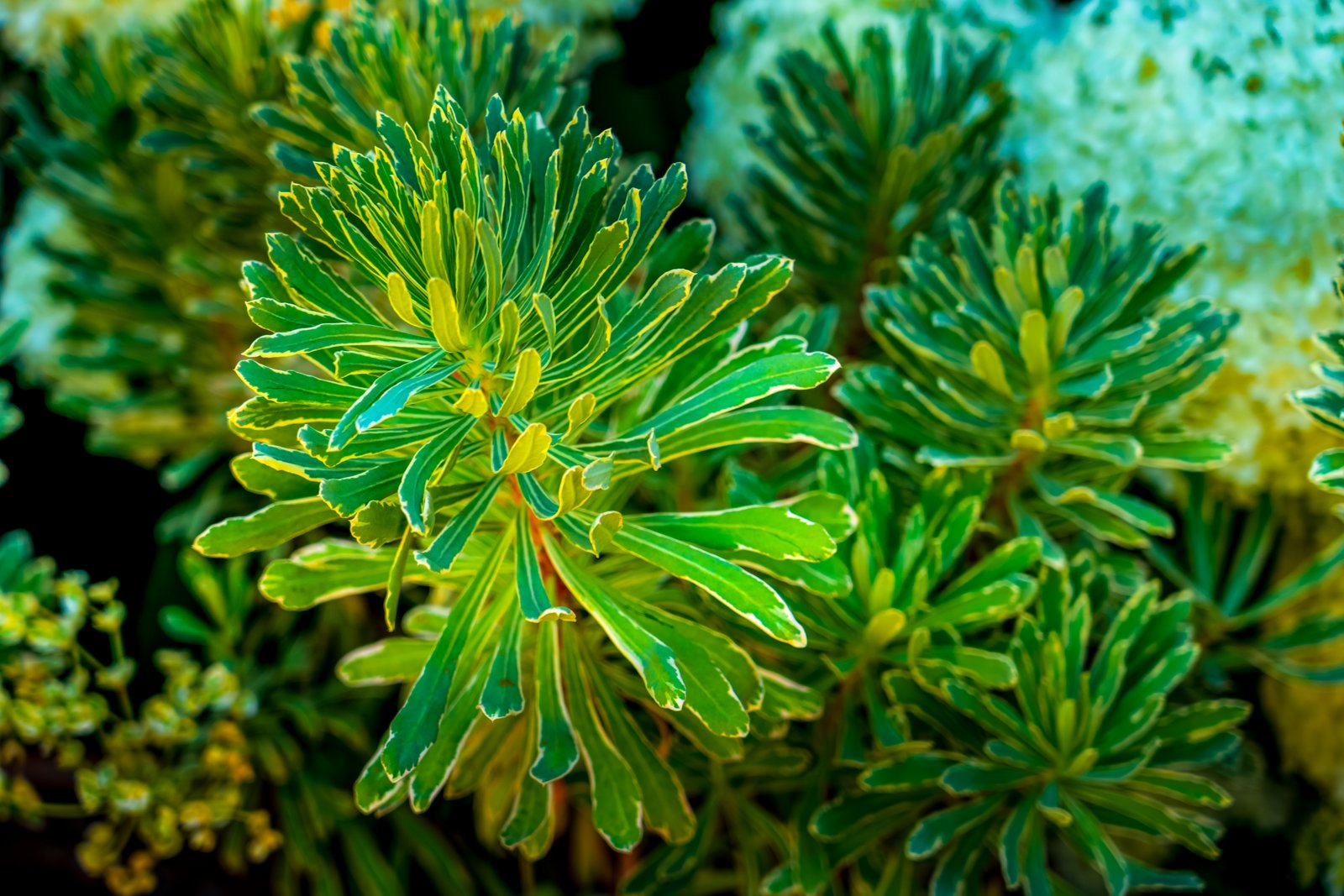
Napa Valley CA
This photograph is a close up detail taken in a garden setting in Napa Valley, California, showing the variegated foliage of an ornamental Euphorbia shrub, likely the cultivar known as Tasmanian Tiger spurge. The tightly whorled, sword shaped leaves with their pale cream margins and yellow green centers radiate outward from a central rosette, while soft blurred foliage and pale blossoms fill the background, suggesting a cultivated landscape bed typical of the valley's wine country estates and gardens. Key Features: The Plant: Euphorbia characias 'Tasmanian Tiger' has variegated foliage. It was reportedly discovered in 1993 as a chance hybrid growing in a garden in Hobart, Tasmania, Australia. Foliage Detail: Its slender, gray-green leaves are variegated with thick white margins. Garden Use: It is a broadleaf evergreen perennial with blue, green, variegated and white foliage, producing chartreuse flowers in spring and summer. Such plants are popular in Napa Valley's drought tolerant landscape gardens. Regional Setting: Napa Valley is renowned for its vineyard estates, whose surrounding gardens often showcase ornamental, low water plantings like this variegated spurge.
Prints from $14Downloads from $19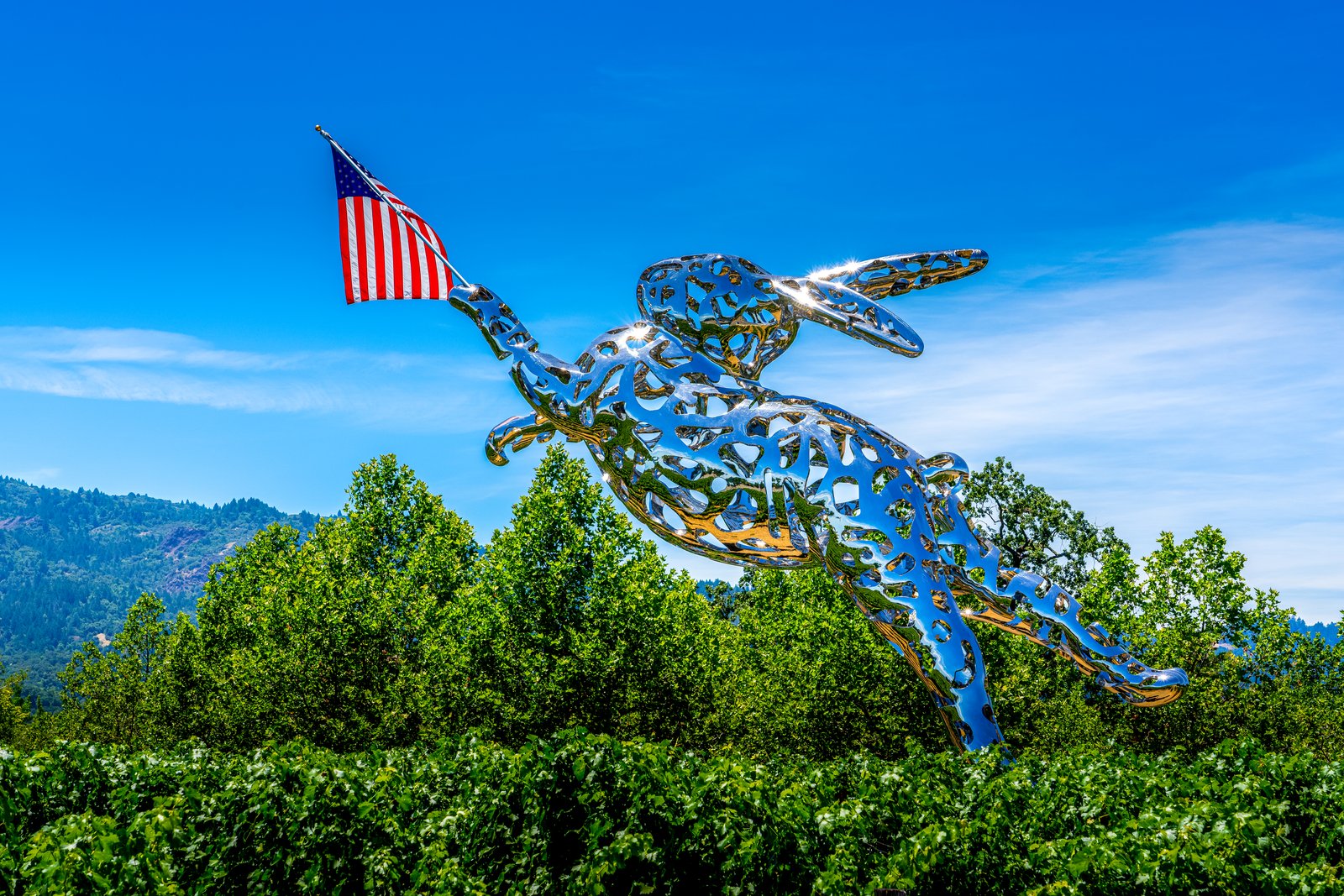
Napa Valley CA
Now I have enough information to write the story.This photograph captures Bunny Foo Foo, a 35 foot tall stainless steel rabbit sculpture leaping above the vineyards of HALL Wines along Highway 29 in St. Helena, in Napa Valley. Shot from among the vines, it frames the rabbit's polished, lattice body against a clear sky, with wooded valley hills behind and a small American flag set into its forepaw. Key Features: The Sculpture: Created by artist Lawrence Argent from over three metric tons of polished stainless steel. The Setting: Stands in the HALL Wines vineyard beside Highway 29, one of Napa Valley's main wine touring routes. The Artist: Argent also created Denver's giant blue bear and Sacramento's giant red rabbit. The Landscape: Grapevines and forested mountains identify the scene as Napa Valley wine country.
Prints from $14Downloads from $19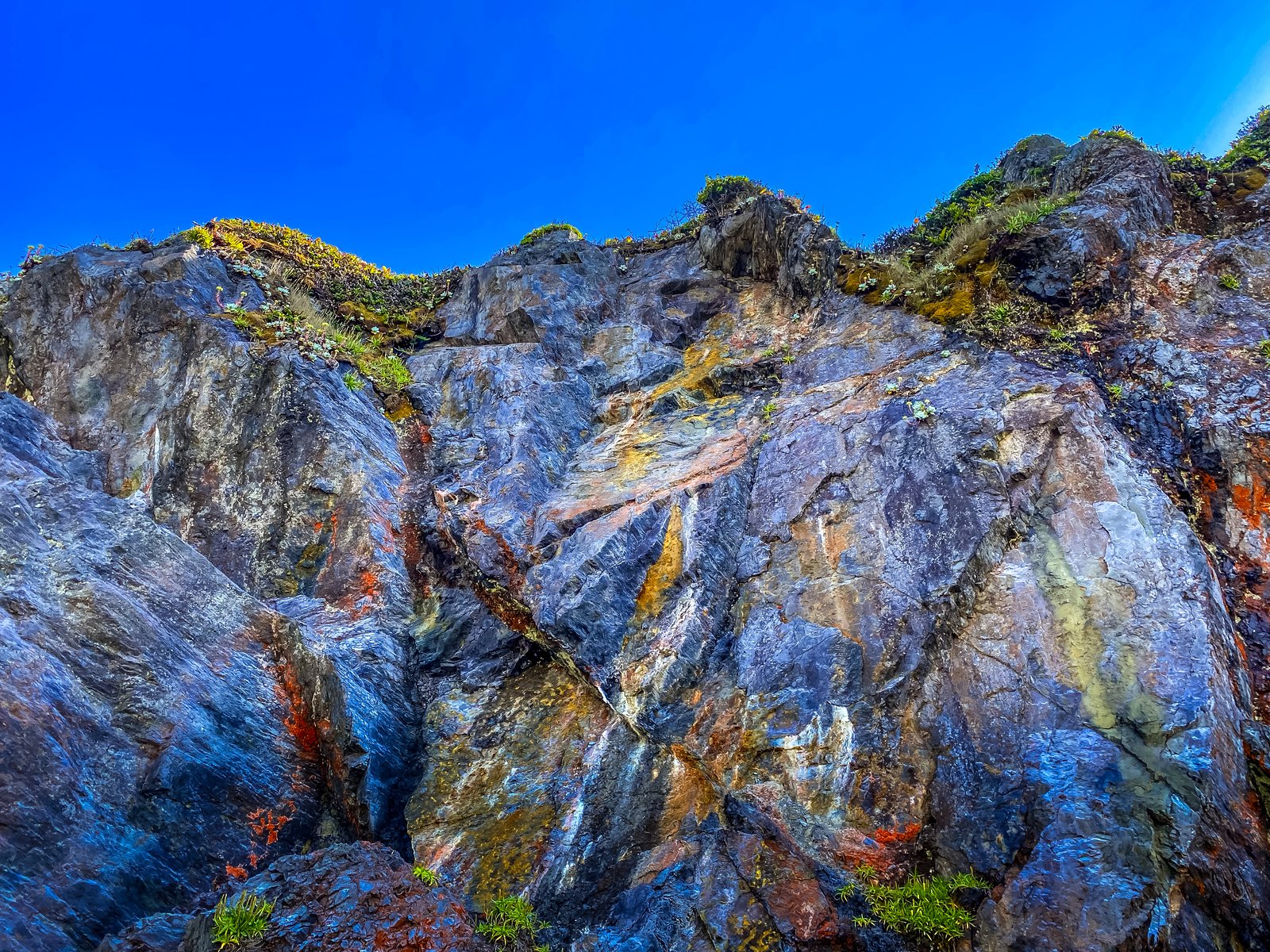
Humboldt Lagoon State Park California
Humboldt County, California
The photograph looks straight up a steep coastal bluff within Humboldt Lagoons State Park along California's north coast, where a thin strip of dune and beach separates a chain of lagoons from the open Pacific. The close vantage from the shoreline captures a jagged rock face streaked with rust, ochre and blue gray tones, its jointed surface crowned by a thin fringe of wind sculpted coastal scrub and grasses against a deep blue sky. Key Features: The Rock: These deposits protect the underlying Franciscan formation from erosion by waves, forming pinnacles and jagged bluffs. The Origin: The park was formed by the clash of two tectonic plates, part of the largest lagoon system in the United States. The Setting: Forty miles north of Eureka, the park features dunes, forests, prairies, coastal scrub and marshland that support a rich variety of plants, birds and other wildlife. The Coastline: Black cliffs mark the edge of the bluffs where the sandy lagoon beaches give way to exposed, mineral streaked rock.
Prints from $14Downloads from $19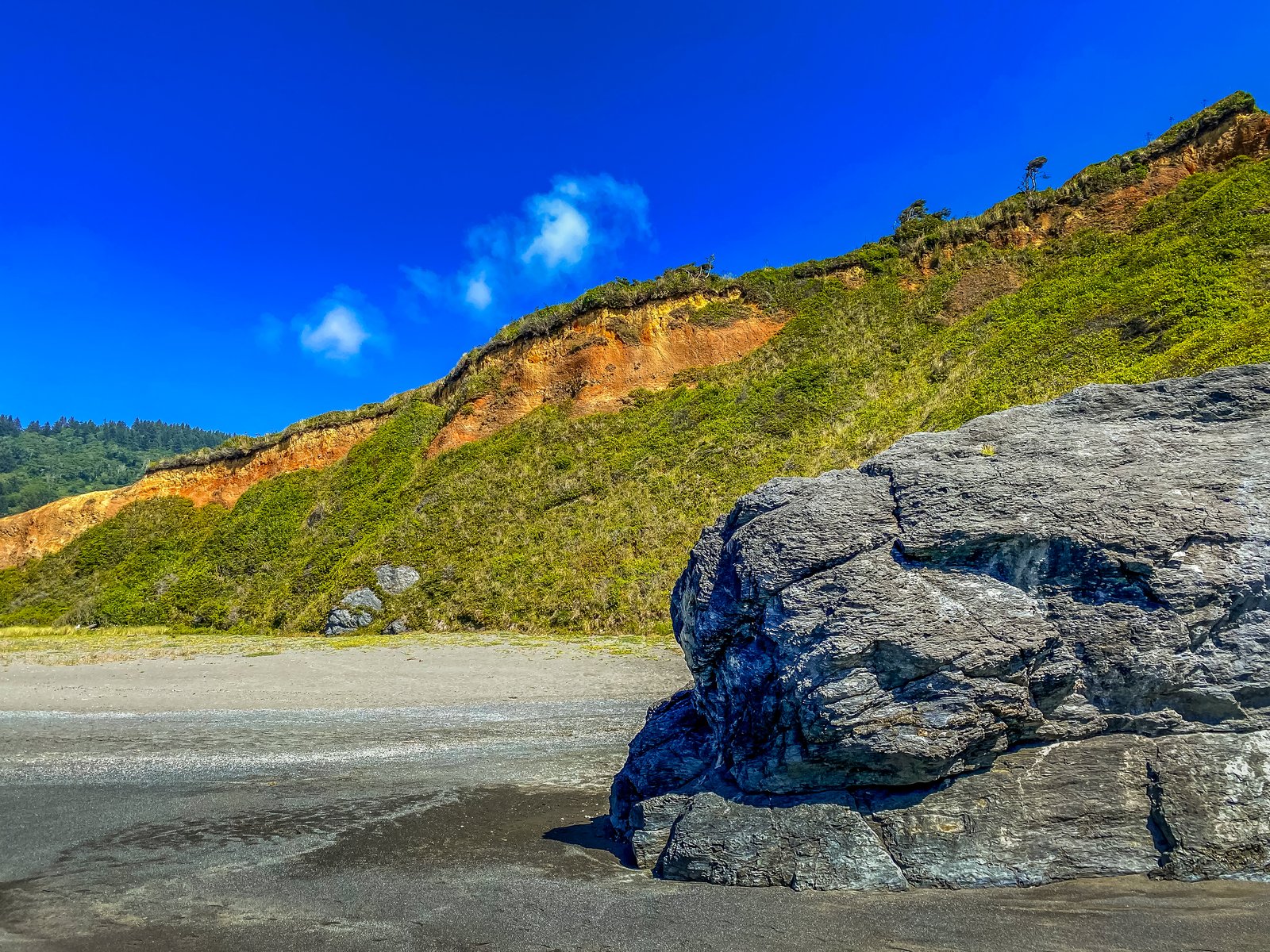
Humbolt Lagoon State Park CA
Humboldt County, California
This matches nicely - Freshwater Rocks at Humboldt Lagoons State Park.The photo was taken along the coast of Humboldt Lagoons State Park in Humboldt County, California, likely near Freshwater Lagoon Beach where dark, weathered sea rocks known locally as the Freshwater Rocks rise from the sand. The vantage point is low on the open beach, looking toward a steep coastal bluff whose face shows a band of rust colored exposed soil beneath a cap of wind sheared coastal scrub and a lone conifer, with a large dark boulder anchoring the foreground. Key Features: The Freshwater Rocks: black cliffs known as the Freshwater Rocks rise up at the edge of a range of coastal bluffs, marking where the open sand ends The Lagoon System: Humboldt Lagoons State Park is part of the largest lagoon system in the United States, formed by the clash of two tectonic plates The Setting: the ocean beach side of Freshwater Lagoon lies within the boundary of Redwood National Park, with dunes behind the long wide beach The Landscape: Layers of orange sediment cut through the green covered bluff, evidence of ongoing coastal erosion along this stretch of the Redwood Coast.
Prints from $14Downloads from $19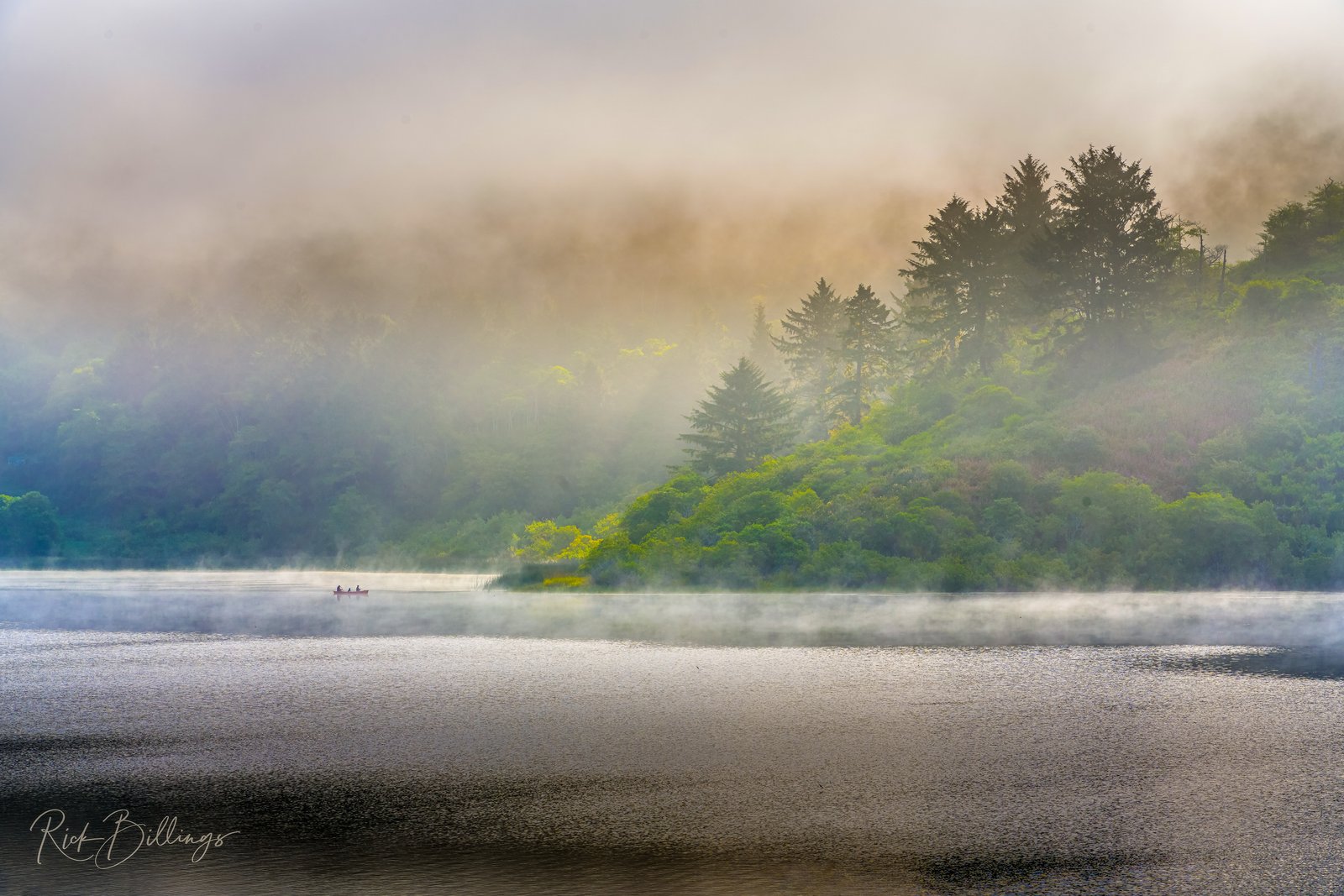
Humboldt Lagoon California
Morning fog rolls off the Pacific and drifts over one of the coastal lagoons within Humboldt Lagoons State Park on California's redwood coast, likely Stone or Big Lagoon. A canoe glides quietly along the misty shoreline while sunlight filters through low clouds, illuminating a hillside of redwood and spruce forest above the water. Wisps of fog cling to the surface, softening the line between water, trees, and sky. Key Features: The Lagoon System: This stretch of shoreline is part of the largest lagoon system in the United States, where shallow coastal waters are separated from the Pacific by narrow strips of sand. The Setting: The park sits along a redwood coast forty miles north of Eureka, where dense stands of coast redwood, spruce, and fir crowd the hills above the water. Native Heritage: The Yurok people have lived along this coastal strip for generations, once using hollowed redwood log canoes to travel between villages. Natural Character: Frequent fog and mist off the Pacific shape the region's cool, moist climate, often burning off by midday to reveal the forested hillsides.
Prints from $14Downloads from $19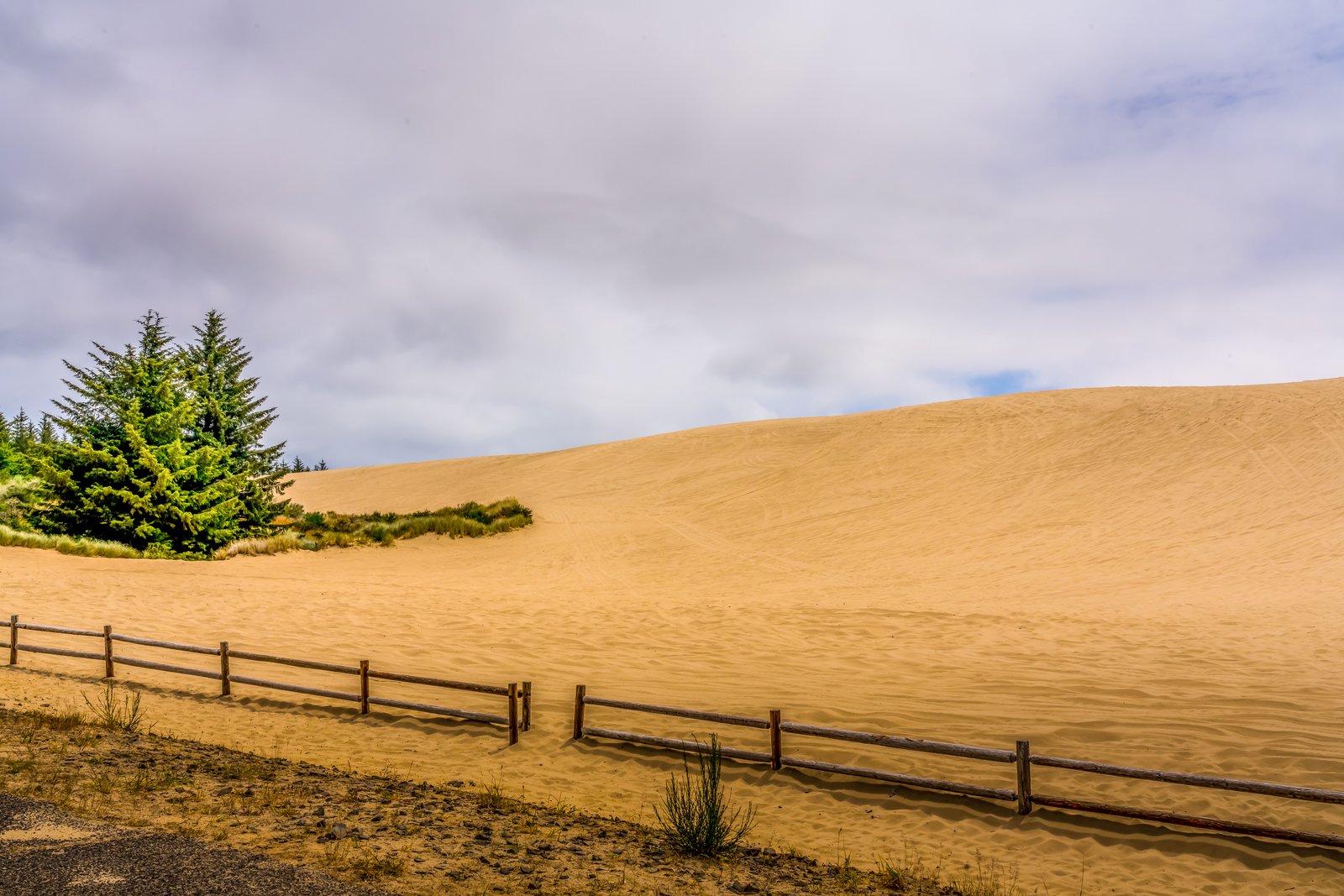
Oregon Dunes
Along the Oregon Coast, a great wave of pale sand rises against a heavy, cloud filled sky, with dark conifers clinging to its edge and a simple log fence marking a trailhead where the forest gives way to open desert. This is the Oregon Dunes National Recreation Area, stretching along the shoreline between Florence and Coos Bay, where wind and time have built some of the largest coastal dune fields in the world. Key Features: The Scale: The Oregon Dunes are one of the world's largest expanses of temperate coastal sand dunes. The Setting: The dunes extend for 40 miles along the Oregon coast between Florence and Coos Bay, with wind sculpted peaks towering almost 500 feet above the shore. The Landscape Mix: Desert, lake, and tree covered regions provide shelter and life to rare and diverse plants and wildlife within the same recreation area. The Ongoing Change: A major challenge the Forest Service faces in managing the area is the loss of open sand to encroaching vegetation.
Prints from $14Downloads from $19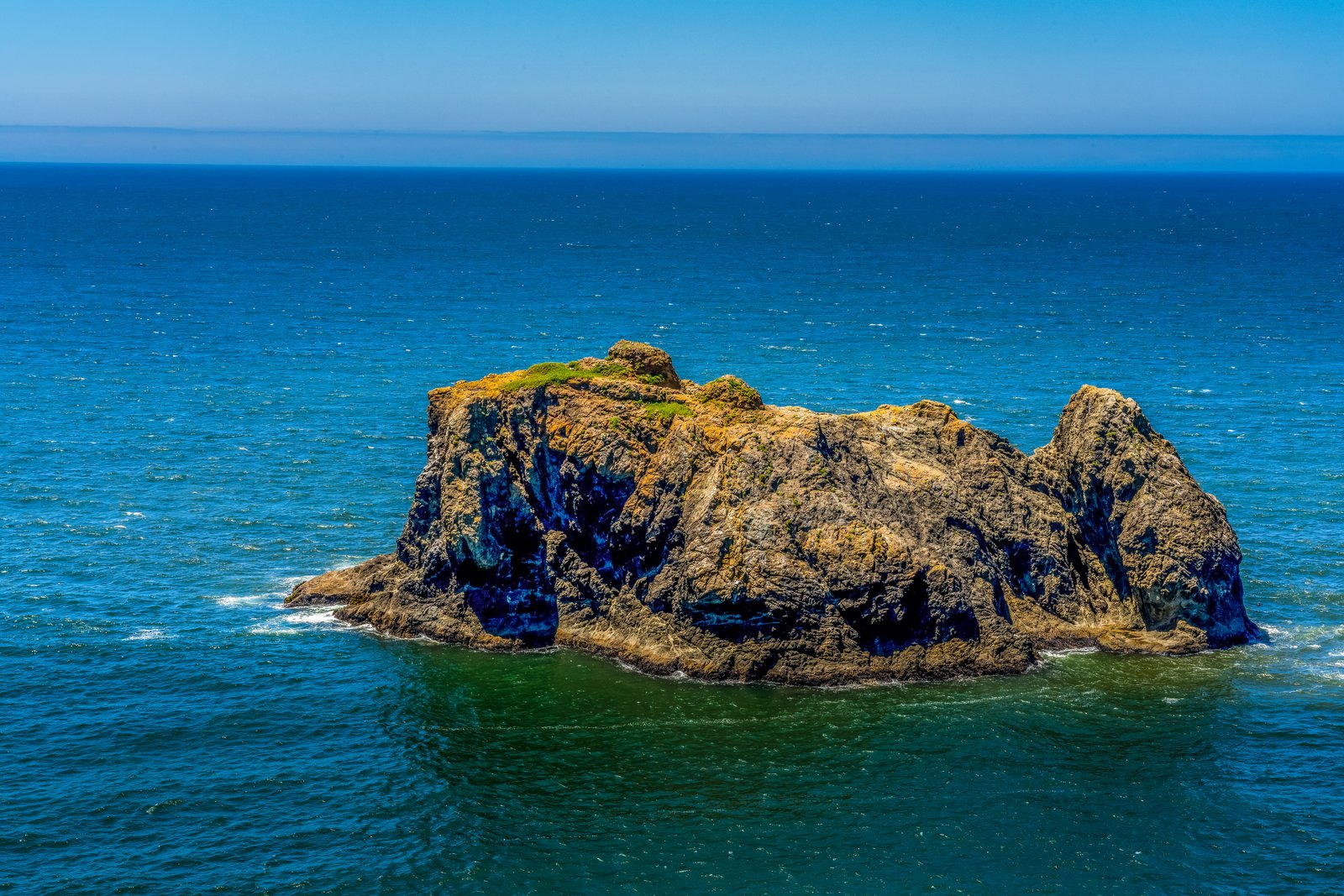
Frog Rock Oregon Coast
Prints from $14Downloads from $19