

Collection
Animals
By · 15 photos
 Painterly
Asian Elephant
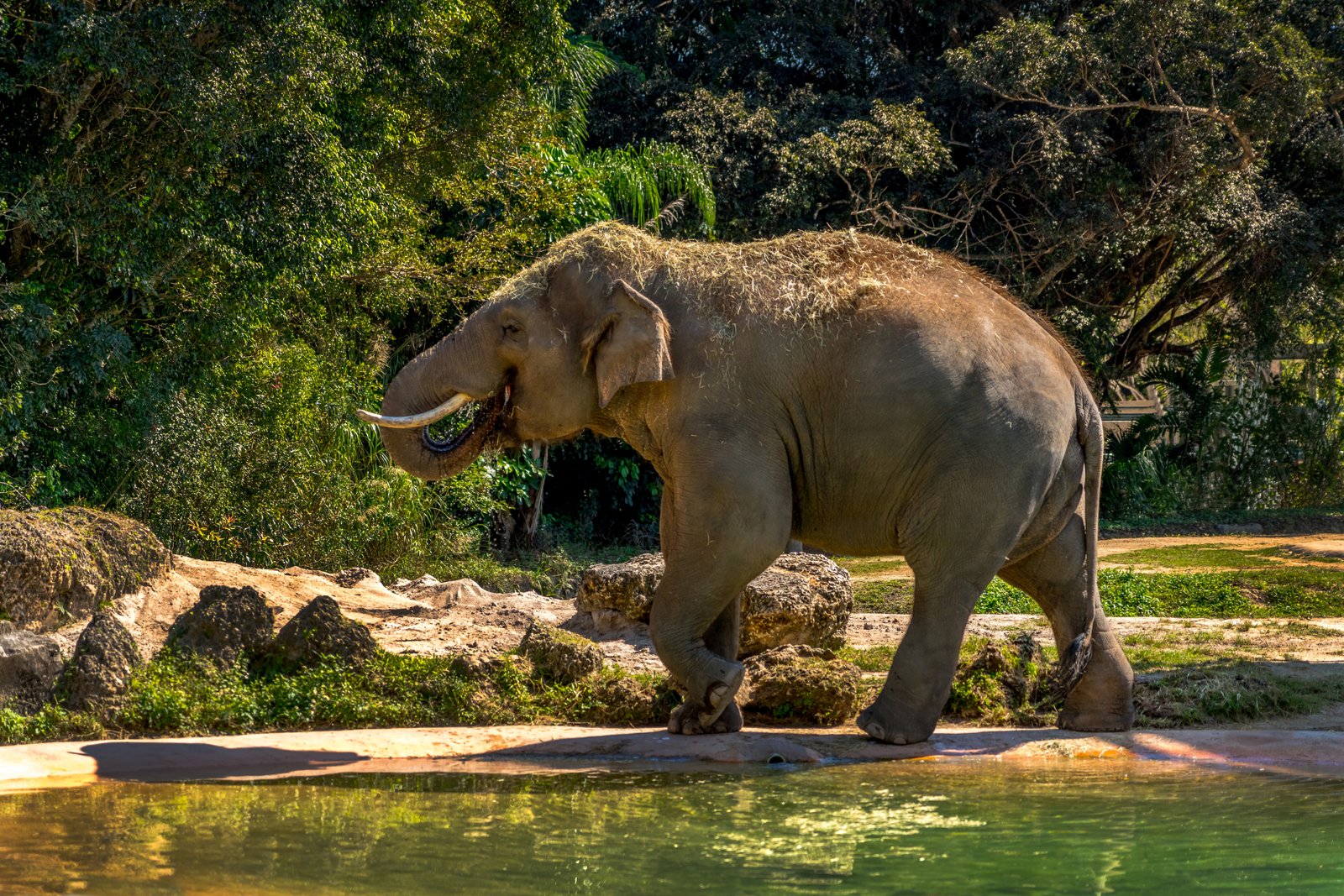
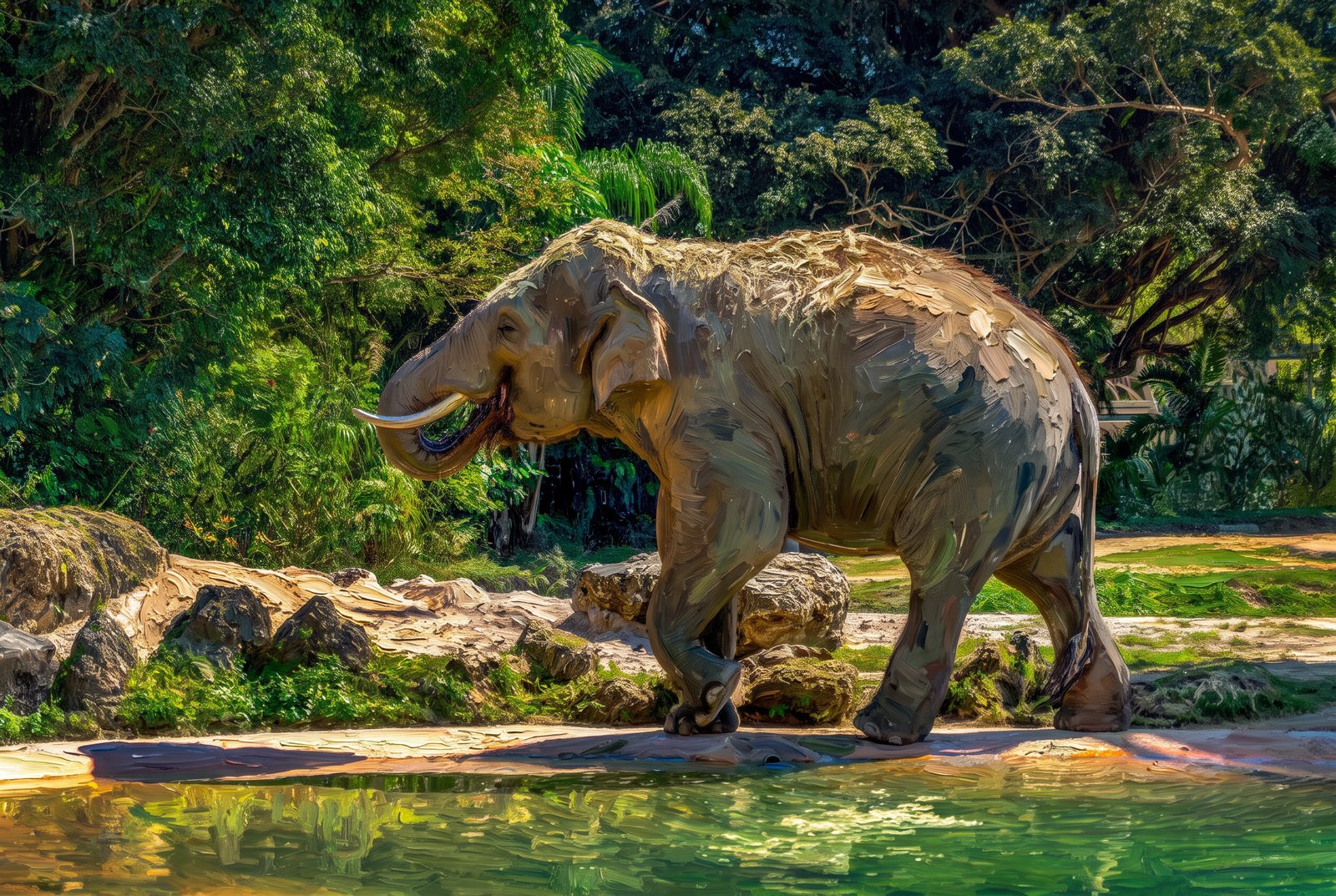
An Asian elephant walks a rocky bank beside a pool of water, hay scattered across its back and tusks catching the sun, with dense palms and broadleaf trees crowding the lush habitat around it. Key Features: The Species: Asian elephants have smaller, rounded ears than their African cousins, and only some males carry tusks. The Habitat: Palms, broadleaf trees and rock work recreate the feel of the elephant's native tropical range. The Behavior: Elephants go to water many times a day to drink, bathe and cool off. The Moment: Soft, angled light catches the elephant mid-stride, an unposed moment in its day.
Prints from $41Prints only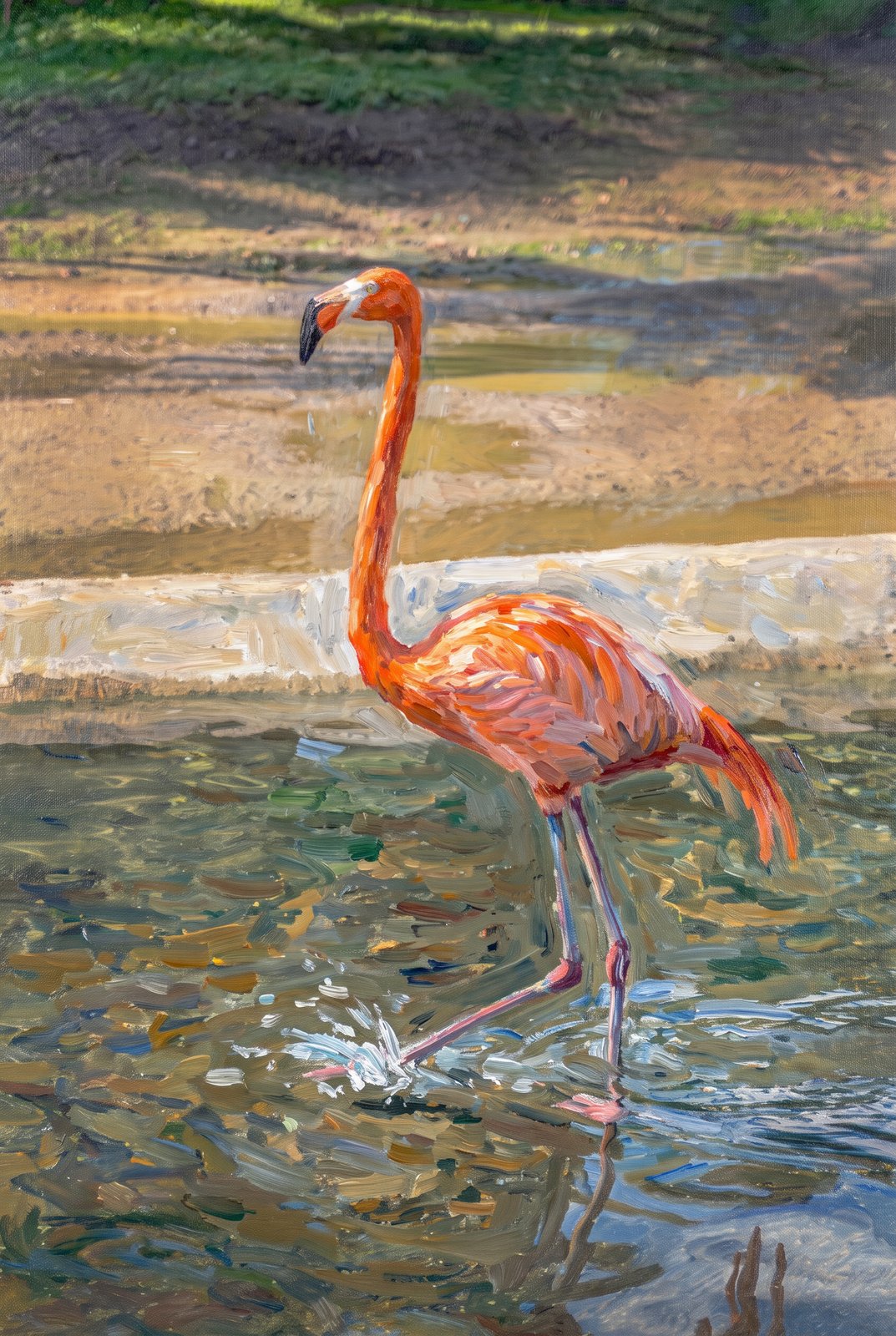 Impressionist
American Flamingo Wading Through Shallow Water
A single American flamingo wades through shallow water, seen low and close as it lifts one leg mid-stride, its curved neck and hooked, black-tipped bill above soft ripples and a faint reflection, with a mown grass bank and concrete edge behind. Key Features: The Species: The American flamingo, Phoenicopterus ruber, has the most vivid reddish pink plumage of any flamingo. The Color: Young birds are pale; adults turn pink from pigments in their diet. The Range: It is the only flamingo native to North America, with wild flocks in the Caribbean, coastal Mexico and northern South America. Feeding: Flamingos are filter feeders, stirring the mud with their feet and sifting small creatures from the water with their bent bills.
Prints from $41Prints only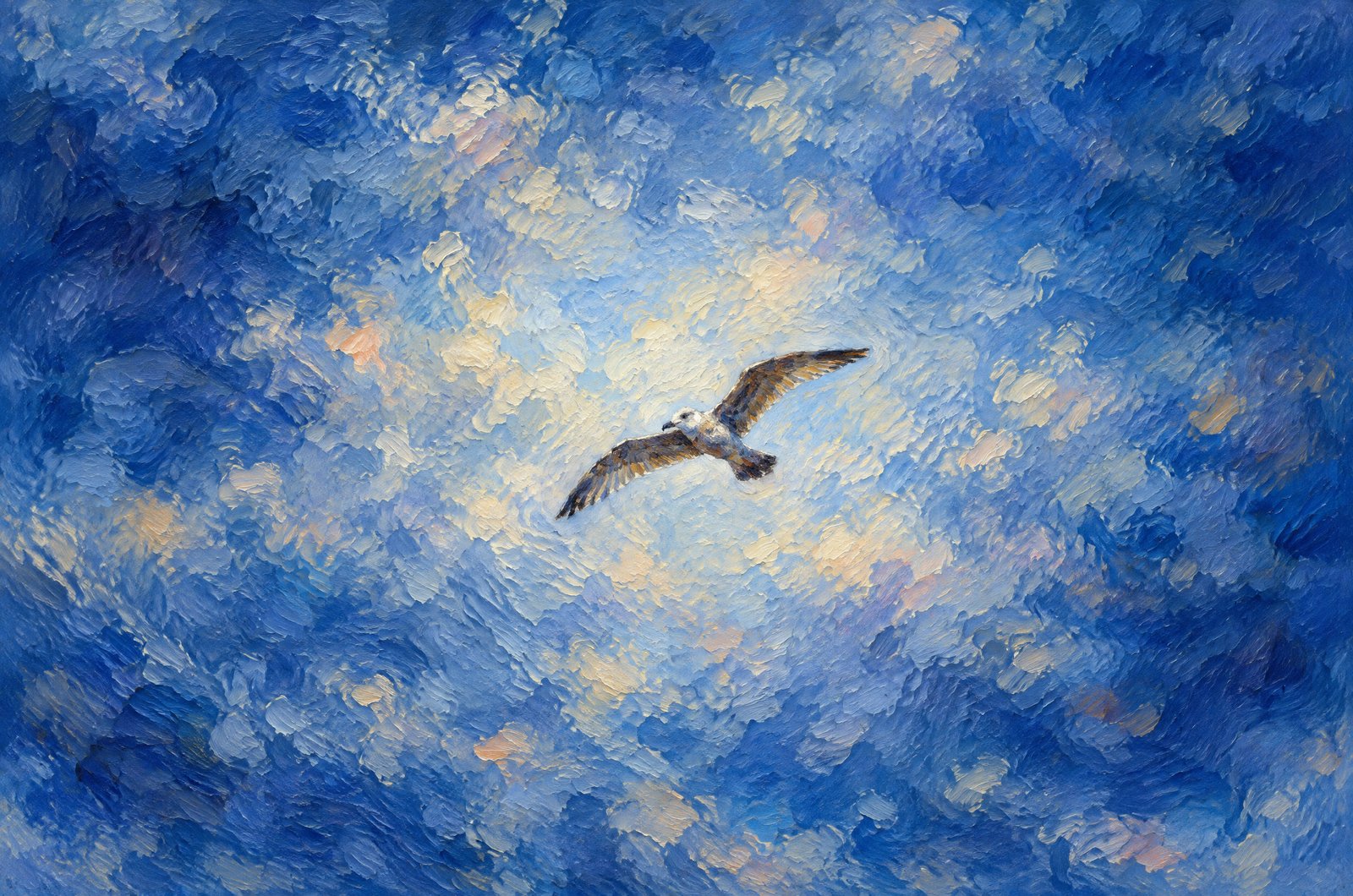 Impressionist
Lone Gull Soaring
A lone young gull soars across a deep blue sky, seen from directly below with wings fully spread as it banks mid-glide, its mottled brown and white feathers marking it as a juvenile. Key Features: Juvenile Plumage: Young gulls wear speckled brown and white until they molt into the clean gray and white of adults. The Composition: With nothing but sky around it, the bird becomes a study of flight and freedom. The Angle: Shooting straight up from beneath the flight path shows the full spread of the wings.
Prints from $41Prints only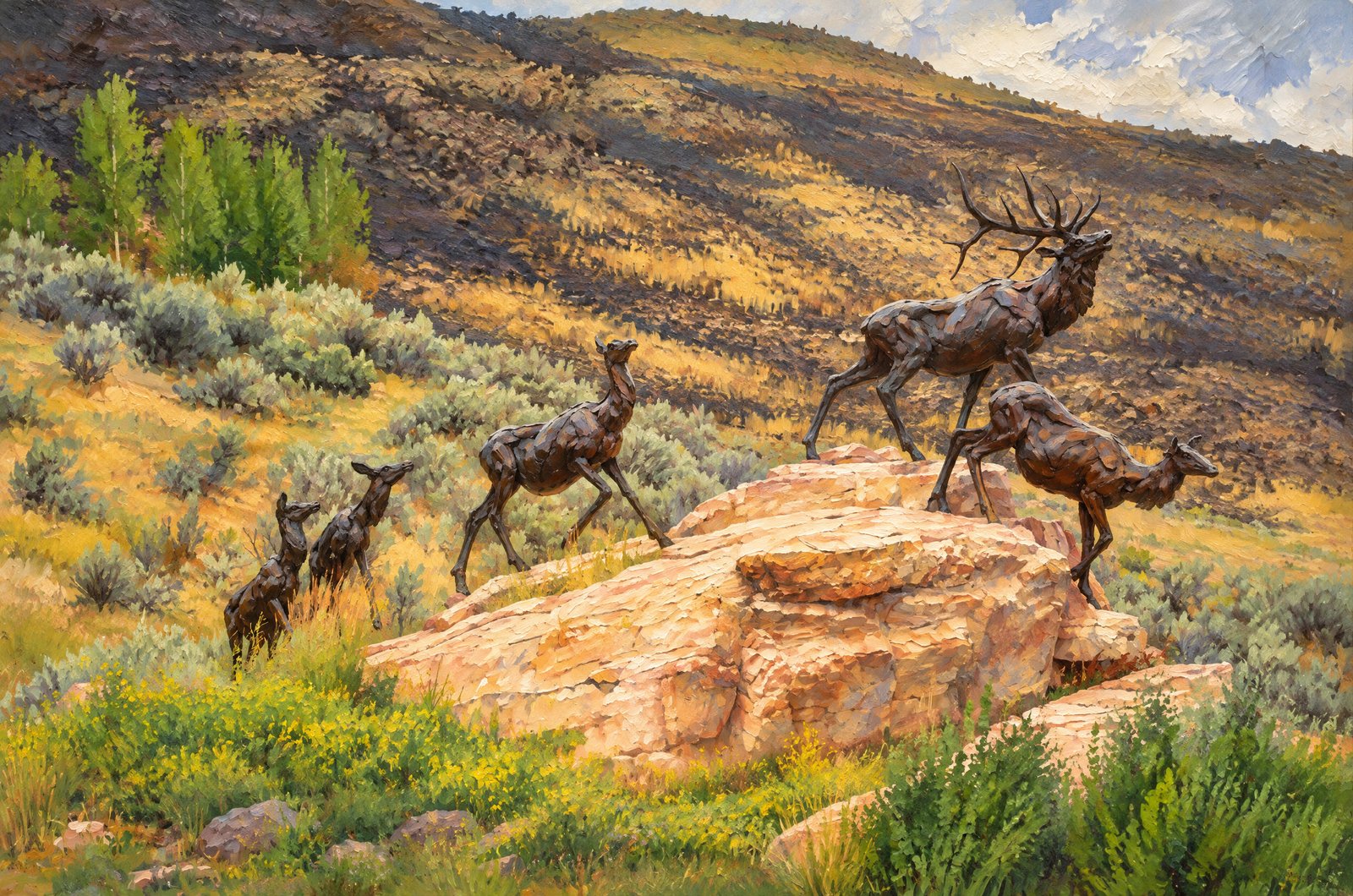 Painterly
Bart Walter's Bronze Sculpture Wapiti Trail
Five bronze elk climb a sandstone outcrop in staggered file, led by a bull with sweeping antlers, in Bart Walter's sculpture Wapiti Trail at the National Museum of Wildlife Art north of Jackson, Wyoming, set on the sage-covered slope of East Gros Ventre Butte with a hillside blackened by past wildfire behind. Key Features: The Sculpture: Modeled in 2005 and cast in 2007, Wapiti Trail marks the entrance to the museum's sculpture trail. The Setting: The museum sits on a bluff above the National Elk Refuge, placing the elk in the very habitat they portray. The Trail: A three-quarter-mile path winds up the hillside from here, pairing bronze wildlife with views of Jackson Hole. The Landscape: Scorched slopes and sagebrush show the natural fire cycle of this high desert valley.
Prints from $41Prints only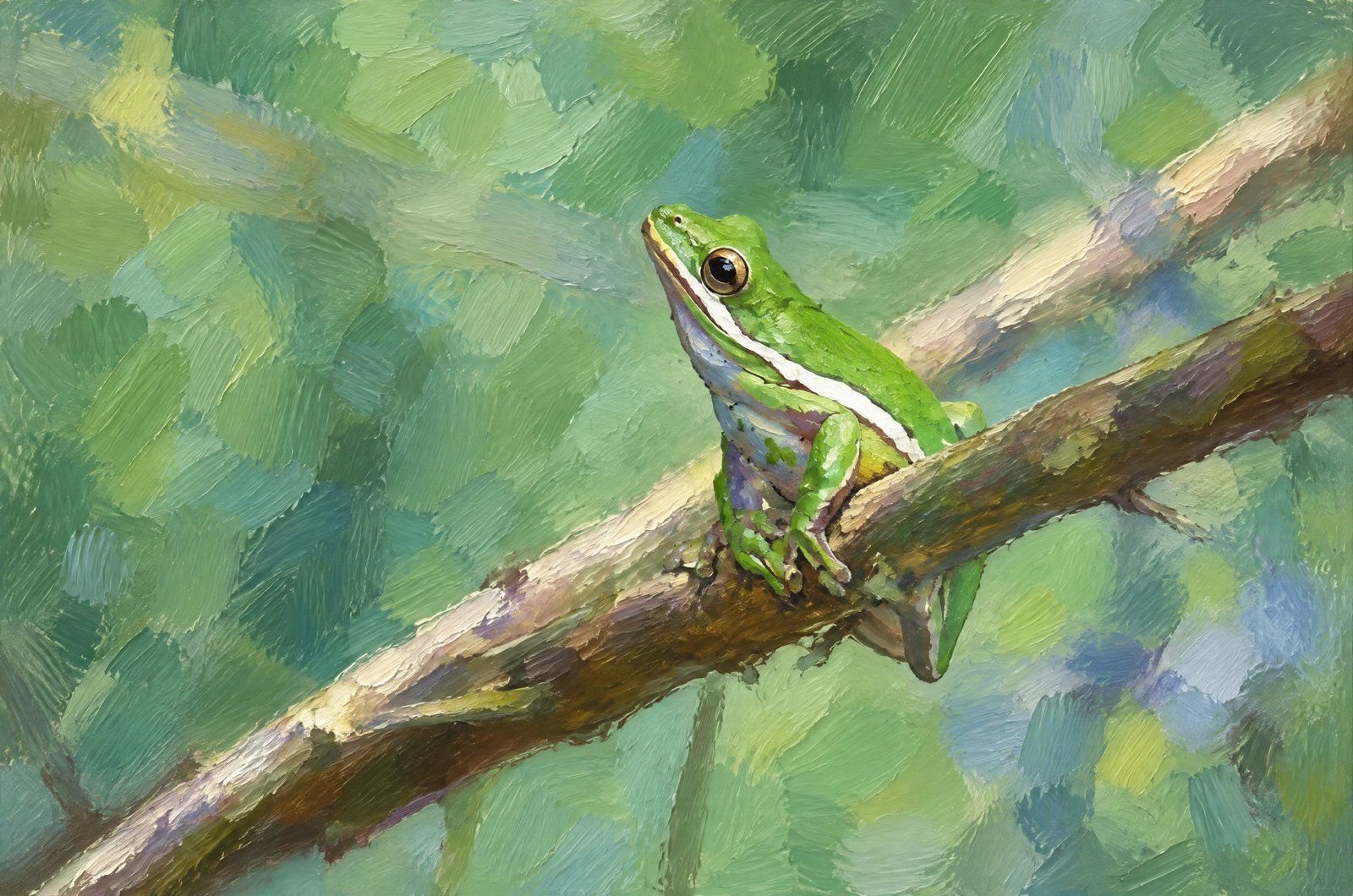 Painterly
American Green Tree Frog
An American green tree frog perches on a bare twig in profile against a soft green backdrop, its smooth lime-green skin, golden eye and crisp white side stripe in sharp detail. Key Features: The Species: The American green tree frog, Dryophytes cinereus, known for its bright green color and white side stripe. Habitat: It favors lakes, ponds, streams, swamps and wetlands with plenty of plants. Range: Native to the southeastern and central United States, from the Gulf Coast into central Texas and as far north as Delaware and Missouri. The Composition: The pale green blur isolates the frog on its diagonal branch, a classic close-up nature portrait.
Prints from $41Prints only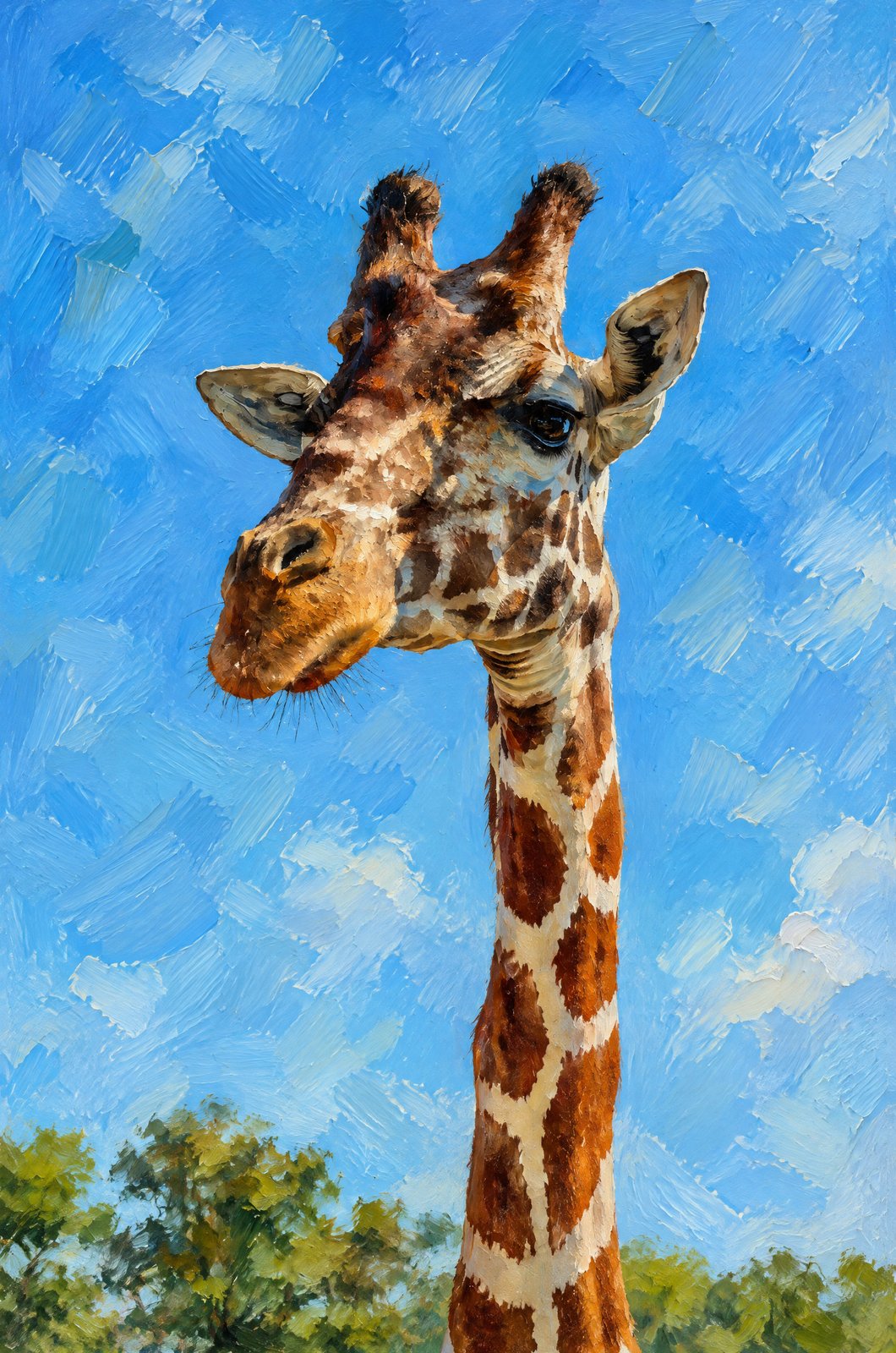 Painterly
Giraffe
A reticulated giraffe's head and long patterned neck rise against a clear blue sky above acacia treetops, seen from low and close, its ossicones, dark eye and bold coat in fine detail. Key Features: The Coat: Reticulated giraffes wear deep chestnut patches separated by a network of crisp white lines. Native Range: Northeast Africa, from Somalia to northern Kenya. Another Name: It is also called the Somali giraffe. The Pattern: Like a fingerprint, no two giraffes' patches are the same.
Prints from $41Prints only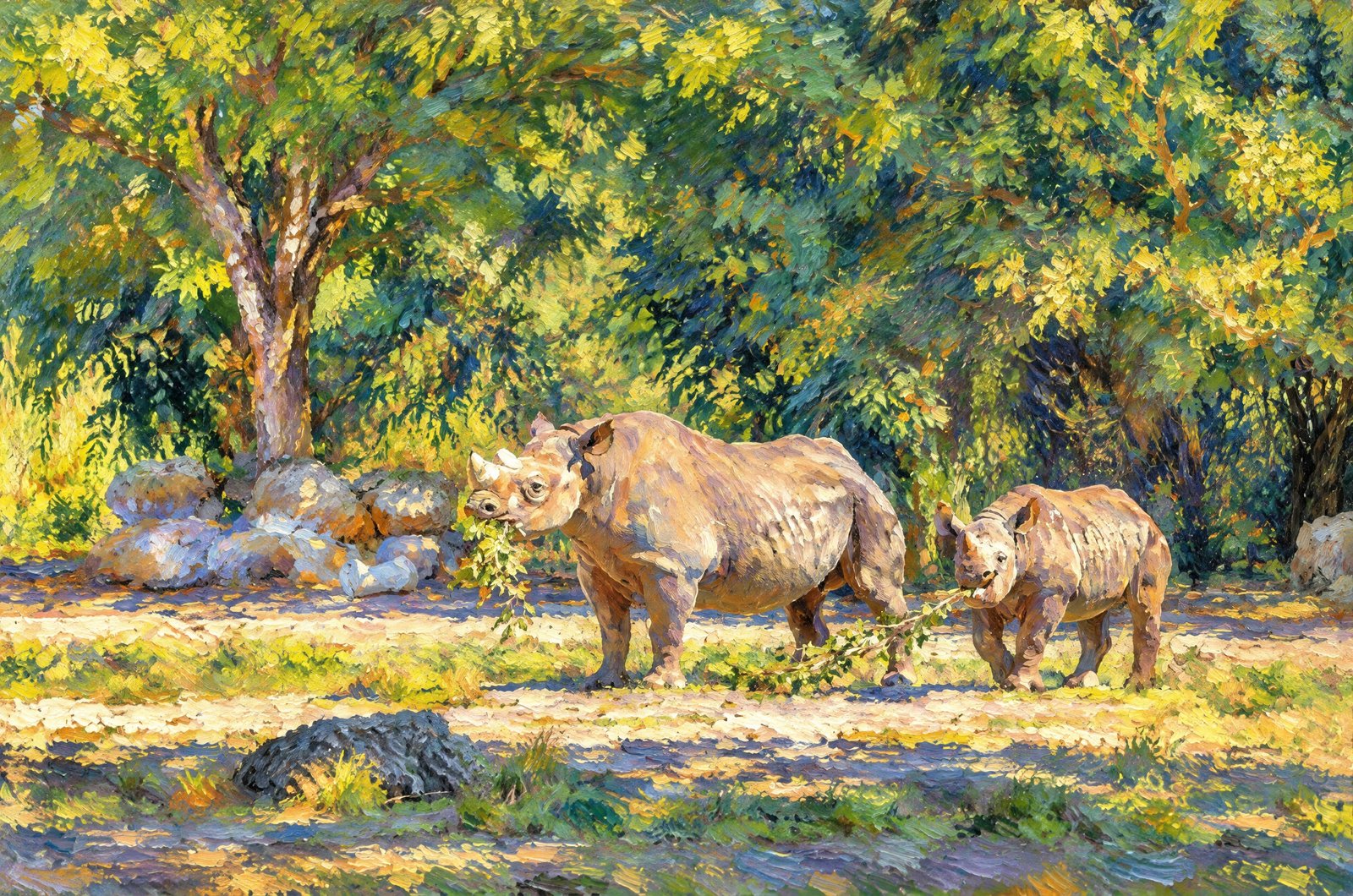 Impressionist
African Momma & Baby Rhino's
A black rhinoceros cow and her calf browse together on a sandy path in a naturalistic habitat, the mother stripping leaves from a cut branch while her calf investigates the same foliage beside her, with dense hammock vegetation and a limestone rock pile around them. Key Features: The Hooked Lip: Black rhinos have a pointed, grasping upper lip for pulling leaves and twigs, unlike the flat-lipped, grazing white rhino. Mother and Calf: Calves stay close to their mothers for several years, learning how to feed and behave before going their own way. Conservation: Black rhinos are critically endangered in the wild, and accredited parks offer browse like this to support breeding and well-being. The Habitat: Rock work and cleared paths are built to encourage natural browsing.
Prints from $41Prints only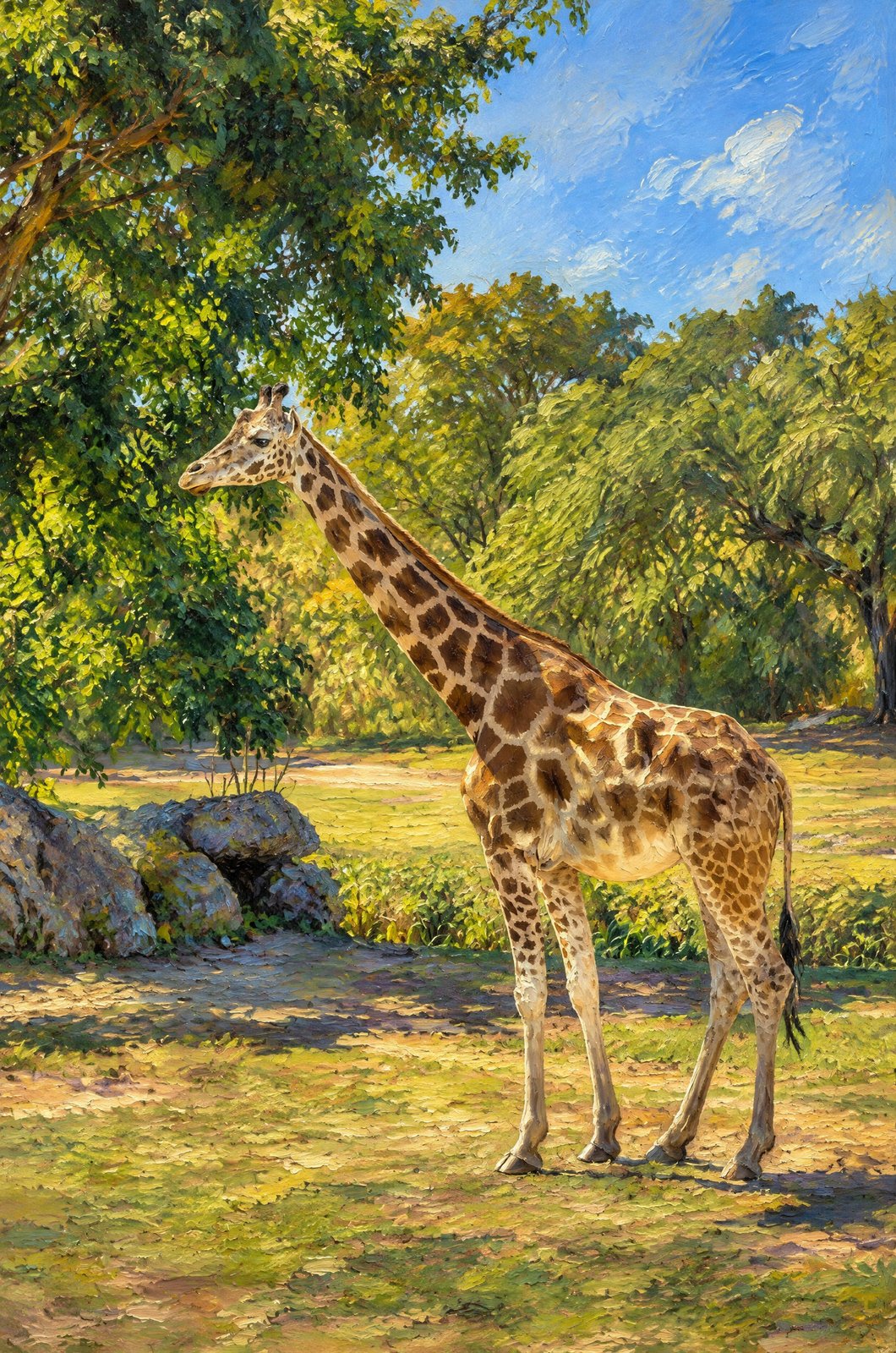 Painterly
Giraffe
A reticulated giraffe stands beneath a canopy of shade trees, seen from ground level so its towering neck rises against clear blue sky, framed by mown grass, a coral rock outcrop and screening plants. Key Features: The Coat: Sharply defined liver-colored patches separated by thin white lines mark a reticulated giraffe, a pattern unique to each animal. Native Range: The arid grassland and acacia savanna of the Horn of Africa, especially Somalia, Ethiopia and northern Kenya. Conservation: Reticulated giraffes are endangered in the wild, which makes their care in parks and zoos important for awareness and breeding. The Setting: Rock and open lawn recreate the open woodland where giraffes browse in the wild.
Prints from $41Prints only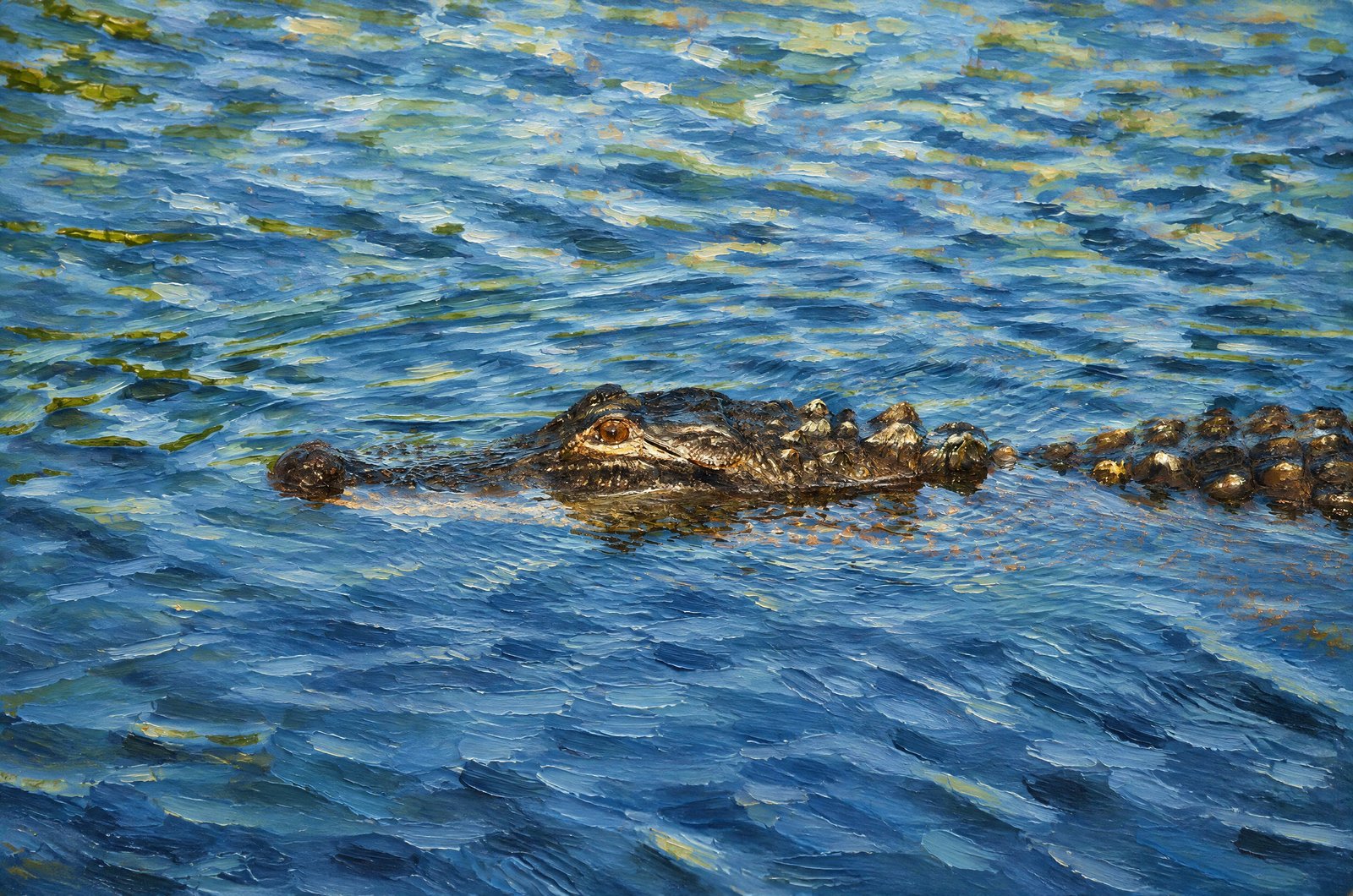 Painterly
Florida Gator
An American alligator glides low through the dark, sun-flecked water of a Florida wetland, only its eyes and the ridged plates of its back breaking the surface, seen from water level amid ripples and strands of algae. Key Features: Ambush Hunting: Alligators hunt by staying perfectly still, with only their eyes and nostrils above water. Built for Water: They can see, hear and breathe while almost completely submerged. A Keystone Species: The alligator is the most important species in the Everglades. Habitat Engineers: The gator holes they dig hold water through the dry season, a lifeline for other animals.
Prints from $41Prints only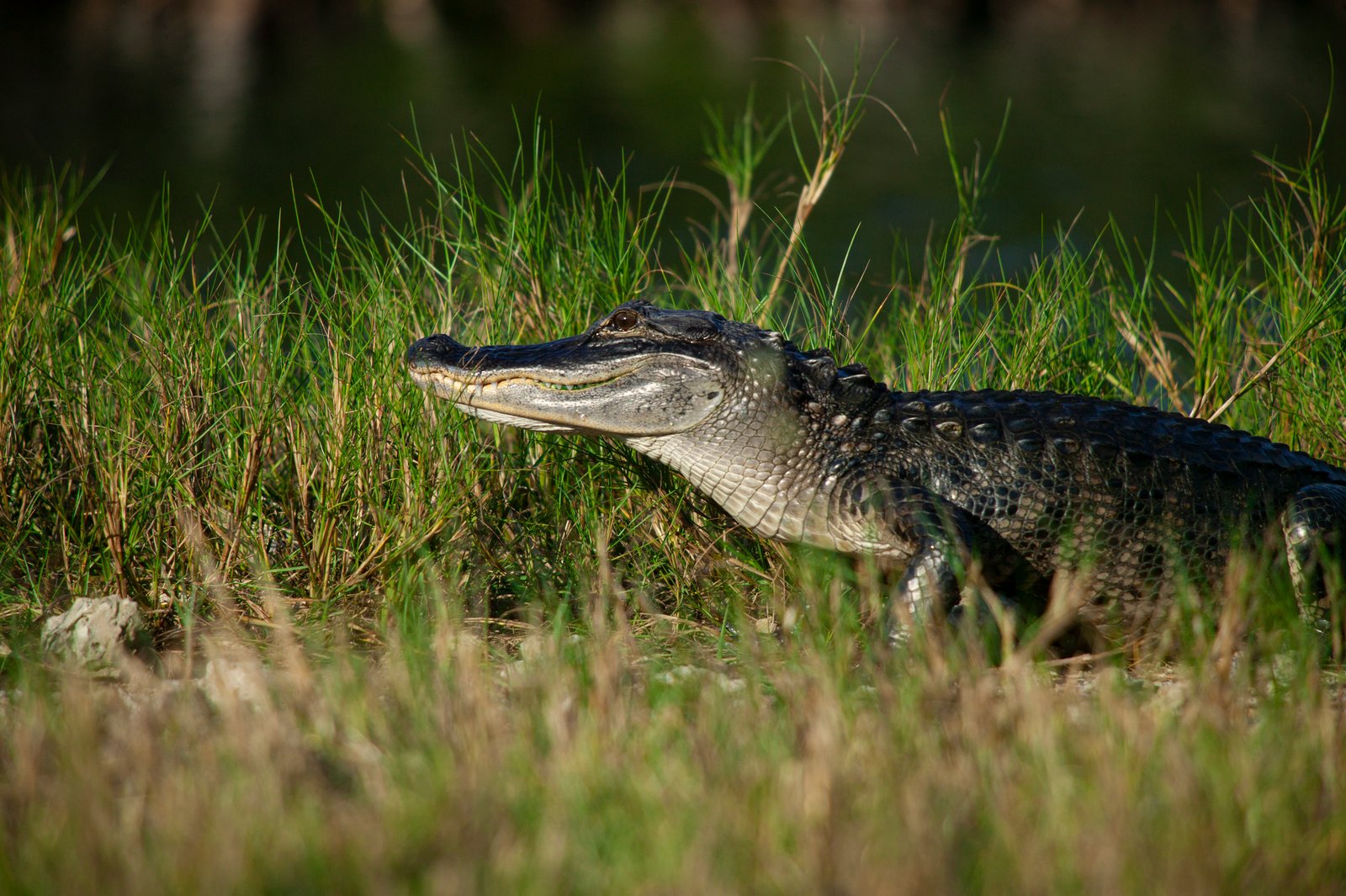
Gator On The Prowl
An American alligator emerges from tall marsh grass at the edge of a quiet freshwater waterway, body low as it heads for open water, its textured hide and raised head lit by warm, low sun. Key Features: The Habitat: American alligators live in freshwater marshes, rivers and swamps across the Southeast, from the Carolinas through Florida and west to Texas. The Behavior: They bask on banks by day and hunt mostly at night, moving between sun and water to control their body temperature. The Species: Alligator mississippiensis is one of only two living alligator species and a keystone predator that shapes its wetland. The Setting: Tall grass and still water are the marsh and swamp country where alligators are most often seen.
Prints from $22Downloads from $19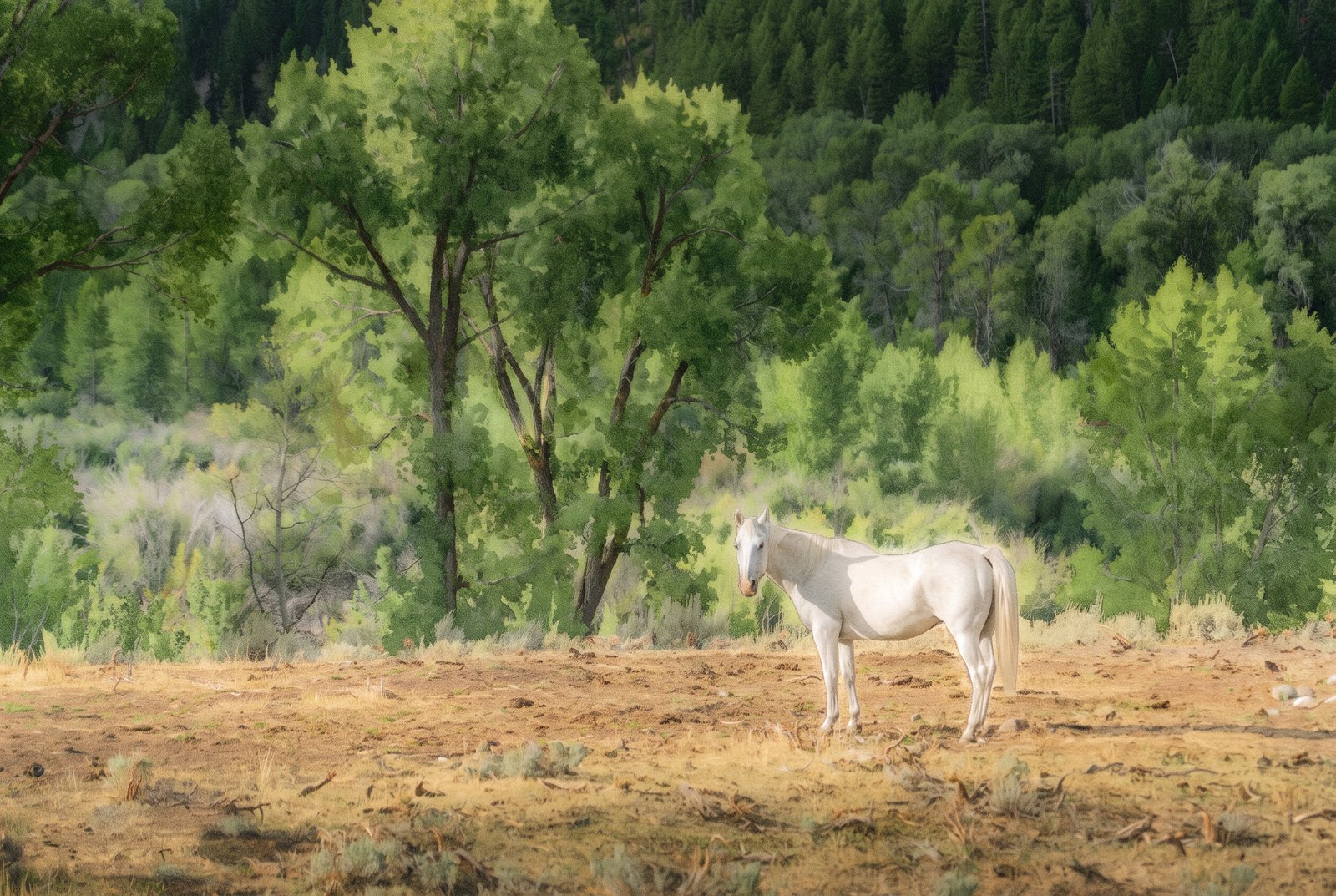 Watercolor
Jackson White Horse
A pale cream horse stands alone in a sun-dried meadow in Jackson Hole, Wyoming, its coat catching the late afternoon light against a dense backdrop of cottonwoods and dark evergreens climbing the hillside. Key Features: The Valley: Jackson Hole is a high mountain valley where cattle and horse ranches line the Snake River below forested slopes. The Trees: Cottonwoods, which turn yellow and orange in the fall, fill the river bottoms with the thick green seen behind the horse. The Ranching Tradition: Some of the region's largest historic ranches have grazed livestock along these bottoms for generations. The Moment: A quiet, unposed pause in a grazing horse's day.
Prints from $41Prints only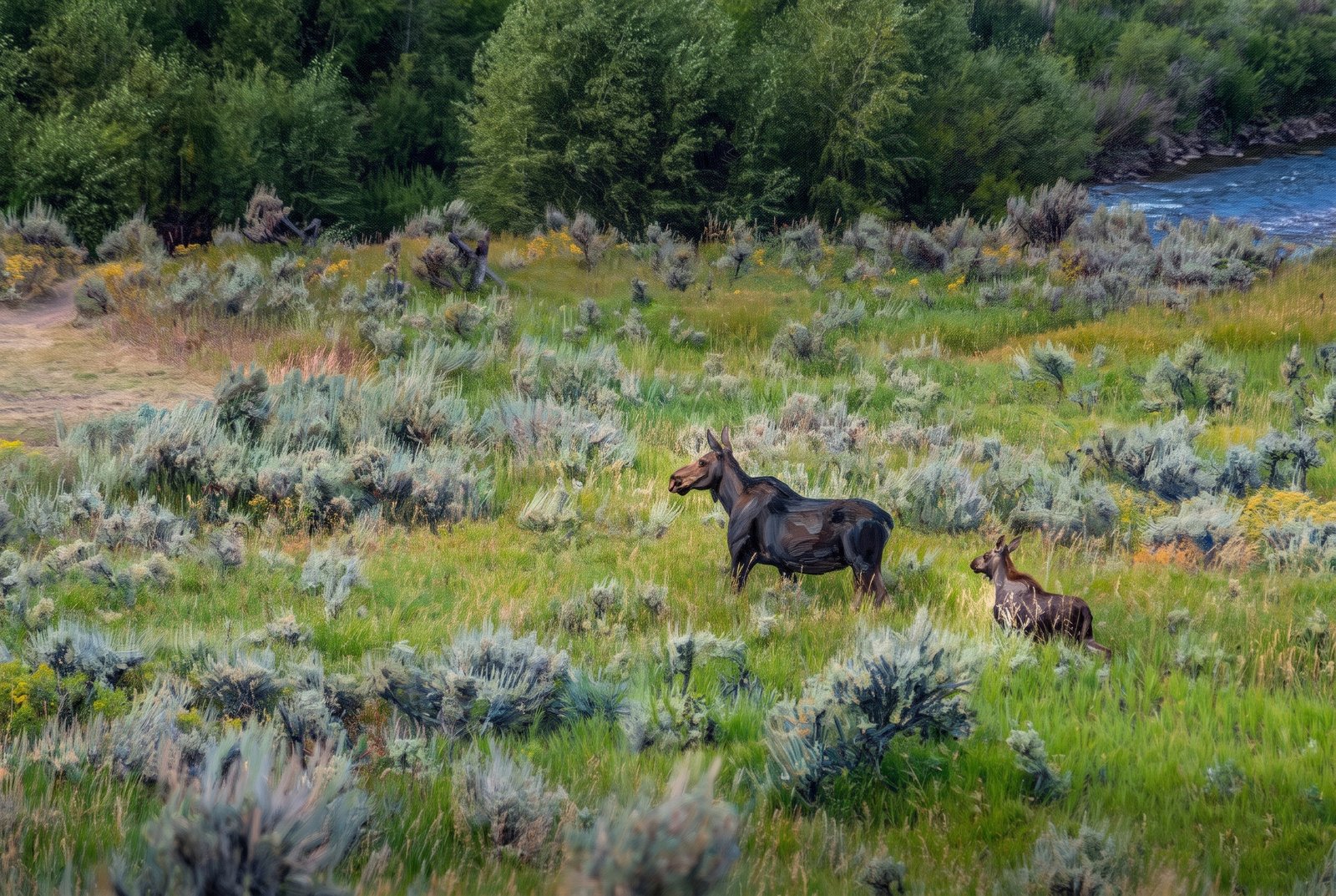 Painterly
Yellowstone Moose Baby
A cow moose and her calf move through a sagebrush meadow near flowing water in Yellowstone National Park, the calf close behind as they pause in the tall grass, with dense willows and conifers along the riverbank. Key Features: A Rare Sighting: Moose are among the least common large mammals in the park, with fewer than 100 living there. The Habitat: Sagebrush flats bordered by river willows and conifer forest give moose the cover and browse they favor, especially in the warmer months. Mother and Calf: Cow moose stay close to their calves through the summer, teaching them to forage in wet meadows and streamside plants.
Prints from $41Prints only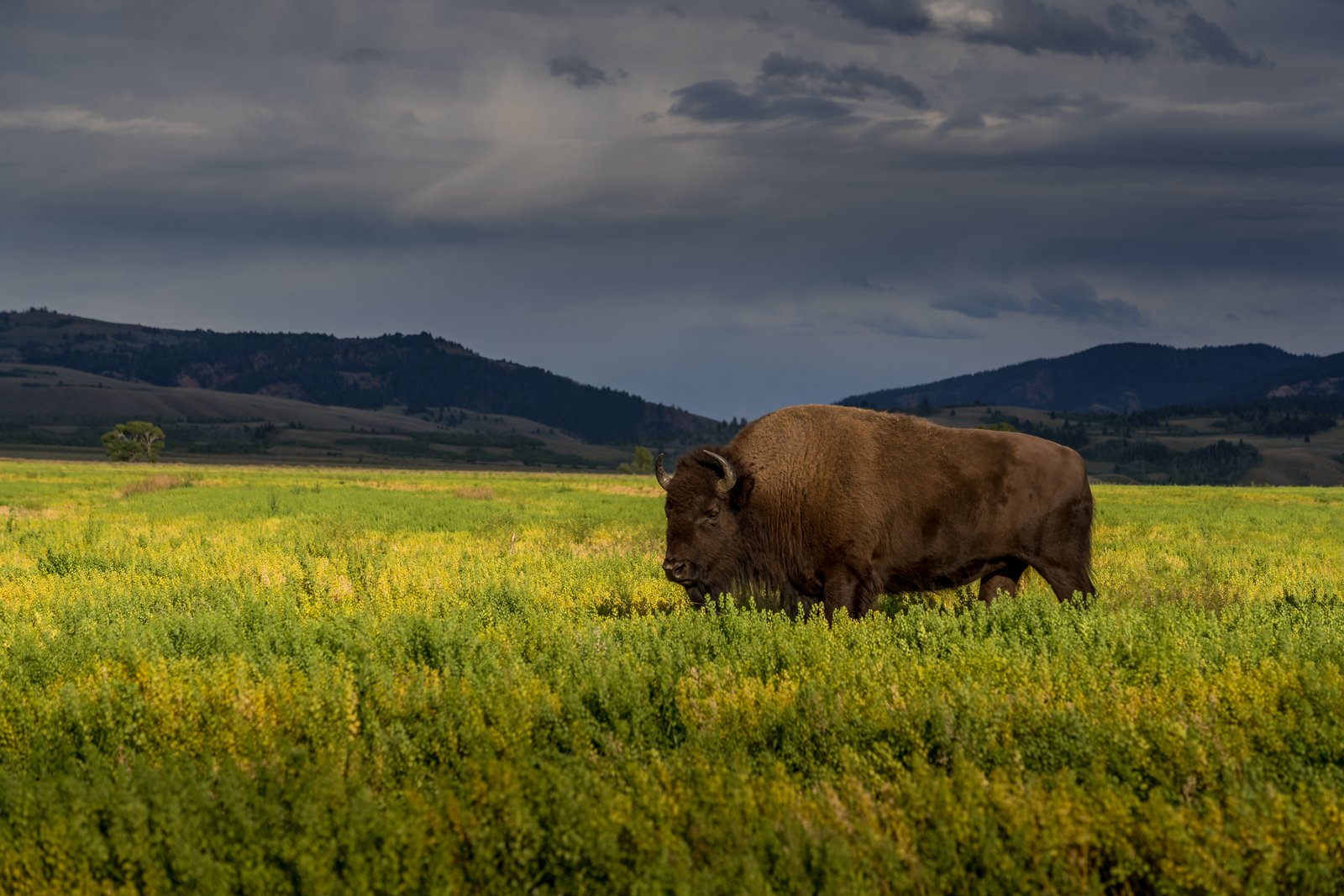
Buffalo Range
A lone American bison stands in a lush meadow of wildflowers in Yellowstone National Park, seen from low against distant mountains and a darkening storm sky that show the scale and wildness of the land. Key Features: The Herd: Yellowstone is home to thousands of bison, one of the last genetically pure herds of American buffalo. Bison Conservation: In 1907 the park's Buffalo Ranch in the Lamar Valley took in 28 bison from Fort Yellowstone, to help save one of the last free-roaming herds in the United States. Bison Country: Herds graze and rest across the park's broad valleys, where visitors see them often.
Prints from $22Downloads from $19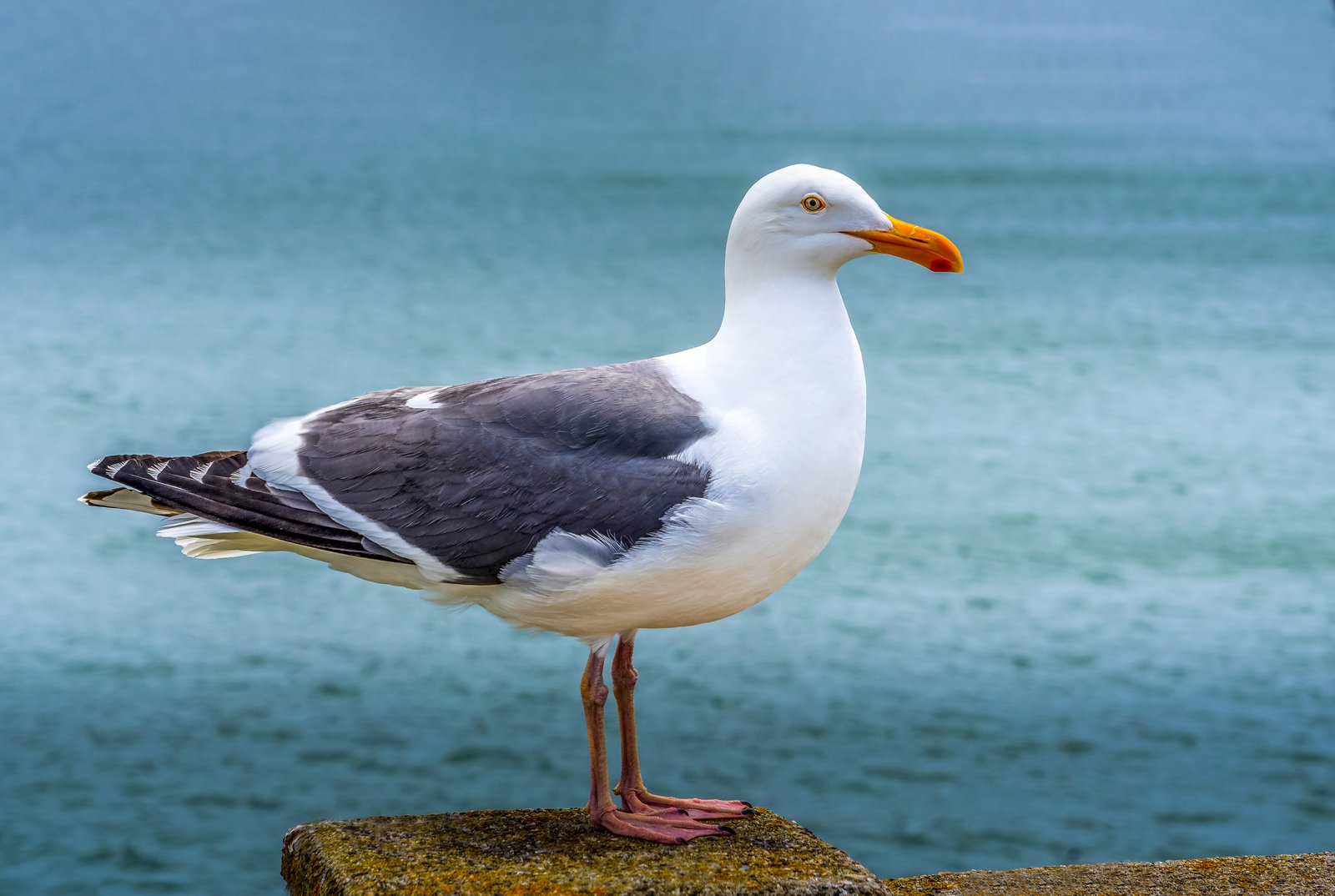
San Francisco California
A Western Gull stands on a weathered concrete piling on the San Francisco waterfront, the calm blue bay stretching behind it, its clean white head, dark slate back, stout yellow bill with a red spot and pink legs all in sharp detail. Key Features: The Species: A large, white-headed gull with a dark gray mantle, pink legs and a heavy yellow bill marked with red near the tip. The Range: It breeds from Washington State to central Baja California and winters along the coast from Vancouver Island to the tip of Baja. The Setting: The piers and seawalls of San Francisco's working waterfront make ideal perches for seabirds. The Behavior: Western Gulls are bold around people, often perched still on posts and railings while scanning the water for food.
Prints from $22Downloads from $19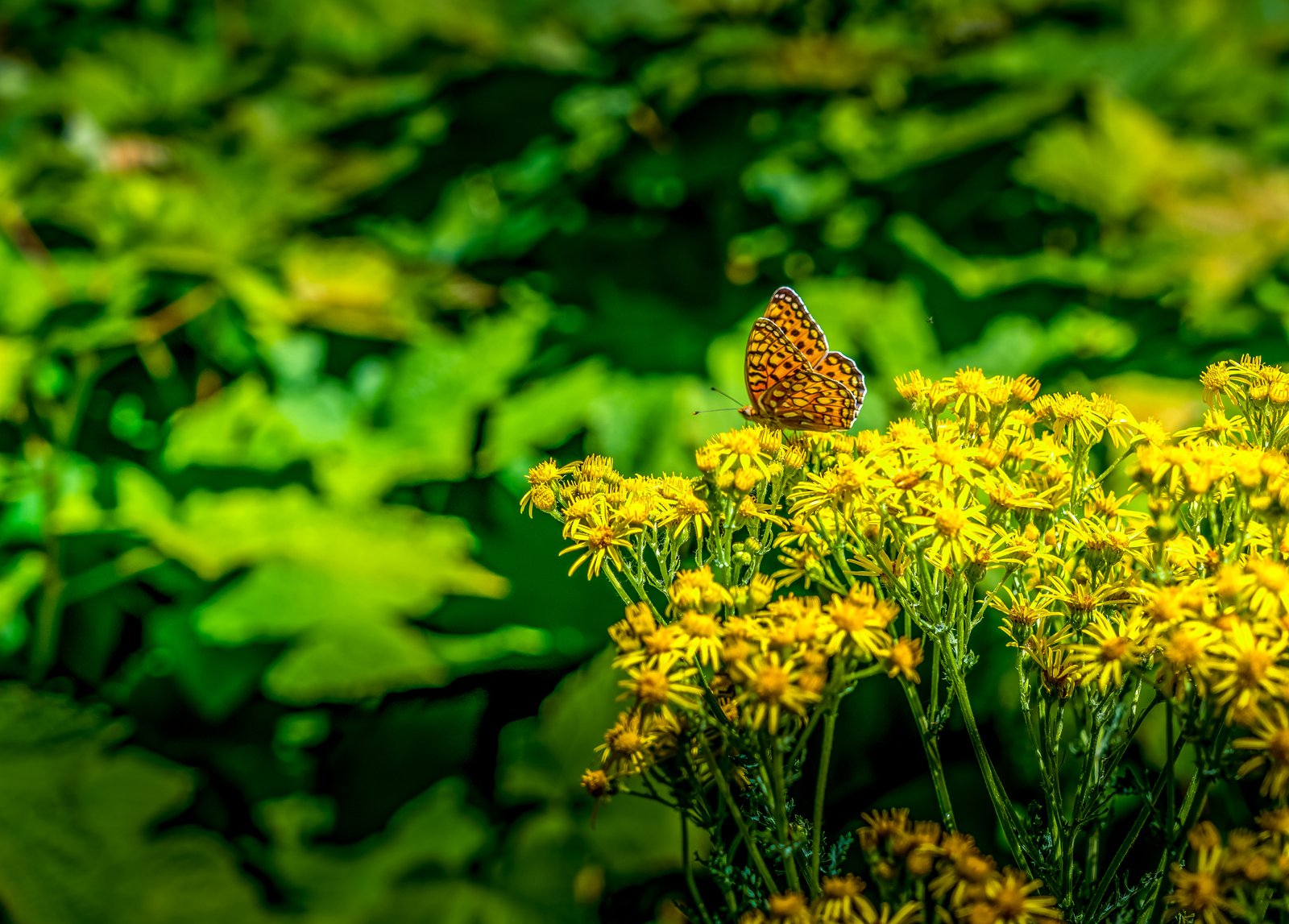
Butterfly
A fritillary butterfly rests on a cluster of common ragwort blossoms, wings folded to show their intricate orange and black checkered pattern, with soft, blurred greenery behind. Key Features: The Butterfly: Fritillaries are known by the checkered orange and black pattern on their wings. The Flowers: Common ragwort is a native biennial wildflower; its wind-spread seeds can make it a nuisance on farmland. Ecological Value: Ragwort feeds hundreds of species of butterflies, bees, moths and other insects with its nectar. The Moment: Summer sun on a meadow edge, when pollinators like this one are easy to find.
Prints from $22Downloads from $19