

Collection
Scotland
By · 54 photos
 Watercolor
Scotland's Inner Hebrides On The Isle Of Jura
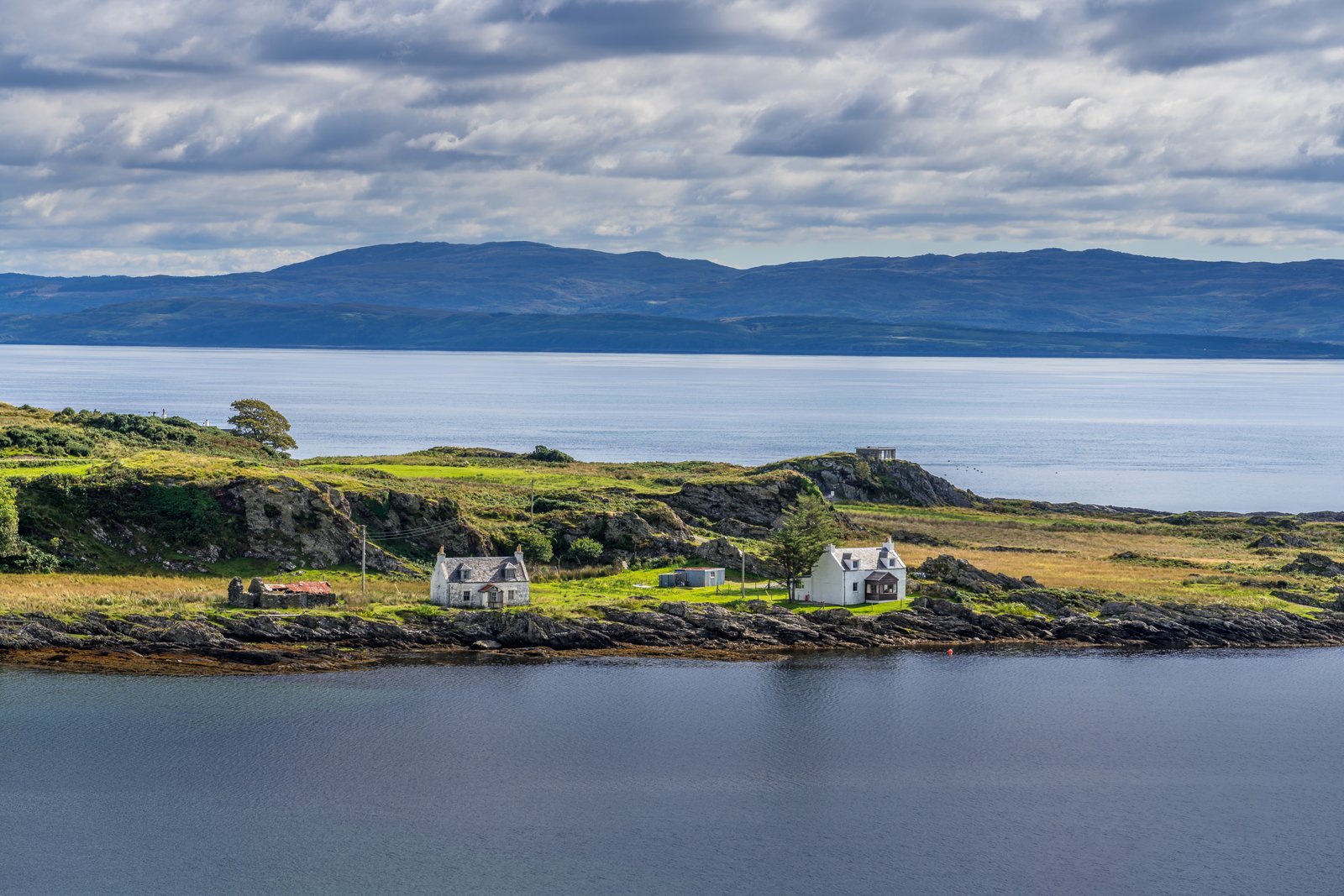
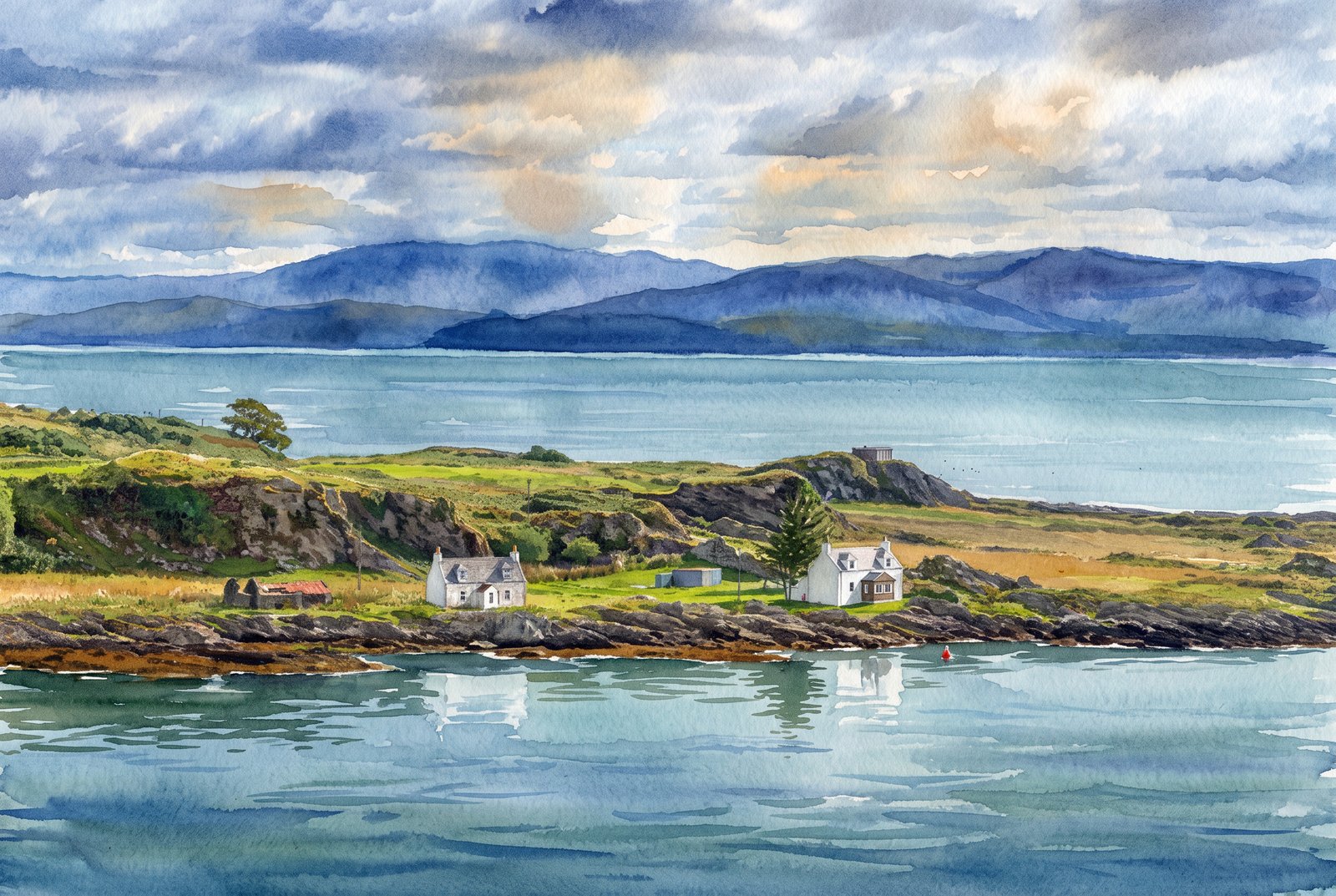
Across a channel of sheltered water on the Isle of Jura, in Scotland's Inner Hebrides, two whitewashed cottages stand on a low rocky headland above the shore, with a wider sound and higher hills beyond under a heavy sky of layered cloud. Key Features: The Island: Jura is one of the most thinly settled of the Inner Hebrides, with a single narrow road and far more red deer than people. The Landscape: Its wild, boggy interior rises to the quartzite peaks called the Paps of Jura, while crofts and farmhouses like these dot the shore. Notable History: The island's isolation drew George Orwell, who wrote much of Nineteen Eighty-Four in a remote farmhouse on Jura's northern end.
Prints from $59Prints only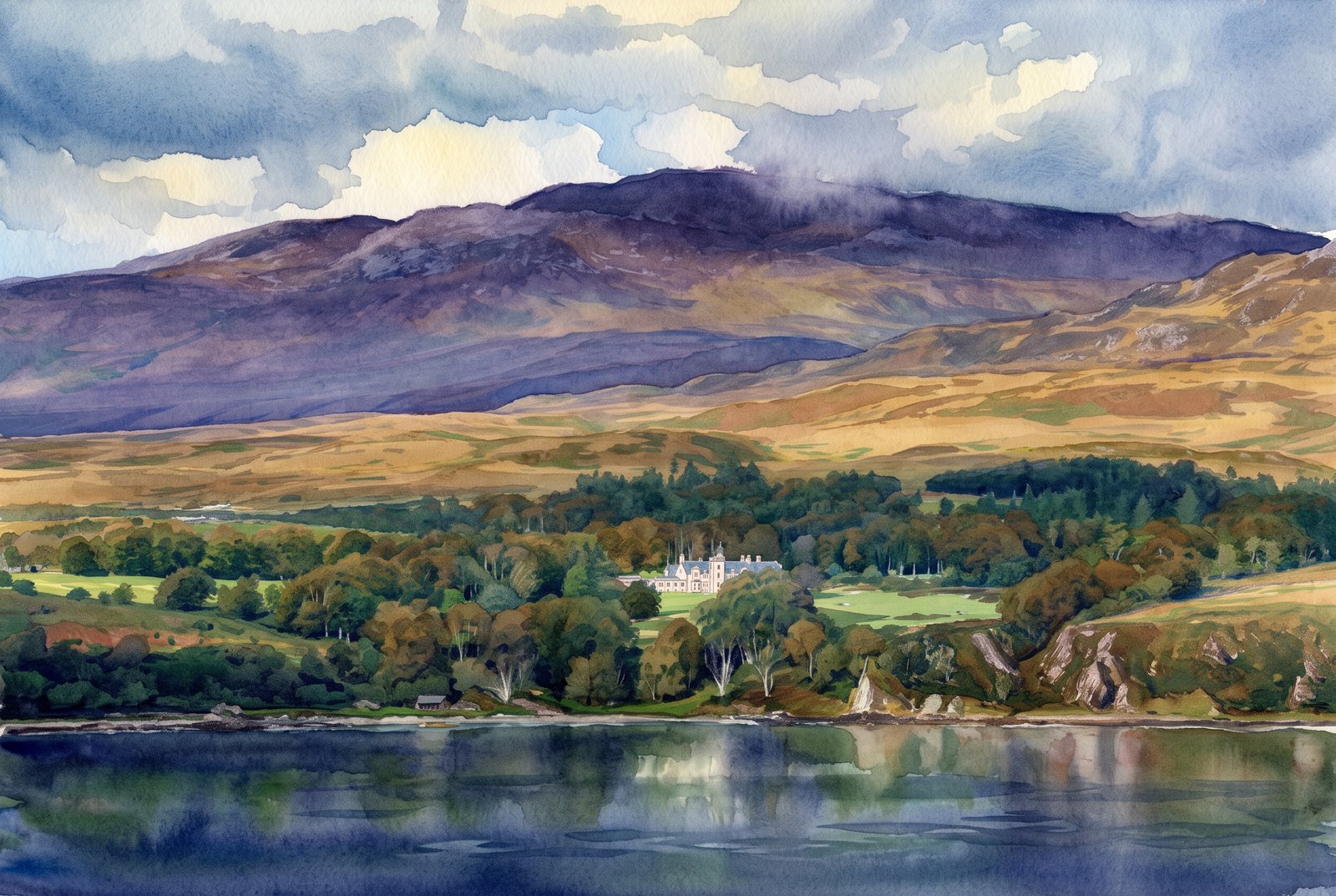 Watercolor
Scotland
Glenborrodale Castle shows through dense woodland on the southern shore of the Ardnamurchan peninsula, its pale turrets and lawns running down to Loch Sunart, seen from across the water with the bulk of Beinn Resipol rising behind in shifting light under a heavy, changeable sky. Key Features: The Castle: A category A listed Scots Baronial mansion from the early twentieth century, long known for its sweeping views over Loch Sunart. The Setting: Ardnamurchan is one of the most remote parts of mainland Britain, and the castle is surrounded by gardens, old woodland and gravel walks. Beinn Resipol: A Corbett and the main peak of the district, rising over Glenborrodale from all along Loch Sunart. The Loch: A sea loch home to otters, seals and porpoises, with the wooded shores of the west Highland coast.
Prints from $41Prints only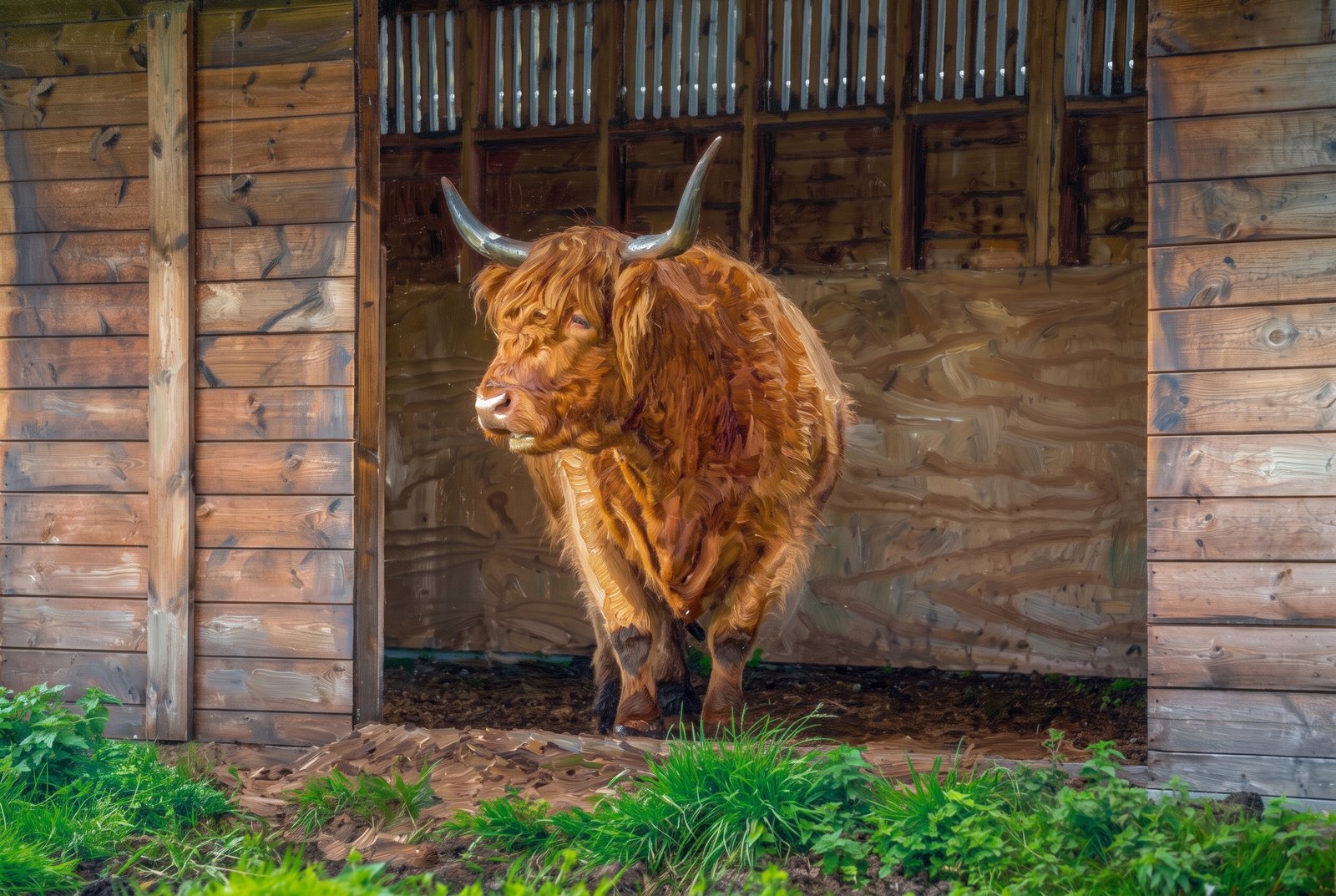 Impressionist
Highland Cow County, Scotland
A Highland cow steps out of the doorway of a timber byre on a Scottish farm, its shaggy auburn coat and long curved horns filling the frame above muddy, grass-fringed ground. Key Features: The Breed: Highland cattle come from the Scottish Highlands and the Outer Hebrides, prized for their hardiness in harsh weather. The Coat and Horns: A long, shaggy coat and wide horns help them through cold, wet winters. The Byre: Plank walls and slatted vents are the traditional Scottish way of sheltering livestock from the damp. The Heritage: Highland cattle are one of Scotland's most iconic breeds, tied to the beauty and romance of its countryside.
Prints from $59Prints only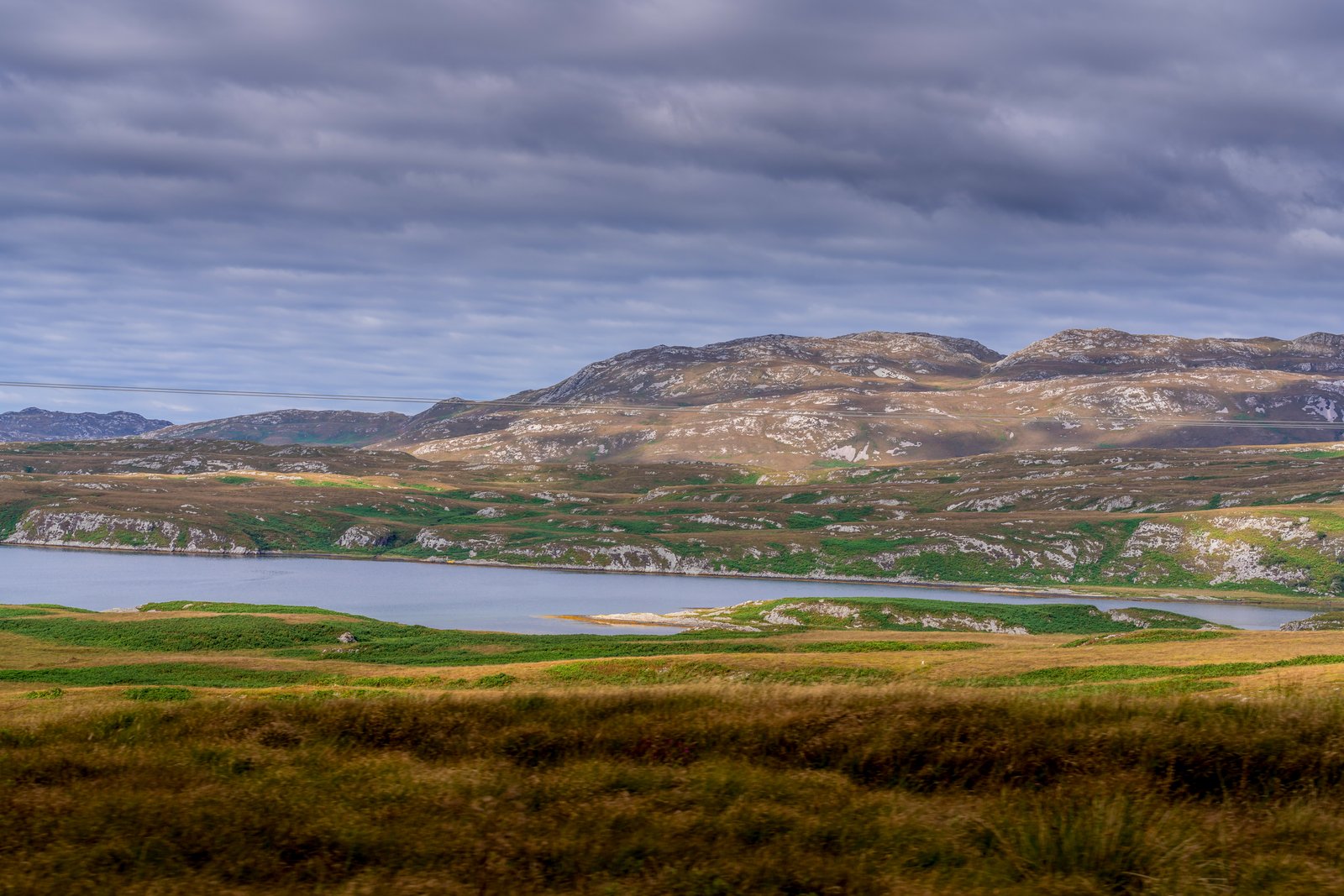
Remote Lochs In Rock Strewn Hills
Across one of Jura's remote lochs, rolling, rock-strewn hills rise on this Inner Hebridean island, pale quartzite breaking through heather and grass moorland under a heavy, changeable sky. Key Features: The Island: Jura is thinly settled, known for its empty, wild interior. The Geology: Its hills are ancient quartzite, which gives the bare rock its pale, almost white look among the moor. Wild Land: Much of the island is rugged and little changed, far from any road.
Prints from $22Downloads from $19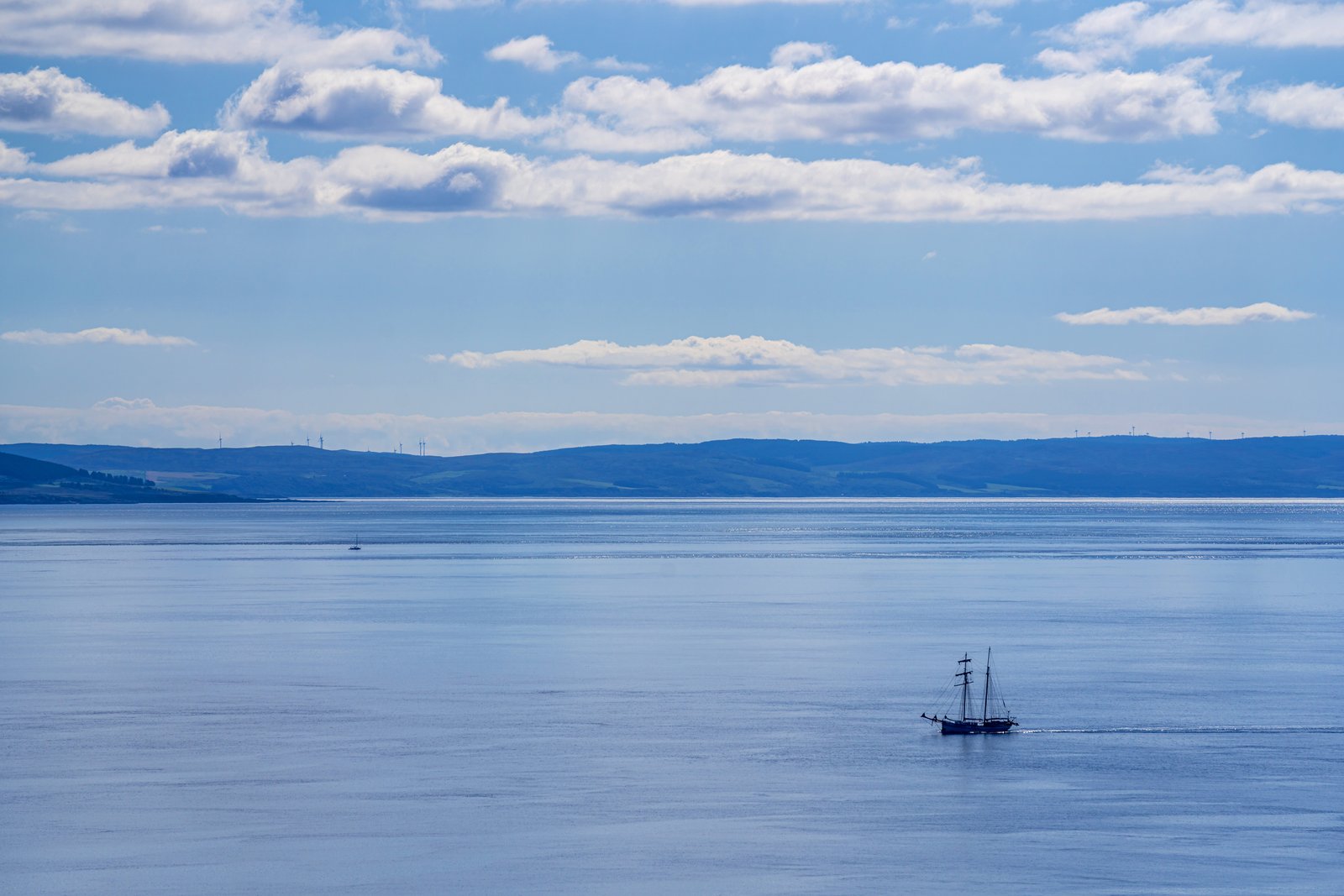
1440 Jura Scotland
A two-masted tall ship cuts a long wake across the calm Sound of Jura, with a small sailing yacht farther out, looking east from the Isle of Jura to the low, hazy hills of Kintyre, where wind turbines line the ridges under a wide, layered sky. Key Features: The Sound of Jura: The channel between Jura and the Kintyre peninsula has long been a sailing route between the Atlantic coast, the Firth of Clyde and Loch Fyne. The Kintyre Coast: Onshore wind farms stand along the distant hills. The Island: Jura is thinly settled and prized for its wild coastline and open views to the mainland.
Prints from $22Downloads from $19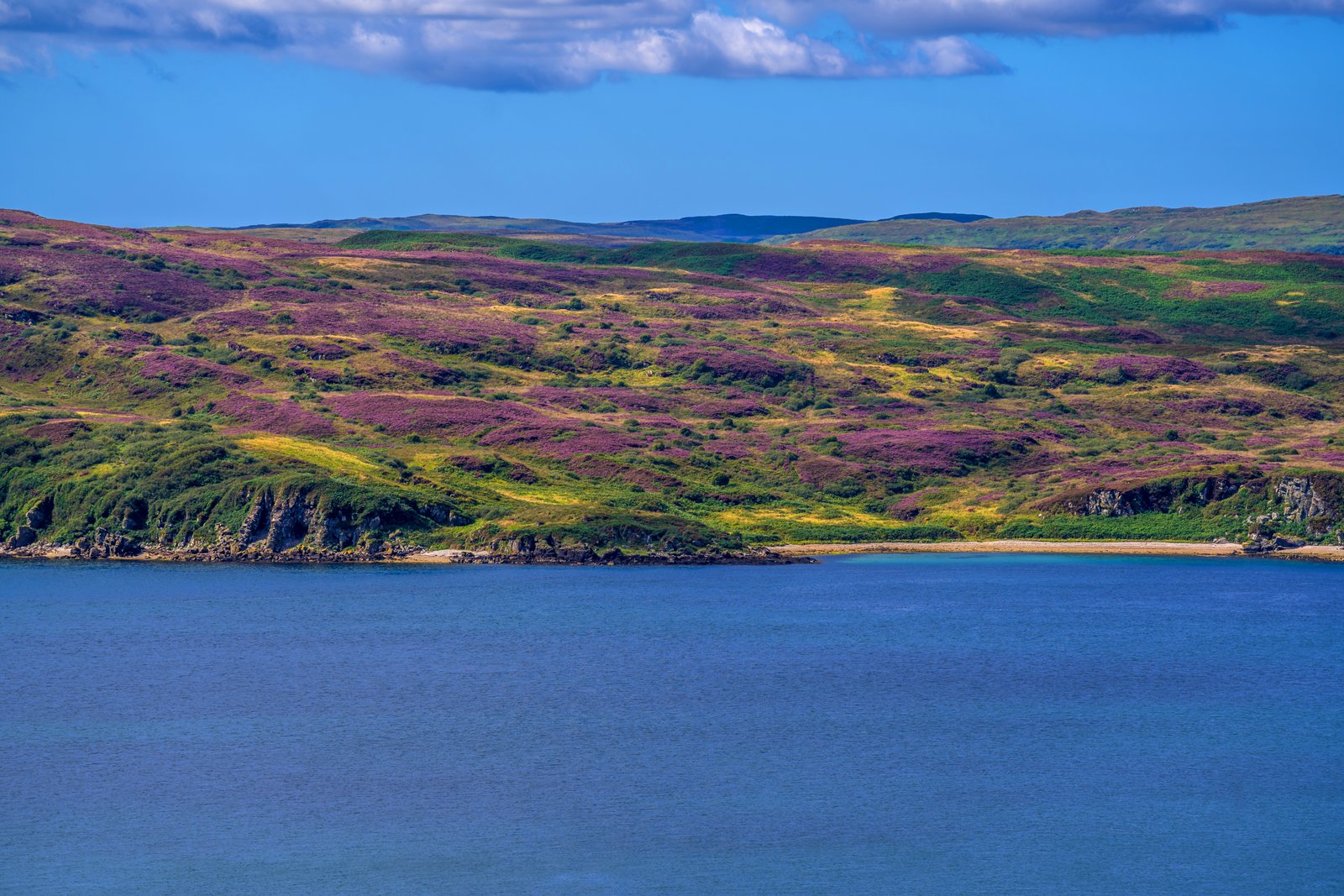
Isle Of Jura In Scotland's Inner Hebrides
Late summer heather cloaks the rugged shore of the Isle of Jura in Scotland's Inner Hebrides, seen across a sheltered sea channel, its purple and gold broken by green bracken and gorse above dark rock and a narrow pale beach. Key Features: The Landscape: Jura's interior is open, rolling heather moor rather than farms or villages. The Setting: The island lies just northeast of Islay, with a rugged coast of hidden sandy beaches. The Population: About 142 square miles in size, it has only around 200 residents. The Heather: The purple across the hills marks the short late summer bloom of the moorland heather.
Prints from $22Downloads from $19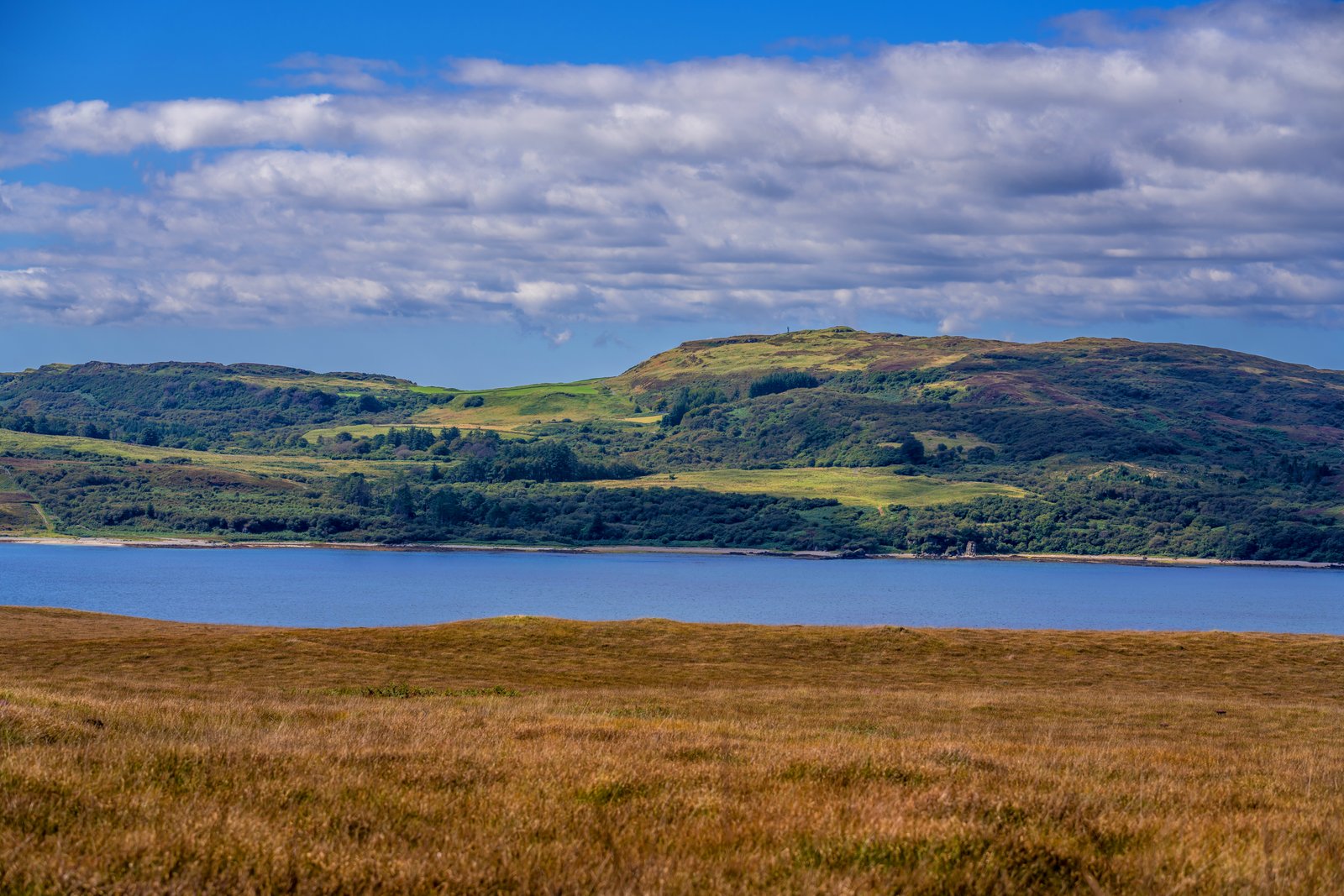
Inner Hebrides Off Scotland's West Coast
From a patch of rust-colored moor grass on the Isle of Jura, a sheltered channel of sea leads to low green hills across the water, with a small marker on the highest ridge and a scatter of trees along the quiet far shore. Key Features: The Moor: Jura's interior is open heather and grass moor, home to far more red deer than people. A Historic Strait: Channels like this were once watched over by strongholds such as Claig Castle, guarding the passage through the sound. A Wild Island: Much of Jura is thinly settled, its west coast still largely empty and little changed.
Prints from $22Downloads from $19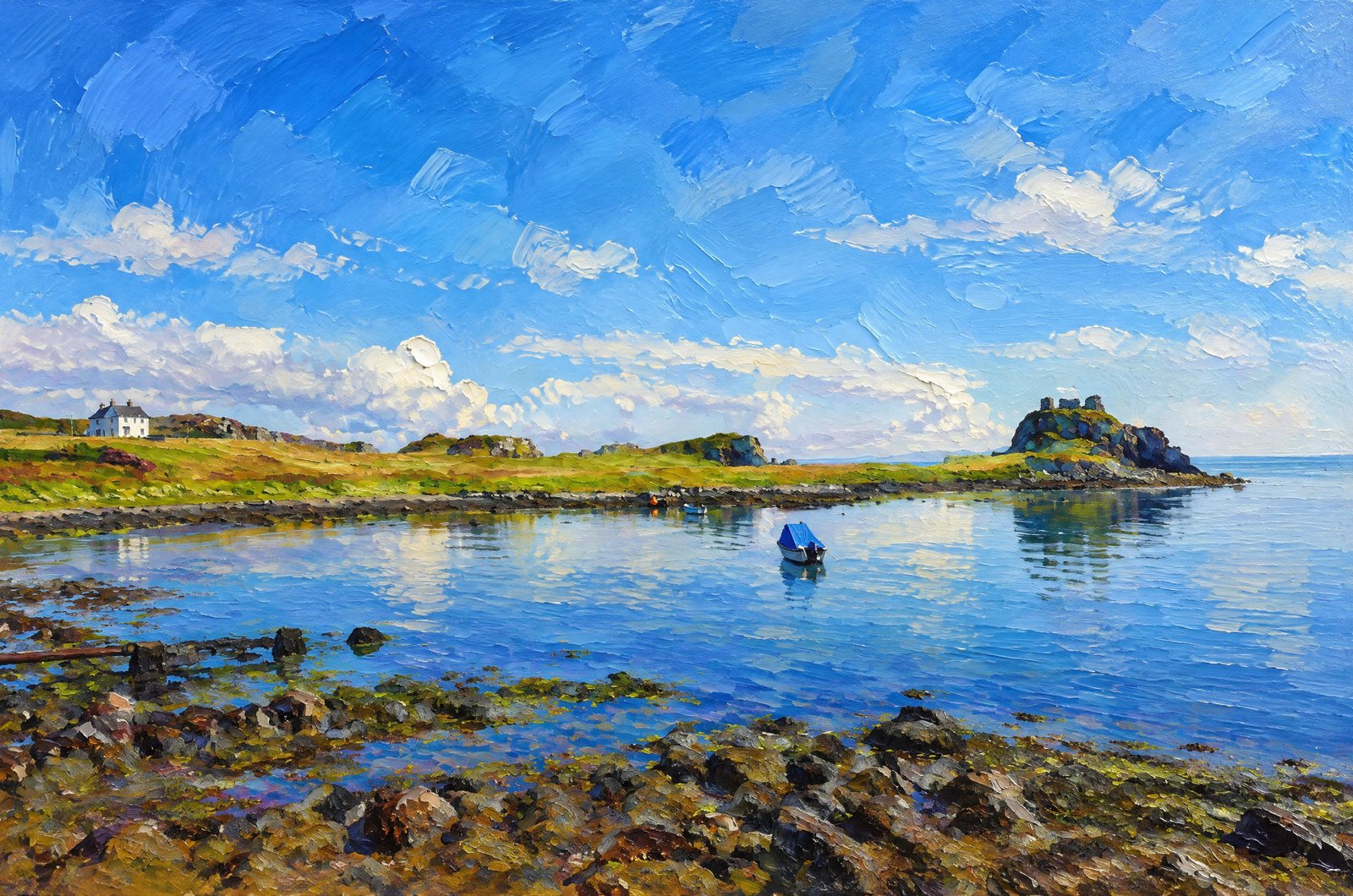 Painterly
Lagavulin Bay On The Isle Of Islay In Argyll, Scotland
A small boat rides at anchor on the still water of Lagavulin Bay, on the Isle of Islay in Argyll, Scotland, with the ruins of Dunyvaig Castle crowning the rocky headland across the bay and a lone white house on the grassy point to the left. Key Features: The Stronghold: Dunyvaig Castle stands on Islay's south coast, on the shore of Lagavulin Bay, a few miles from Port Ellen. Its Origins: Built on a rocky promontory jutting into the bay, the castle was once a naval base of the Lords of the Isles, chiefs of Clan Donald. Seafaring Legacy: The MacDonalds kept their fleet of galleys anchored in Lagavulin Bay. Today: The bay shares its name with the renowned Lagavulin whisky distillery on its shore.
Prints from $41Prints only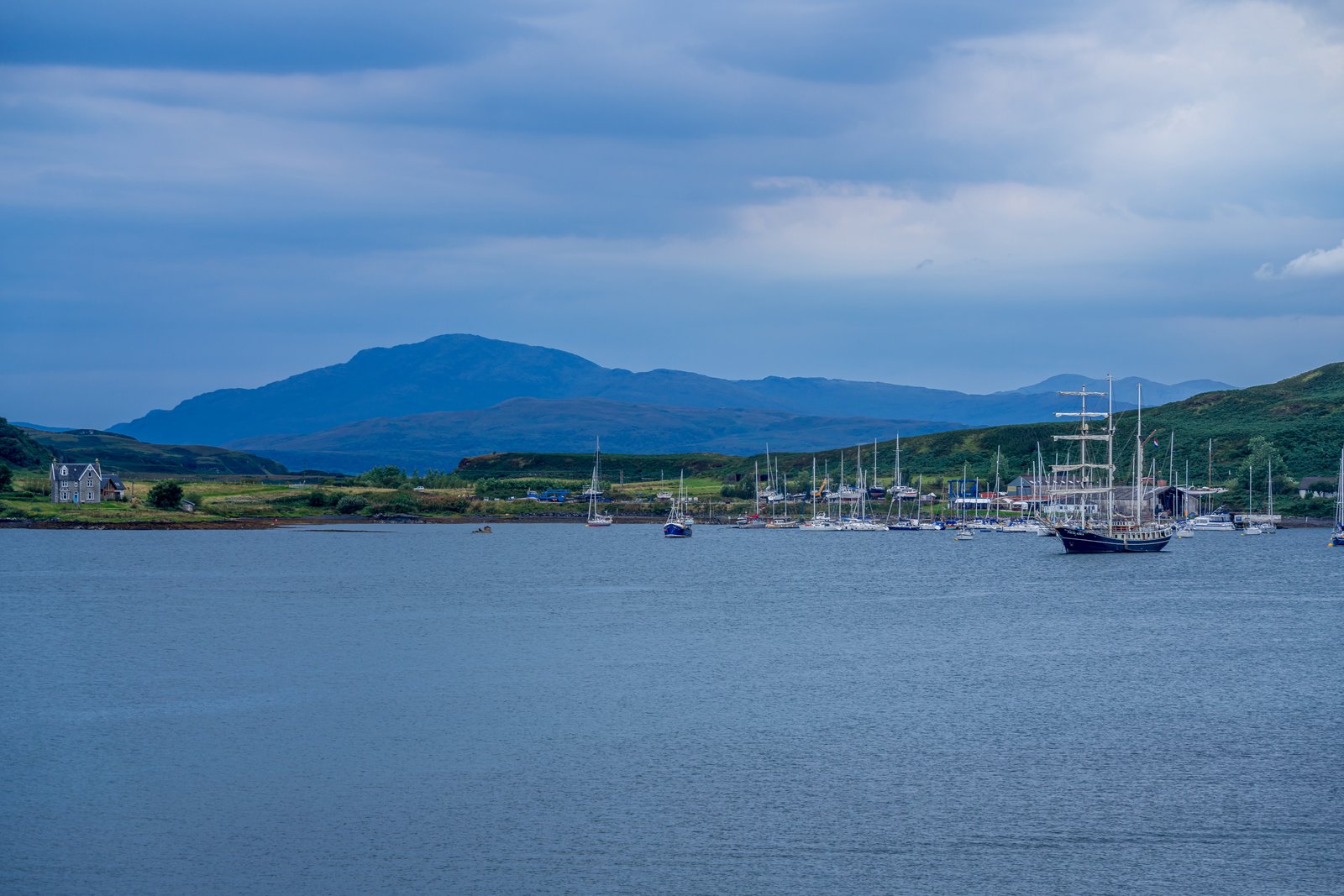
Oban, On Scotland's West Highland Coast
A cluster of white yachts and a tall, square-rigged sailing ship ride at anchor in the sheltered waters near Oban, on Scotland's west Highland coast, with a lone stone house on the shore in front and the layered hills of Argyll rising across the water under a heavy, changeable sky. Key Features: The Town: Oban is a historic fishing and ferry port, often called the gateway to the Hebrides, long valued for its sheltered bay. The Anchorage: Local boats share these waters with visiting yachts and traditional sailing ships drawn to the region's cruising grounds. The Landscape: The hills and sea lochs of Argyll give the harbor its mountain-backed setting. The Light: Shifting cloud and soft light over the water are the ever-changing weather of Scotland's western seaboard.
Prints from $22Downloads from $19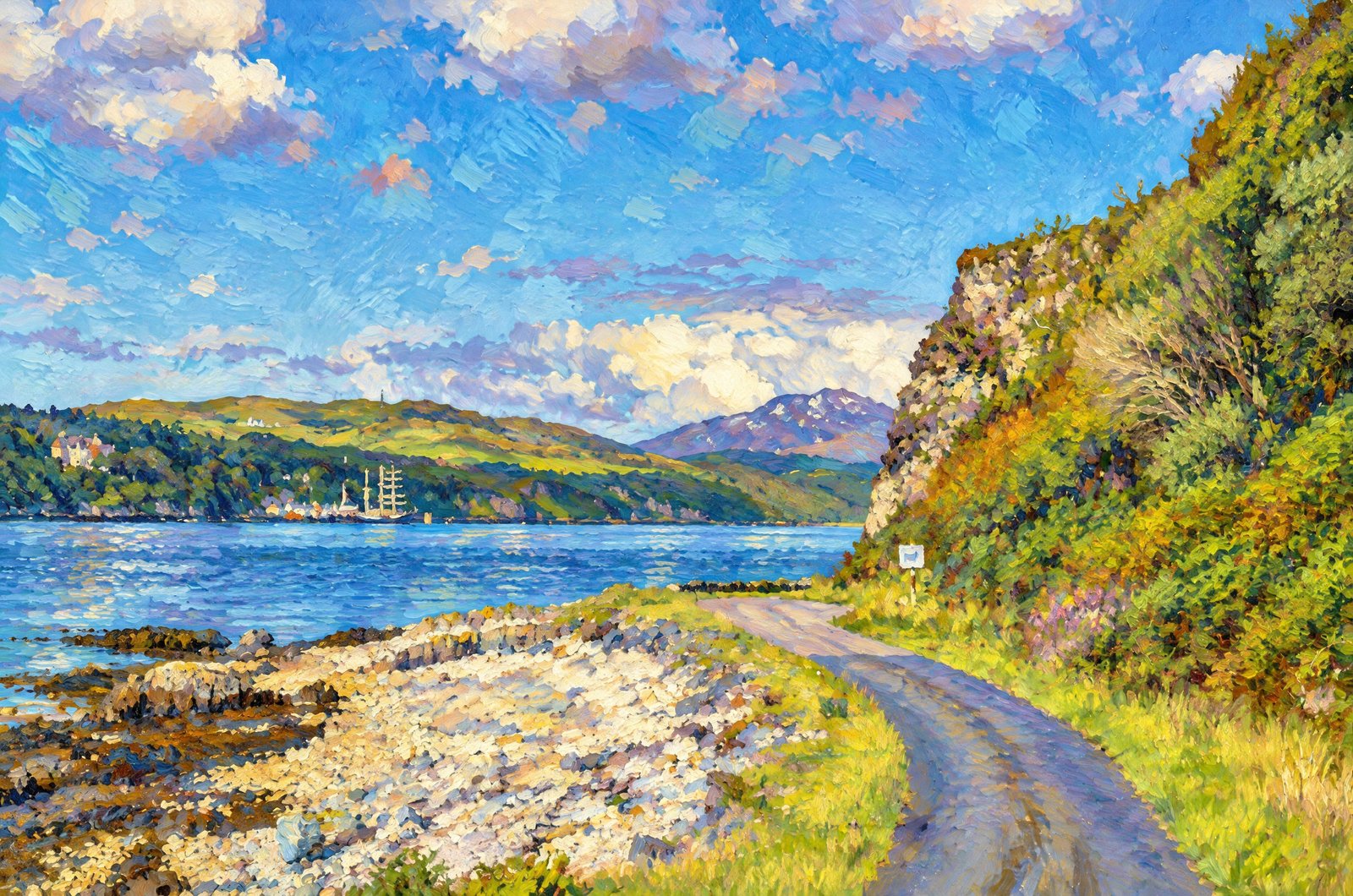 Impressionist
Jura In The Inner Hebrides
From the coast road curving south of Craighouse on the Isle of Jura, the view looks back across the Bay of Small Isles to the village, where a tall ship lies moored near the distillery pier, with the rounded summit of one of the Paps of Jura rising beyond. Key Features: Craighouse: Jura's tiny capital and its main gathering place, with the distillery pier and cafes along the waterfront. The Paps of Jura: Three mountains on the western side of the island that anchor every view. The Island: Jura is about thirty miles long and seven miles wide, with a very small population.
Prints from $41Prints only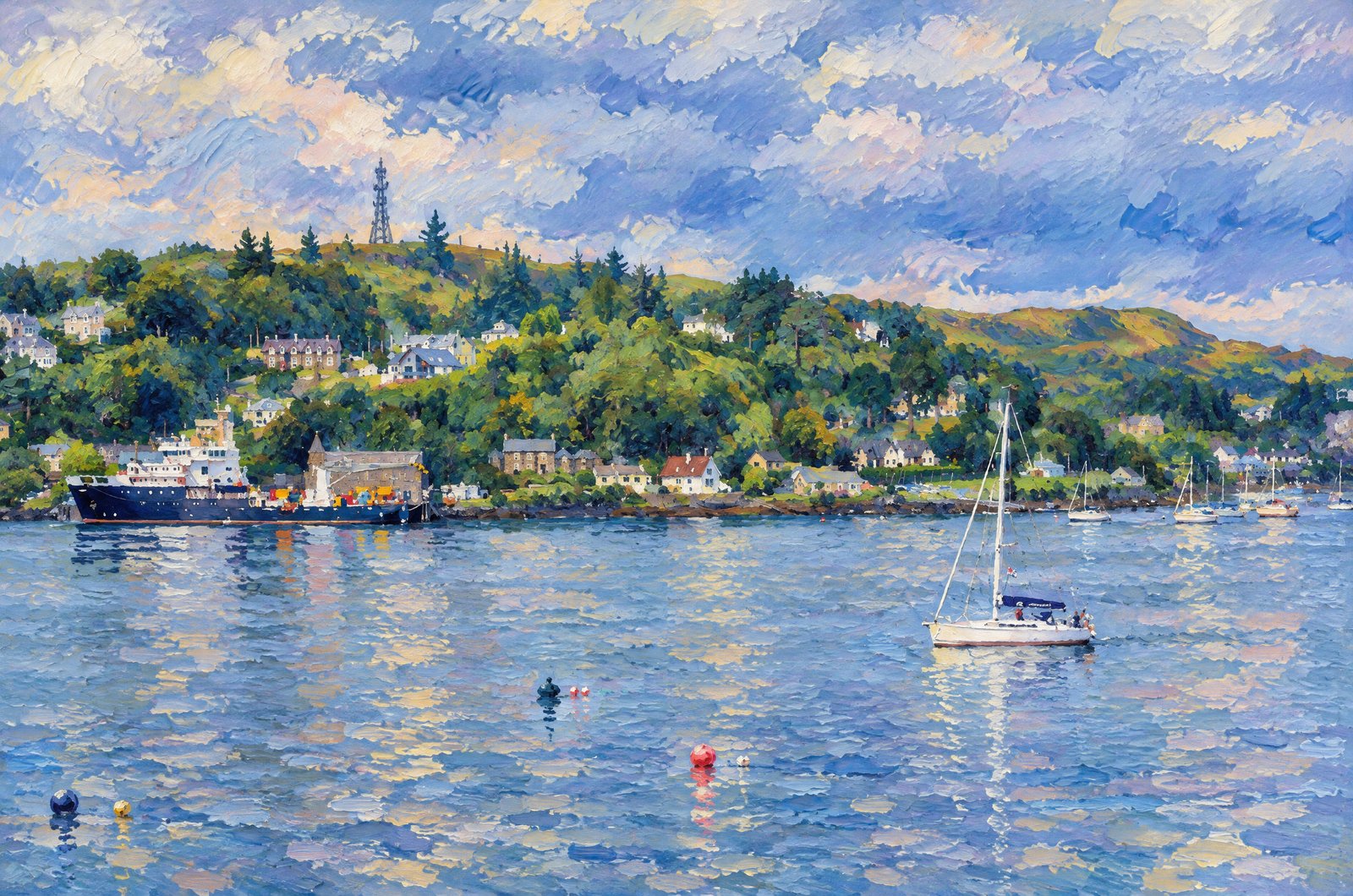 Impressionist
Oban Bay On Scotland's West Coast
Rows of Victorian villas and a church spire rise among the trees on Oban's wooded hillside, seen from out on the bay below a hilltop mast, while a dark-hulled service vessel lies alongside a small pier and a lone yacht rides at anchor on the calm, overcast water. Key Features: The Gateway to the Isles: Oban grew from a small fishing village into the main ferry port linking the Scottish mainland to the Hebrides, including Mull, Coll and Tiree. The Hillside Villas: Most of the stone houses terraced along the slope date from the Victorian era, when Oban's popularity as a resort brought the railway and grand holiday homes. The Working Harbour: Fishing boats, lighthouse and marine support vessels and leisure craft all share the waterfront. The Shelter: The island of Kerrera shields the bay from the Atlantic, making it one of the calmest natural harbours on the west coast.
Prints from $41Prints only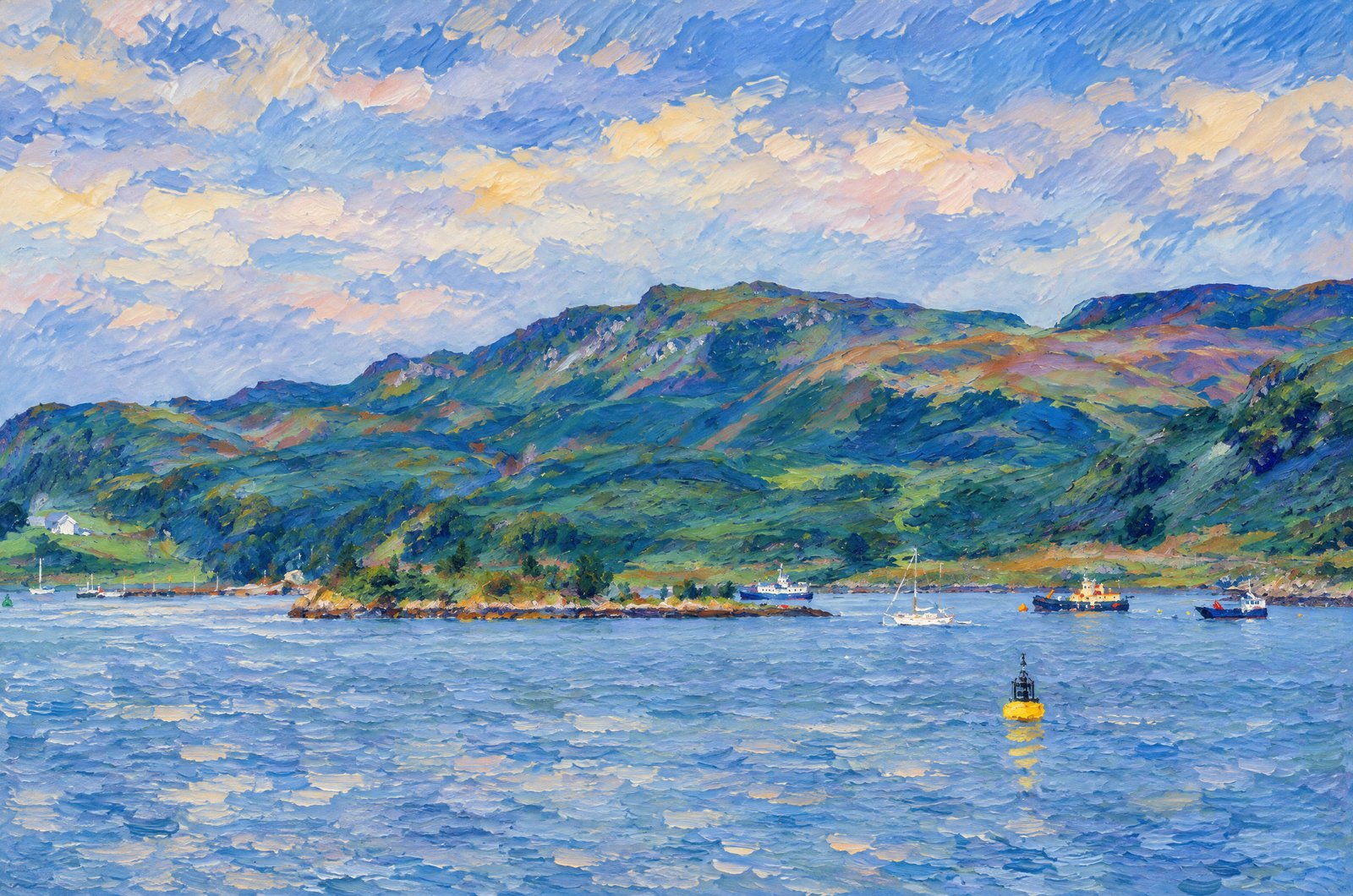 Impressionist
Maiden Island On Oban Bay In Scotland
Fishing boats, a yacht and a channel buoy rest on calm water in Oban Bay on Scotland's west coast, where small, uninhabited Maiden Island sits at the harbour entrance off the tip of Kerrera, the island's hills rising behind to shield the bay from the open sea. Key Features: The Gateway to the Isles: Oban is the main ferry port for the Hebrides, its harbour a departure point for the western islands. Kerrera's Shelter: The hilly island just offshore protects Oban Bay from Atlantic winds, making it a safe natural anchorage. Maiden Island: The small grassy island marks the narrow northern entrance to the bay. A Working Harbour: Fishing vessels and leisure craft share the anchorage, a sign of Oban's role as a maritime and ferry hub.
Prints from $41Prints only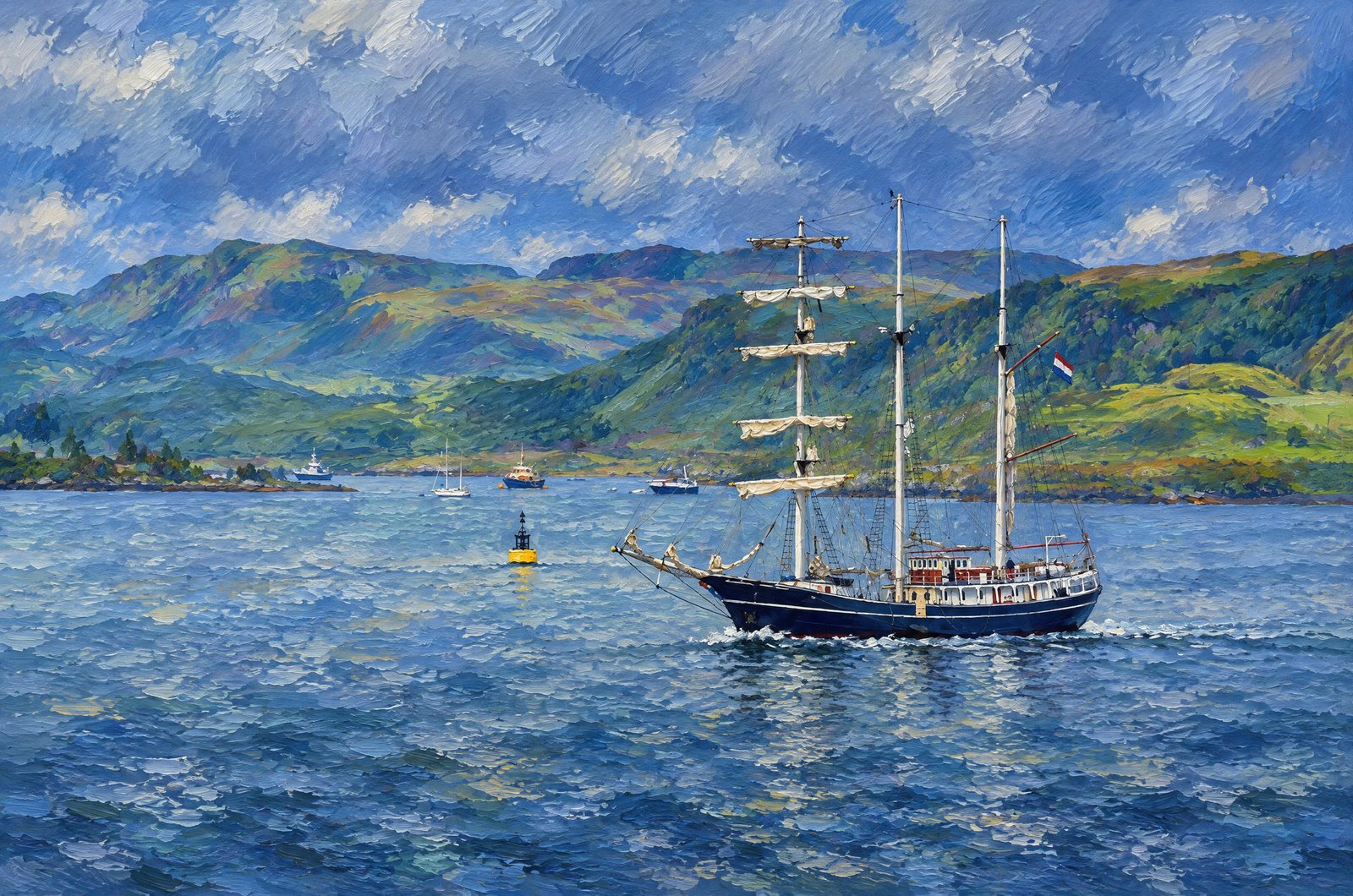 Painterly
Dutch Barquentine Thalassa
The Dutch barquentine Thalassa glides through Oban Bay on the west coast of Scotland, sails partly furled, past smaller vessels and a channel buoy, with the hills of Kerrera and the Morvern peninsula rising beyond under cloud-shadowed highlands. Key Features: The Ship: Thalassa is a three-masted barquentine, square-rigged on the foremast with gaff-rigged main and mizzen masts, built as a Dutch sail training ship. The Harbor: She is often anchored outside the Port of Oban, readying for voyages around Scotland. The Setting: Oban is the gateway to the Inner Hebrides, its bay framed by Kerrera and the hills of the Argyll coast. The Voyages: Thalassa sails week-long journeys along Scotland's coast, among them a whisky voyage between Scrabster and Oban past islands rich in nature and history.
Prints from $41Prints only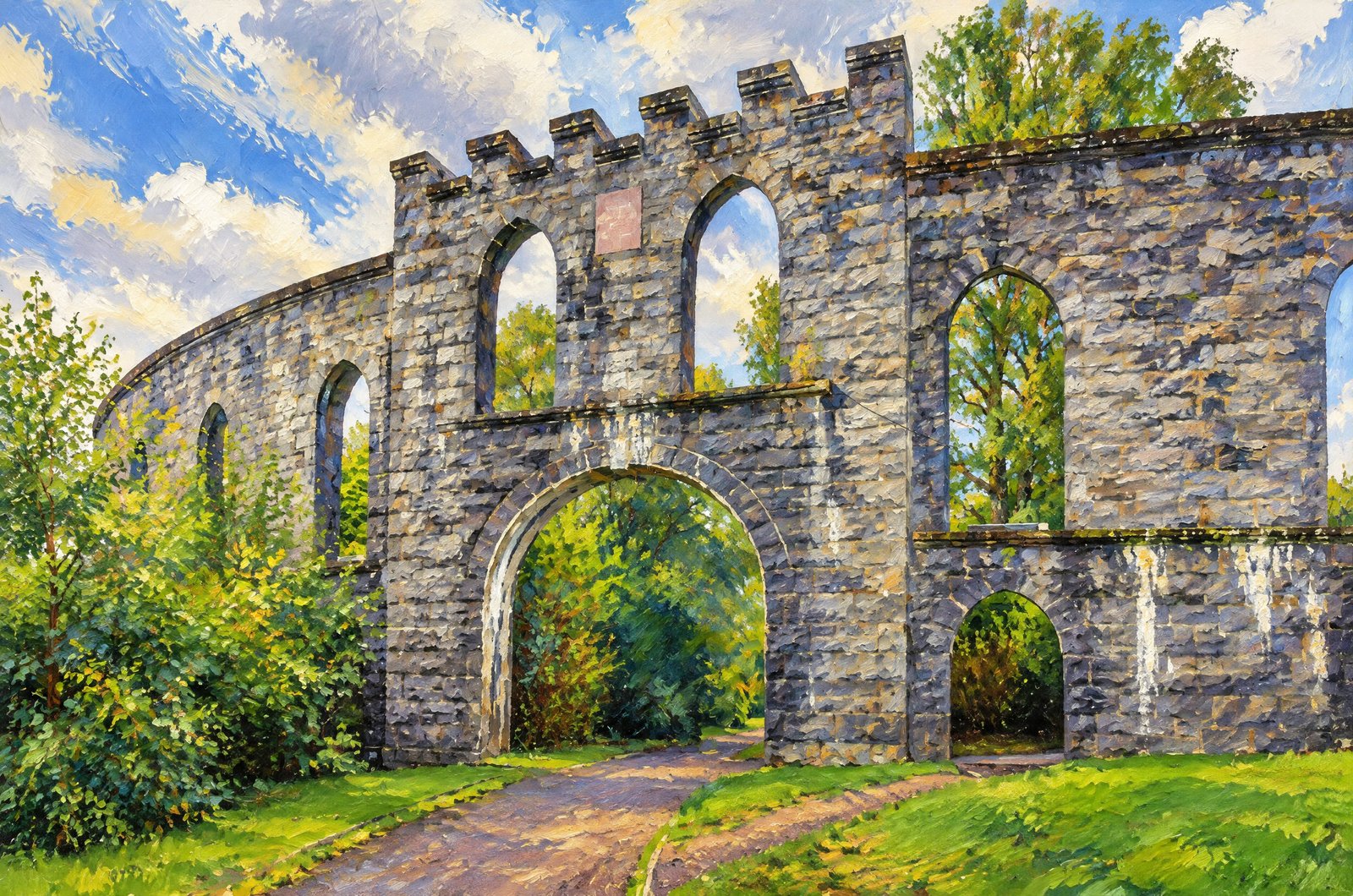 Painterly
McCaig's Tower, Granite Monument On Battery Hill
Through the gateway arch of McCaig's Tower, a granite monument on Battery Hill above Oban on Scotland's west coast, crenellated walls and tiers of lancet arches rise above lawns and trees, with a worn inscription plaque over the entrance. Key Features: Origins: Local banker John Stuart McCaig commissioned the folly, built from 1897 to 1902 as a family monument and as winter work for Oban's stonemasons. Design: Inspired by Rome's Colosseum, McCaig planned a central tower, museum and family statues, but his death in 1902 stopped the work, leaving only the outer walls. Setting: The site is now a public garden above the harbour, prized for its sweeping views over Oban Bay.
Prints from $41Prints only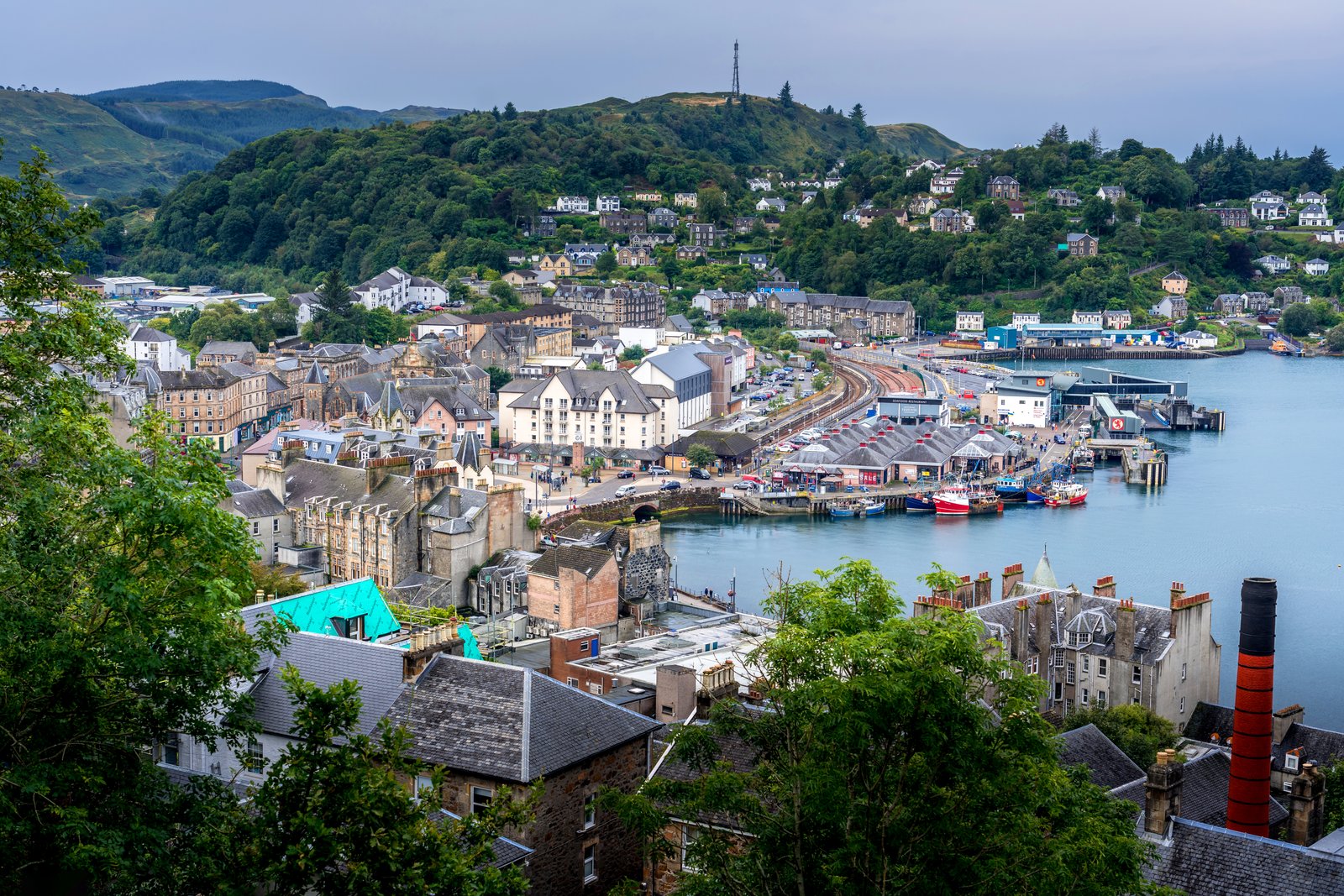
McCaig's Tower Overlooking Bay
From the heights of McCaig's Tower, the tiered rooftops and terraces of Oban step down to the curved waterfront, with the railway station, ferry pier and fishing boats along the harbour and wooded hills and scattered houses rising behind. Key Features: Gateway to the Isles: Oban is a principal ferry port on Scotland's west coast, with Caledonian MacBrayne services to Mull, Lismore and other Hebridean islands. The Vantage Point: McCaig's Tower, a Victorian folly above the town, gives this sweeping view over the harbour and hills. Rail and Sea: The end of the West Highland Line sits right beside the pier, where train meets ferry. Harbour Town: Stone tenements, piers and fishing boats tell of Oban's long life as a working fishing and trading harbour.
Prints from $22Downloads from $19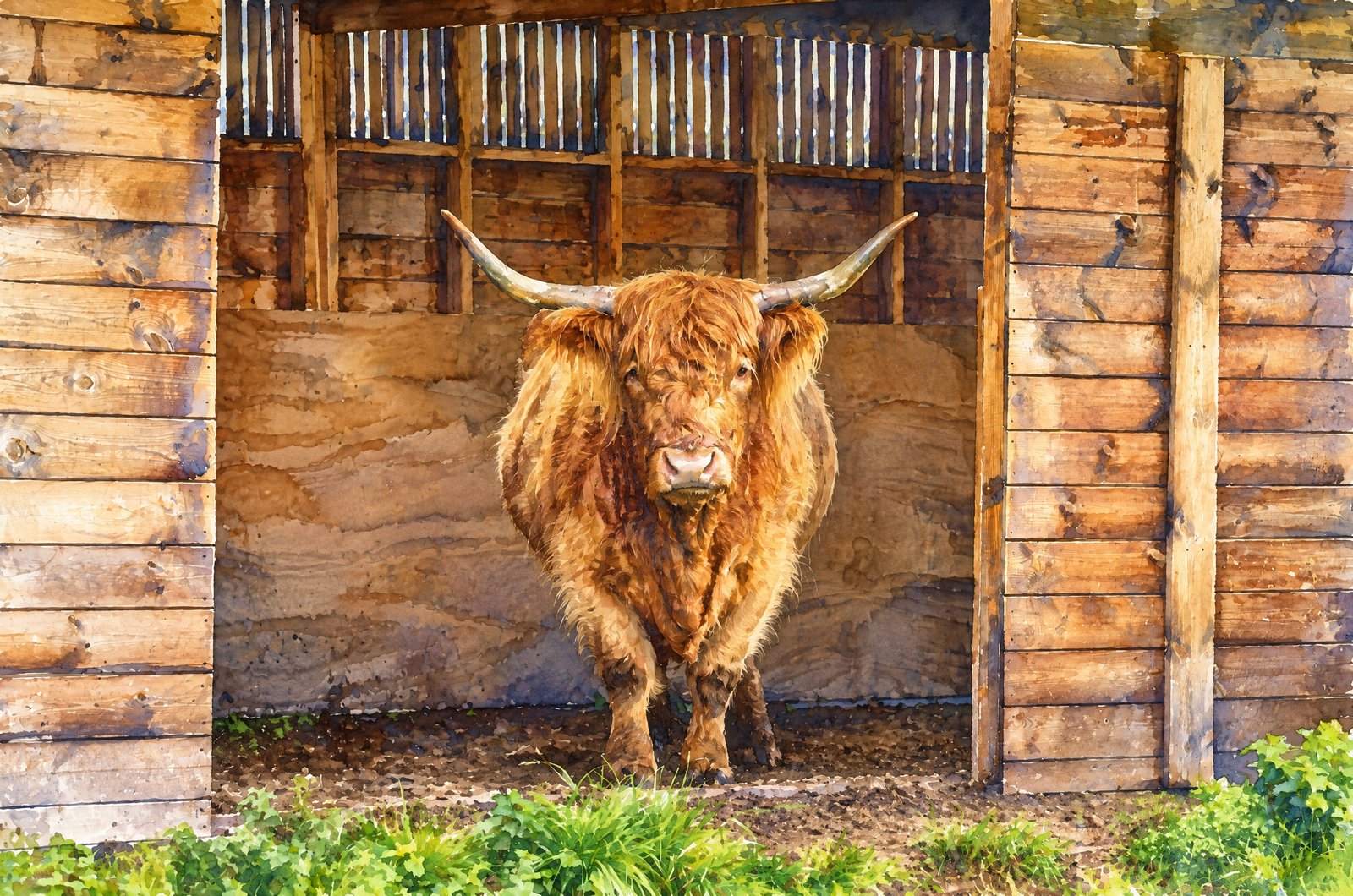 Watercolor
Highland Cow, Scotland
A Highland cow faces the camera from the open doorway of a timber byre on a Scottish farm, its long horns and shaggy auburn coat lit by soft daylight, with straw bedding and grass at the threshold. Key Features: The Breed: Highland cattle come from the Highlands and Outer Hebrides, a rustic breed recorded as early as the 6th century and prized for its long horns and shaggy coat. The Coat: A thick, woolly double coat and sweeping horns help them through hard winters, scarce forage and exposed uplands. The Byre: Timber shelters like this one are still used on Scottish farms, giving hardy cattle protection while they come and go freely. The Legacy: Highland cattle remain one of Britain's oldest and most recognizable native breeds.
Prints from $41Prints only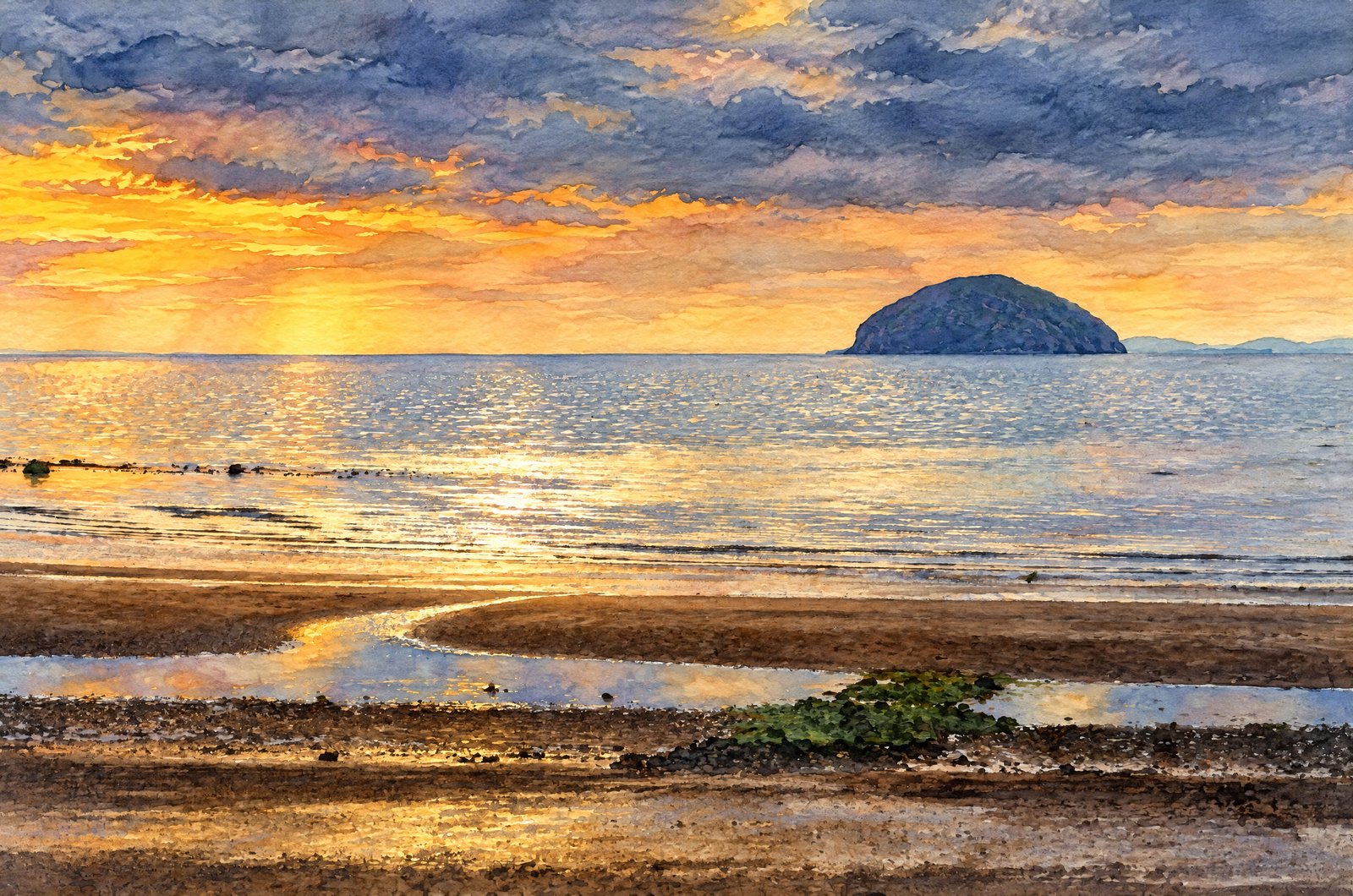 Watercolor
Loch Ryan In Dumfries And Galloway
Across the tidal flats at Stranraer, on the shore of Loch Ryan in Dumfries and Galloway, wet sand, pools and seaweed lead the eye at low tide to the unmistakable dome of Ailsa Craig rising from the Firth of Clyde under a glowing, overcast sky. Key Features: The Island: Ailsa Craig is an uninhabited granite plug, the eroded core of an extinct volcano, rising steeply from the sea about 9 miles off the Ayrshire coast. Curling Stones: Its rare microgranite, called Ailsite, has long been quarried to make curling stones. The Vantage Point: Stranraer sits at the head of Loch Ryan, with wide, low views across the water. Wildlife Haven: The island is a protected bird sanctuary, home to large colonies of gannets and other seabirds.
Prints from $41Prints only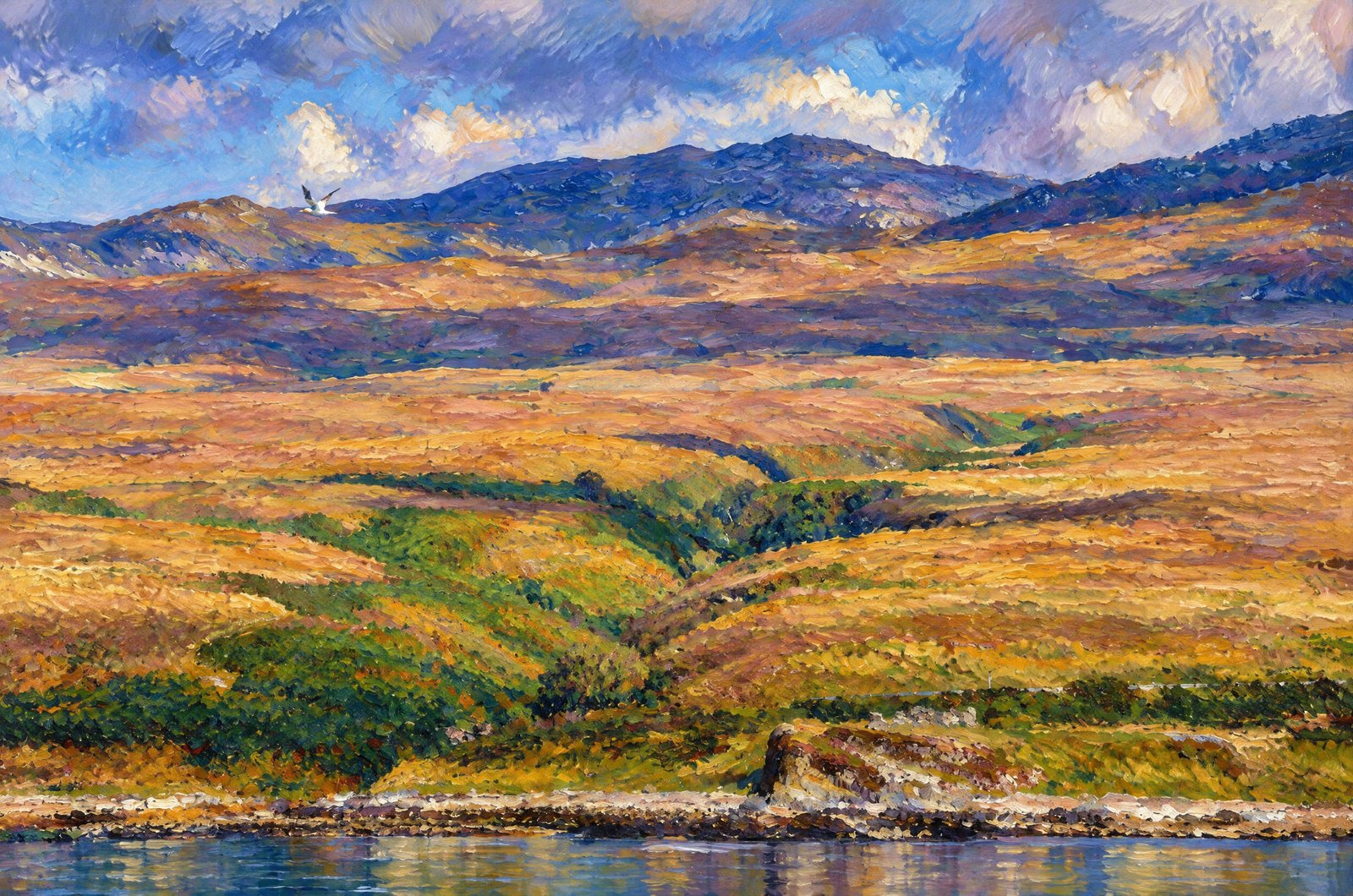 Impressionist
Loch Eriboll On Scotland North Coast
From the water of Loch Eriboll on Scotland's far north coast, the rocky Ard Neakie peninsula juts out with a ruined stone structure on its point, a single-track road tracing the shore beneath heather hills and layered Sutherland ridges fading into a cloud-filled sky. Key Features: The Loch: Loch Eriboll is a sea loch near Durness, best known as a deep-water anchorage used by the Royal Navy. Ard Neakie: The loch's most striking feature, a mound of land kept from becoming an island by a tombolo of sand and shingle joining it to the east shore. Industrial History: Four large lime kilns were built on Ard Neakie in 1870, where the Reay estate produced lime in quantity. Access: Before the coast road around the loch was built in 1890, the Heilam ferry ran from the quay at Portnancon on the west shore to Ard Neakie.
Prints from $41Prints only