

Collection
United Kingdom
By · 15 photos
 Painterly
Trafalgar Square London
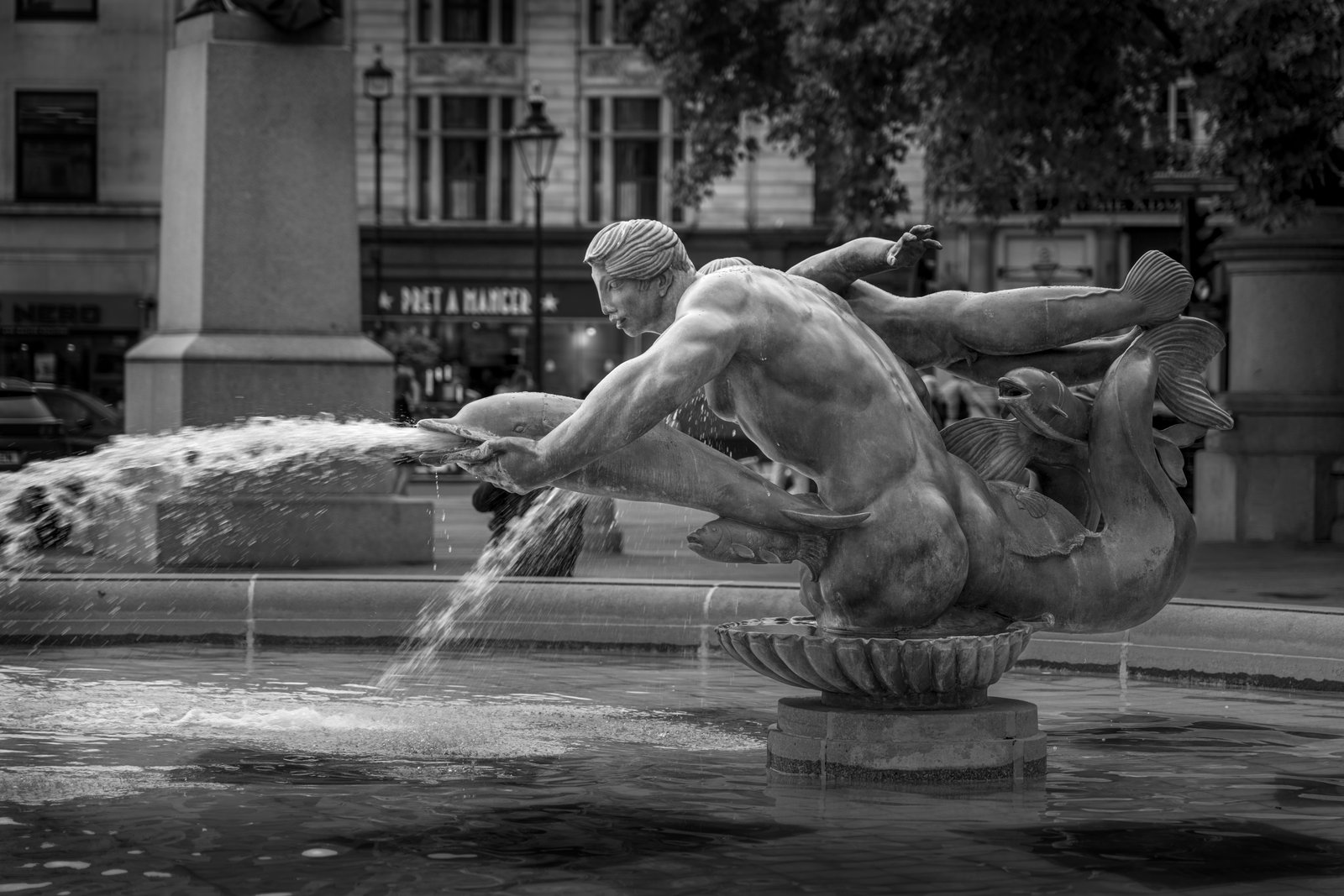
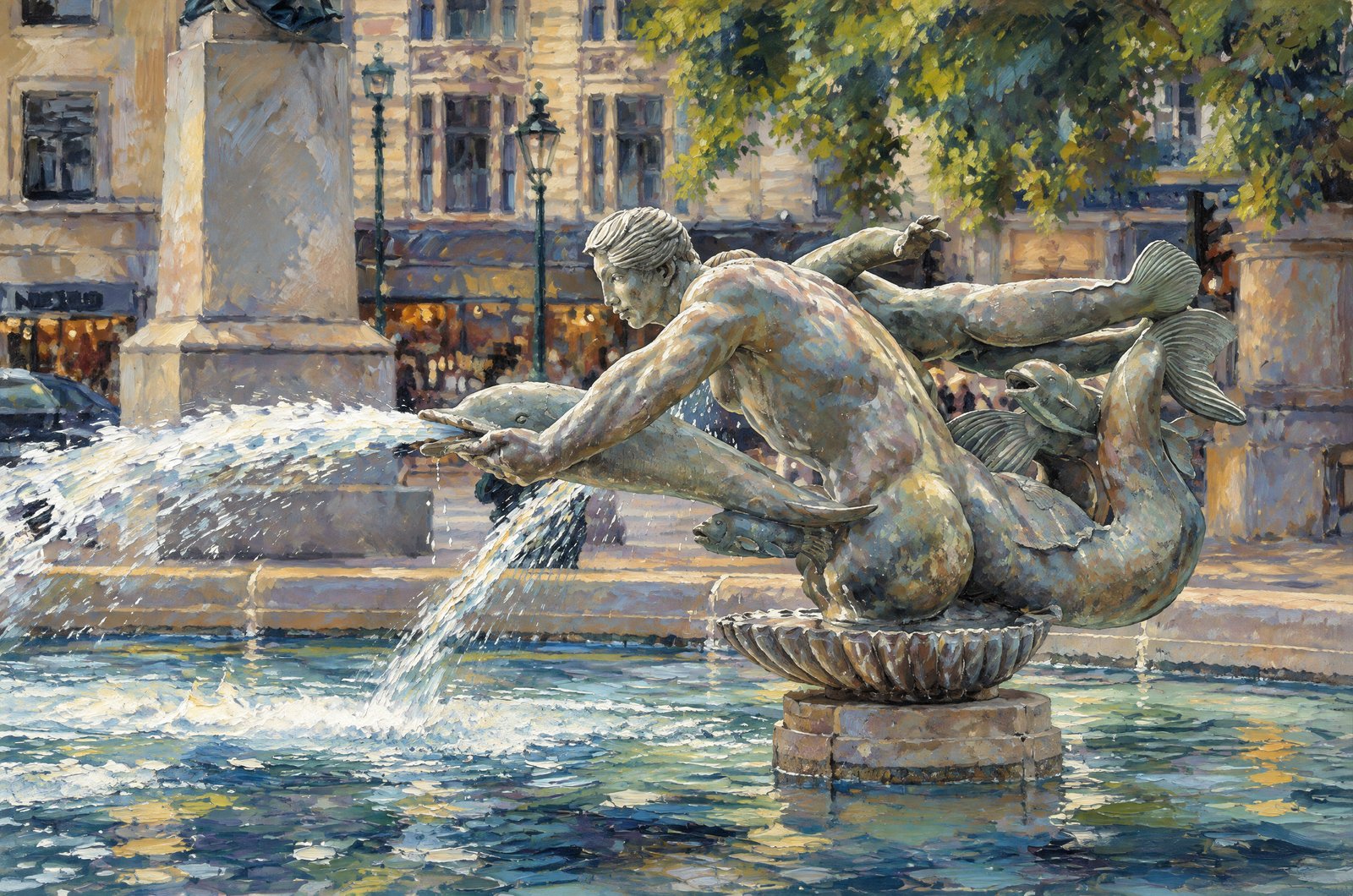
A muscular bronze merman reclines among leaping fish and dolphins in one of the two fountains facing Nelson's Column in Trafalgar Square, London, as a dolphin sends a jet of water across the pool and droplets catch the light, with the National Gallery soft behind. Key Features: The Sculptures: The two fountains honor Admiral Jellicoe and Admiral Beatty, with mermaids, mermen, dolphins and tritons. The Artists: Sir Charles Wheeler and William McMillan made the bronze sea creatures, finished in 1939. The Fountains: Fountains were part of Charles Barry's 1845 design for the square; the lively bronzes came much later. The Square: Trafalgar Square is central London's best-known public square, framed by the National Gallery, church spires and busy streets.
Prints from $41Prints only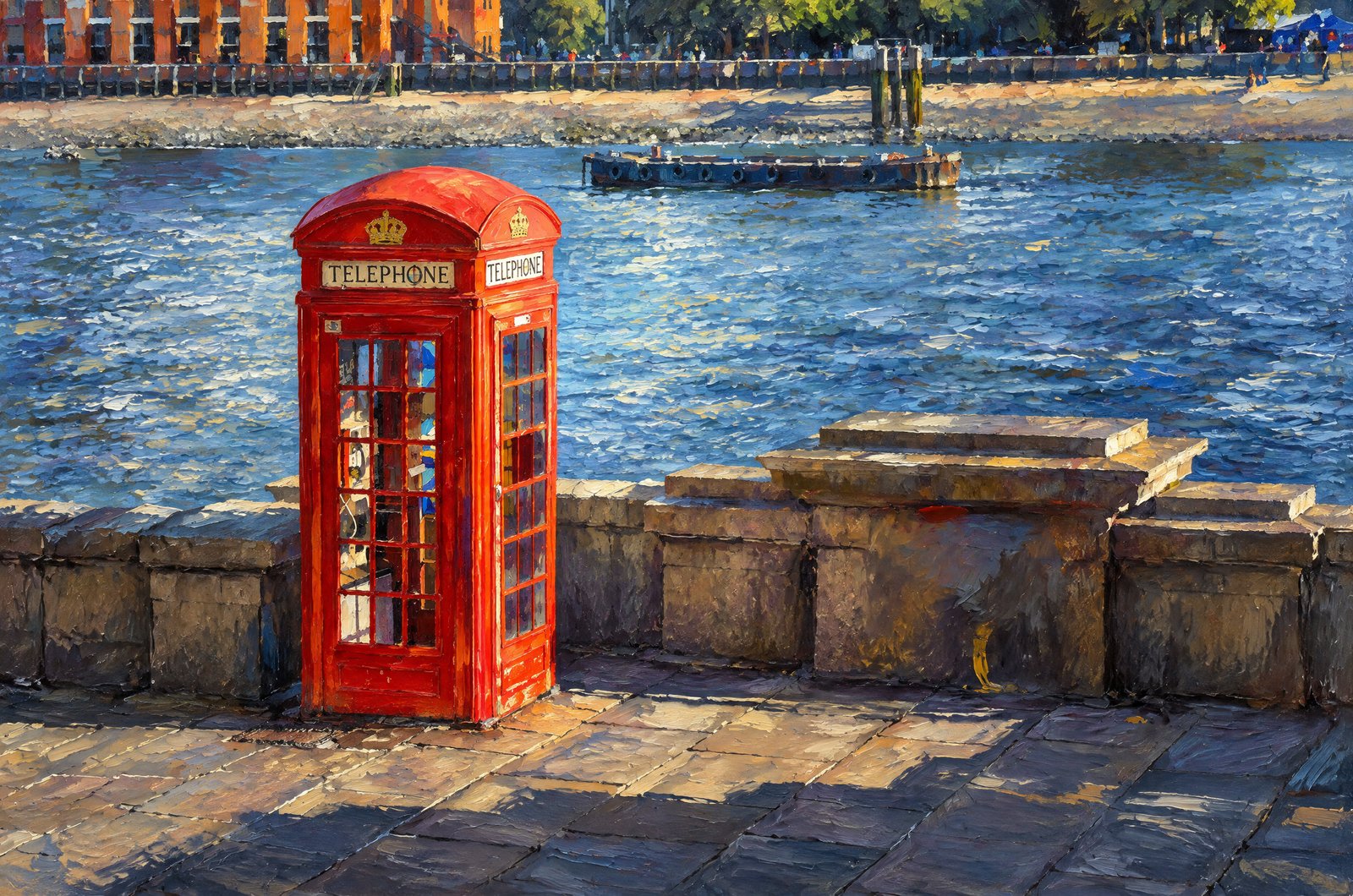 Painterly
Telephone Booth London
A red K6 telephone box stands on a stone walkway beside the River Thames in London, lit by a shaft of late sun against the deepening blue of the water. Across the river, the low tide has bared the muddy foreshore in front of a row of converted Victorian warehouses, and a small barge sits moored in the current. Key Features: The Design: The K6, short for Kiosk No. 6, was designed in 1935 by architect Sir Giles Gilbert Scott. A Cultural Icon: The most famous British phone box of all was actually the sixth design. The Waterfront: The warehouses across the river are London's old dockside buildings, converted for new lives. The Tide: At low water the Thames foreshore of shingle and sand is open for riverside walks.
Prints from $41Prints only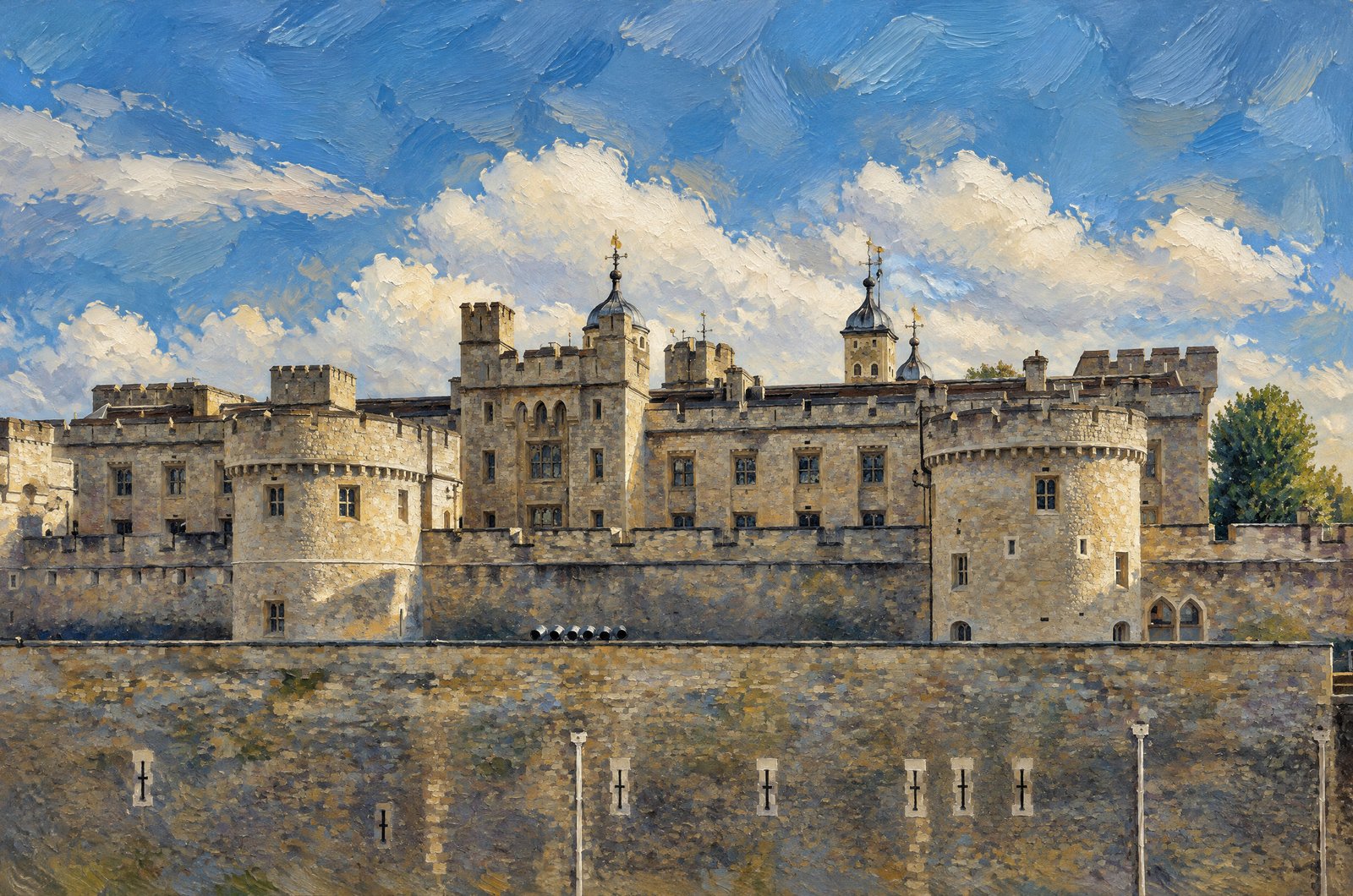 Painterly
Tower Of London
The Tower of London's medieval walls rise beside the Thames, seen from outside the moat across the outer curtain wall toward the White Tower and its corner turrets above the battlements, with crenellated parapets, arrow slits and layer upon layer of defenses. Key Features: The Building: The White Tower dates from 1078; the fortress grew around it in stages over the next two centuries. The Defenses: Henry III greatly expanded the Tower in the thirteenth century, adding defensive walls around the White Tower. World Heritage: The Tower of London has been a UNESCO World Heritage Site since 1988. Its Roles: Over the centuries it has served as royal palace, prison and treasury.
Prints from $41Prints only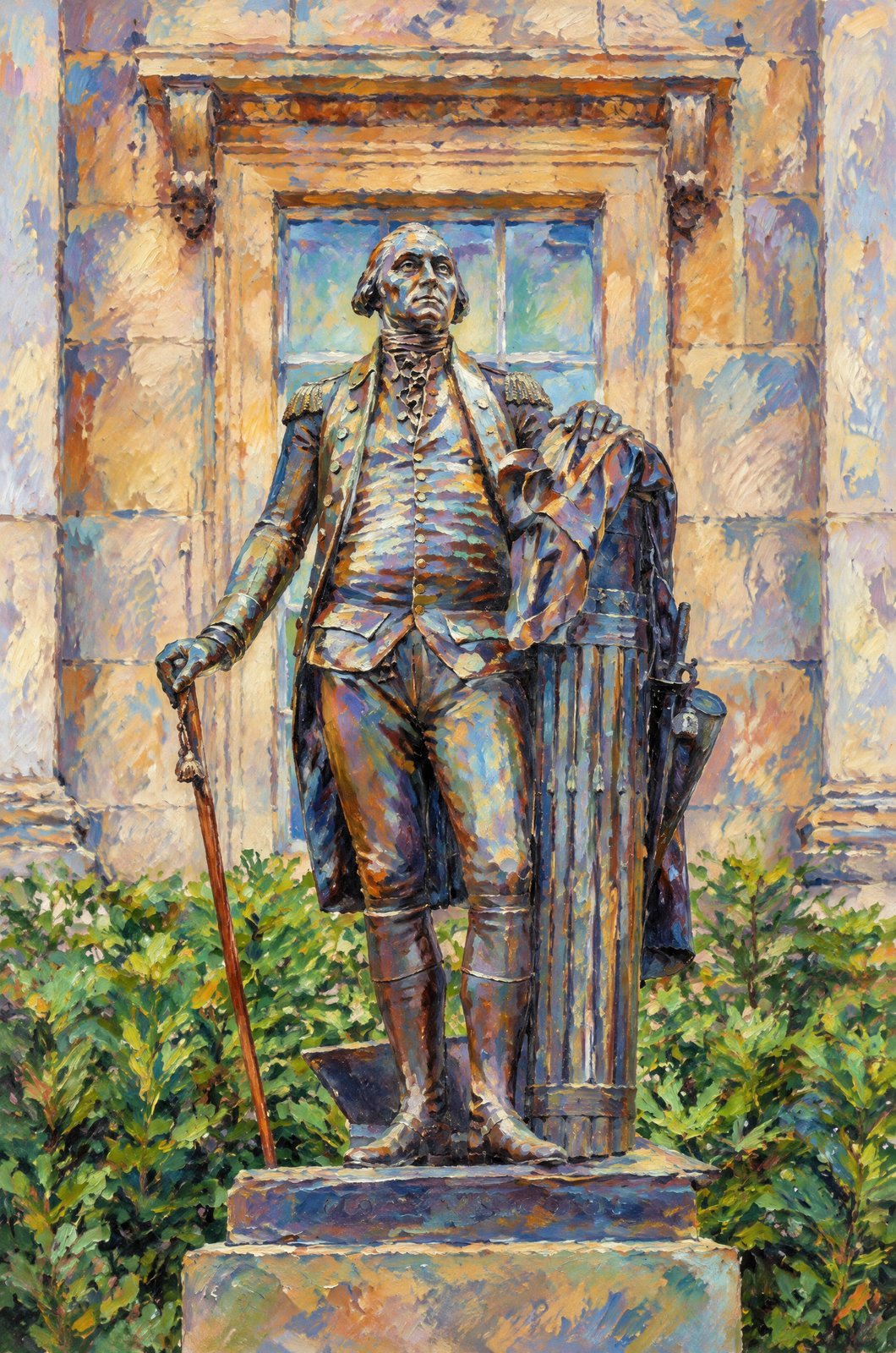 Impressionist
George Washington London
A bronze George Washington stands on the east lawn of the National Gallery facing Trafalgar Square in London, seen close against the gallery's stone facade and shrubbery, in military dress with cane and cloak and a bundle of fasces behind him. Key Features: The Gift: The Commonwealth of Virginia presented this bronze to the people of Great Britain and Ireland in 1921. The Original: It copies Jean-Antoine Houdon's statue in the Virginia State Capitol in Richmond. The Legend: Washington once said he would never set foot on English ground, so the statue was given American soil to stand on.
Prints from $41Prints only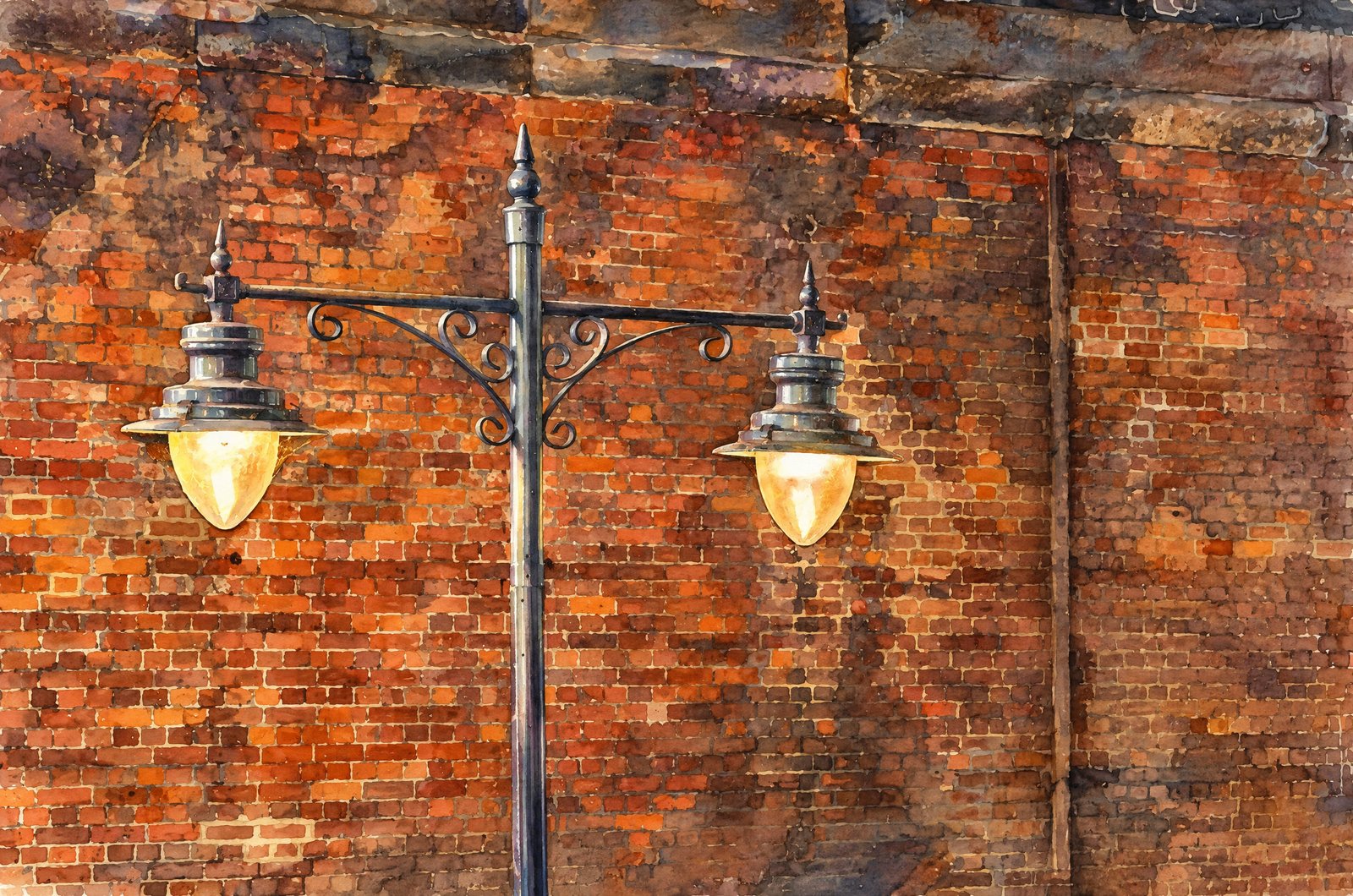 Watercolor
Victorian Railway
An ornate cast-iron lamp standard glows against soot-darkened brick inside a restored Victorian railway building in London, its double arms, urn finials and scrolled iron brackets carrying two glass-shaded lanterns, with a small plate on the wall numbering it six. Key Features: The Fixture: Twin lamps with urn finials and curling ironwork, the style of station lighting across Britain's railways in the late nineteenth century. The Building: Red brick and a blackened, timber-raftered ceiling mark the Victorian railway architecture that still stands across London. The Detail: The numbered plate is the kind of methodical touch railway buildings were known for. The Atmosphere: Warm lamplight against cool brick and shadow gives Victorian industrial design a second life.
Prints from $41Prints only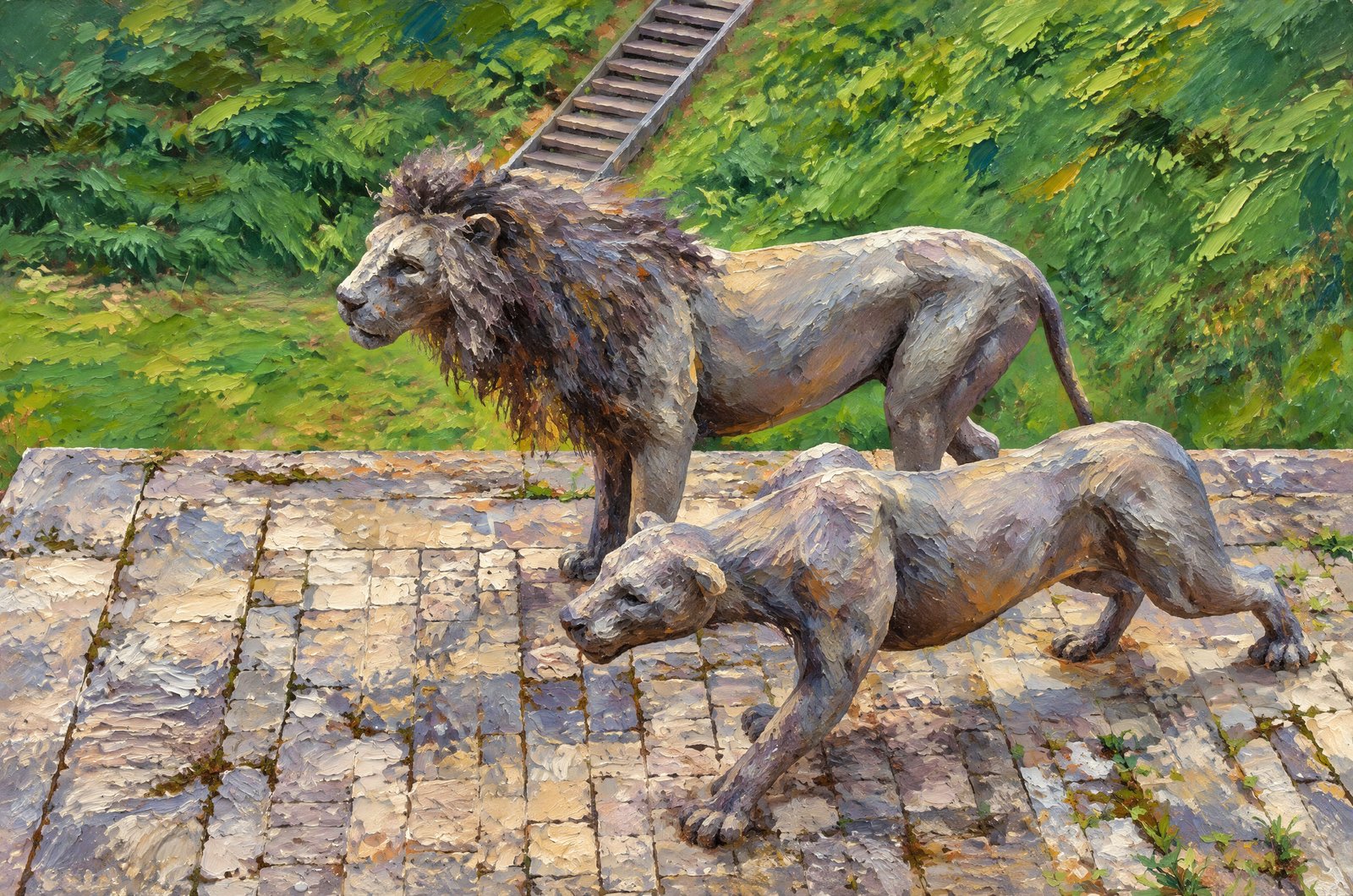 Painterly
Prowlers At The Tower Of London
Life-size wire mesh lions prowl the stone causeway by the west entrance of the Tower of London, near where the Lion Tower once stood, a male and a crouching lioness seen low and close in profile against the grassy moat bank and a wooden stair, their woven coats catching light and shadow. Key Features: The Sculptor: Wildlife artist Kendra Haste built the lions from layered galvanised wire mesh over steel frames. The Commission: Historic Royal Palaces commissioned thirteen of her sculptures in 2010 to recall the Royal Menagerie once kept at the Tower. The Setting: They stand on the old site of the Lion Tower, where exotic animals were kept for centuries. The Moat: The grassed moat around them was once part of the castle's defenses, now a public lawn.
Prints from $41Prints only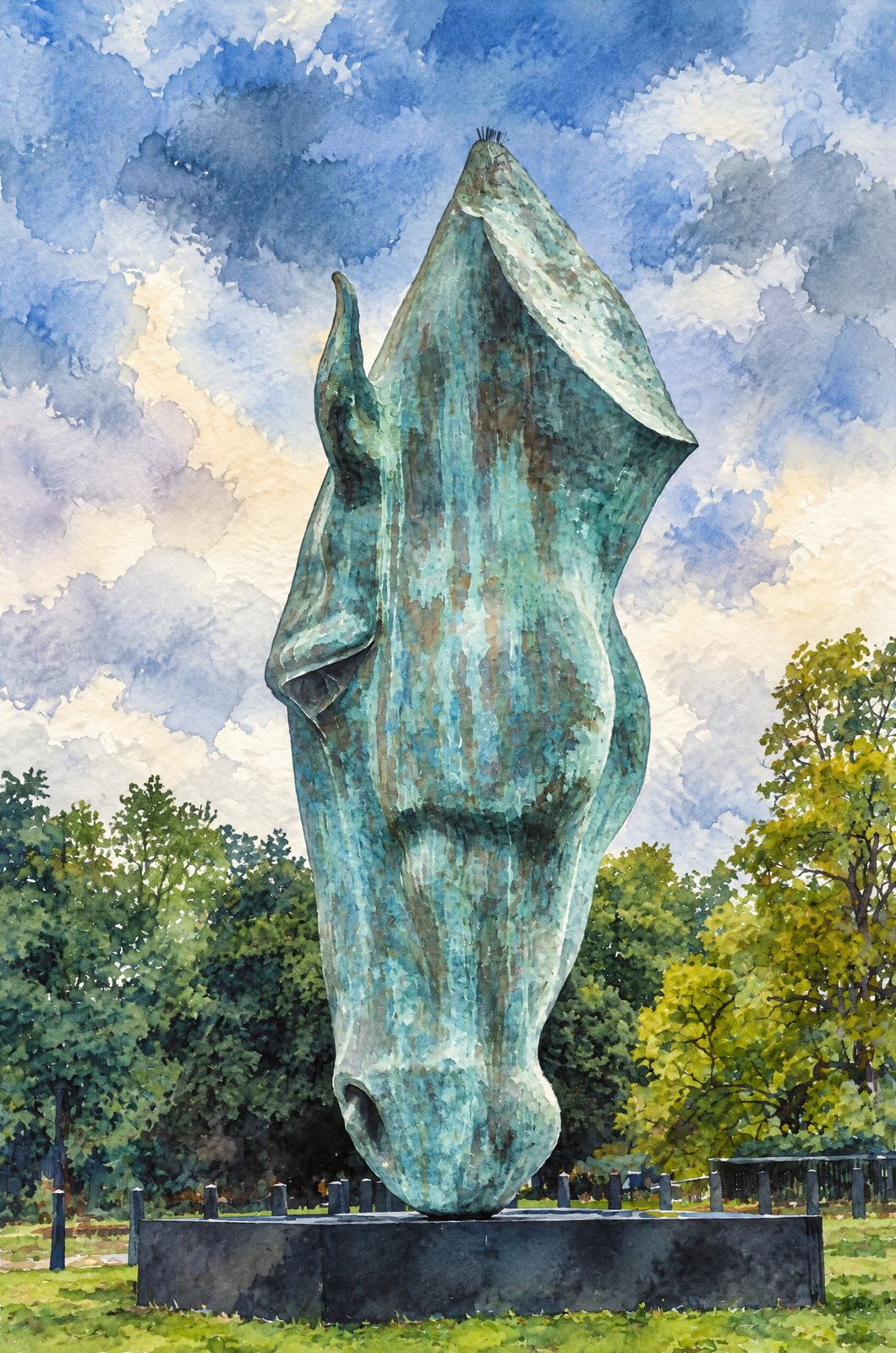 Watercolor
Hyde Park Colossal Bronze Horse
A colossal bronze horse's head tilts forward as if dipping to drink, balanced on the tip of its nose above a low black plinth near Hyde Park Corner in central London, seen from below against a dramatic cloudy sky and the park's trees. Key Features: The Sculpture: Still Water stands more than 30 feet high, the whole weight of the green-patinated head resting on its nose. The Artist: British sculptor Nic Fiddian-Green is best known for giant horse heads, often inspired by his own chestnut hunter, George. The Location: It stands on Achilles Way near Hyde Park Corner, moved there from its first home at Marble Arch. The Concept: The work draws on Greek ideals of harmony, proportion and balance.
Prints from $41Prints only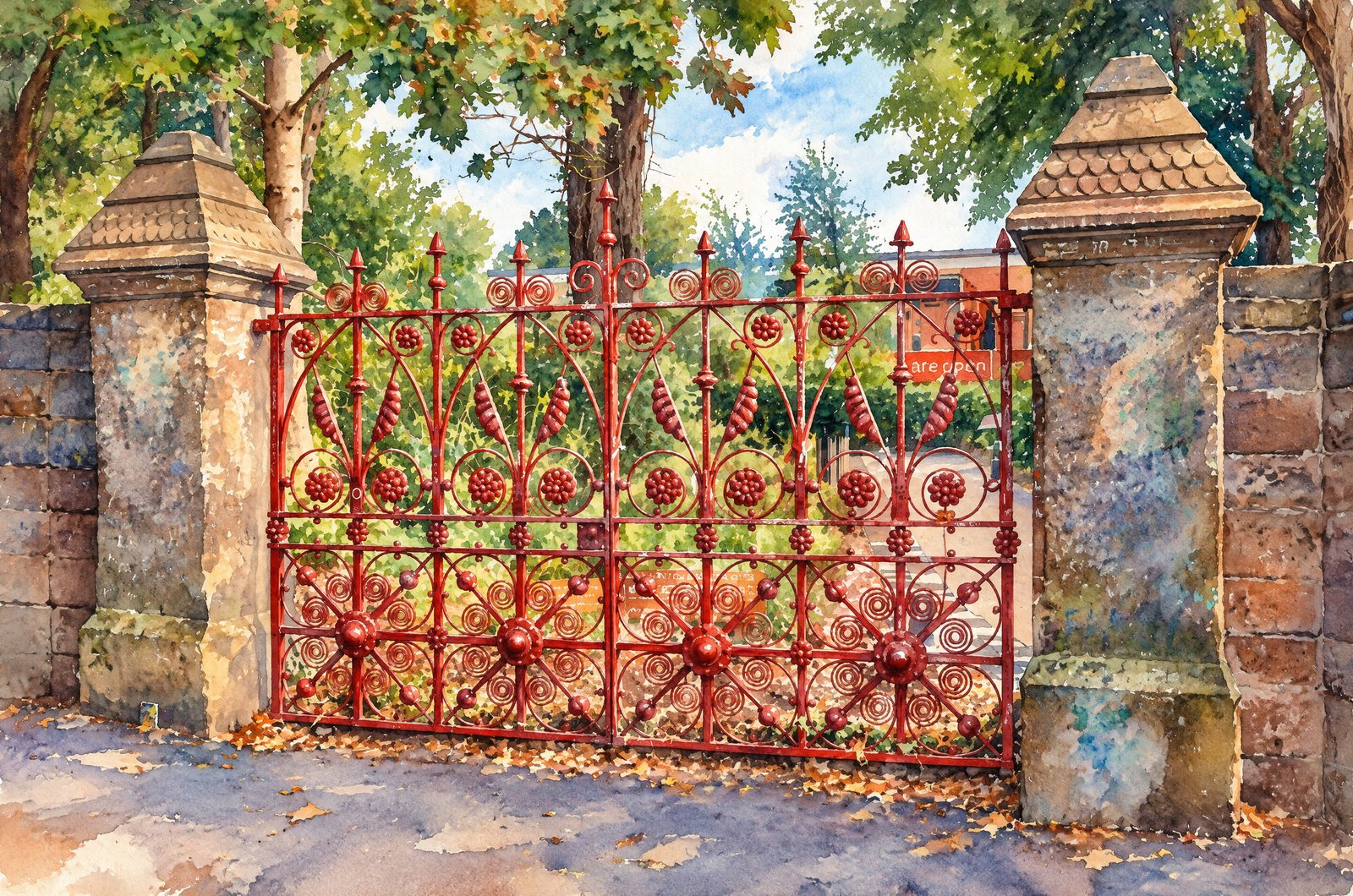 Watercolor
Strawberry Field In Liverpool
Bright red wrought iron gates, flanked by stone gateposts covered in decades of fan graffiti, mark Strawberry Field on Beaconsfield Road in Woolton, Liverpool, with the modern visitor centre showing through the trees beyond. Key Features: The Gates: The original gates were replaced with replicas in May 2011; the originals are on display at The Beatles Story museum. The Beatles Connection: John Lennon grew up nearby and played in these grounds as a boy, and the place inspired Strawberry Fields Forever. The History: The Salvation Army bought the Victorian mansion and its grounds in 1934 and ran it as a children's home. Visitor Attraction: The site reopened to the public in 2019 with an exhibition, cafe and gardens, along with a training programme for young people.
Prints from $41Prints only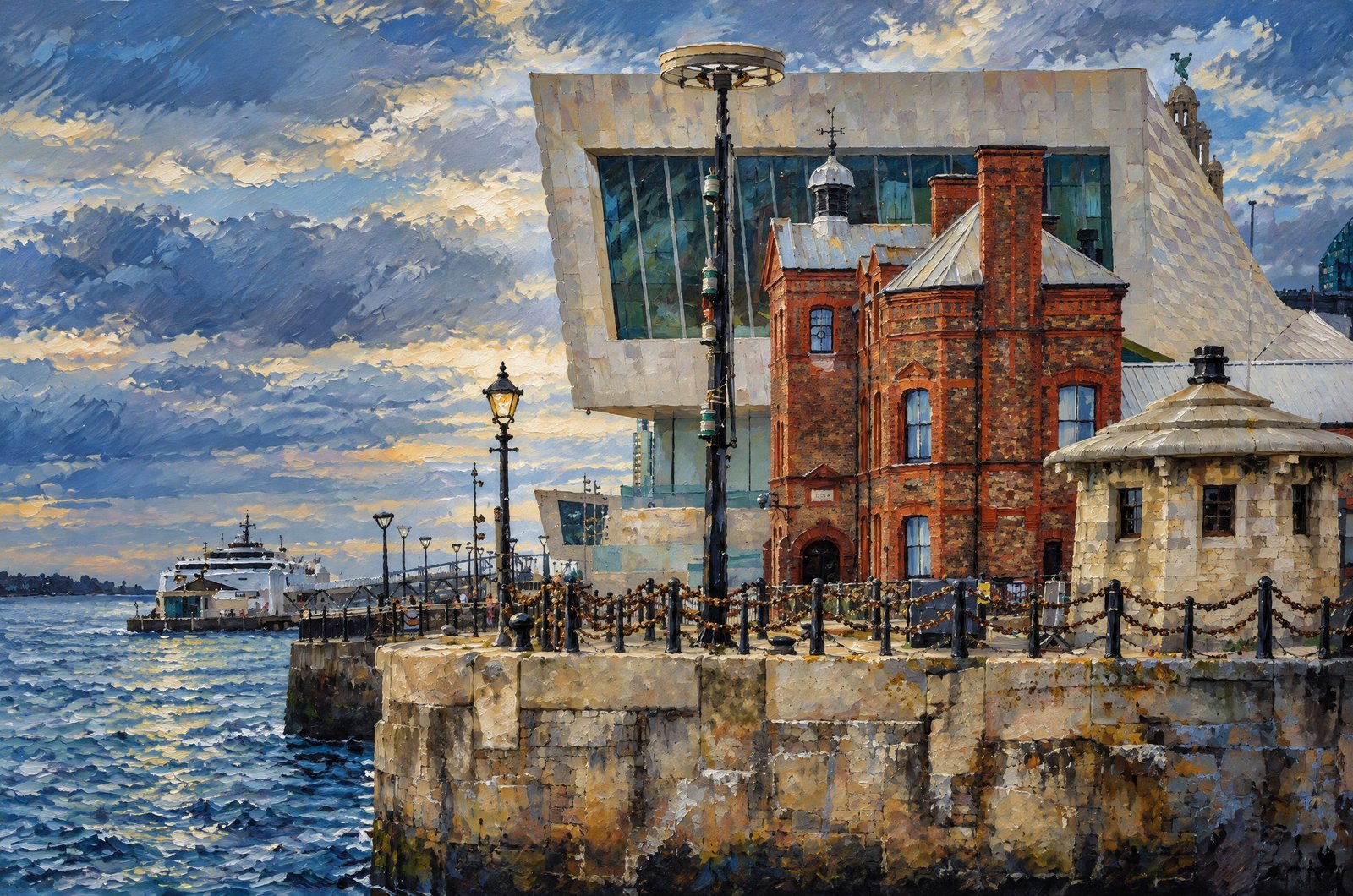 Painterly
The Liverpool Pier On River Mersey
The red brick Pilotage Building of 1883 stands beside the angular white Museum of Liverpool at Pier Head on the River Mersey, with a Liver Bird atop the Royal Liver Building on the skyline and a Mersey ferry waiting at its landing stage, as the stone river wall and lamp posts lead out over the water under a cloudy sky. Key Features: The Pilotage Building: Built in 1883 for the Liverpool Pilotage Service, founded in 1766 to guide ships through the Mersey's shifting sandbanks. The Museum of Liverpool: Opened in 2011 and designed by Danish architects 3XN, its modern form sets off the historic brick beside it. The Pier Head: The heart of Liverpool's waterfront, watched over by the Royal Liver Building and its famous Liver Birds.
Prints from $41Prints only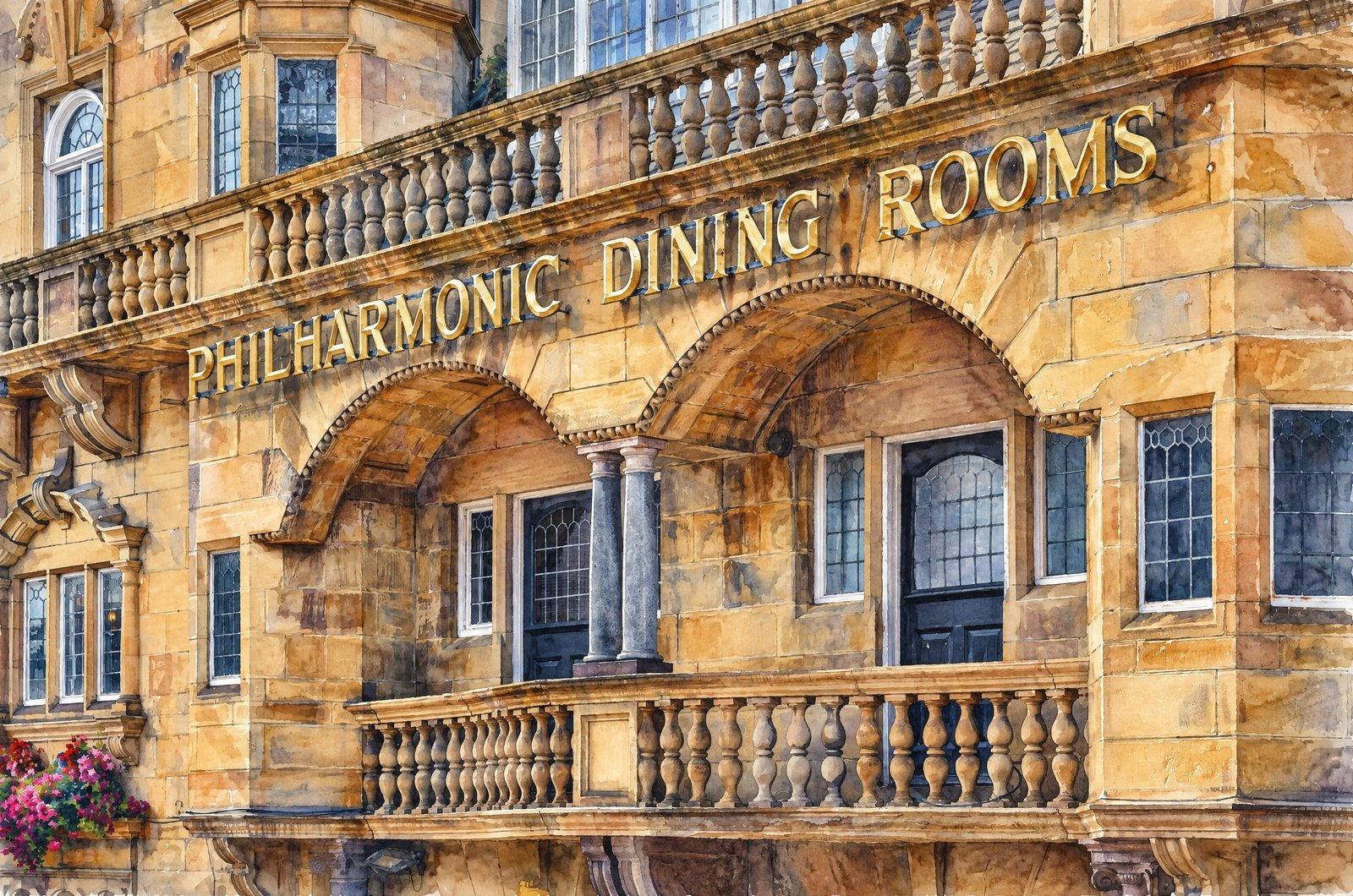 Watercolor
Philharmonic Dining Rooms, Liverpool
Gilded lettering spells out the name of the Philharmonic Dining Rooms beneath a carved stone balcony on the corner of Hope Street and Hardman Street in Liverpool, seen from street level looking up at its twin arched entrances, stained glass and sandstone detail. Key Features: Origins: Built between 1898 and 1900 for brewer Robert Cain, designed by Liverpool architect Walter W. Thomas. Recognition: Called a cathedral among pubs for its opulence, it was one of the most spectacular pubs of the late Victorian golden age of pub building. The Interior: The Grade I listed pub is known for its stained glass, wood panelling and decorative plaster ceilings.
Prints from $41Prints only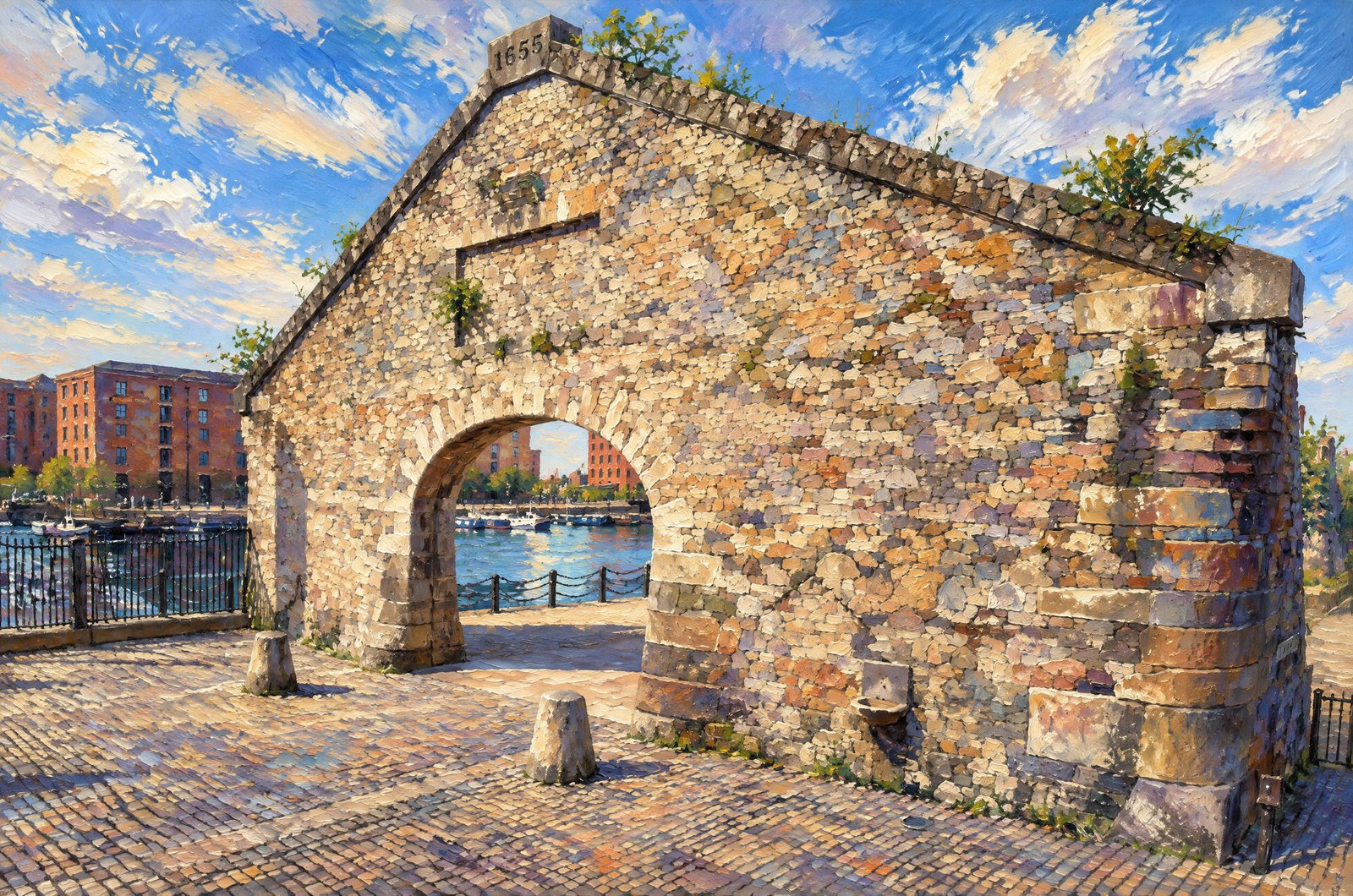 Painterly
Albert Dock In Liverpool
A stone gateway dated 1855 frames a view through to the dock basin at Albert Dock in Liverpool, England, with warehouses and moored boats across the water, seen from the cobbled approach beside the road into the docks. Key Features: The Stone Arch: Merseyside County Council rebuilt the gateway here in 1980 from stone salvaged from the original 1855 structure. The Dock: Engineer Jesse Hartley and architect Philip Hardwick designed Albert Dock, opened in 1846, with warehouses of brick, iron and stone rather than timber to guard against fire. The Warehouses: Together they form the largest group of Grade I listed buildings in Britain.
Prints from $41Prints only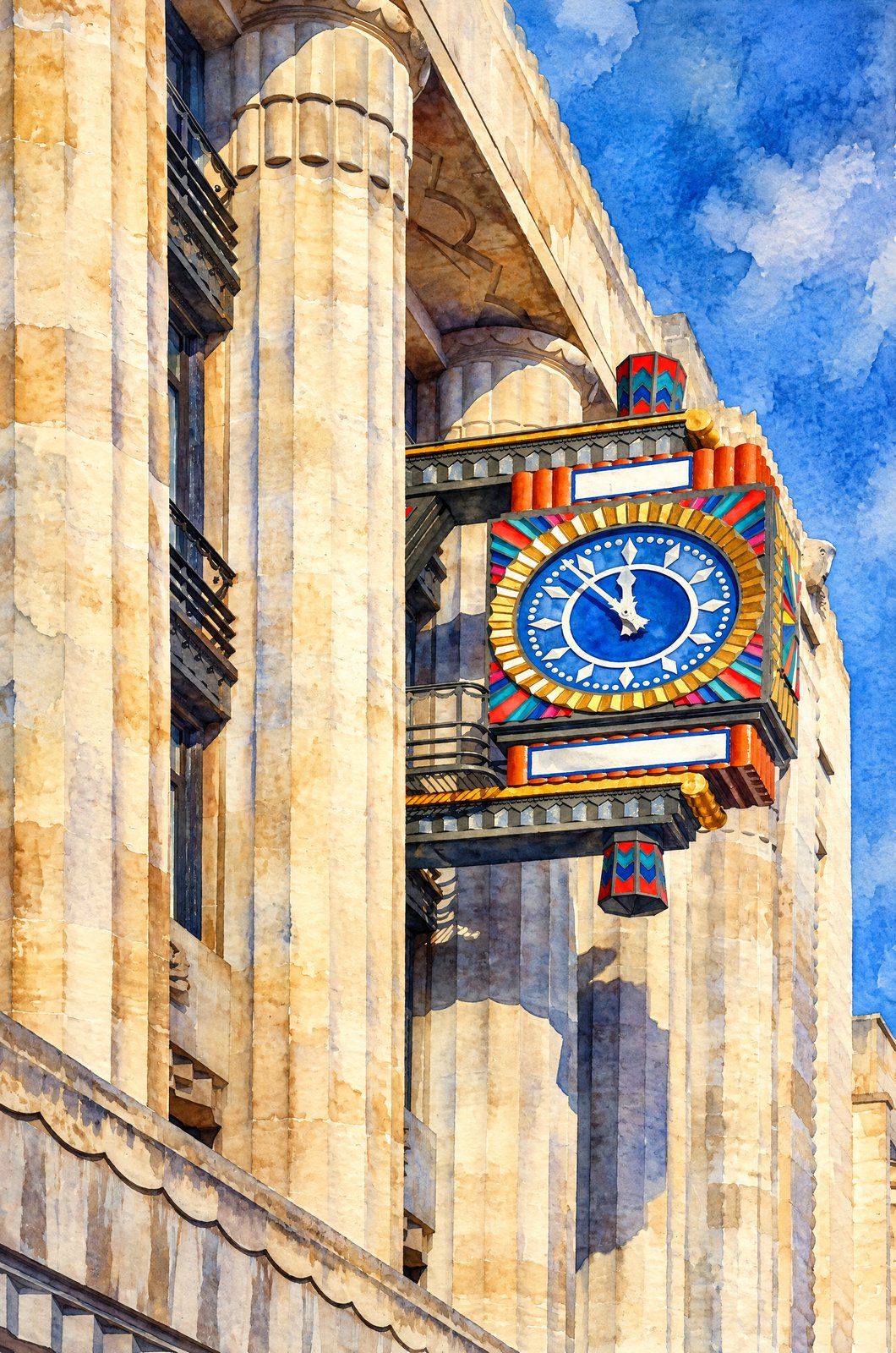 Watercolor
Time At The Telegraph Building
The Daily Telegraph Building's vivid blue, red, green and gold Art Deco clock projects between massive fluted Portland stone columns on Fleet Street in the City of London, seen from below against a deep blue sky. Key Features: The Building: Designed by Charles Ernest Elcock with Thomas S. Tait, it opened in 1928 as an Art Deco office block with Egyptian-inspired decoration and a monumental colonnade. The Clock: Its bright, oversized face is one of the best-known surviving details of the old newspaper headquarters. History: The Daily Telegraph was based here until the 1980s; the building later housed Goldman Sachs' European offices. Status: Grade II listed since 1983.
Prints from $41Prints only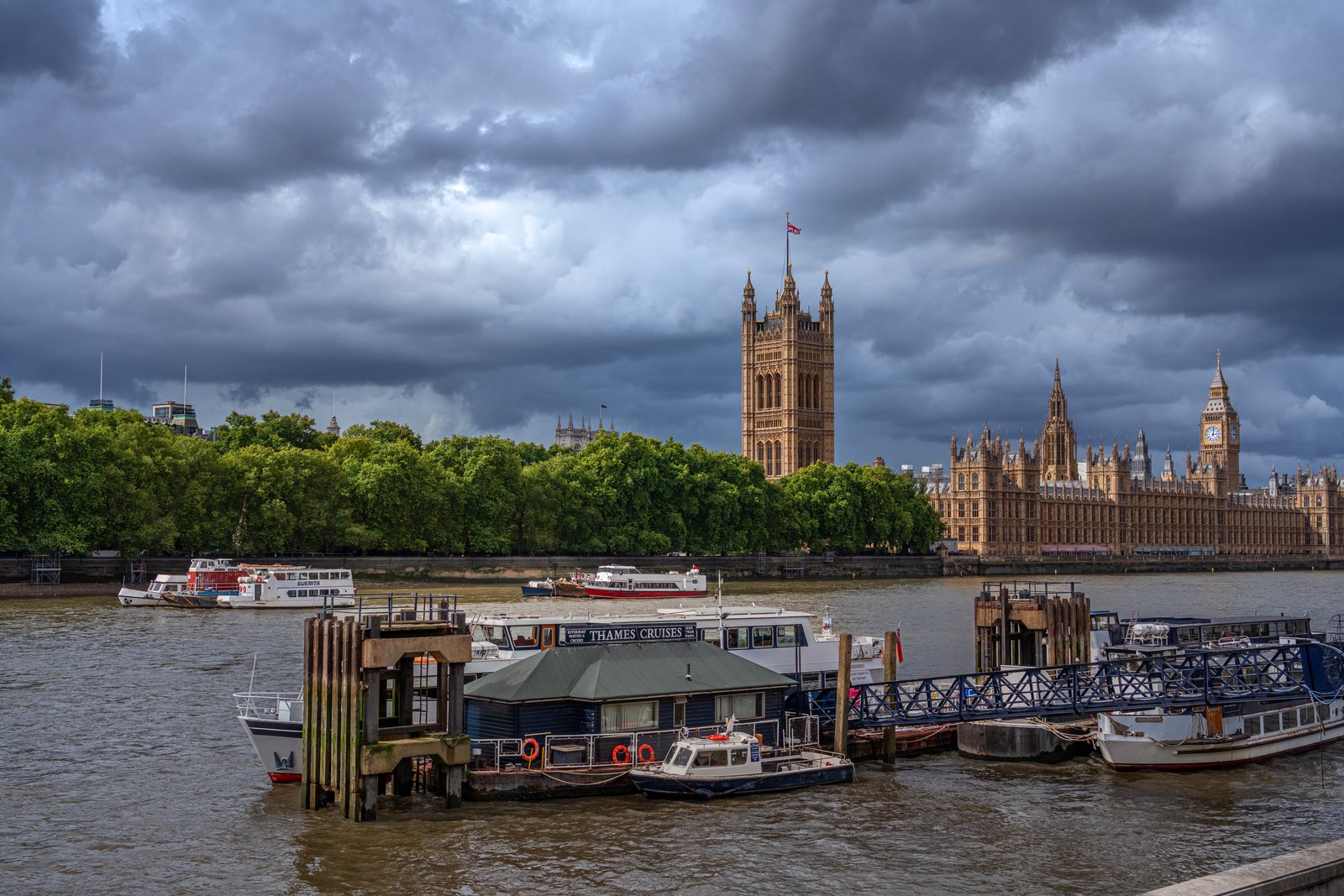
The River Thames
Tour boats and a houseboat sit tied up at a floating pier on the south bank of the Thames, looking north across the river to the Palace of Westminster, with the square Victoria Tower on the left and the clock tower housing Big Ben on the right beneath a heavy, storm-laden sky. Key Features: The Palace of Westminster: Seat of the UK Parliament, rebuilt in Gothic Revival style after fire destroyed the medieval palace in 1834. Victoria Tower: The tall square tower at the palace's southwest corner, long used to store parliamentary records. Big Ben: The nickname of the Great Bell in the Elizabeth Tower, one of London's most recognized landmarks. River Traffic: Pleasure cruisers and houseboats show the Thames still at work for sightseeing and travel through central London.
Prints from $22Downloads from $19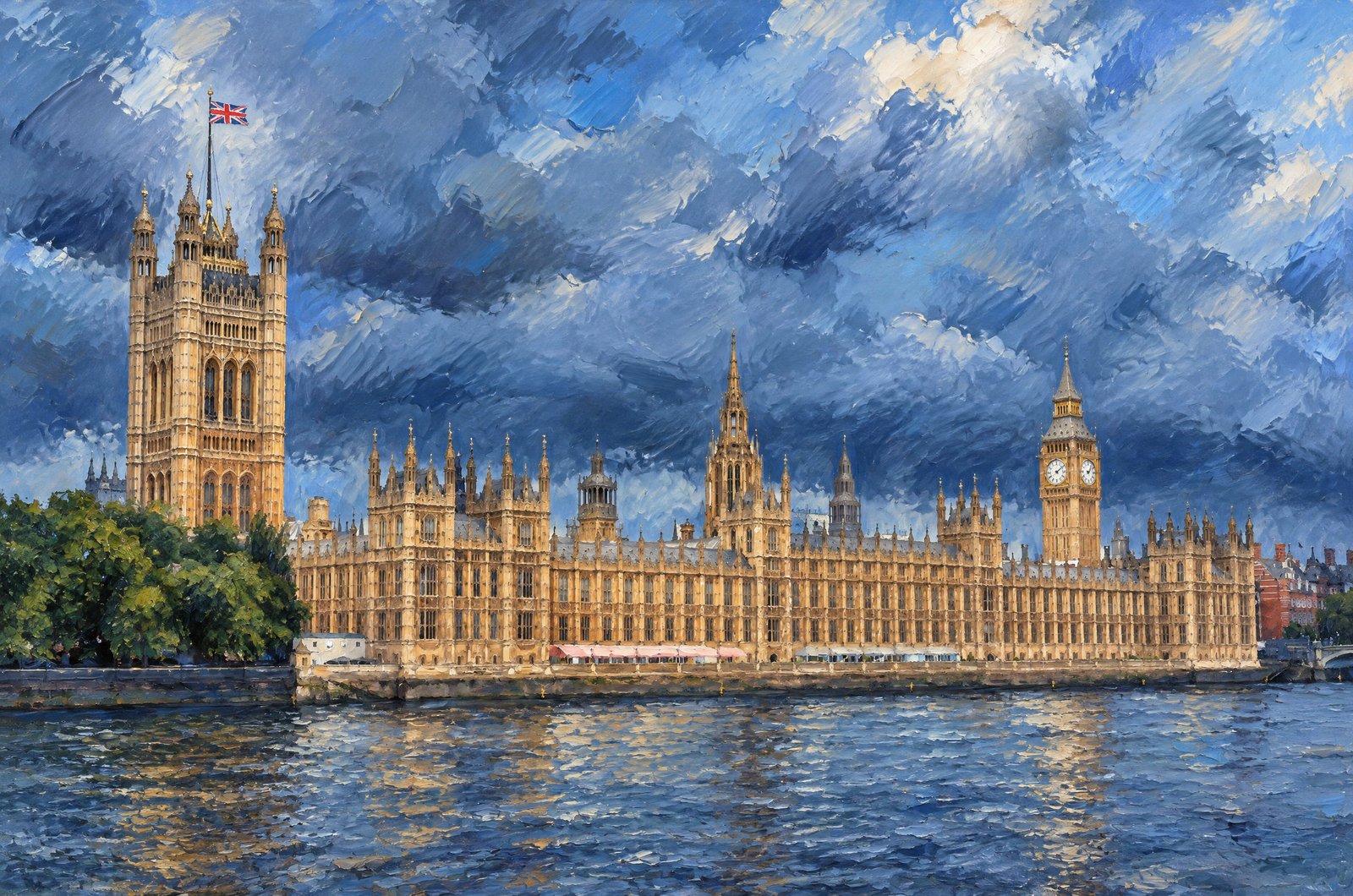 Painterly
Palace Of Westminster In London
Storm clouds bank over the Palace of Westminster across the Thames, its riverfront facade running from the tall, flag-topped Victoria Tower on the left to the clock tower of Big Ben on the right. Key Features: Victoria Tower: At 98.5 meters the tallest part of the palace, flying the Union Flag when Parliament sits. The Rebuilt Palace: Charles Barry and Augustus Pugin designed the Gothic Revival building after fire destroyed the medieval palace in 1834. Big Ben: The Elizabeth Tower at the north end holds the famous bell, one of London's best-known symbols.
Prints from $41Prints only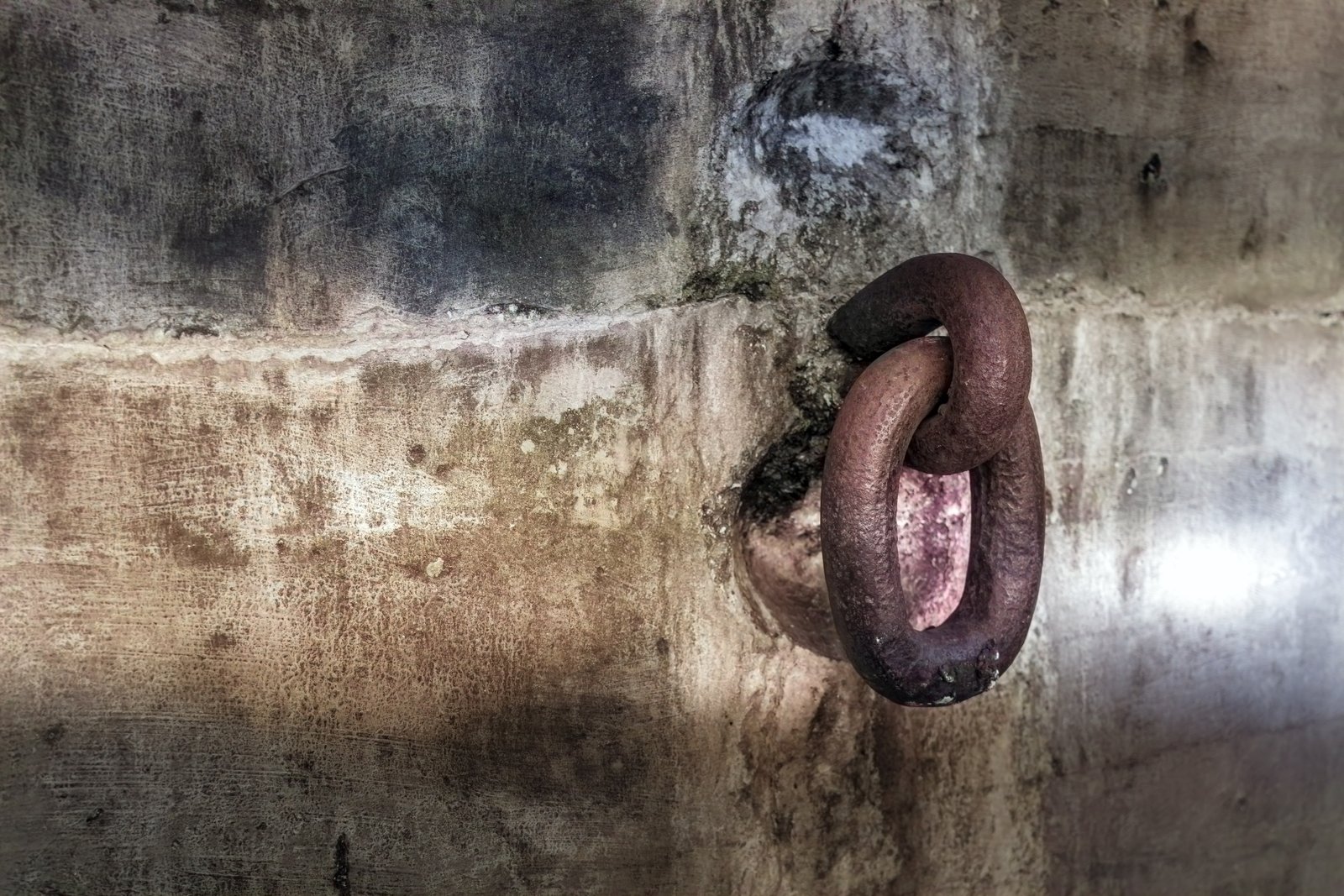
Weathered Link
A rusted iron ring and chain link hang from a stained, streaked concrete piling, the kind of tie-off point found on old piers and seawalls, isolated by tight framing and raking light against decades of water stains, algae and mineral deposits. Key Features: The Hardware: Heavy rust and pitting show long years of salt air and water. The Concrete: Mottled black, white and ochre stains come from minerals leaching out and growth taking hold on old waterfront structures. The Meaning: A single surviving link suggests endurance, connection and what remains of something once larger. The Approach: Close, selective focus and dramatic side light turn a utilitarian object into a study of texture, form and quiet decay.
Prints from $22Downloads from $19