

Collection
Yellowstone National Park, Wyoming
By · 32 photos
 Watercolor
Yellowstone National Park, Wyoming
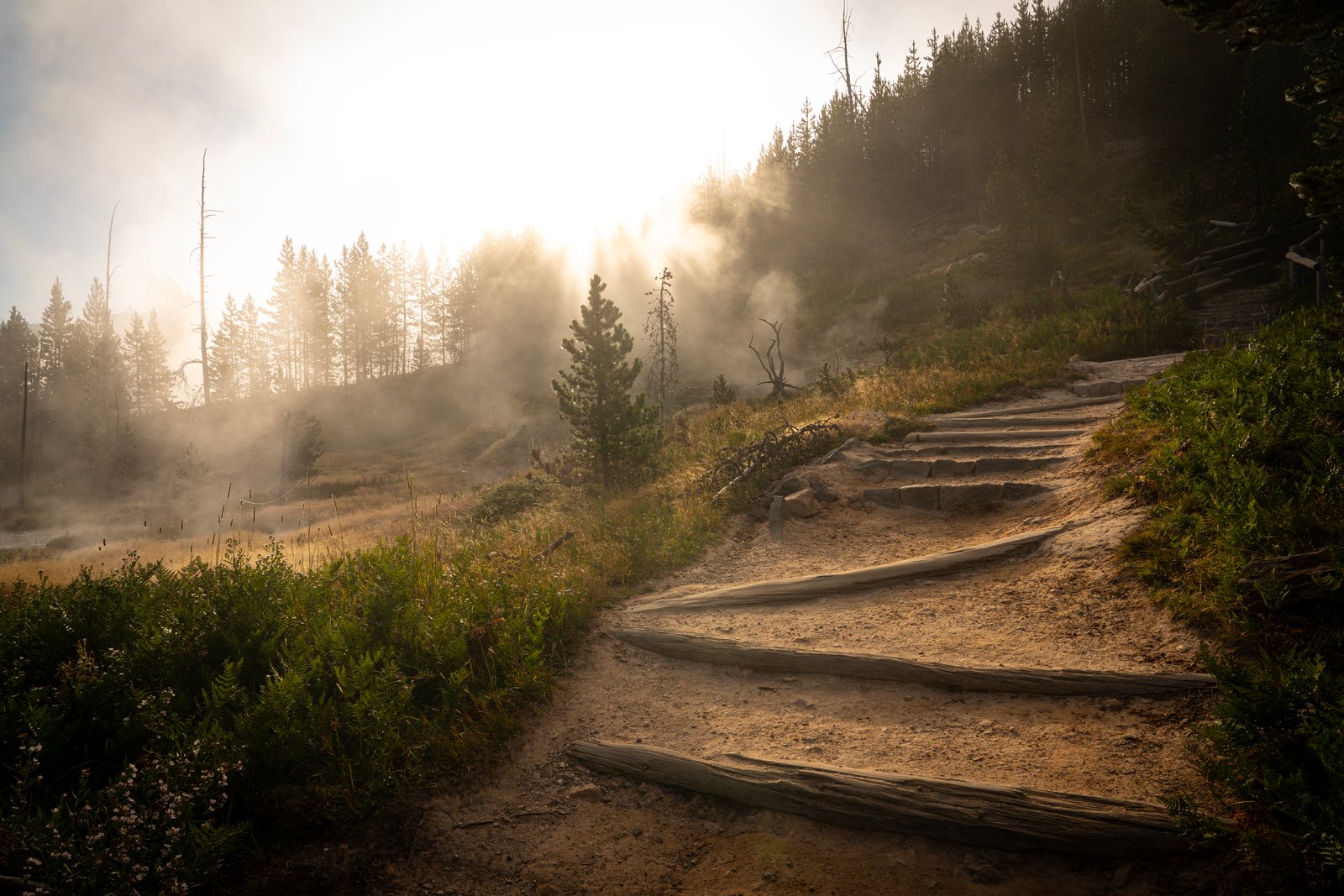
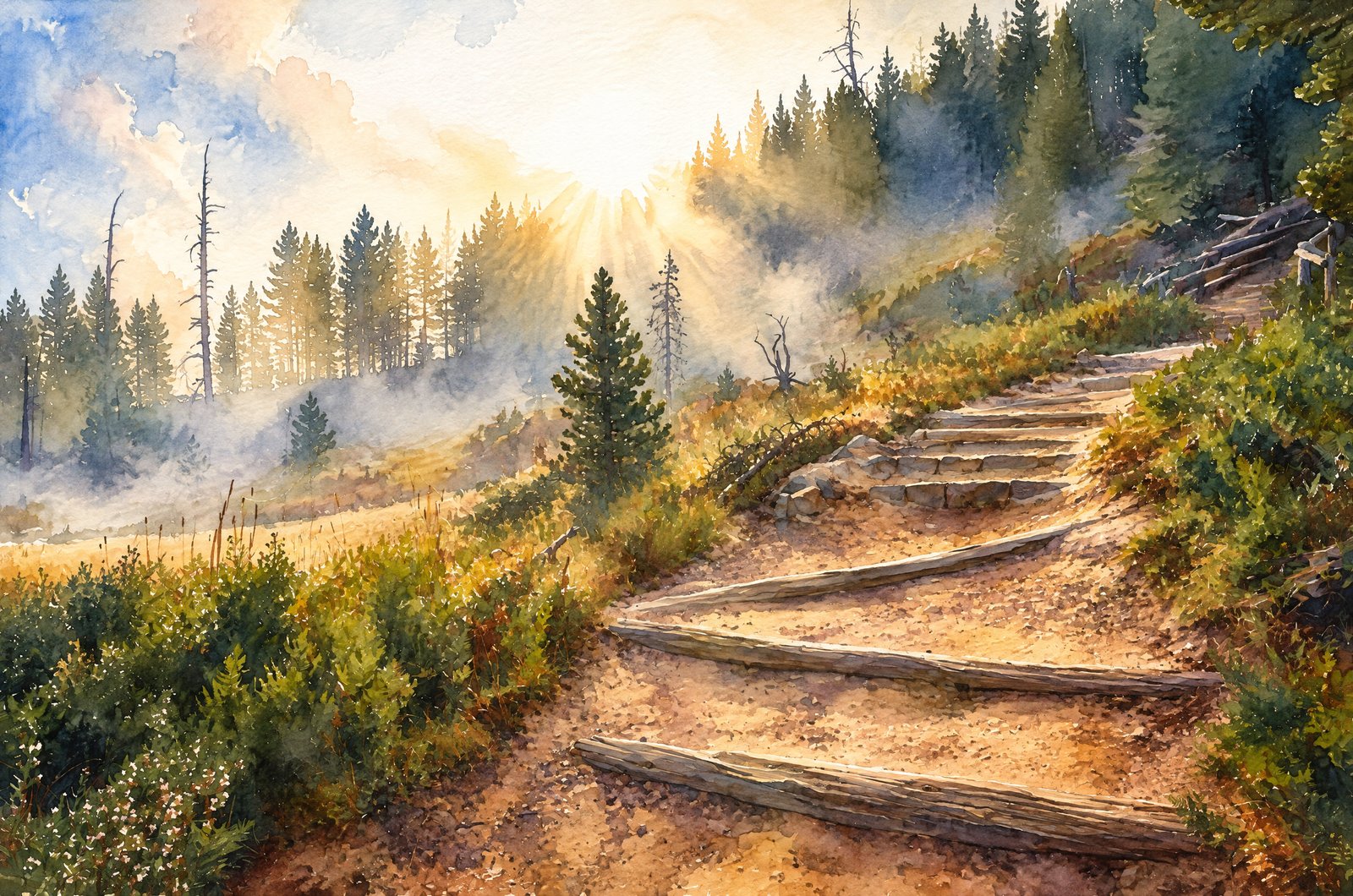
At dawn, a backcountry trail climbs a wooded hillside above a geothermal basin in Yellowstone National Park, Wyoming, rough timber steps and log water bars winding past young lodgepole pines and bare, fire-killed snags as thick steam from hidden hot springs drifts across the meadow below and catches the low sun. Key Features: The Setting: Yellowstone holds the largest concentration of geothermal features on Earth, more than ten thousand hot springs, geysers, fumaroles and mudpots powered by the volcanic system beneath it. The Forest: Standing dead trees among new growth tell of past wildfires, after which lodgepole pine slowly reclaims the burned hillsides. The Trail: Simple log steps and water bars harden Yellowstone's backcountry paths to the thermal basins beyond the boardwalks. The Light: Rising steam softens the early sun into shafts of light where hot water meets cool morning air.
Prints from $41Prints only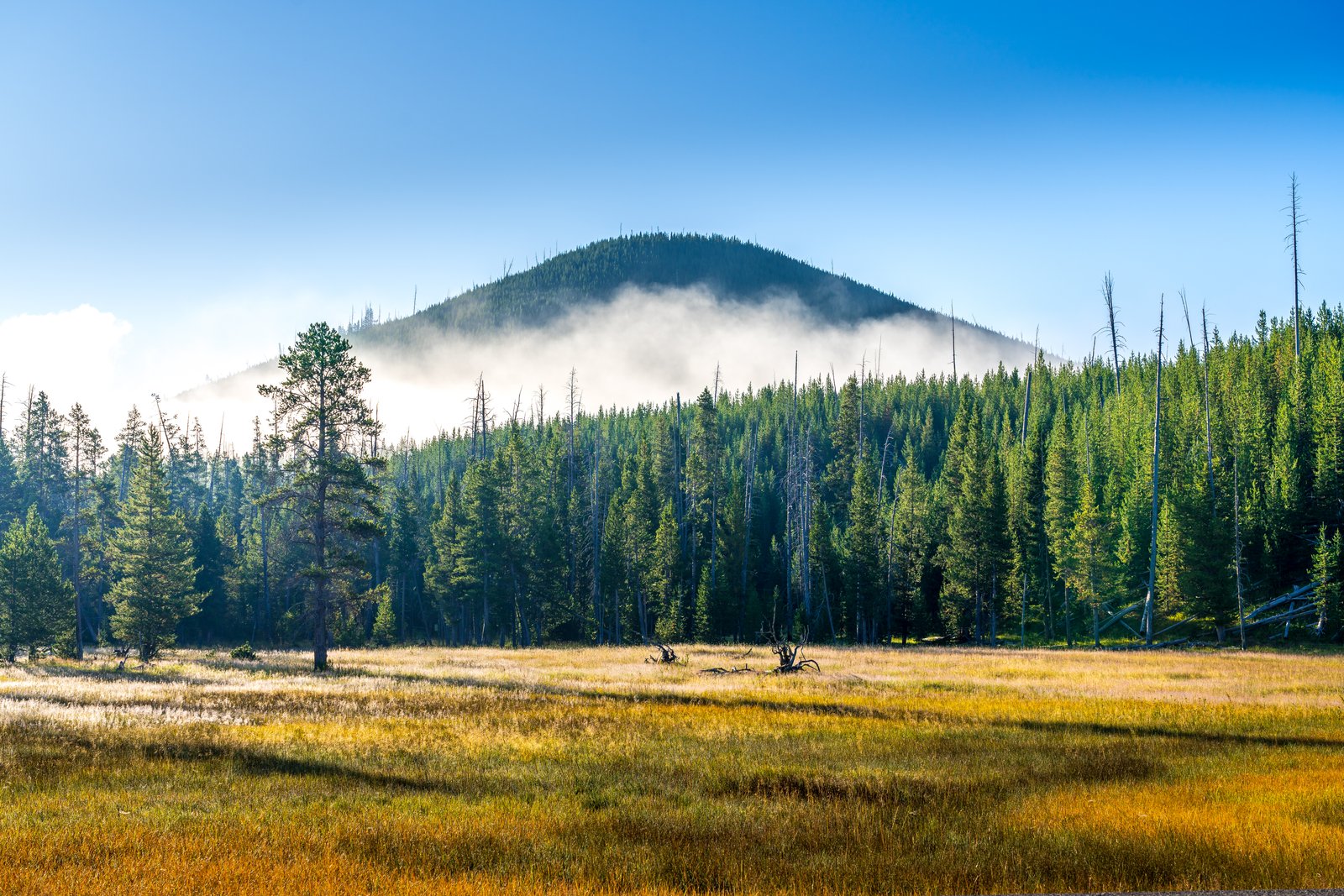
Yellowstone Quiet Subalpine Meadow
Golden grass stretches across a quiet subalpine meadow in Yellowstone National Park toward a dense band of lodgepole pine, with morning mist drifting through the trees at the foot of a broad, rounded hill and silvered snags standing among the living pines. Key Features: Fire Ecology: Many of the gray, standing dead trees are lodgepoles killed in Yellowstone's great fires of 1988, which burned about a third of the park. Regeneration: Lodgepole pine is built for fire, with cones that open in the heat, so thick new growth rises among the old burned trunks. The Meadow: Open grassland ringed by conifer forest and rounded hills is the look of Yellowstone's high plateau. The Mist: Low fog threading through the tree line is a sunrise sight in the park's cool, high valleys.
Prints from $22Downloads from $19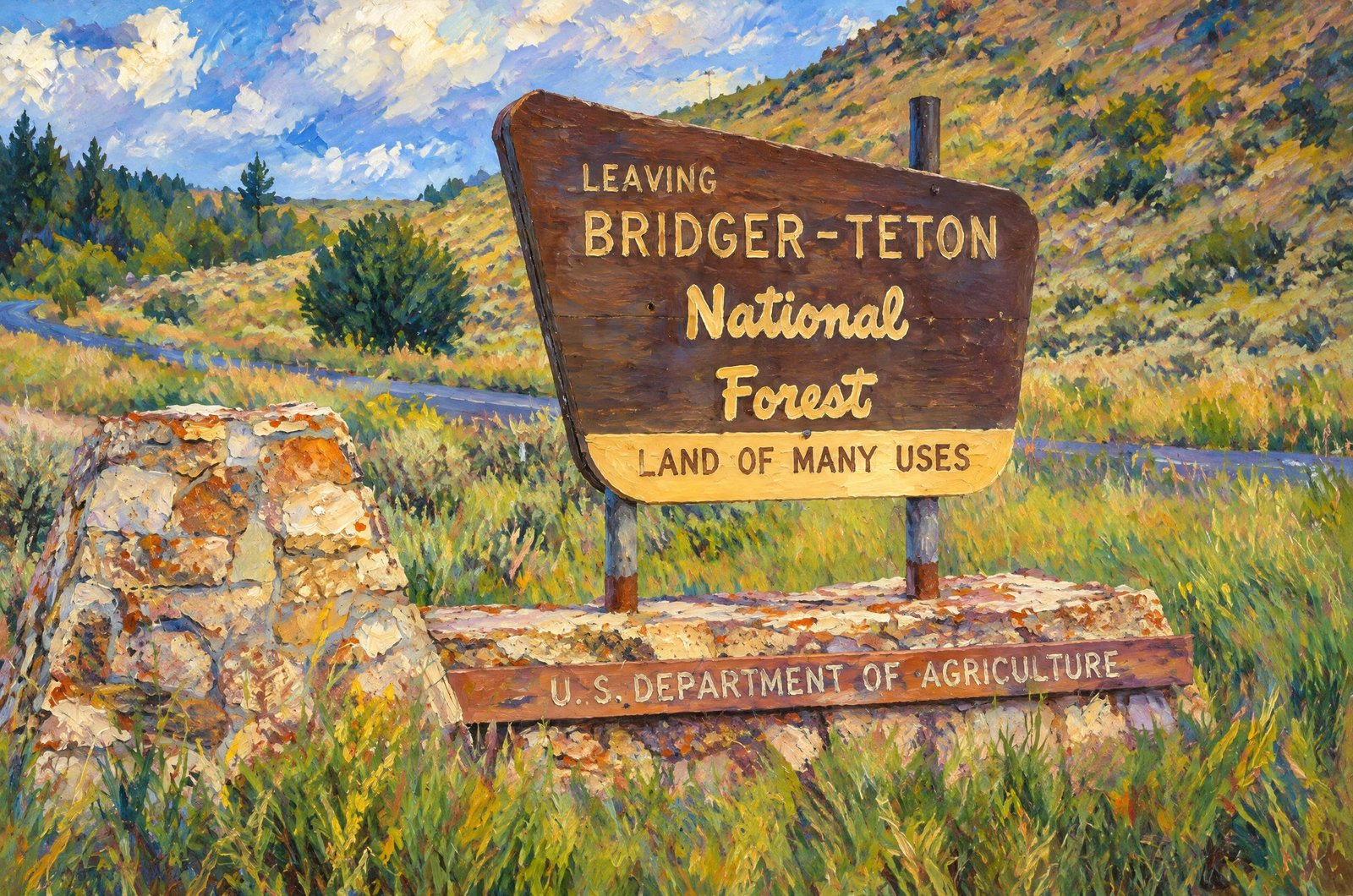 Impressionist
Bridger-Tenton National Forest
A rustic wooden sign on a stacked stone base reads "Leaving Bridger-Teton National Forest, Land of Many Uses" beside a gravel forest road in western Wyoming, with sagebrush hills, a line of conifers and distant mountains marking the change from forest back to open range. Key Features: The Forest: Bridger-Teton covers more than 3.4 million acres of the Greater Yellowstone Ecosystem, one of the largest national forests in the lower 48. Human History: People have lived here for 10,000 years, a history found at more than 800 sites across the forest. The Motto: "Land of Many Uses" is the Forest Service's mission, balancing recreation, grazing, timber and wildlife. The Setting: Sagebrush slopes, a two-lane forest road and a stone and timber marker mark the forest's rural edges.
Prints from $41Prints only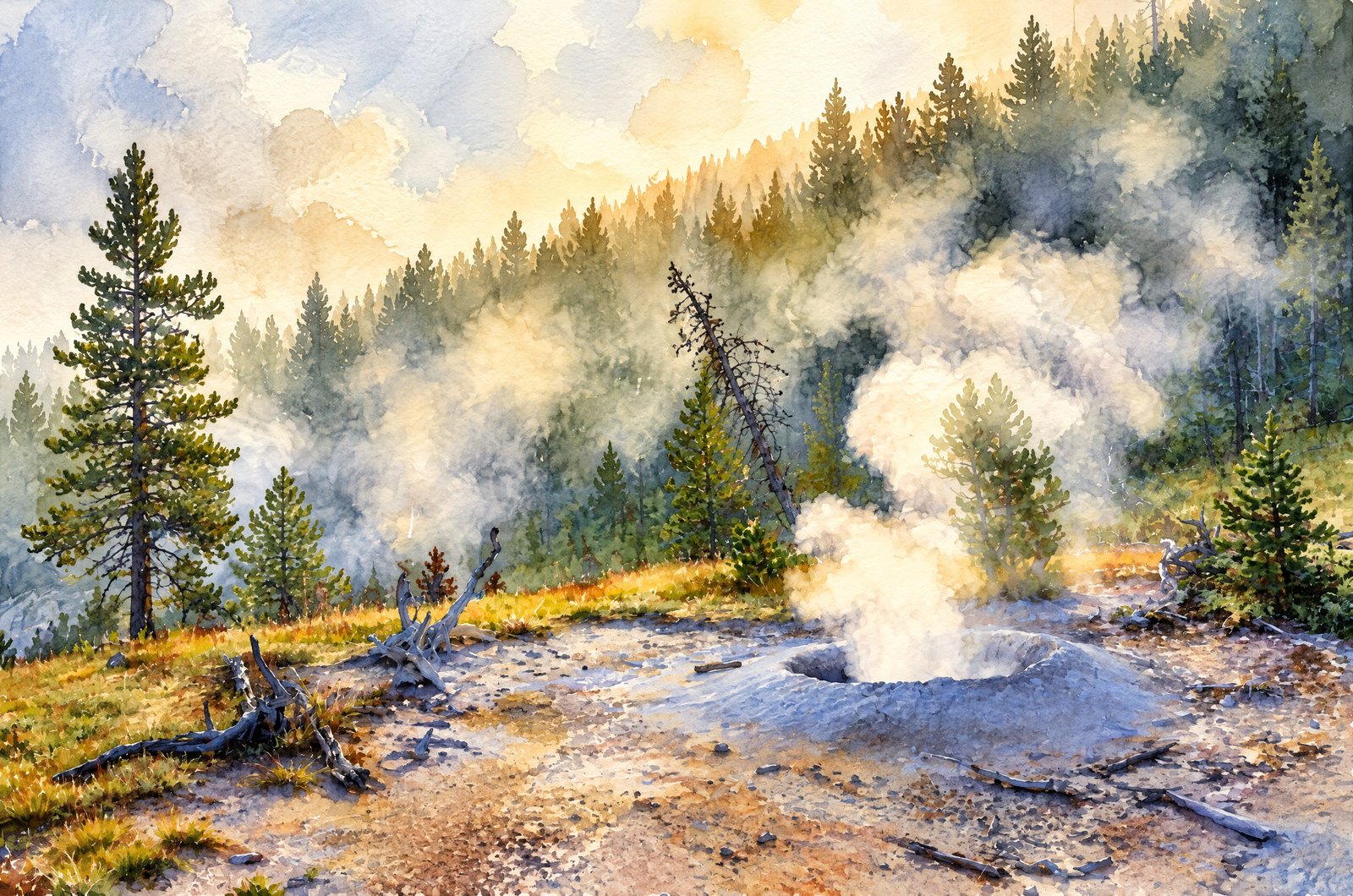 Watercolor
Yellowstone Lone Fumarole Breaks Through
At first light, a lone fumarole breaks through a mineral-crusted vent on a forested hillside in Yellowstone National Park, sending thick plumes of steam into the cool morning air among lodgepole pines, weathered deadfall and drifting fog. Key Features: The Fumarole: A steam vent, releasing gas and vapor with little liquid water. Fumaroles are Yellowstone's hottest features; some in Norris Geyser Basin reach 280 degrees Fahrenheit. The Setting: Lodgepole forest and bare, mineral-stained ground surround the park's backcountry thermal clearings. The Park: Yellowstone sits atop one of the world's largest volcanic systems, which powers its geysers, hot springs, mudpots and fumaroles. The Atmosphere: Cold morning air makes the steam billow, the fog drifting through the timber.
Prints from $41Prints only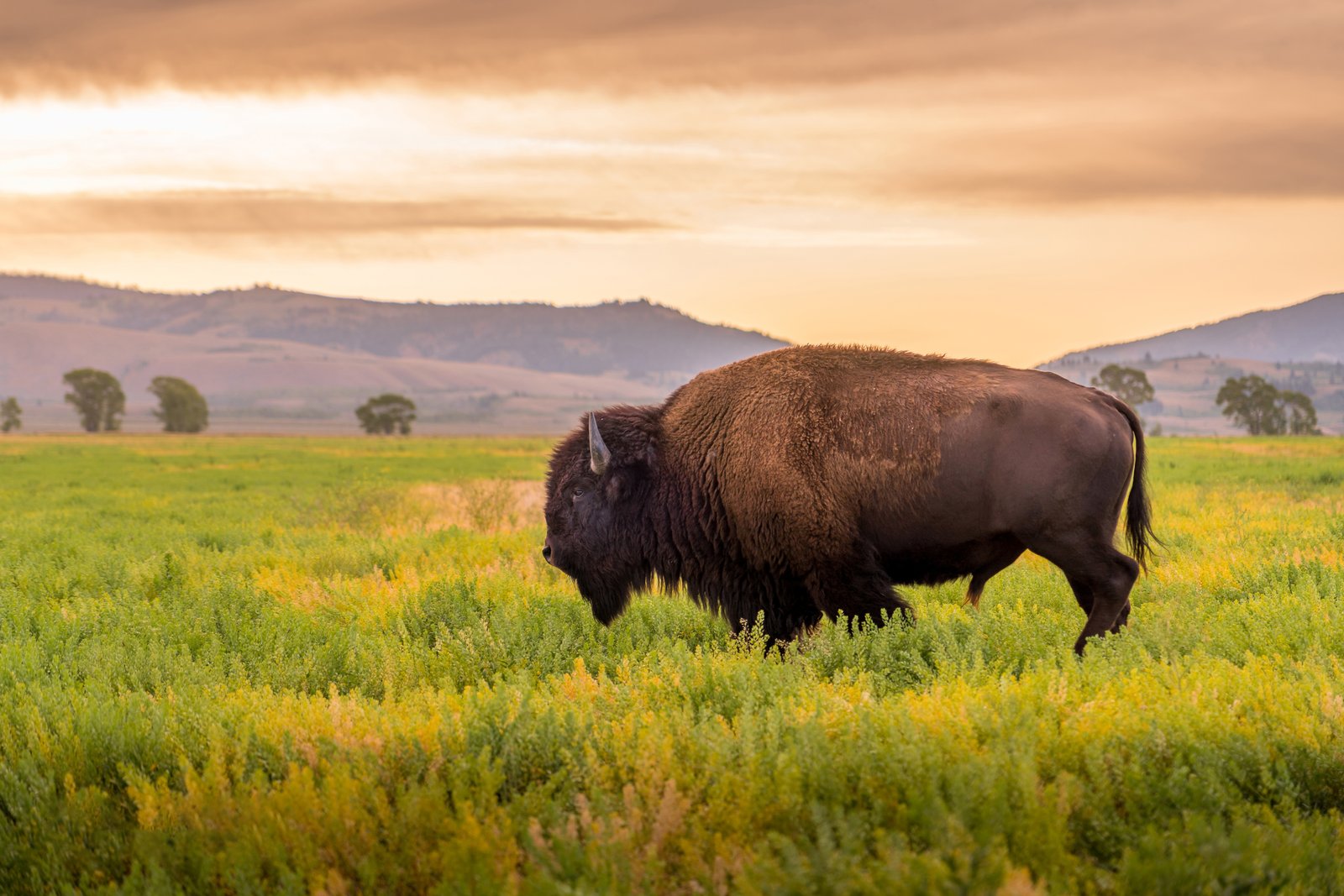
Wild Bison Grazing In The Yellowstone National Park In Wyoming
An American bison grazes on an open valley floor in Yellowstone National Park, surrounded by rolling hills and sagebrush plains. Key Features: The Subject: The American bison (Bison bison). Yellowstone is home to the oldest and largest public bison herd in the United States. The Habitat: Grassland valleys ringed by pine-dotted mountains are prime grazing ground for the park's thousands of bison. The Light: The warm, golden glow across the sky and land comes at the edge of the day, when wildlife in these valleys is most active.
Prints from $22Downloads from $19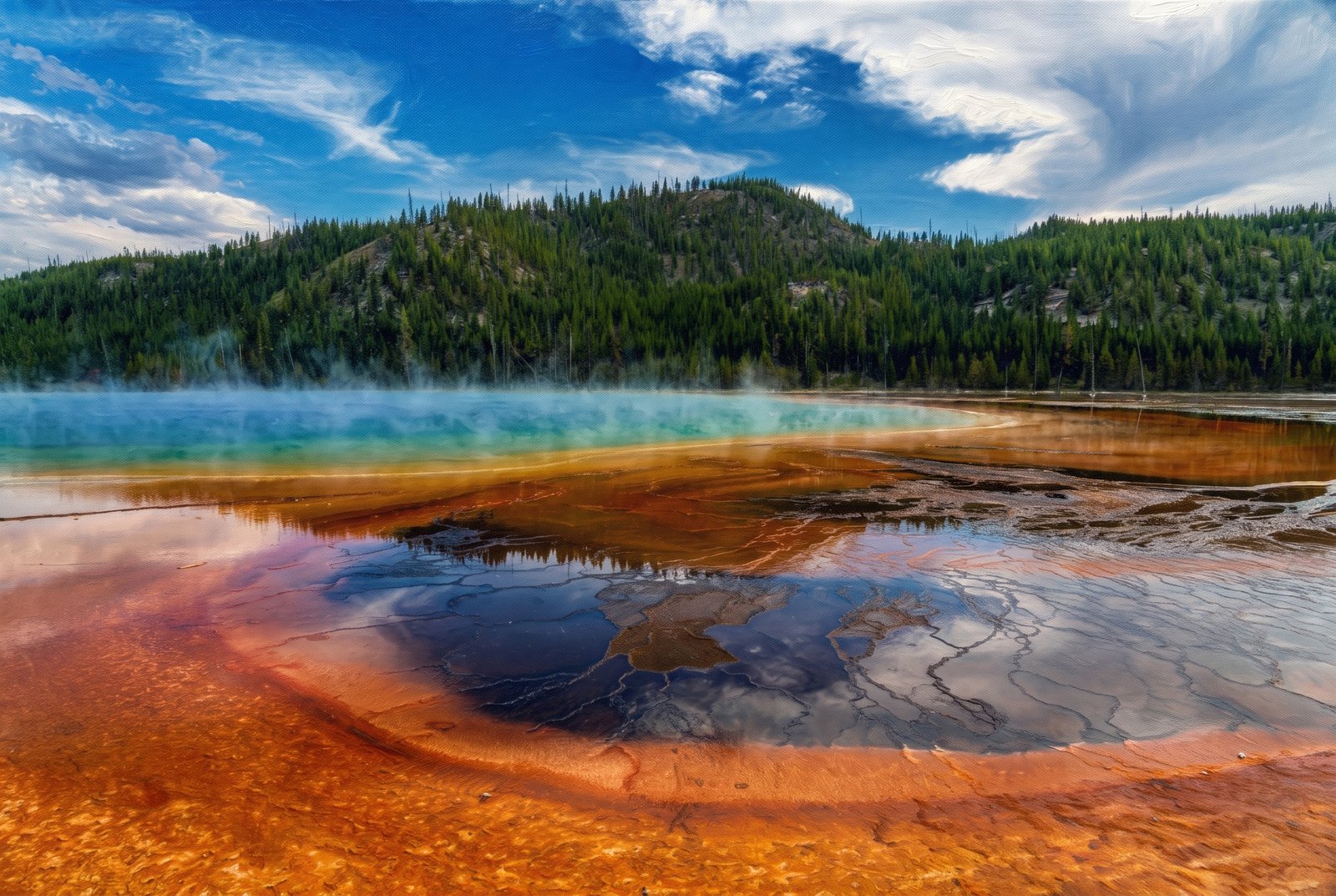 Painterly
Grand Prismatic Spring, Midway Geyser Basin Of Yellowstone National Park In Wyoming
Grand Prismatic Spring, in the Midway Geyser Basin of Yellowstone National Park, is the largest hot spring in the United States and the third largest in the world. Key Features: The Colors: The deep blue center comes from the depth and clarity of the water, which absorbs red light. The yellow, orange and red bands around it are mats of heat-loving (thermophilic) bacteria growing in the cooler, shallow edges. The Scale: The spring is about 370 feet (110 meters) across and more than 120 feet (37 meters) deep, pouring scalding water into the nearby Firehole River. The View: From ground level, the terraced bacterial mats and rising steam stand out against the park's lodgepole pine forest.
Prints from $166Prints only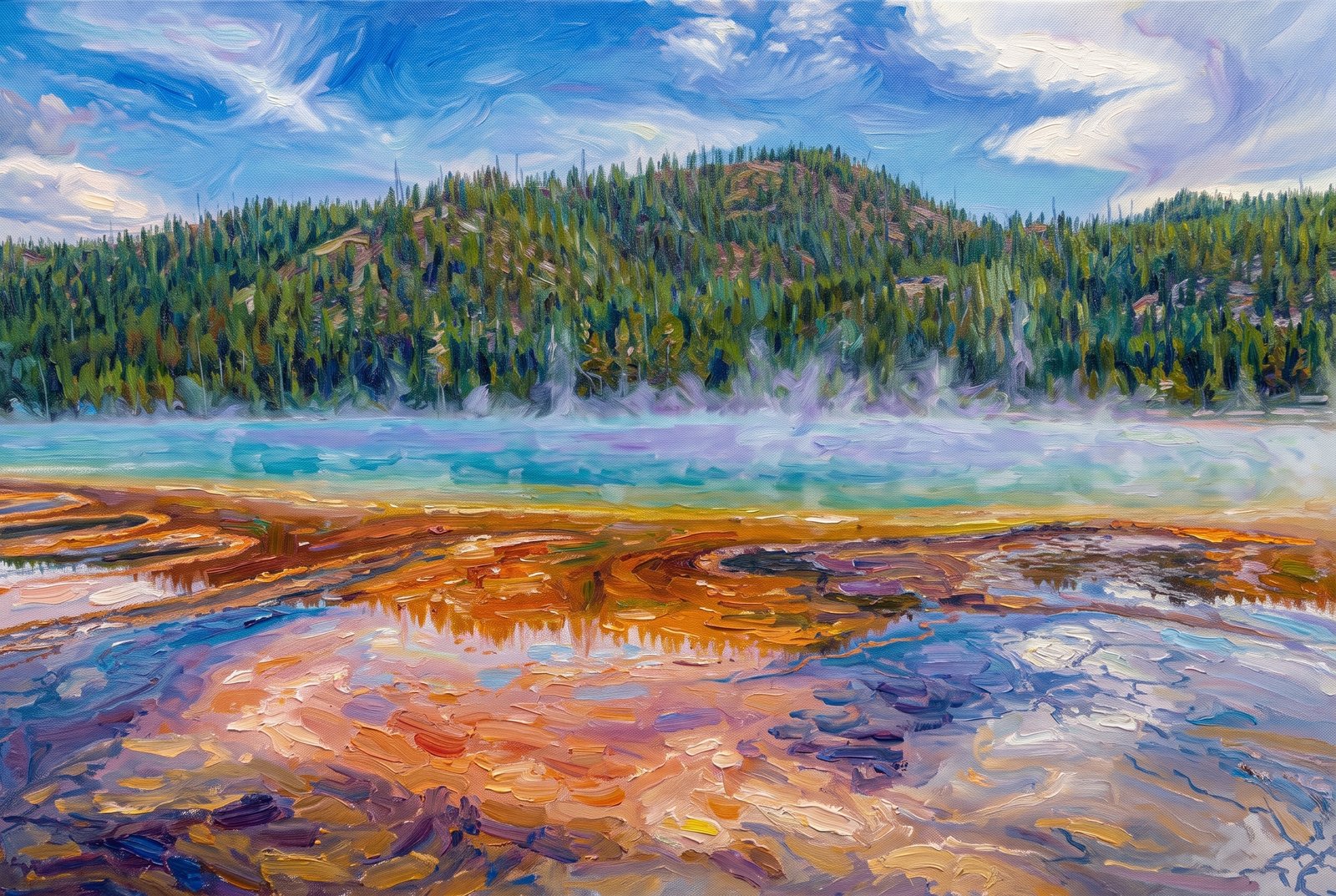 Impressionist
Grand Prismatic Spring
Steam drifts across a forested hillside at Grand Prismatic Spring in the Midway Geyser Basin of Yellowstone National Park, as the spring's mineral-rich runoff spreads in bands of amber and rust and its blue heart glows faintly beyond the mist. Key Features: The Spring: The largest hot spring in Yellowstone and the third largest in the world. The Colors: Bands of orange, yellow and green ring its deep blue water. The Cause: The water cools in rings from the center outward, and different heat-loving bacteria live in each ring, so the colors shift with the seasons. The Boardwalk: Visitors stay on the boardwalk; the water is dangerously hot and touching it is prohibited.
Prints from $41Prints only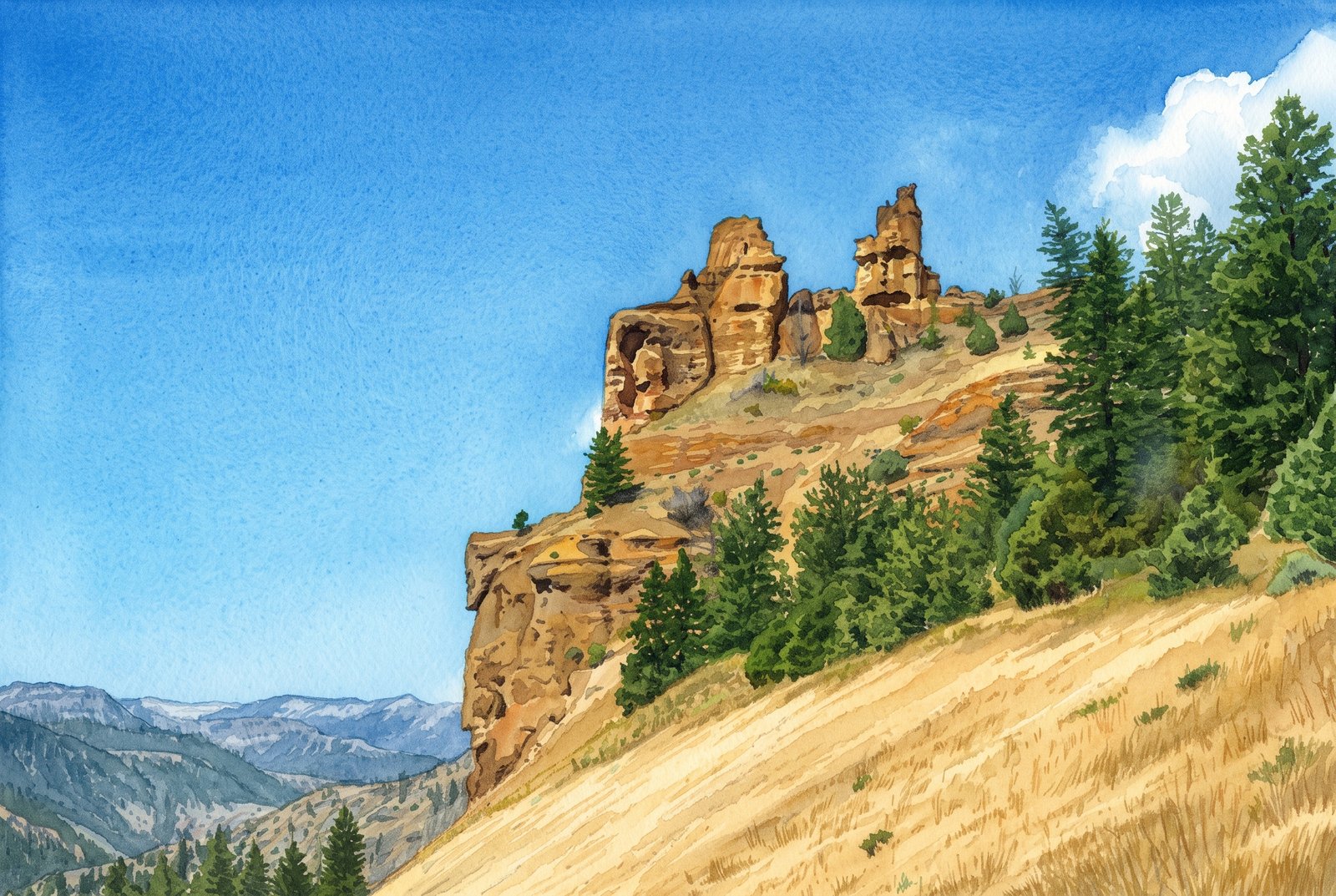 Watercolor
Yellowstone Hillside
A rugged outcrop of weathered spires rises above sloping, gold-hued grassland and lodgepole pine on Yellowstone's northern range, overlooking a forested draw with the Absaroka Range fading into the distance. Key Features: The Rock: The pinnacles are volcanic breccia, coarse rock formed from ancient lava and debris flows that cooled and fractured into blocky towers, a geology documented near Tower Fall since the park's earliest surveys. The Setting: Sun-dried grass hills meet stands of pine on the slope below, the look of Yellowstone's drier northern range in late summer. The Backdrop: Snow-streaked peaks of the Absaroka Range line the horizon, the mountain boundary around the park's interior valleys. The Significance: These eroded volcanic towers are a lesser-known side of Yellowstone, showing the deeper volcanic history beneath its famous geothermal features.
Prints from $41Prints only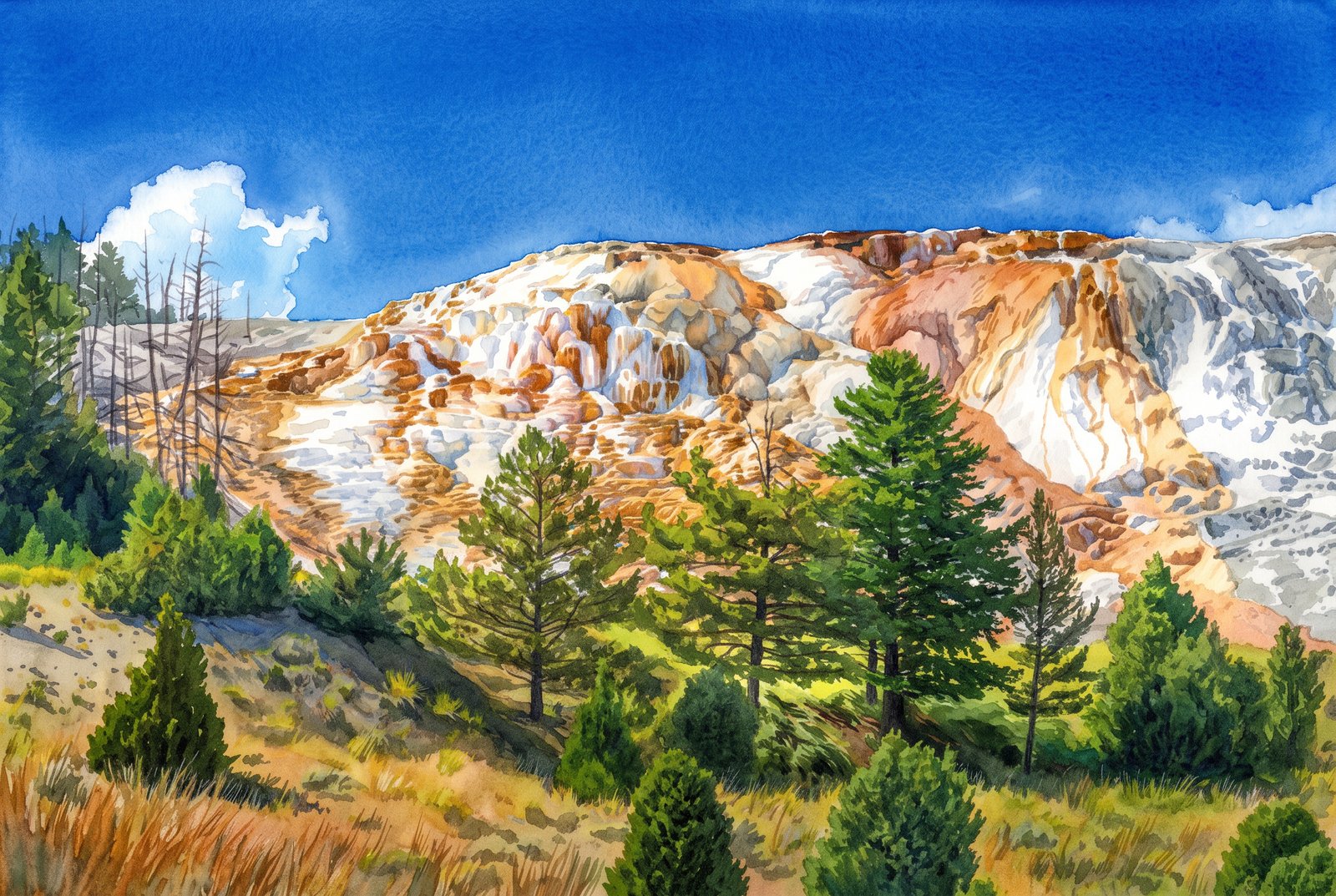 Watercolor
Mammoth Hot Springs
The travertine terraces of Mammoth Hot Springs climb the hillside in Yellowstone National Park, layered white and orange above lodgepole pines and sagebrush meadow, with a bright cumulus cloud drifting over the ridge. Key Features: The Terraces: Formed over thousands of years as mineral-rich hot water flows down the hillside. The Rock: Travertine is a crystalline limestone that forms in springs saturated with calcium carbonate, giving the terraces their sculpted, cascading look. A Living Landscape: Travertine builds up here unusually fast, about 3 millimeters a day, so the terraces keep reshaping themselves and shifting color from year to year. Discovery: Early expeditions, Washburn and Hayden in the 1870s among them, marveled at the massive terraces, so different from Yellowstone's other geothermal areas.
Prints from $41Prints only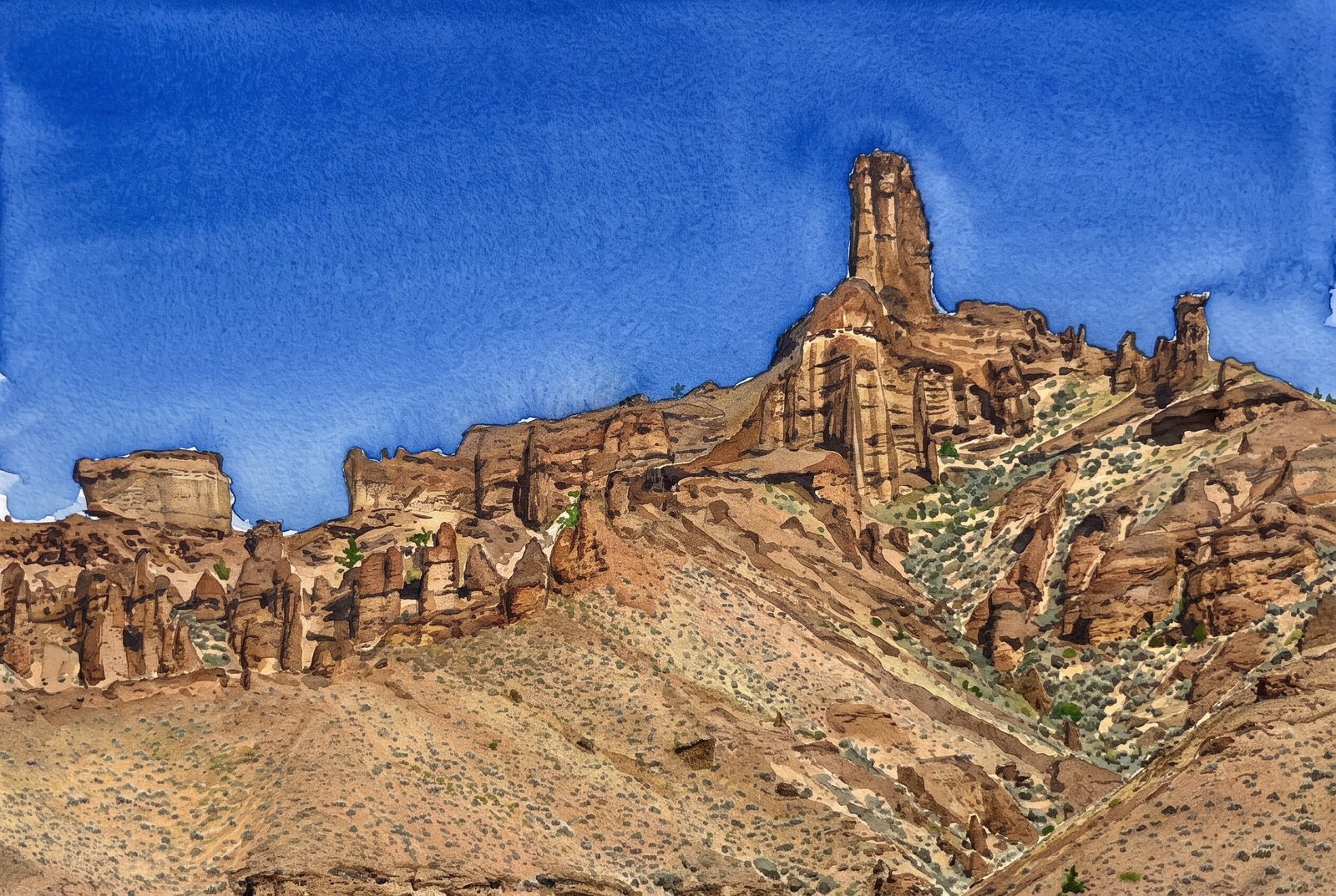 Watercolor
Yellowstone Peaks
A weathered spire and its companion towers of ancient volcanic breccia rise above a sage-covered slope in the Absaroka Range, in the remote northeast corner of Yellowstone National Park. The ridge exposes thick layers of hardened ash, mud and rock debris, with one tall pinnacle standing over a jagged line of smaller hoodoos under a clear summer sky. Key Features: Volcanic Origins: Eruption after eruption from ancient volcanoes buried standing trees under waves of ash and debris, building these layers. The Terrain: Erosion has exposed more than 1,000 vertical meters of these volcanic rocks, carving the rugged topography. Fossil Ground: The famous petrified forests of Specimen Ridge and Mount Amethyst lie in this same northeast corner of the park. Erosional Sculptures: The soft breccia weathers into spires and pillars, a striking contrast to the park's geothermal features.
Prints from $41Prints only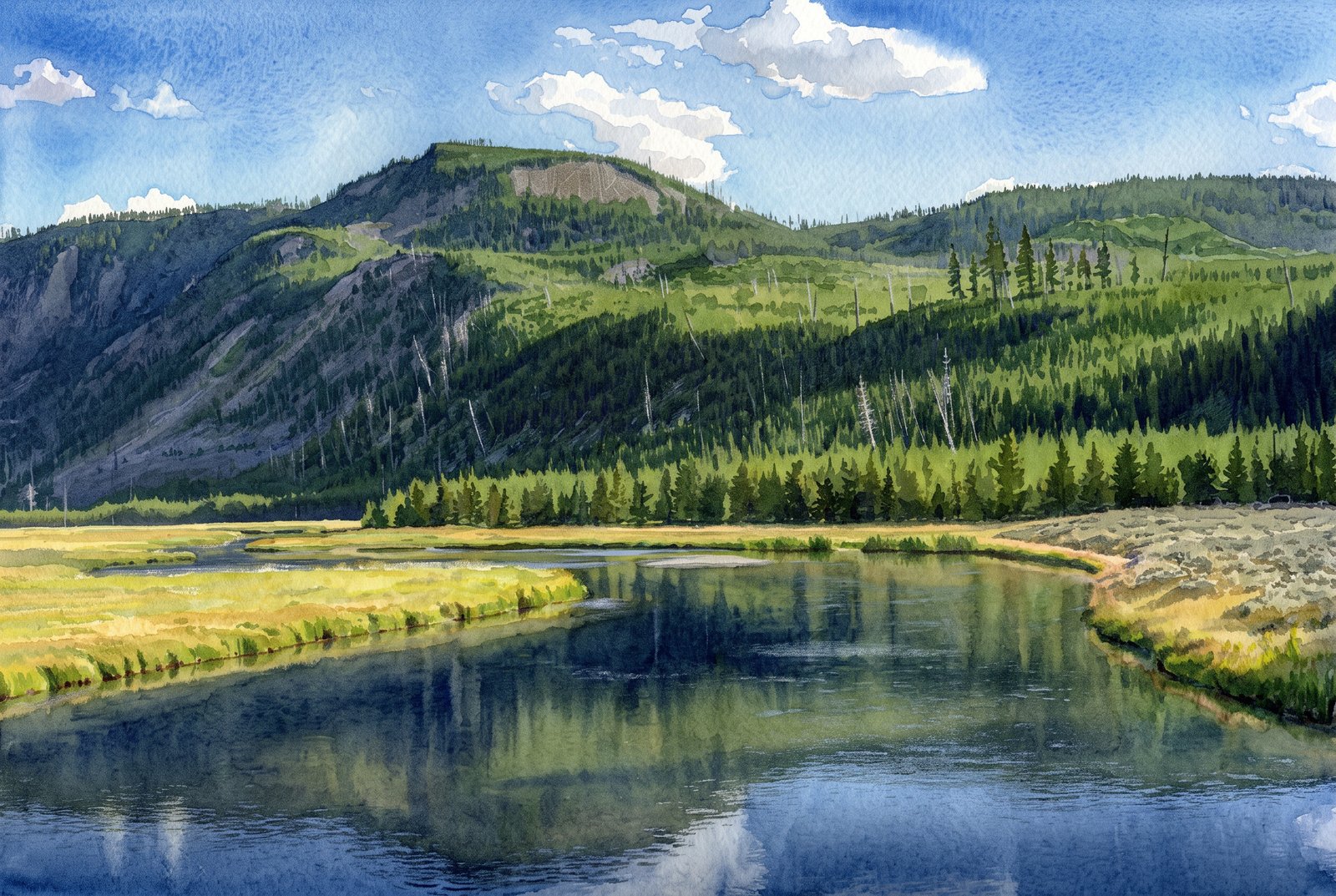 Watercolor
Yellowstone River Range
The Yellowstone River winds in broad, glassy loops through the open grassland of Hayden Valley in Yellowstone National Park, looking north across marshy meadow to a forested ridge and a bare, rounded summit, with dead snags standing among the live lodgepole pines. Key Features: The Valley: Hayden Valley lies between the north shore of Yellowstone Lake and the Grand Canyon of the Yellowstone, with the river meandering between grassy banks. Why It Stays Open: The glacial till here mixes many grain sizes, including clay and a thin layer of lake sediment, so water can't soak into the ground; the valley stays marshy, with few trees. Elevation: At nearly 8,000 feet, Hayden Valley is a striking break in the dense lodgepole forest that covers much of the park. Fire History: The dead snags on the slopes are left from past fires, part of the natural cycle that shapes Yellowstone's high country.
Prints from $41Prints only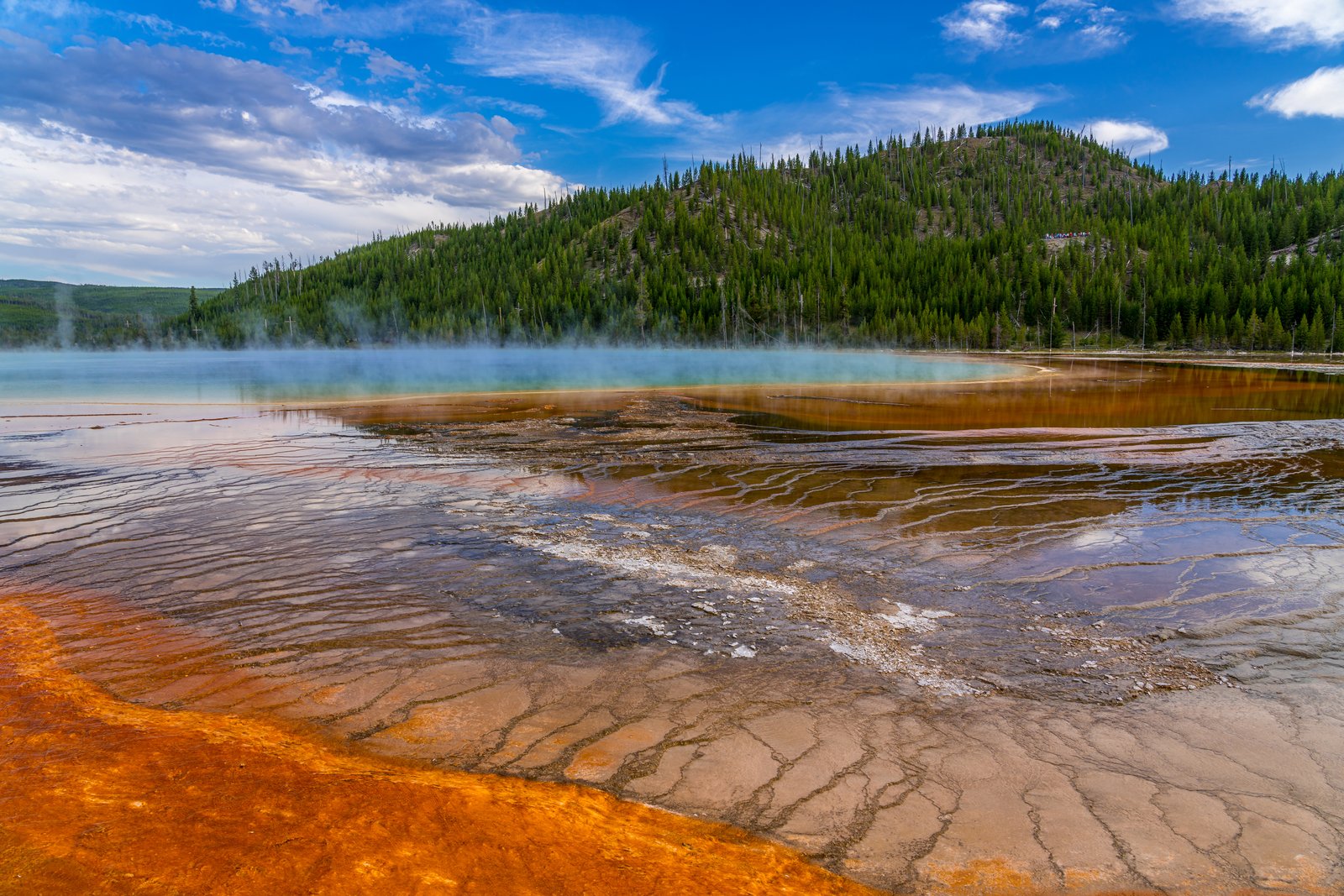
Grand Prismatic Spring
Grand Prismatic Spring's deep turquoise heart fades into bands of amber and orange bacterial mats, with vapor drifting across the water and a forested ridge rising behind the Midway Geyser Basin in Yellowstone National Park. Key Features: The Size: It is the world's third-largest hot spring. The Colors: Pigmented bacteria in the microbial mats around its edges paint the water in hues from green to red. The Setting: Midway Geyser Basin lies between the park's Lower and Upper Geyser Basins, surrounded by lodgepole pine forest. History: Expeditions in the 1870s documented its thermal features for the newly created national park.
Prints from $22Downloads from $19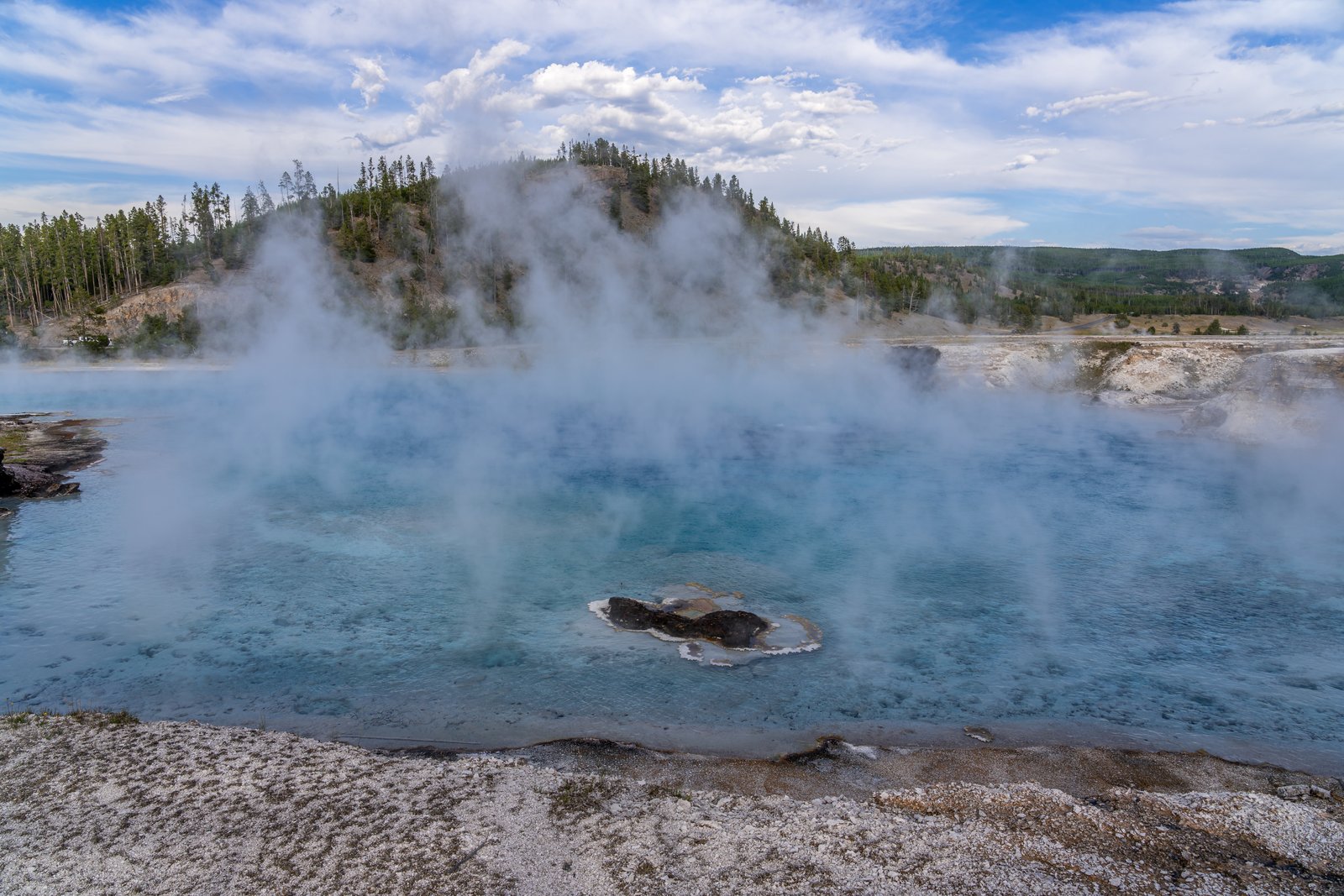
Excelsior Geyser Crater
Steam billows off the turquoise pool of Excelsior Geyser Crater in Yellowstone's Midway Geyser Basin and drifts across a pine-covered ridge above the Firehole River valley. Key Features: The Crater: About 200 by 300 feet, it pours more than 4,000 gallons of water a minute into the Firehole River. Historic Eruptions: In the 1880s Excelsior threw bursts 50 to 300 feet high, violence that blasted out the jagged crater and ended its regular eruptions. Renewed Activity: On September 14, 1985, it erupted again for 46 hours, with bursts up to 55 feet. The Setting: The crater sits beside Grand Prismatic Spring, along the road between Madison and Old Faithful.
Prints from $22Downloads from $19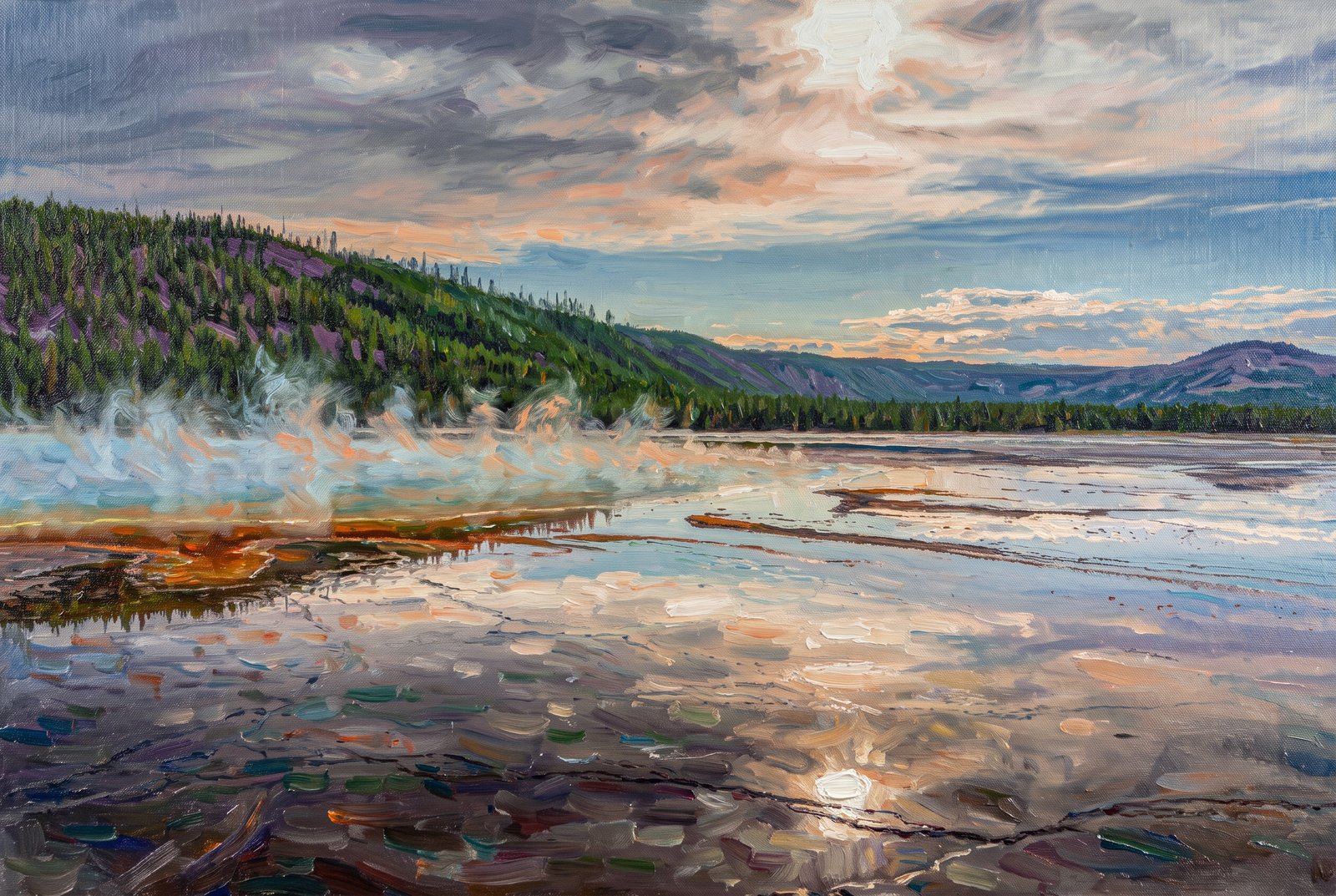 Impressionist
Grand Prismatic Spring
From ground level along the rim of Grand Prismatic Spring in Yellowstone's Midway Geyser Basin, steam drifts over mineral-colored runoff channels, while forested hills and distant mountains frame the basin and a soft, cloud-filtered sun reflects in the still water. Key Features: The Spring: The largest hot spring in the United States and the third largest in the world. The Colors: Bands of orange, yellow and green ring its deep blue water. The Setting: Midway Geyser Basin, Yellowstone National Park, in Teton County, Wyoming.
Prints from $41Prints only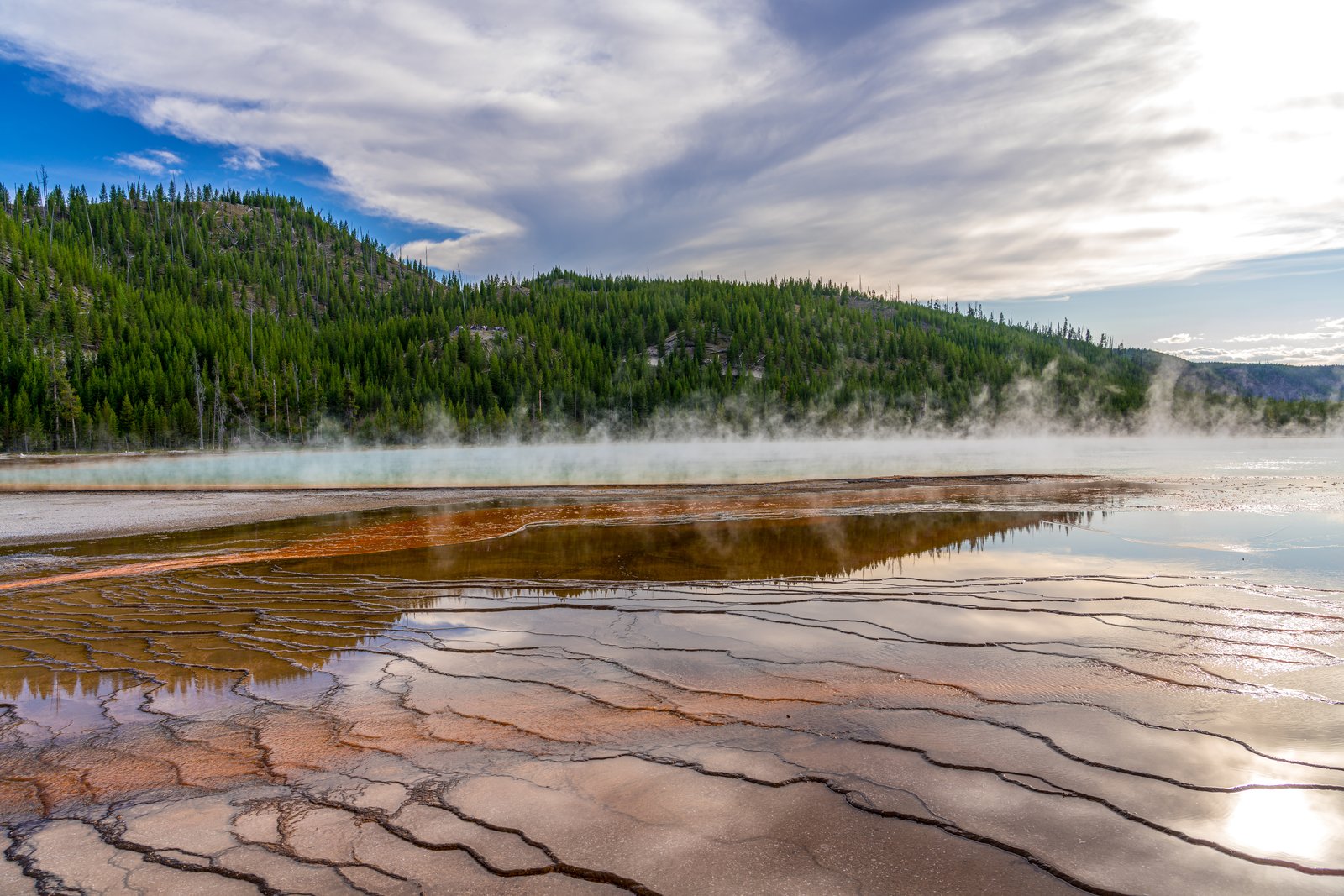
Grand Prismatic Spring
Vivid orange and blue water steams across the terraced, mineral-crusted edge of Grand Prismatic Spring toward a forested ridge under a wide, streaked sky, in Yellowstone National Park's Midway Geyser Basin. Key Features: The Spring: About 370 feet across, it is the largest hot spring in the United States, fed by water surging up through a crack deep in the earth. Global Ranking: It is the third-largest hot spring in the world. The Colors: Bands of orange, yellow and green ring the deep blue water at its center.
Prints from $22Downloads from $19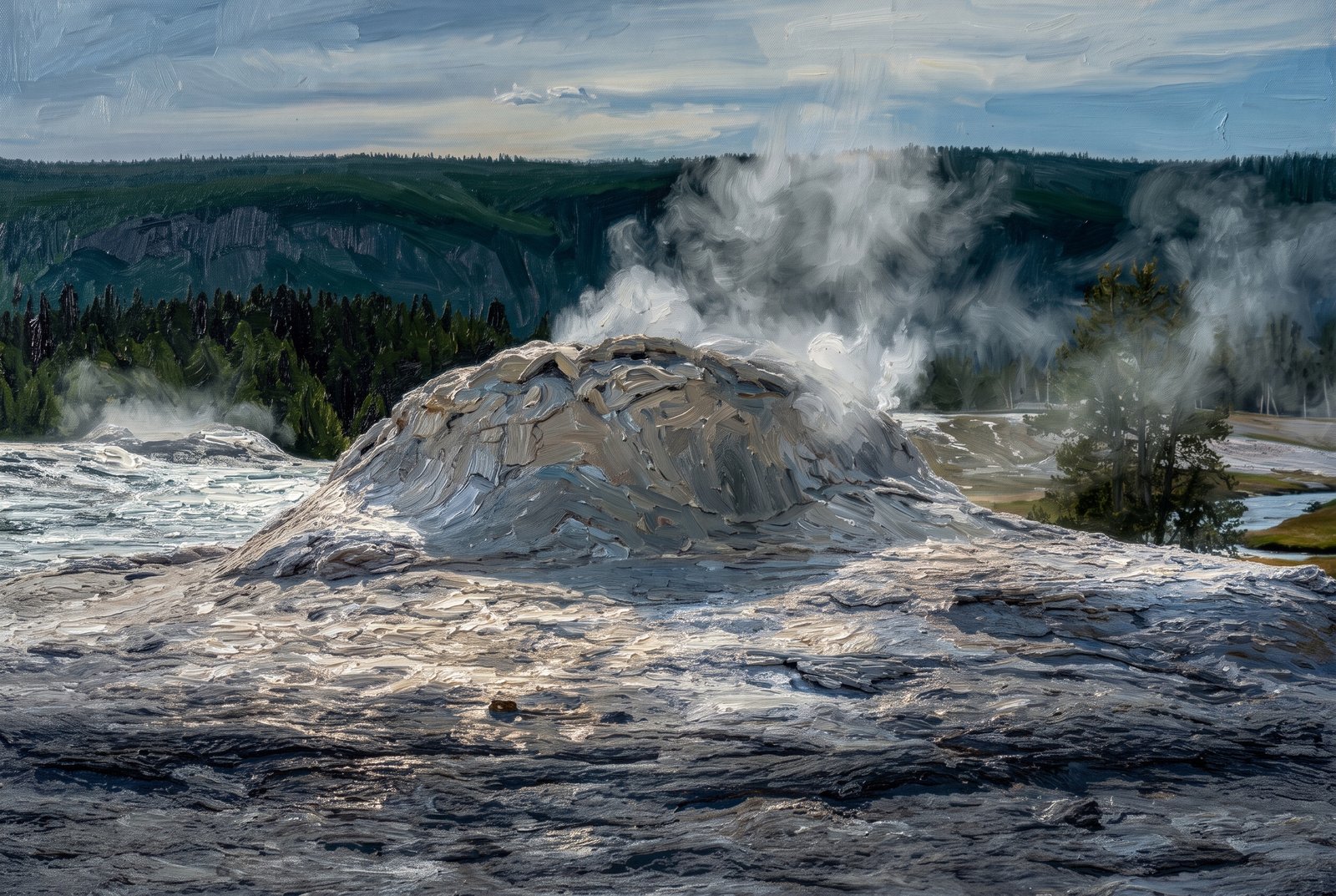 Painterly
Lion Geyser In The Upper Geyser Basin Of Yellowstone
Sunlight rakes across the weathered sinter cone of Lion Geyser in the Upper Geyser Basin of Yellowstone National Park as steam vents skyward, with forested hills behind and wisps of steam rising from neighboring thermal features. Key Features: The Lion Group: Lion is the largest of four connected geysers that make up the Lion Group. The Roar: Its eruptions come with a loud roaring sound, which gave it its name, and send water up to 100 feet high in active periods. The Setting: The Upper Geyser Basin holds the densest concentration of geysers on Earth, surrounded by lodgepole pine and the Firehole River valley. The Cone: Its pale, ridged mound was built up over centuries from silica left by escaping steam and hot water.
Prints from $41Prints only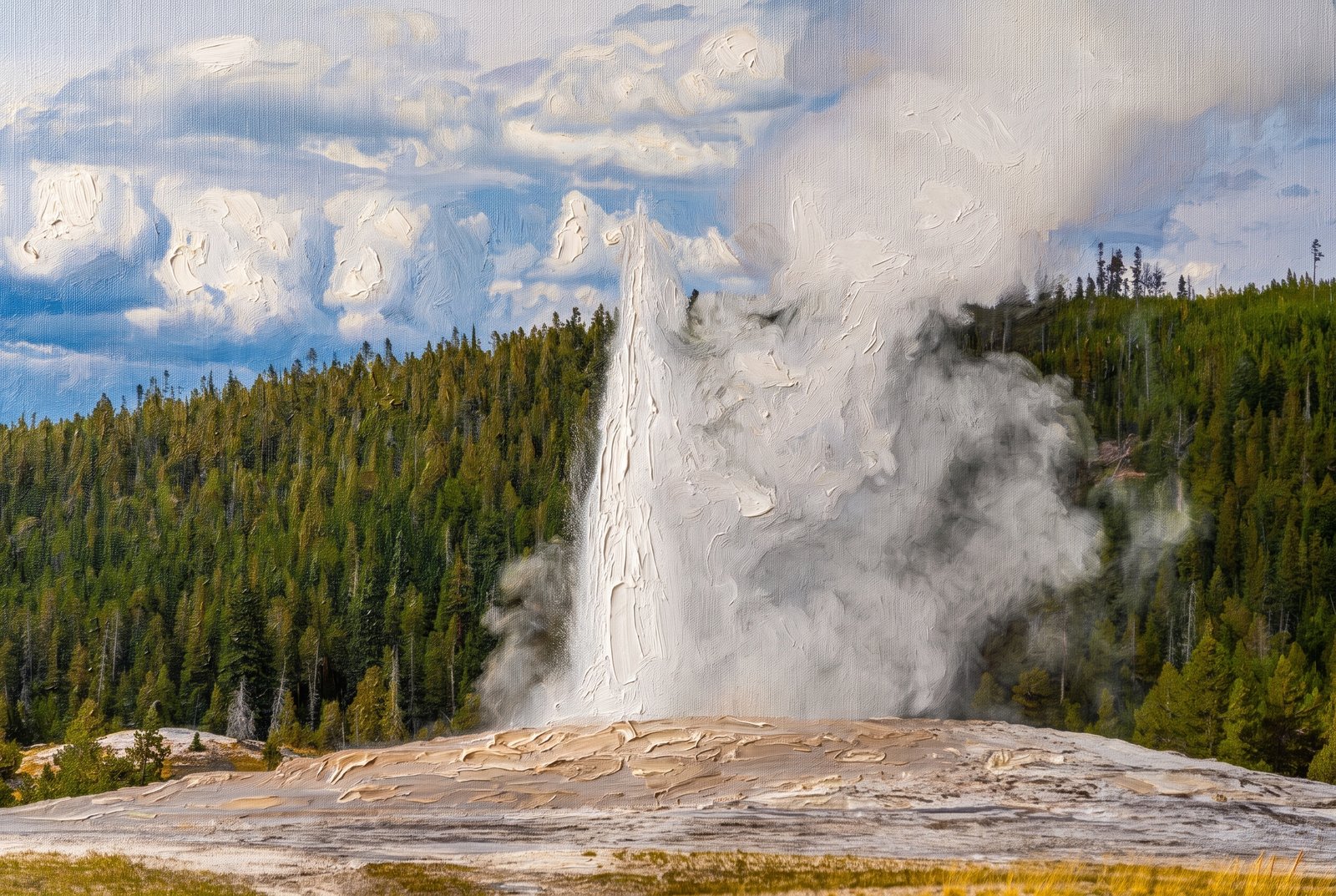 Painterly
Old Faithful
Old Faithful sends a column of scalding water skyward in the Upper Geyser Basin of Yellowstone National Park, its plume of steam rising against lodgepole pine forest and a partly cloudy sky, as it has on a nearly predictable schedule for well over a century. Key Features: The Name: Henry D. Washburn named it on September 18, 1870, for its unusually regular eruptions. The Eruptions: Bursts reach 106 to 185 feet, every 44 to 120 minutes, and last one and a half to five minutes. The Setting: The Upper Geyser Basin in Teton County, Wyoming, at 7,349 feet. The Legacy: It has erupted more than a million times since Yellowstone became the world's first national park in 1872.
Prints from $41Prints only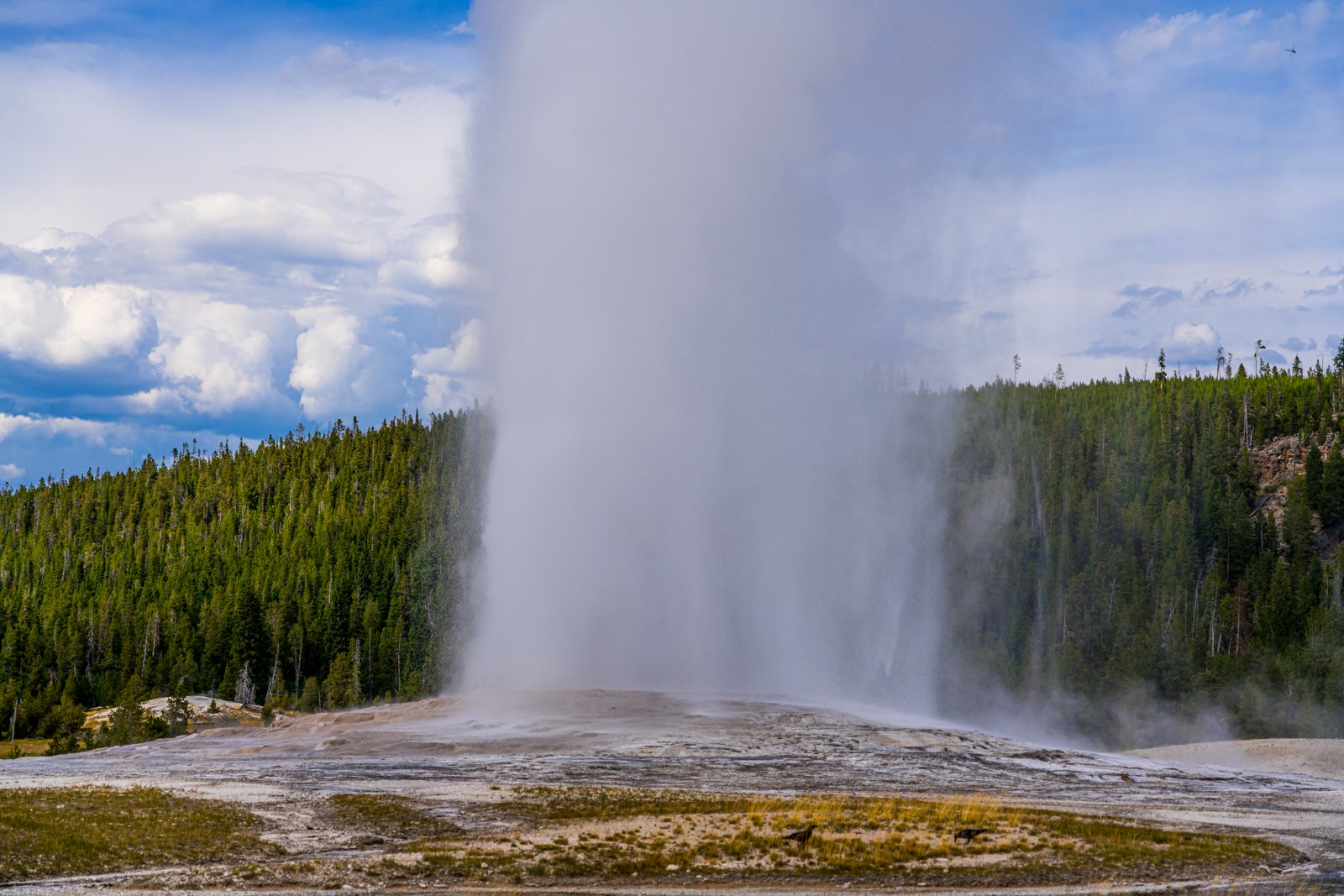
Old Faithful
Mid-eruption, a tall plume of steam and boiling water rises from Old Faithful's cone in Yellowstone's Upper Geyser Basin, surrounded by mineral terraces and dense lodgepole pine under a partly cloudy sky. Key Features: The Eruption: Each one throws 3,700 to 8,400 gallons of boiling water 106 to 184 feet high, for 1.5 to 5 minutes. The Name: Henry D. Washburn named it on September 18, 1870. The Setting: Conifer forest and pale mineral deposits, built up over centuries of eruptions, ring the geyser. Its Fame: Frequent, predictable eruptions have made it the park's most famous landmark and a symbol of Yellowstone itself.
Prints from $22Downloads from $19