

Collection
Yellowstone National Park, Wyoming
By · 32 photos
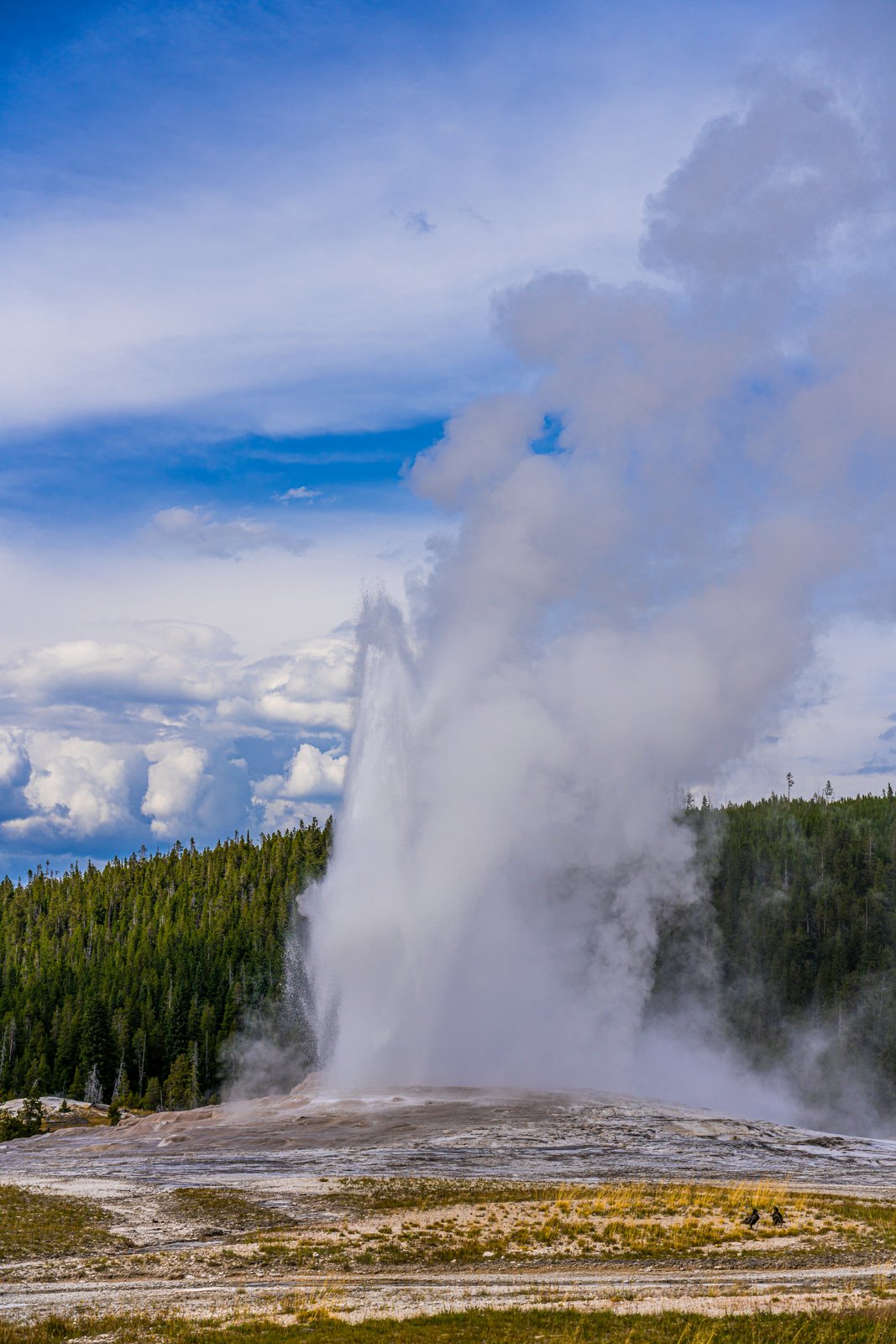
Old Faithful
A few small figures near the base give scale to Old Faithful's plume of steam and spray, rising against blue sky and clouds over the lodgepole pine forest of Yellowstone's Upper Geyser Basin. Key Features: The Name: Named in 1870, it was the first geyser in the park to be given a name. The Eruptions: 3,700 to 8,400 gallons of boiling water shoot 106 to 184 feet high, for 1.5 to 5 minutes. The Setting: The Upper Geyser Basin is the park's densest collection of hydrothermal features, in subalpine forest above seven thousand feet. The Draw: Its frequent, predictable bursts make it one of the most visited natural landmarks in the United States.
Prints from $22Downloads from $19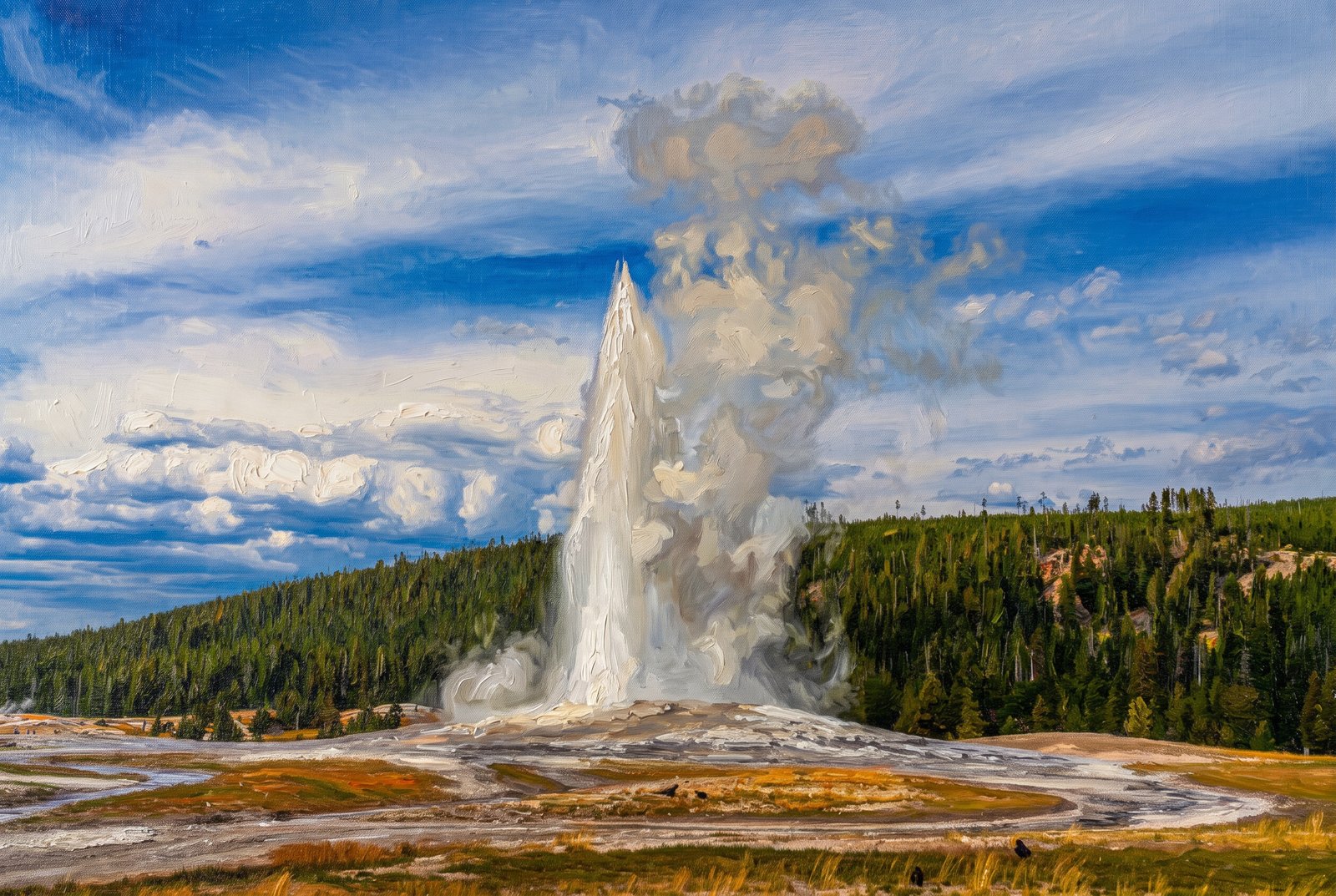 Painterly
Old Faithful
At full eruption, Old Faithful's column of boiling water towers over a plume of steam, with the forested slopes of Yellowstone's Upper Geyser Basin and a wide blue sky behind it. Key Features: The Name: Explorers in 1870 watched it spout nine times during their stay, throwing water 90 to 125 feet each time, and named it Old Faithful. The Eruption: Heights run 106 to 185 feet, every 44 to 120 minutes. The Setting: The Upper Geyser Basin, the park's most active hydrothermal area. Its Standing: Old Faithful erupts more often than any of the other big geysers, though it is neither the largest nor the most regular in the park.
Prints from $41Prints only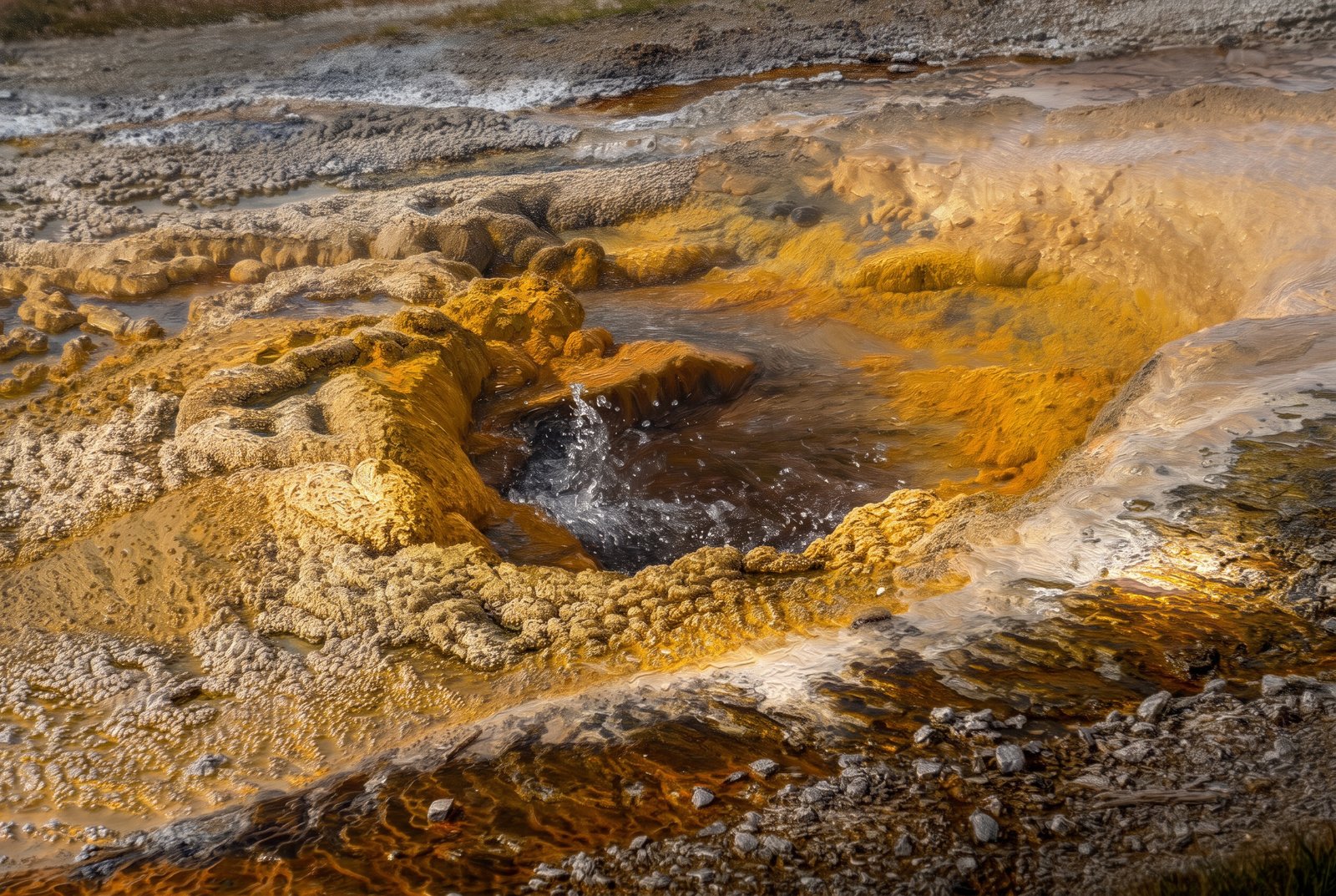 Painterly
Pump Geyser
Pump Geyser sits on Geyser Hill in Yellowstone's Upper Geyser Basin, just across the Firehole River from Old Faithful. Looking straight down, its small vent bubbles almost without pause, framed by thick orange and buff sinter mounds built by mineral-laden runoff and heat-loving bacteria. Key Features: The Name: Frank Jay Haynes, the park's official photographer from 1883 to 1916, named it. The Activity: This cone geyser is almost constantly active, with small eruptions of two to fifteen feet from water around 86 degrees Celsius. The Water: Like most springs on Geyser Hill, it is fed by boiling alkaline water, and it is one of the most active features in the area. The Colors: The orange and tan crusts around the pool are microbial mats and sinter deposits.
Prints from $41Prints only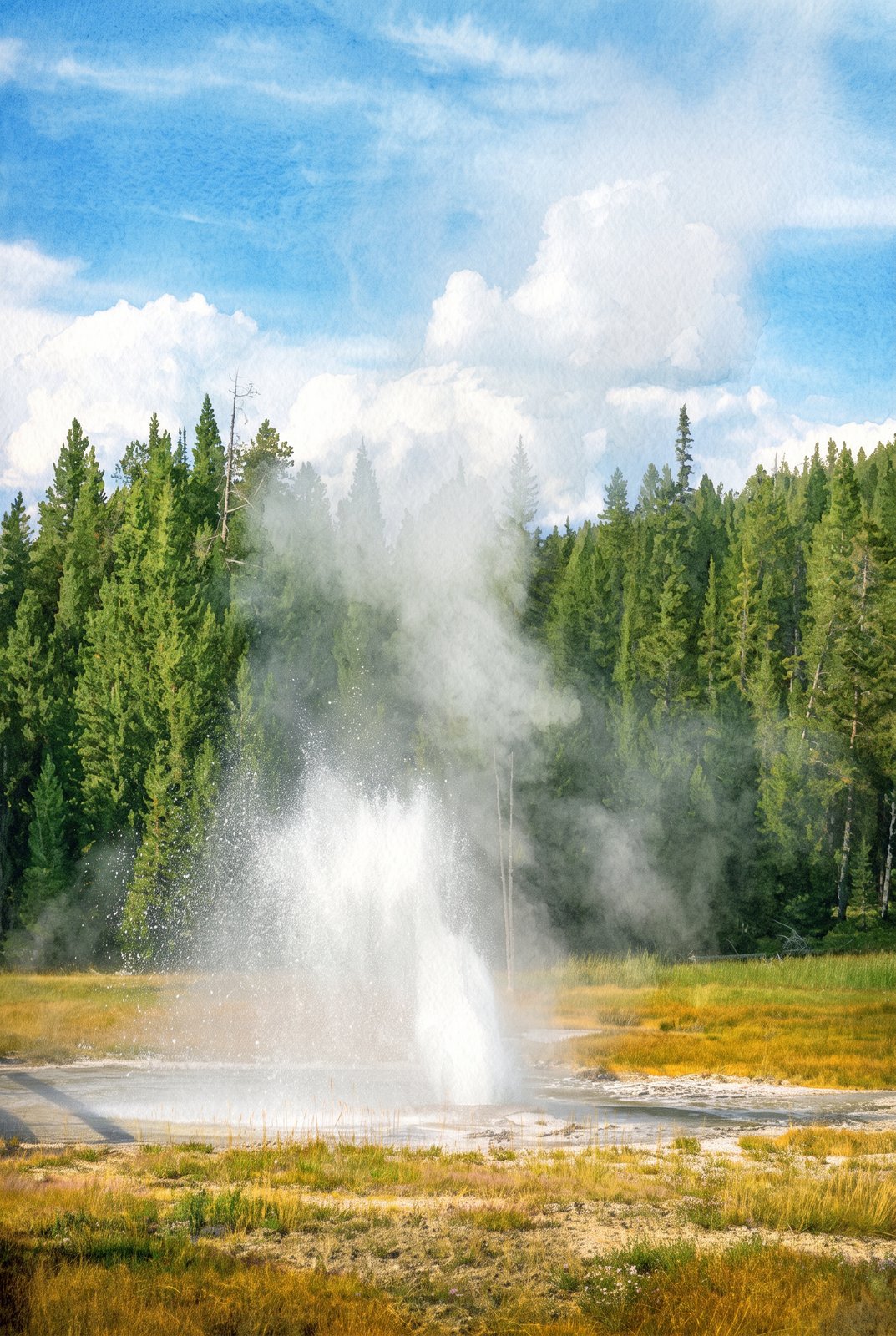 Watercolor
Yellowstone Aurum Geyser
At the height of an eruption, Aurum Geyser's plume rises against lodgepole pine forest and a wide summer sky in Yellowstone's Upper Geyser Basin, with golden mineral deposits ringing the vent below. Key Features: The Name: Aurum, Latin for gold, is named for the golden iron oxide staining around its vent and the pool beside it. The Eruptions: Bursts of 15 to 25 feet come every three to seven hours and last about 90 seconds. The Setting: The Upper Geyser Basin, the densest concentration of geysers on Earth, shared with Old Faithful and Beehive Geyser. The Water: Underground, its water nears 197 degrees Fahrenheit before venting at the surface.
Prints from $41Prints only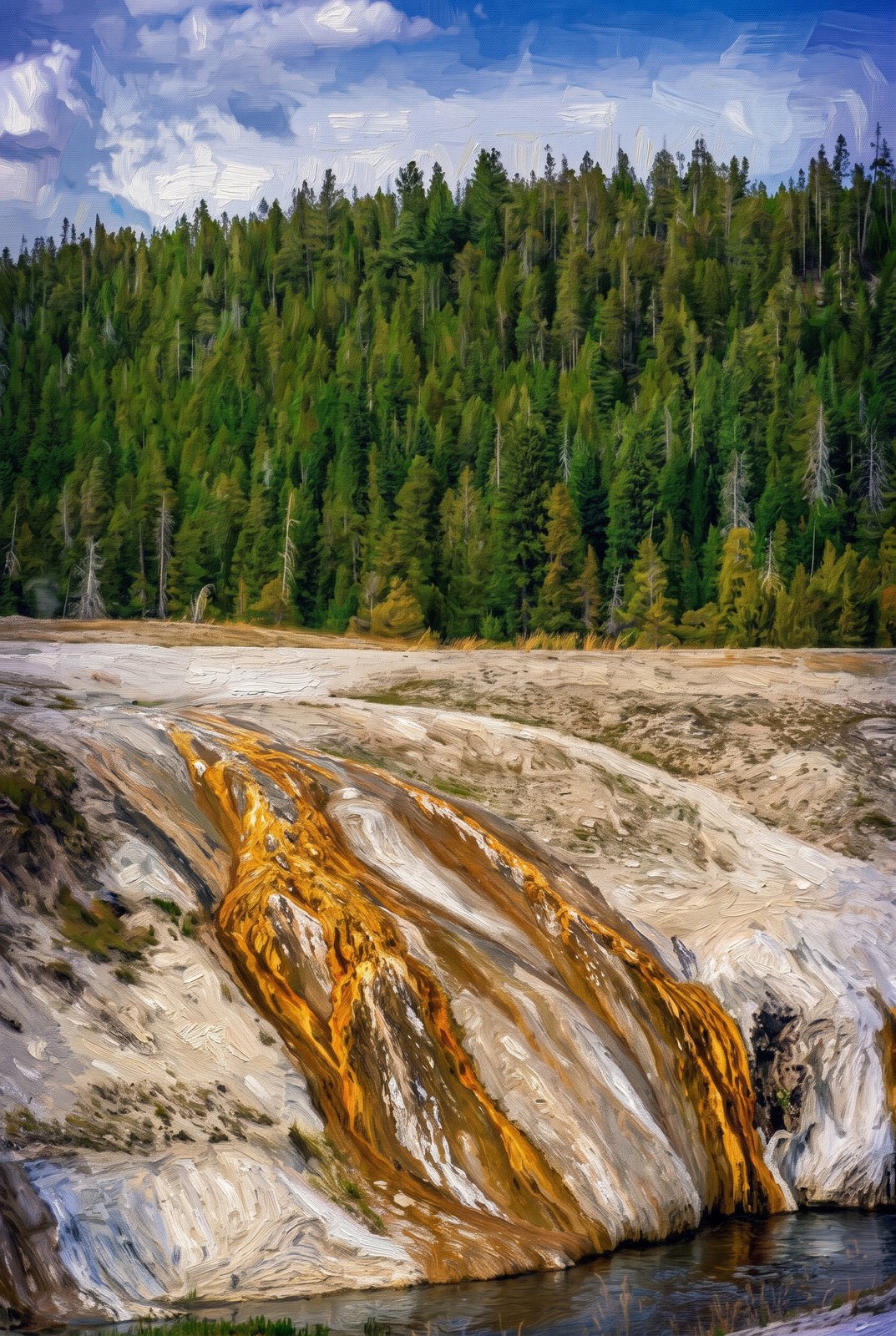 Impressionist
Yellowstone
Mineral-laden runoff from Excelsior Geyser Crater spills down a broad sinter terrace into the Firehole River in Yellowstone's Midway Geyser Basin, its bright orange and white channel leading toward a dense ridge of lodgepole pine under a partly clouded sky. Key Features: The Runoff Channel: The orange and rust bands are colonies of heat-loving bacteria and archaea living in the outflow as it cools on its way to the river. Excelsior Geyser: Once the largest geyser in the world, Excelsior threw bursts up to 300 feet high in the 1880s, until its own violence fractured its plumbing. The Firehole River: Steam from the thermal features along its banks gives the river the smoking look early trappers named it for. The Setting: The basin lies near Grand Prismatic Spring, framed by the forested hills of the park's high plateau.
Prints from $41Prints only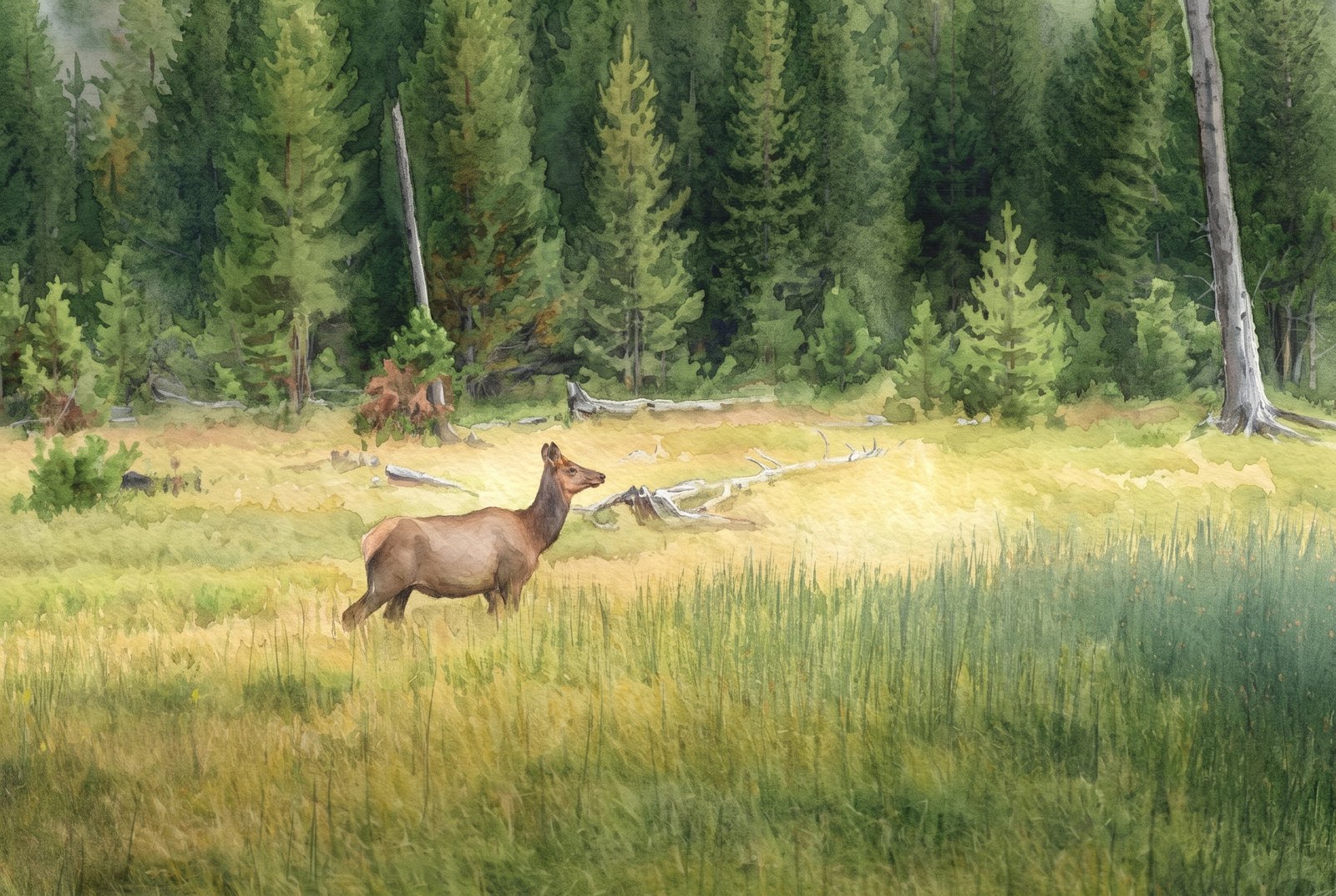 Watercolor
Yellowstone Elk
A cow elk pauses mid-stride in a sunlit meadow at the edge of a dense lodgepole pine forest in Yellowstone National Park, alert and looking off to one side, with tall grass in front and weathered deadwood along the tree line behind her. Key Features: Elk in Yellowstone: The park's herds spend the warmer months in grassland, sagebrush and lodgepole forest near rivers and streams, moving between open meadow and timber through the seasons. Habitat: Elk favor rich meadow bottoms for grazing, which is why she is out in the open clearing rather than deep in the pines. After the Fires: Summering elk still use young lodgepole forests thick with downed timber years after major fires, like the deadfall at this meadow's edge. Wildlife Viewing: Yellowstone is one of the best places in North America to see wild elk moving freely between forest and open range.
Prints from $41Prints only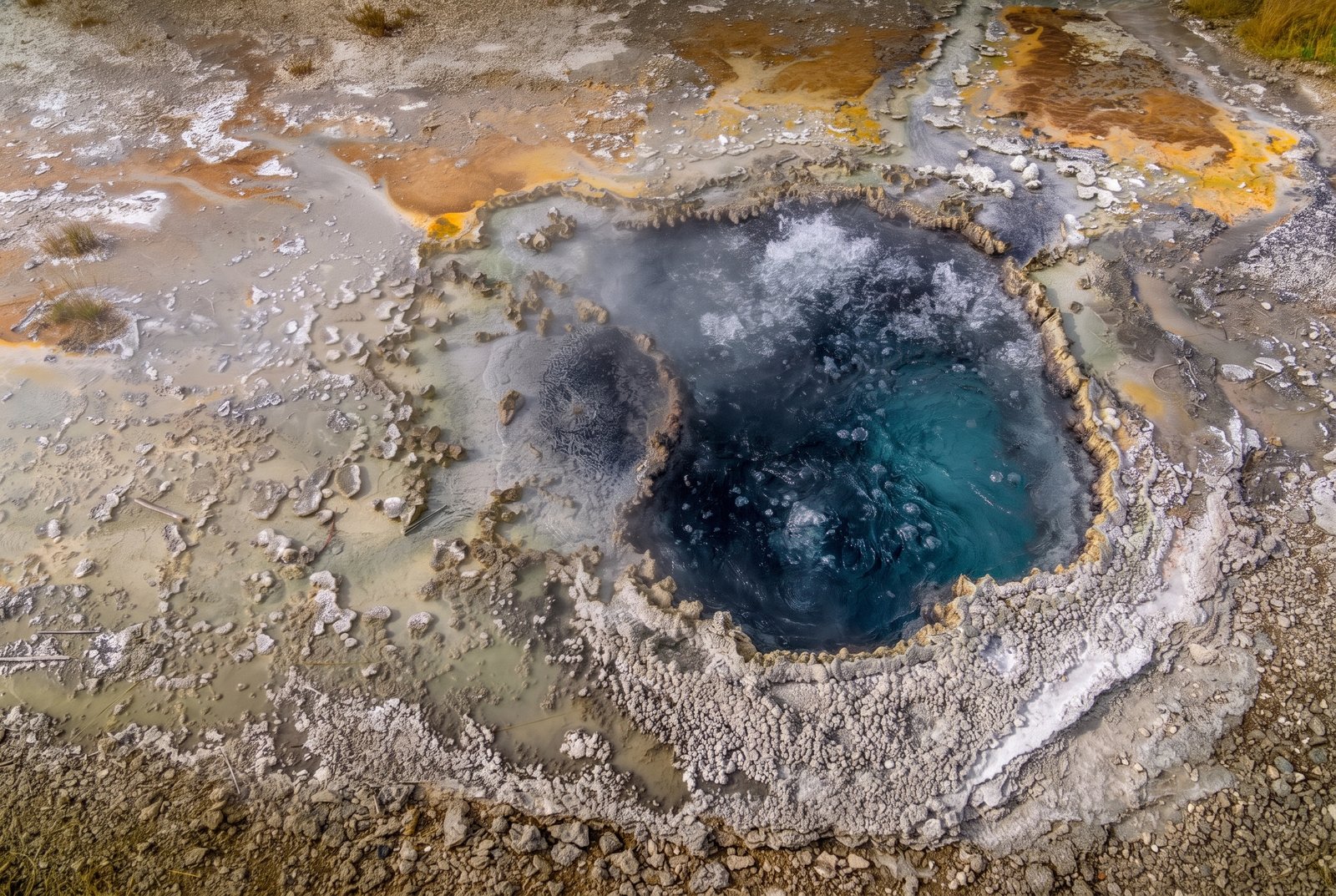 Impressionist
Yellowstone Geyser
Looking down into an active geyser vent in one of Yellowstone National Park's thermal basins, a deep, nearly black throat gives way to brilliant turquoise water churning in white bubbles, ringed by a knobby white sinter rim and pale mineral flats streaked with rust and gold microbial mats. Key Features: The Vent: The dark center is where near-boiling water rises from deep underground before spilling across the sinter terrace. The Sinter: Geyserite settles out of near-boiling water along the edges of hot springs and geysers, building spiky formations where splashing water meets the rim. The Colors: Heat-loving bacteria living in the mineral-rich water paint the ground around the pool. The Basin: Yellowstone's geyser basins sit atop a volcanic hot spot, whose heat keeps them boiling, bubbling and building mineral deposits.
Prints from $41Prints only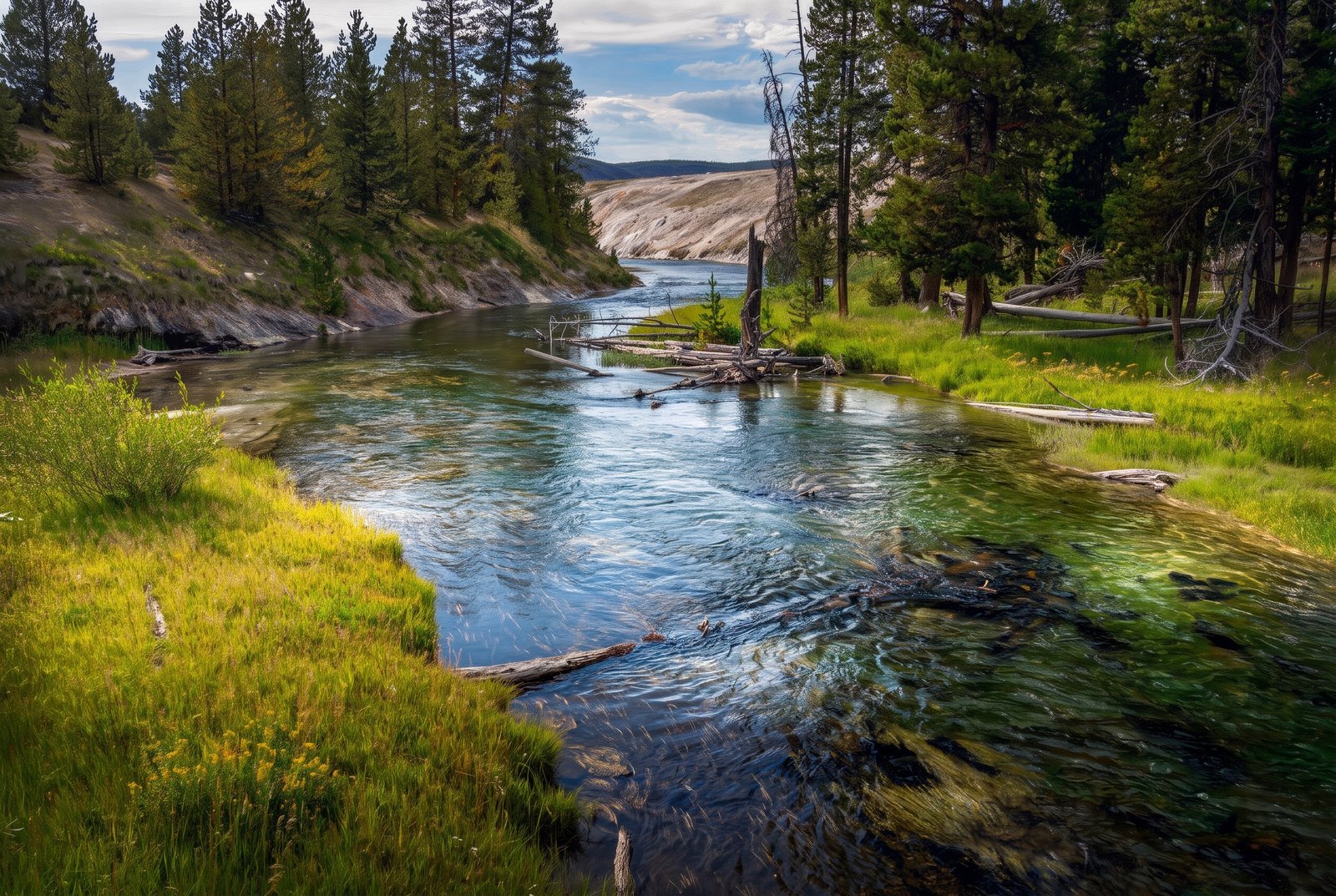 Painterly
Yellowstone River
From the water's edge, the Yellowstone River runs through a quiet stretch of lodgepole pine forest, bending toward a pale, sparsely grassed hillside as sun and shadow play across the current and driftwood rests in the shallows. Key Features: The River: The park's principal waterway, carrying snowmelt and spring-fed flow through forest and meadow toward the Grand Canyon of the Yellowstone. The Forest: Lodgepole pine, the main tree of Yellowstone's high plateau, lines both banks; its shallow roots often leave fallen trunks in and along the water. The Bare Hillside: Volcanic rhyolite soils resist tree growth, leaving the open, pale hills common along the park's rivers. The Character: Calm, clear water and untouched woodland, far from the busy geyser basins.
Prints from $41Prints only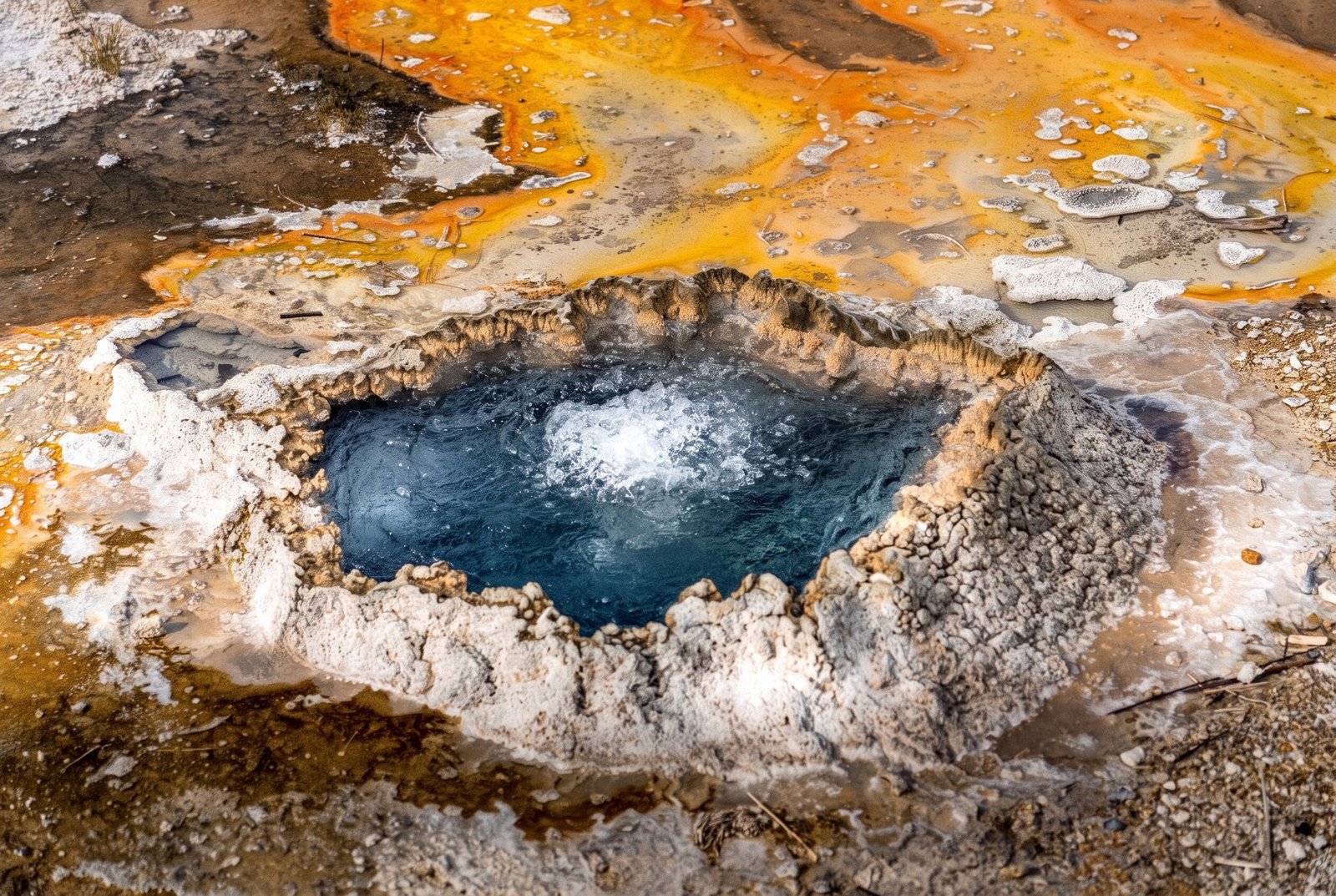 Watercolor
Yellowstone Geyser
Clear blue water pushed up by escaping steam bubbles in a small hot spring vent in one of Yellowstone National Park's geyser basins, ringed by gray and cream geyserite, with bright orange and rust microbial mats spreading across the ground around it. Key Features: The Rim: Silica dissolved from rock underground settles out as the water cools, building the crusty sinter lip around the pool. The Colors: Heat-loving bacteria and algae in the scalding runoff channels make the orange, yellow and rust bands around the vent. The Setting: Yellowstone sits atop one of the world's largest volcanic calderas, which feeds thousands of hot springs, geysers and fumaroles. The Activity: The churning water marks a boiling or near-boiling source, constantly circulating and venting through the opening.
Prints from $41Prints only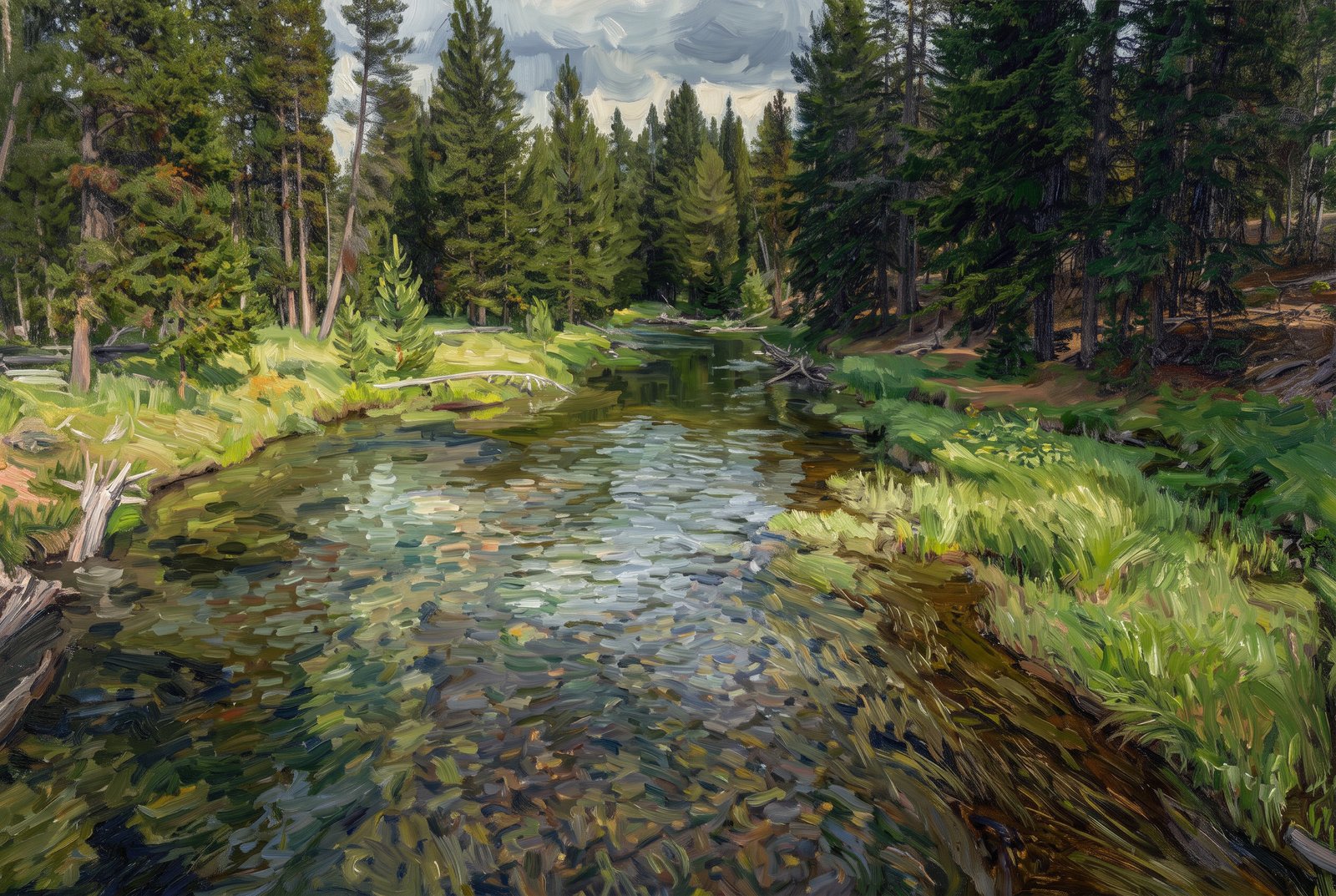 Impressionist
Yellowstone River
A quiet bend of the Yellowstone River glides over a stony bed through dense lodgepole pine, its clear water lined with sunlit meadow grass, narrow and shallow here before it widens into the powerful river found downstream. Key Features: The Source: The river begins with snowmelt near Younts Peak in Wyoming's Absaroka Range, where its North and South Forks join for a 692-mile journey, soon entering the southeastern corner of Yellowstone National Park. Free Flowing: The Yellowstone is the longest undammed river in the lower 48 states. The Setting: Grassy banks and dense conifers line the park's backcountry waters, favored by wildlife and anglers alike.
Prints from $41Prints only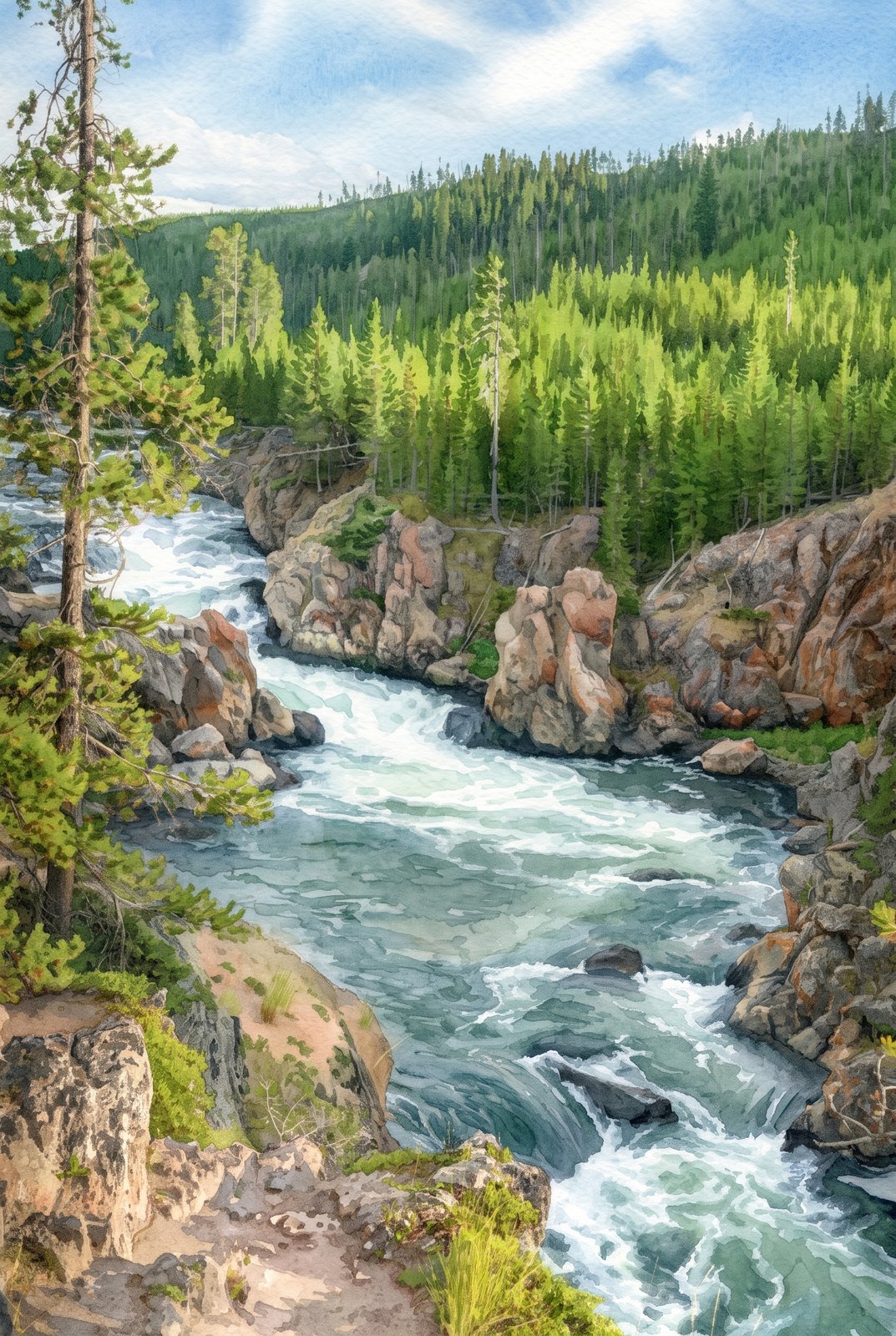 Watercolor
Yellowstone River
Whitewater rushes between weathered rhyolite boulders as the Yellowstone River narrows in a rocky, tree-lined channel just above Upper Falls, near Canyon Village, before plunging into the Grand Canyon of the Yellowstone. Key Features: The Rapids: They lead straight to the 109-foot Upper Falls, the river's first great drop. The Rock: The channel cuts through ancient rhyolite lava flows, the same rock that forms the canyon's colorful walls. The Forest: Lodgepole pine covers the surrounding hills, the high forest of the Yellowstone Plateau. The Park: Yellowstone, established in 1872, was the world's first national park.
Prints from $41Prints only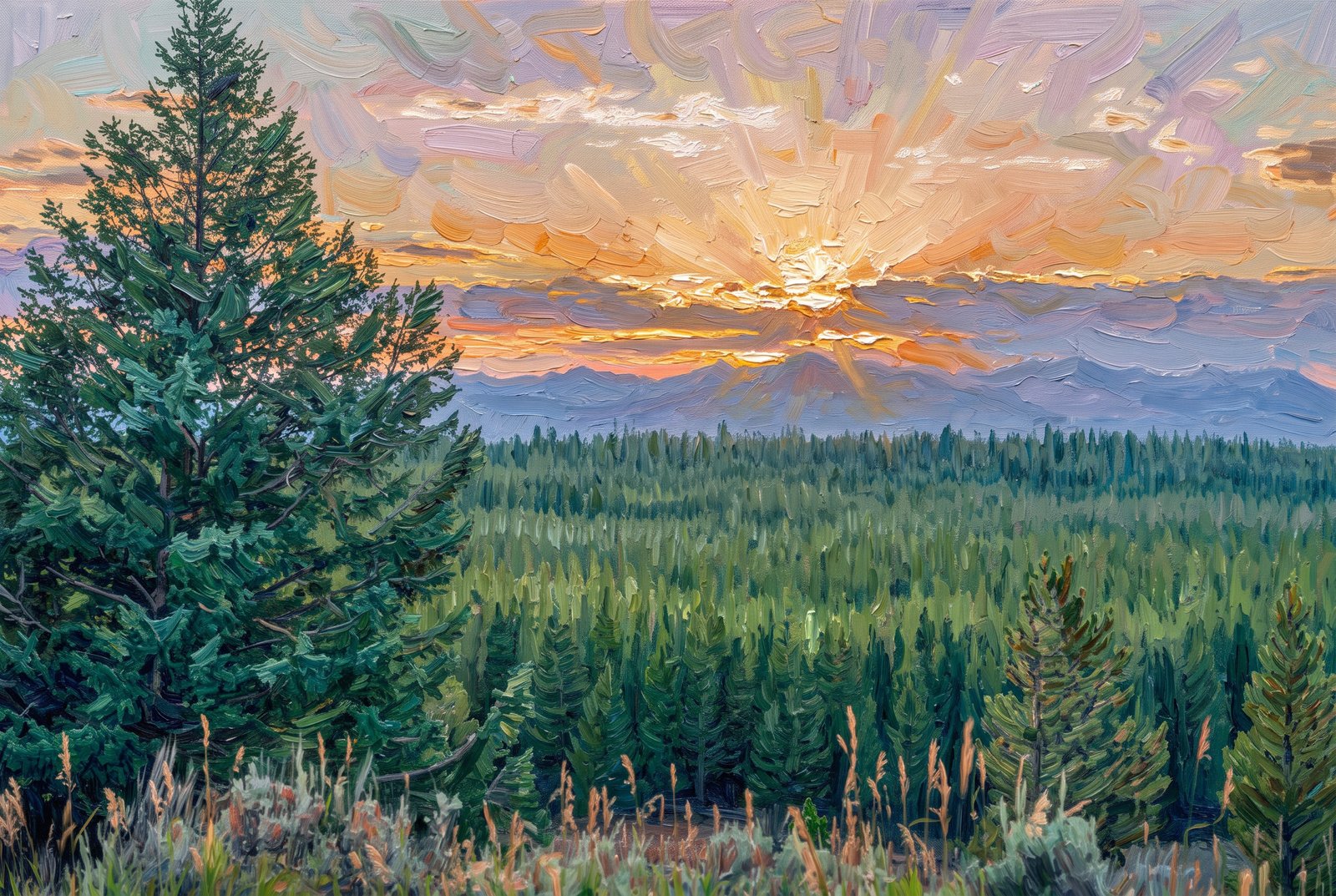 Impressionist
Yellowstone Sunset
From a high overlook in Yellowstone National Park, an unbroken sea of conifer forest runs toward a distant mountain range as the sun sinks behind banked clouds. A lone lodgepole pine and sagebrush frame the foreground, while sunbeams backlight the ridgeline and the valley forest falls into deep blue-green shadow. Key Features: The Forest: Lodgepole pine, Engelmann spruce and subalpine fir grow tightly together across nearly the whole scene, the mix that makes up most of the park's woodland. The Light: High points and open meadows are rare breaks in the trees where the full glow of a Yellowstone sunset can be seen. The Setting: Overlooks like this give an open sightline across the park's vast, largely untouched wilderness.
Prints from $41Prints only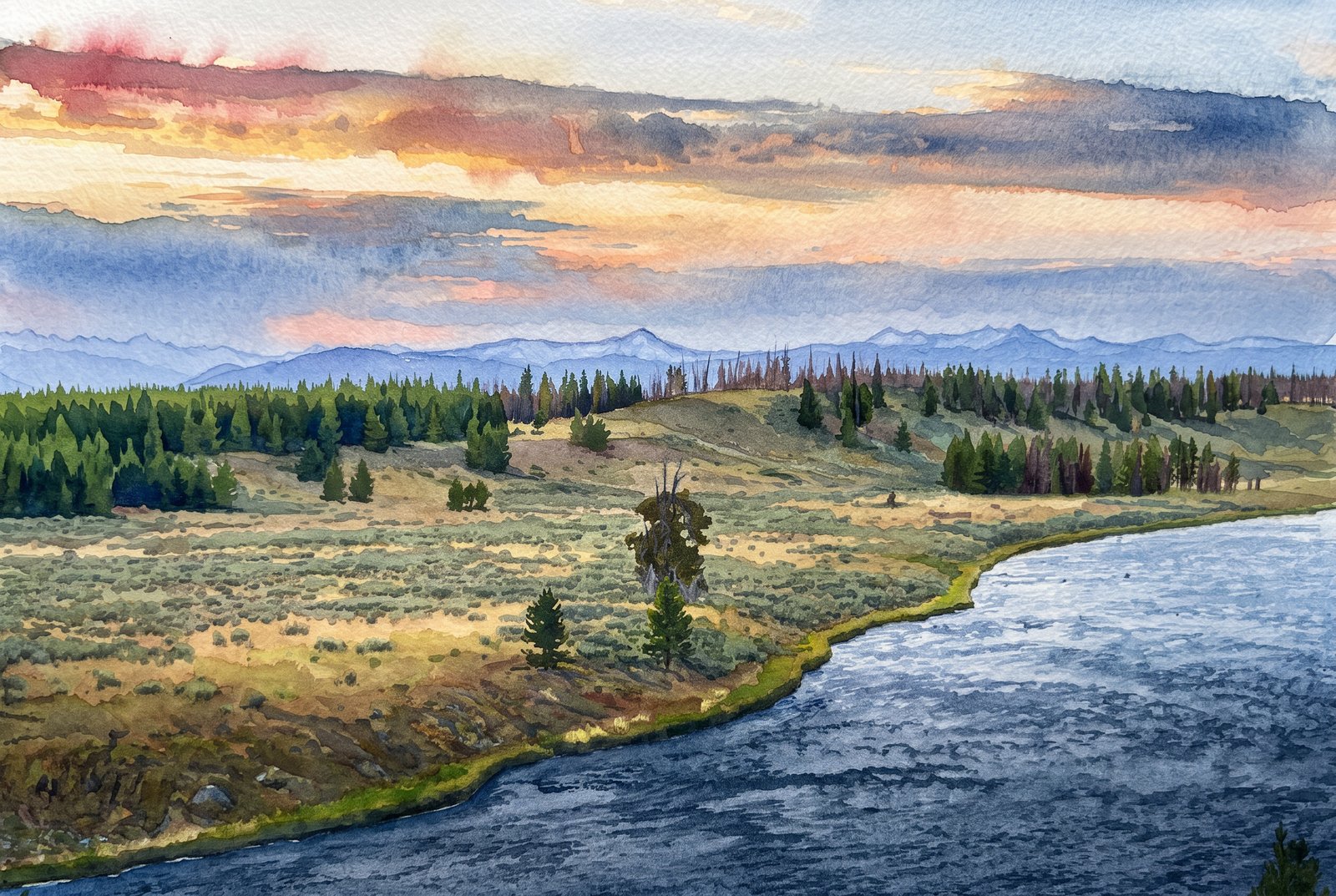 Watercolor
Yellowstone Sunset River
At dusk, the Yellowstone River curves through Hayden Valley's sagebrush meadows, looking north past lodgepole pine ridges to the layered peaks of the Absaroka Range fading into evening haze and cloud. Key Features: The Valley: Hayden Valley lies in the middle of Yellowstone National Park and is often called its heart. The Geology: Its floor is full of fine sediment from a prehistoric lake, covered by glacial till left about 13,000 years ago. The Wildlife: It is one of the park's great wildlife viewing spots, with bison, grizzly bears and elk.
Prints from $41Prints only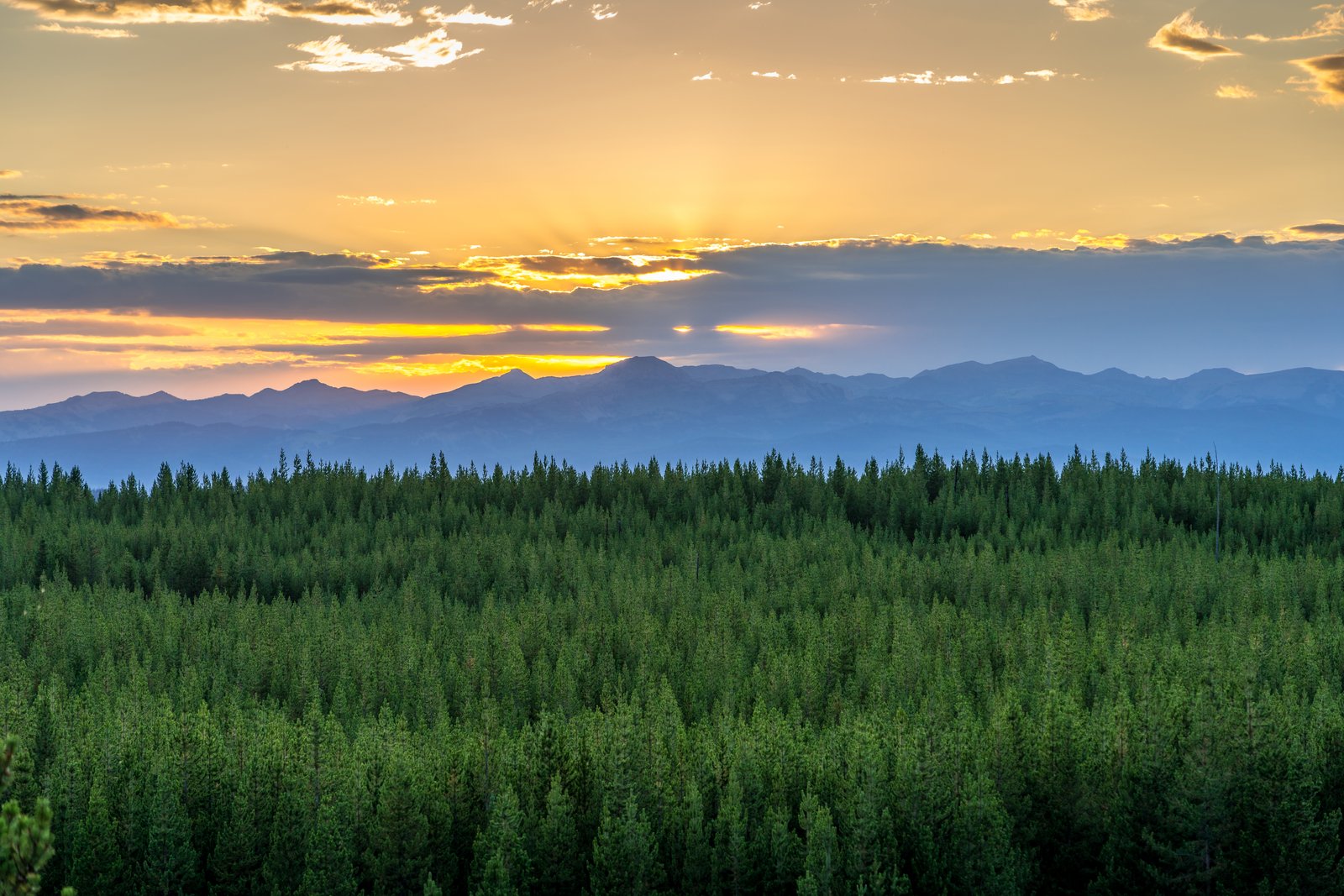
Yellowstone Sunset
The sun sinks behind a bank of clouds over a dense sea of lodgepole pine in Yellowstone National Park, the darkening canopy giving way to hazy blue ridgelines that recede into the distance under a sky streaked gold and violet. Key Features: The Forest: Forest covers about 80 percent of the park, with lodgepole pine in miles of unbroken stands, especially inside the Yellowstone Caldera. The Terrain: Yellowstone sits on a high volcanic plateau ringed by rugged ranges of the Rocky Mountains, their layered peaks fading into the haze. The Light: Golden rays break through the clouds, and the thin air and long sightlines of the plateau deepen the color at dusk.
Prints from $22Downloads from $19