

Collection
Lake Powell Page - Arizona
By · 26 photos
Lake Powell Stretches
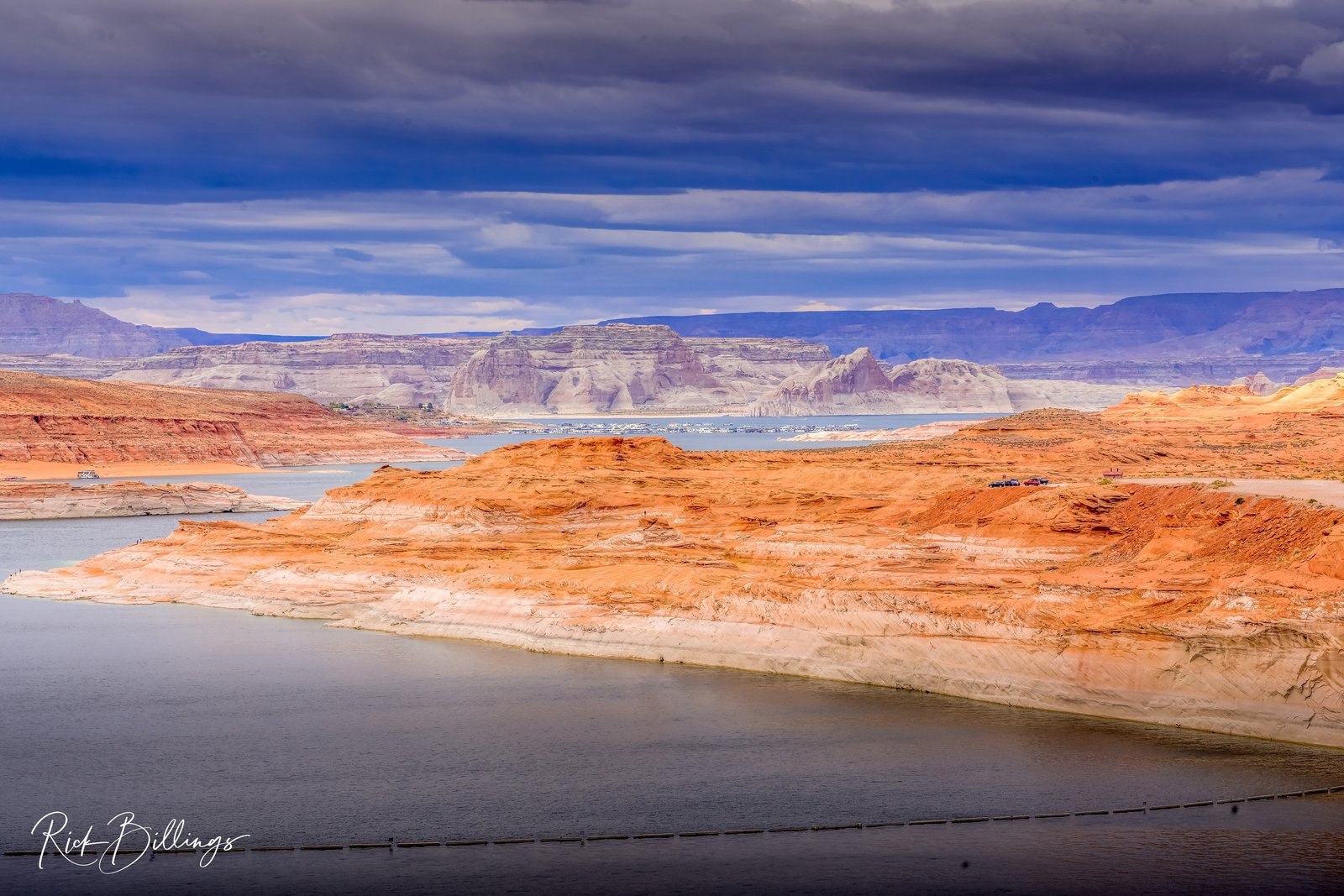
Orange Navajo sandstone bluffs rise from the blue-green water of Lake Powell below Page, Arizona, with pale desert mesas and distant buttes framing the far shore and Wahweap Marina and part of the town tucked among the cliffs beyond. Key Features: The Bathtub Ring: The pale band along the shore is calcium carbonate left on the rock where higher water once stood. The Reservoir: Glen Canyon Dam held back the Colorado River to form Lake Powell, one of the largest man-made reservoirs in the United States. The Setting: Red and white sandstone canyon country on the Arizona-Utah line around Page. Changing Water: Snowmelt and drought make the lake rise and fall, reshaping the bare rock along its edges.
Prints from $22Downloads from $19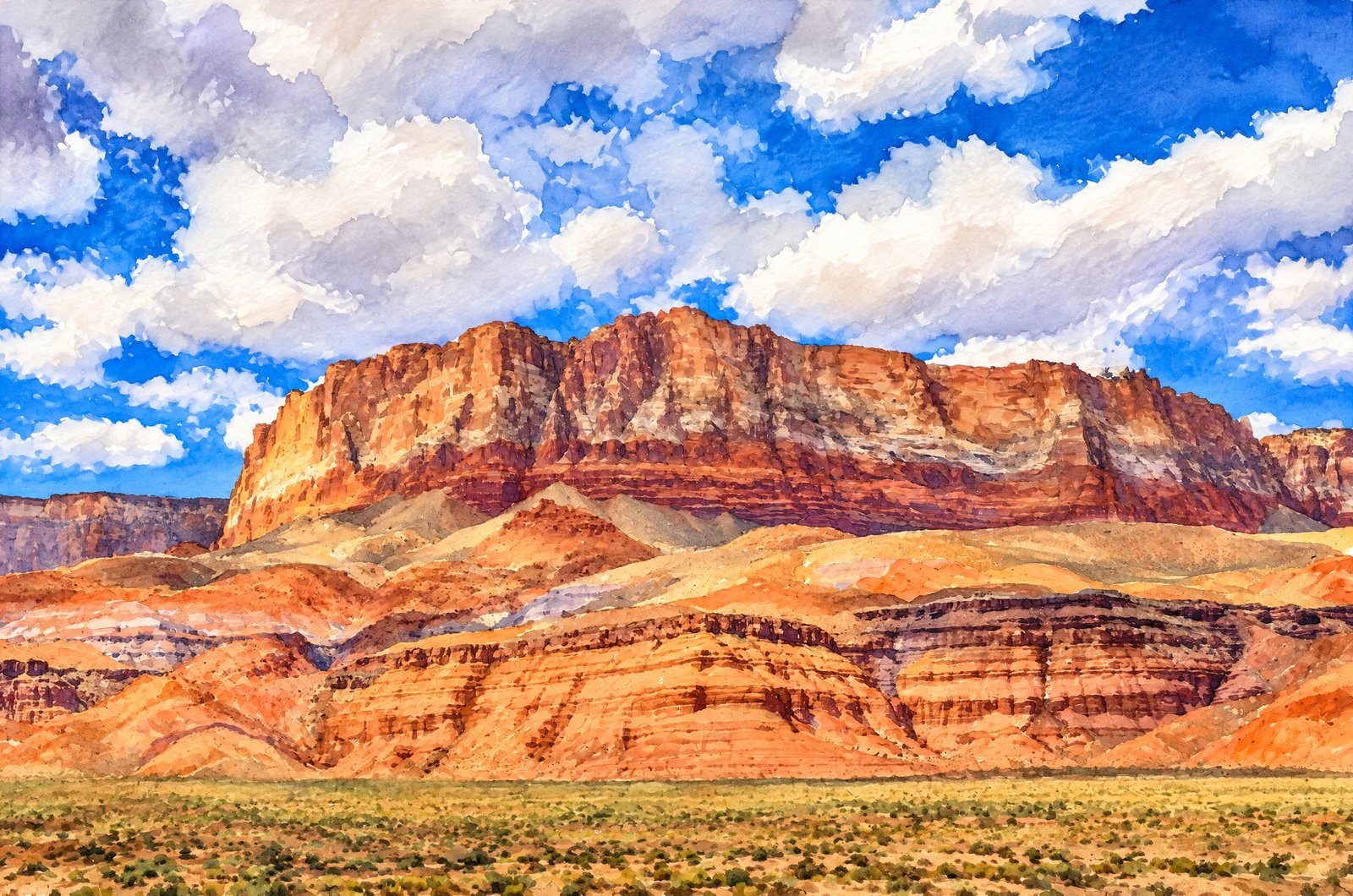 Watercolor
Vermilion Cliffs
The Vermilion Cliffs rise above the desert floor near Page, Arizona, a massive escarpment of red and white sandstone stretching for miles toward the Utah border, seen from the valley floor along Highway 89A with scrub desert in front and billowing clouds drifting across a deep blue sky. Key Features: The Formation: Resistant red sandstone beds of the Lower Jurassic Moenave and Kayenta Formations. The Coloring: Silt and desert dunes, cemented by carbonates and stained by iron oxide and other minerals. The Protected Land: Vermilion Cliffs National Monument protects nearly 300,000 remote, unspoiled acres of the Colorado Plateau. The Wildlife: California condors, reintroduced to the region, are often seen soaring along these cliffs.
Prints from $41Prints only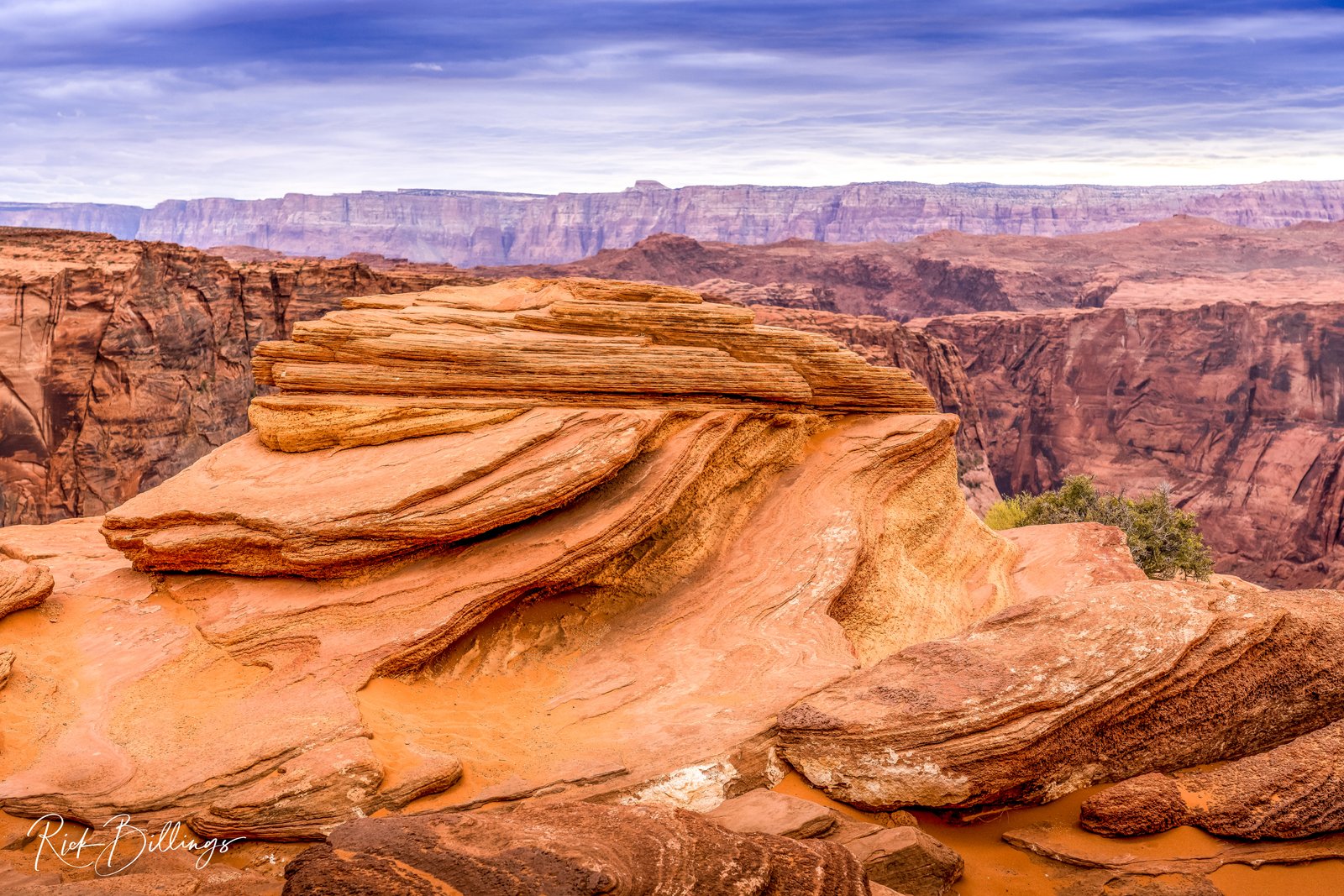
Horseshoe Bend Near Page, Arizona
A slab of weathered Navajo Sandstone shows its wavy, cross-bedded layers on the rim above Horseshoe Bend near Page, Arizona, where the Colorado River carves a tight meander through Glen Canyon, the canyon dropping away behind it toward distant cliff lines under a moody, cloud-streaked sky. Key Features: The Rock: The wavy layers are the remains of ancient sand dunes turned to stone, now the Navajo Sandstone. The Canyon: Horseshoe Bend is a deeply entrenched meander in the short stretch of Glen Canyon that remains above water, and one of the most photographed places in Arizona. The Setting: The bend lies in Glen Canyon National Recreation Area at Page, with the Navajo Nation bordering the overlook area.
Prints from $22Downloads from $19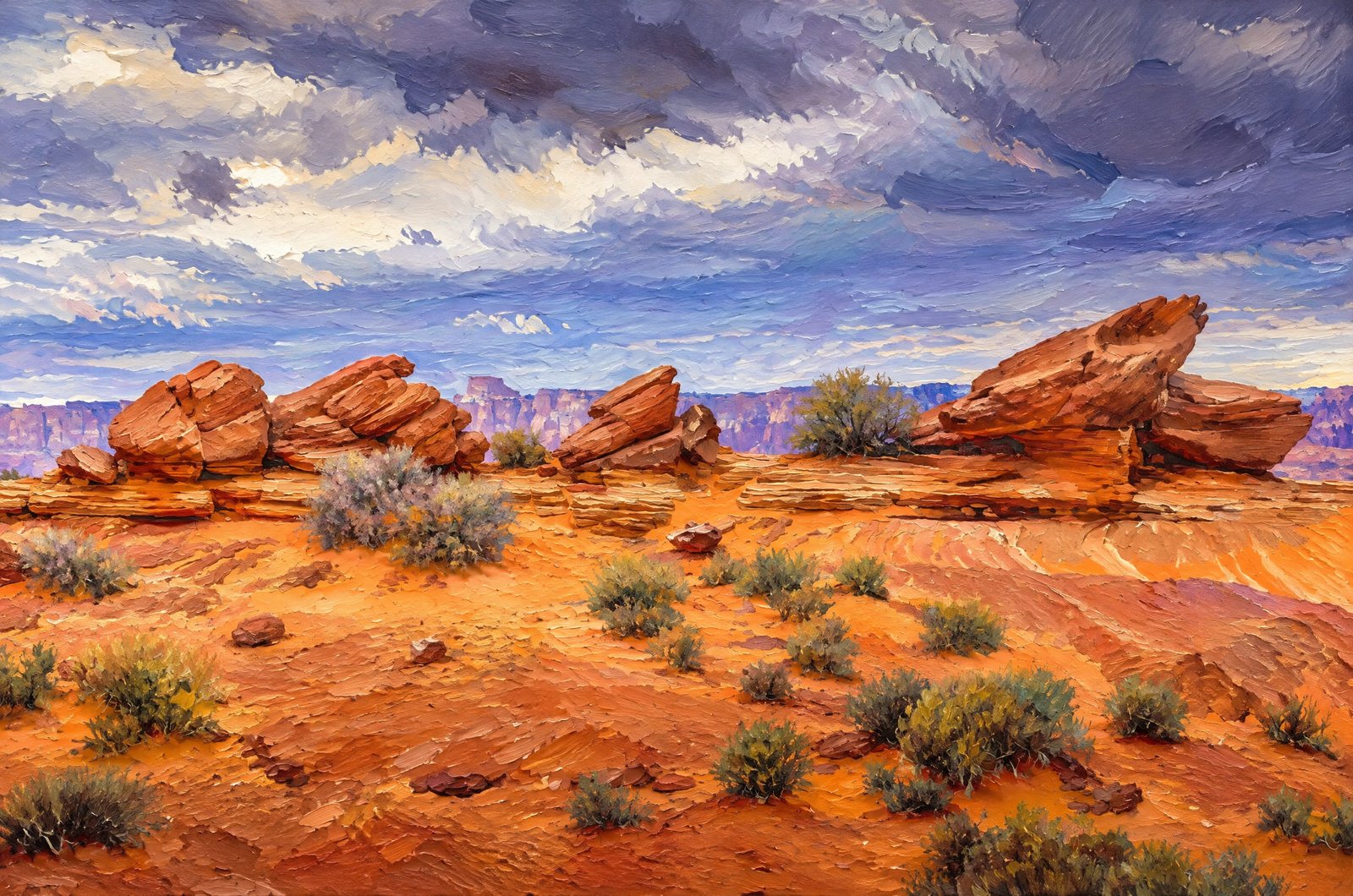 Painterly
Horseshoe Navajo Sandstone
Weathered blocks of Navajo sandstone lie scattered along the rim above the Colorado River at Horseshoe Bend near Page, Arizona, their cross-bedded layers glowing orange-red beneath a bank of dark storm cloud as the sheer walls of Glen Canyon fade into hazy violet beyond the sagebrush and wind-sculpted sand. Key Features: The Sandstone: Navajo sandstone formed from ancient dunes, carved by wind and water into rounded, layered blocks. The Canyon: Below, the Colorado River makes its huge horseshoe-shaped loop, one of the most photographed bends on the river. The Geology: The red rock is Jurassic in age, shaped over millions of years into the canyon seen today. The Setting: Sparse shrubs and drifting orange sand mark the dry Colorado Plateau of northern Arizona.
Prints from $41Prints only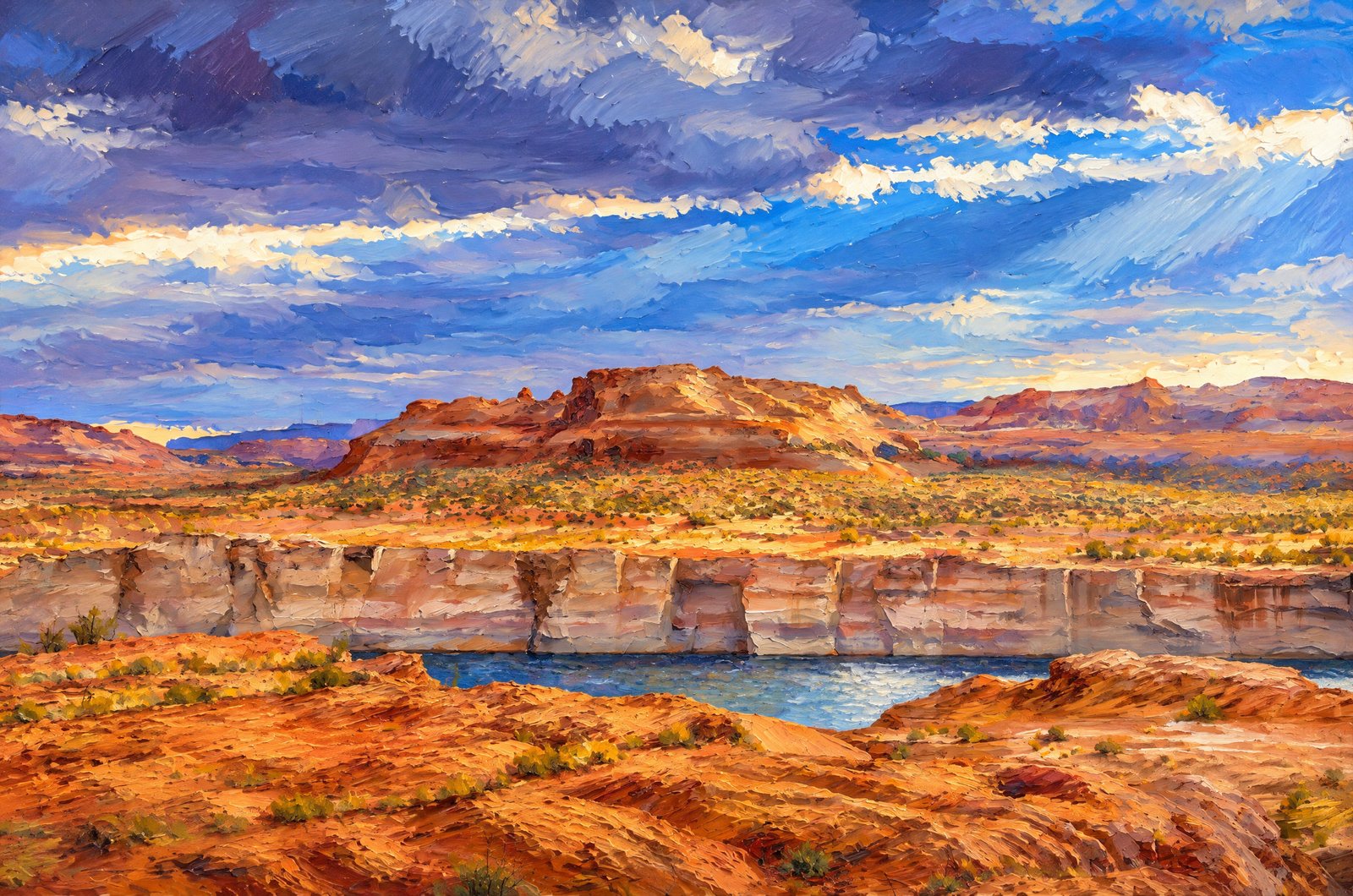 Painterly
Cove Of Lake Powell
Storm clouds break into shafts of light over layered red rock buttes above a cove of Lake Powell near Page, Arizona, pale cliff walls rimming the still water below and wind-sculpted sandstone in front. Key Features: The Bathtub Ring: The pale band on the canyon walls was left by minerals when the lake stood higher. The Reservoir: Lake Powell began filling in 1963, when Glen Canyon Dam held back the Colorado River. Its Scale: The second-largest reservoir in the United States by total storage. The Setting: Page sits at the edge of Glen Canyon National Recreation Area, where Navajo sandstone buttes and slot canyons surround the lake's many coves.
Prints from $41Prints only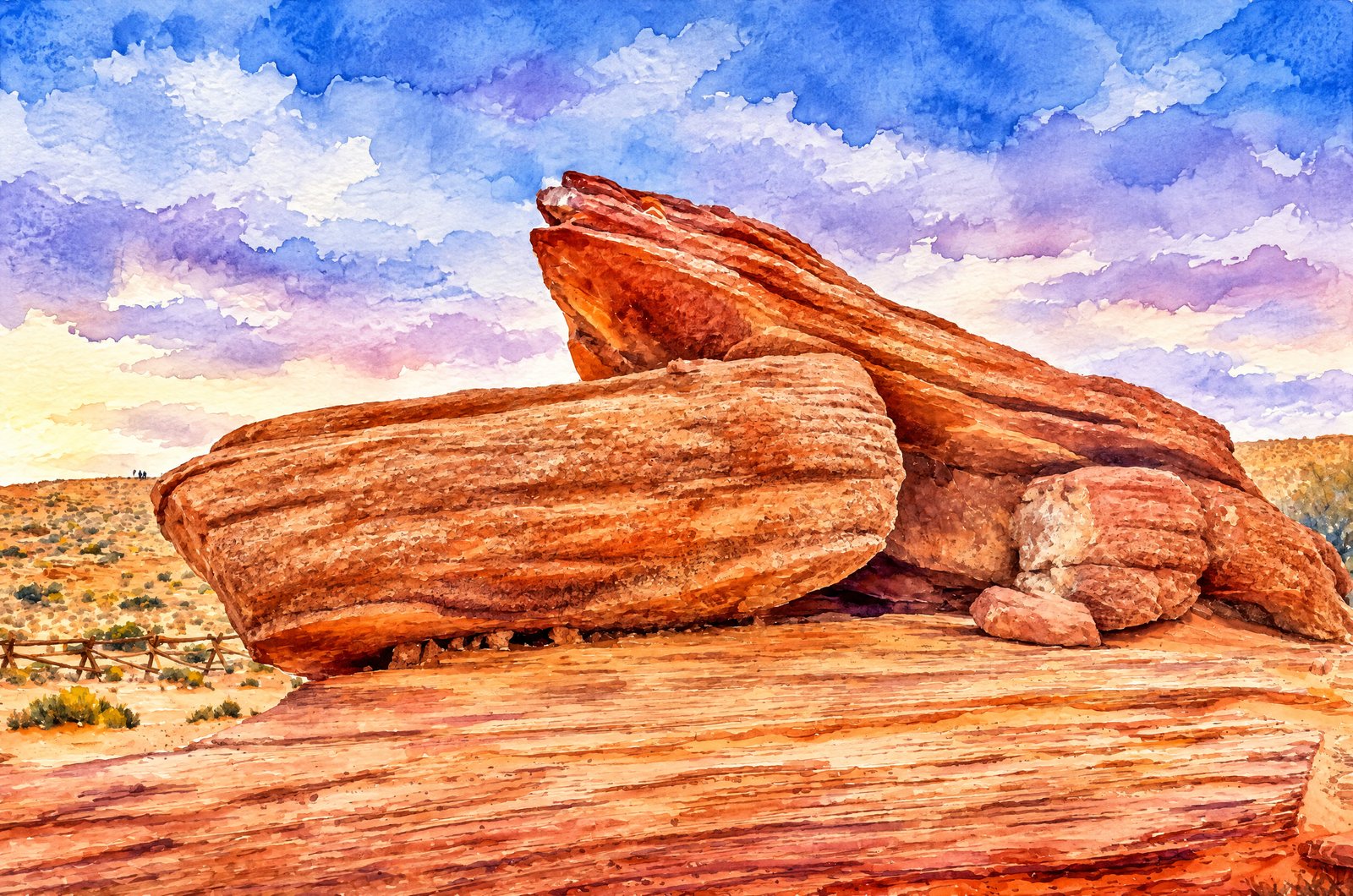 Watercolor
Horseshoe Canyon Navajo Sandstone
A large, fractured slab of Navajo Sandstone balances on sweeping slickrock near the rim on the trail to Horseshoe Bend, just south of Page, Arizona, its deep rust and cream bands catching the light under a streaked blue sky, with open high desert and a wooden trail fence in the distance. Key Features: The Rock: Navajo Sandstone, known for its cross-bedding and iron concretions, is exposed all around Horseshoe Bend. The Formation: The rock began as a vast field of sand dunes that hardened into sandstone over millions of years. The Trail: Walking the rim's slanted slabs gives different views of the bend. The Location: Horseshoe Bend lies on the Colorado River just south of Page.
Prints from $41Prints only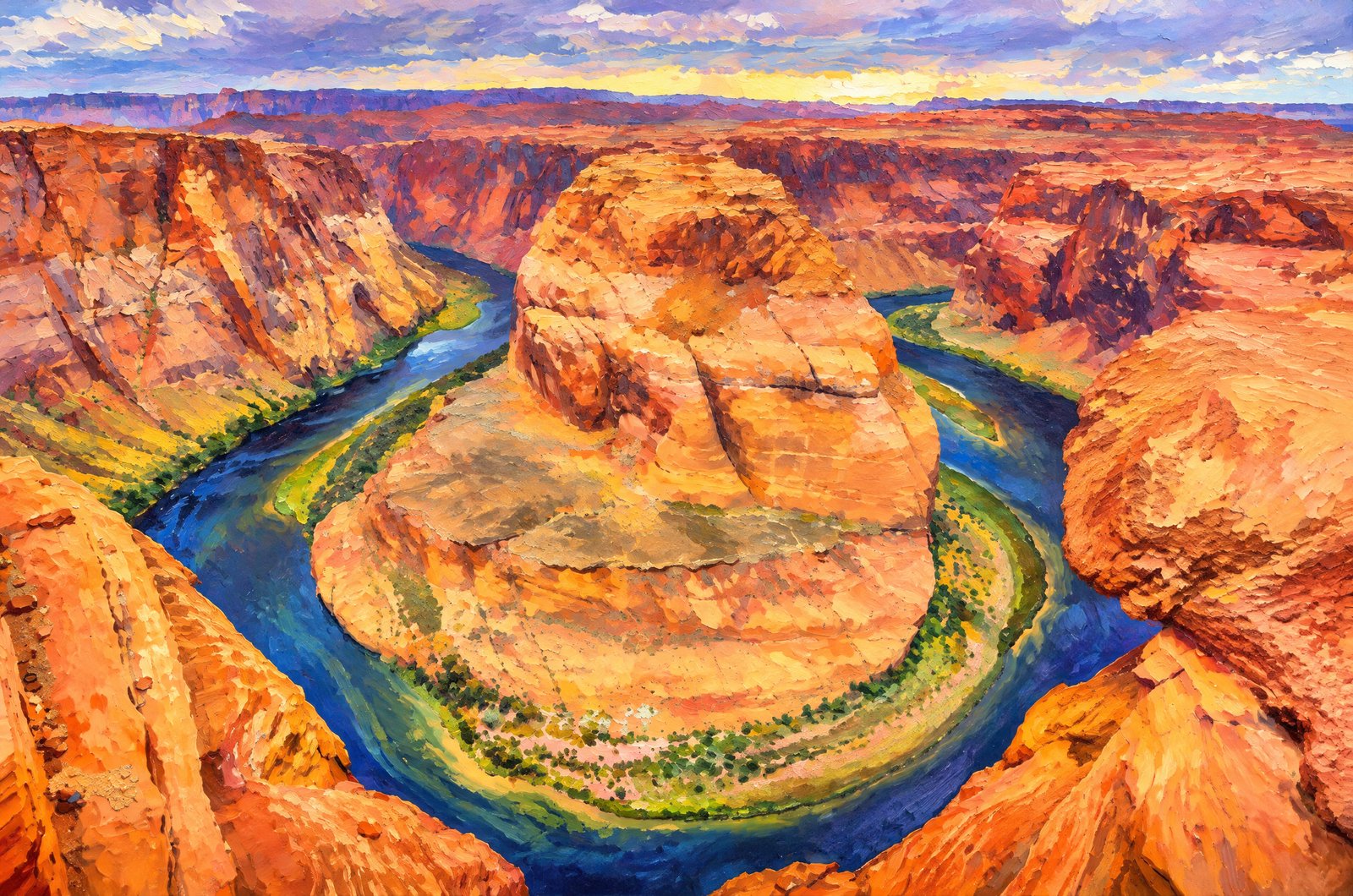 Impressionist
Horseshoe Bend
The Colorado River wraps nearly all the way around a massive sandstone butte at Horseshoe Bend, just south of Page, Arizona, seen straight down from the rim overlook, with layered red cliffs stretching to the horizon under a moody, clouded sky. Key Features: The Formation: The river cuts a 270-degree curve through 1,000 feet of Navajo sandstone, an entrenched meander exposing rock about 190 million years old. The Overlook: Visitors look about 1,000 feet down into Glen Canyon and across a sweep of red sandstone cliffs. The Setting: Horseshoe Bend lies 5 miles downstream of Glen Canyon Dam and Lake Powell, about 4 miles southwest of Page. The Nickname: It is sometimes called the east rim of the Grand Canyon.
Prints from $41Prints only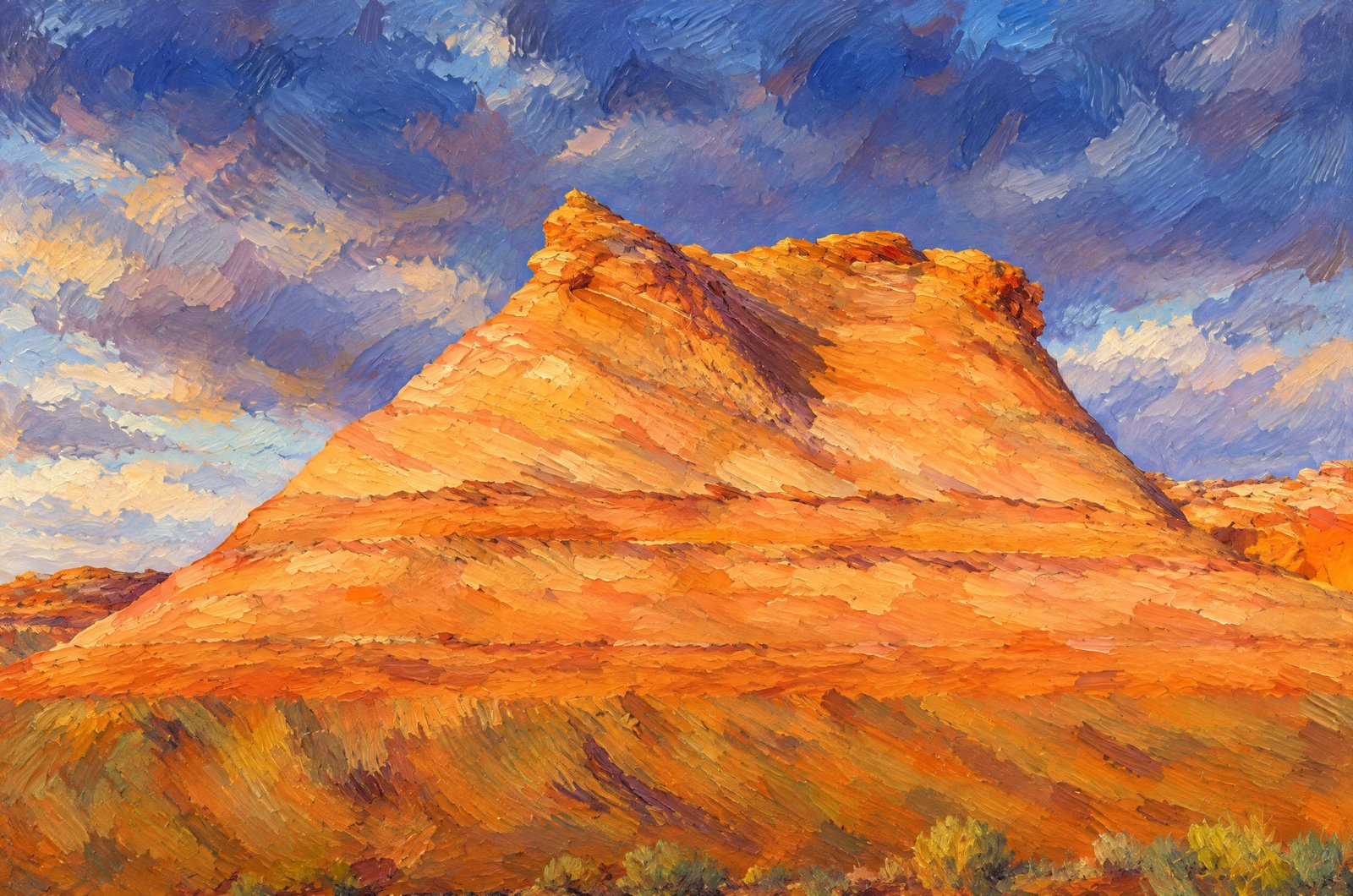 Impressionist
Beehive Formations Near Page, Arizona
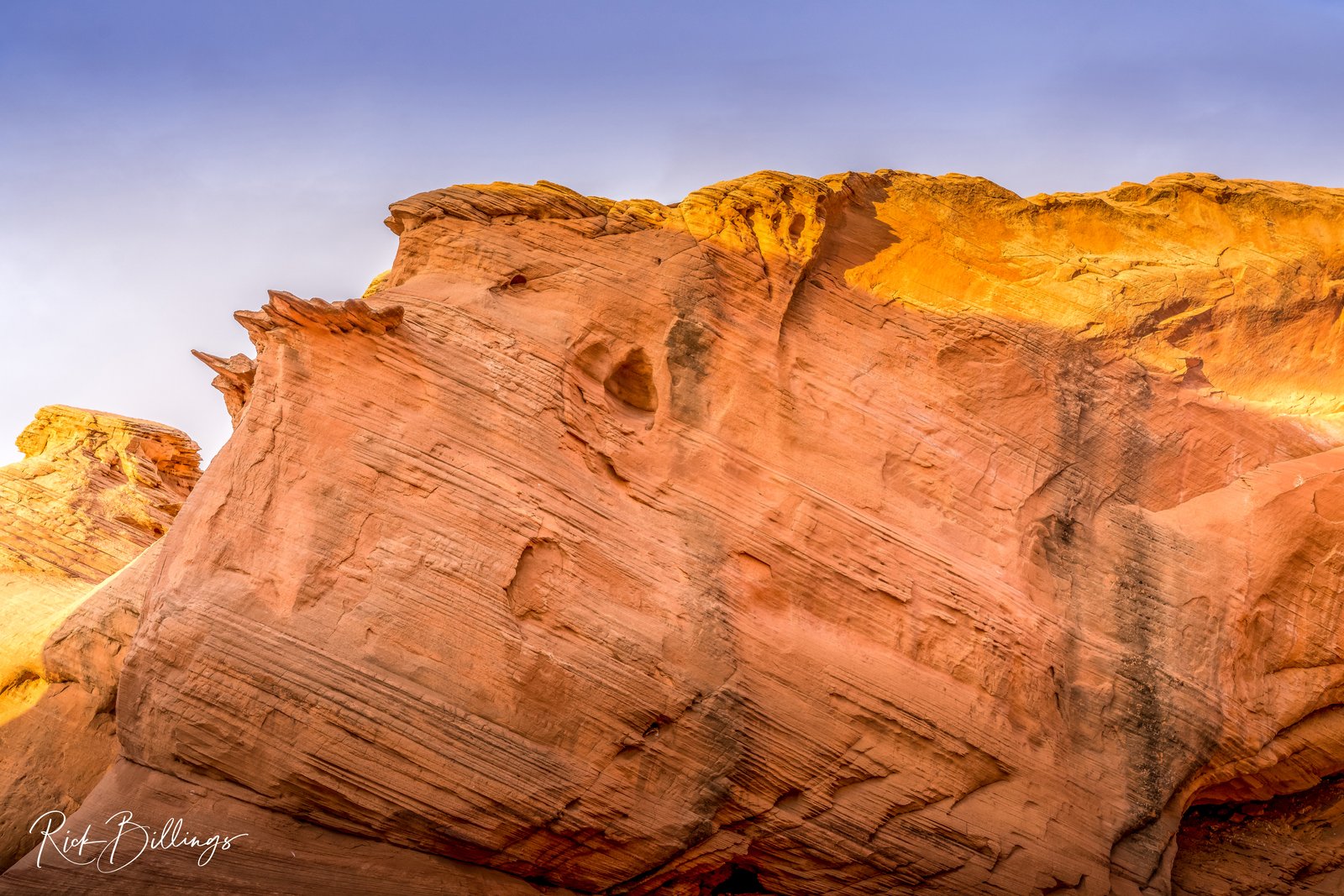
A cone-shaped dome of the Beehive formations glows deep orange in late-day light against a stormy sky near Page, Arizona, its cross-bedded Navajo sandstone striped with curving bands and a dark, shadowed cleft near the summit, just past Glen Canyon Dam. Key Features: The Beehive Trail: A short loop near Glen Canyon Dam and Wahweap Marina winds through sculpted sandstone domes and wave-like ridges. The Wave in Miniature: The swirling, banded rock is often compared to the famous Wave in nearby Coyote Buttes. The Geology: Like the Wave, these patterns were carved by trickles of water running downhill and long spells of very high wind. The Light: Sunset is the time to come, when the colors of the petrified dunes come alive.
Prints from $41Prints only